

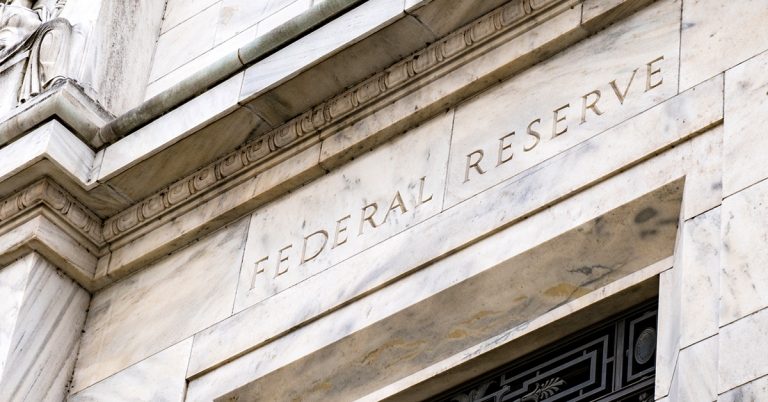
President Donald Trump made a statement during an interview with Politico. He explicitly affirmed that immediate interest rate cuts would serve as a “litmus test” for his nominee to replace Federal Reserve Chair Jerome Powell, whose term ends in May 2026.
Trump responded “yes” when asked if a new chair lowering rates right away would be a requirement, signaling a push for more aggressive monetary easing to support economic growth amid concerns over inflation and tariffs.
This aligns with Trump’s broader criticisms of Powell, whom he has accused of being “too late” on rate reductions, and his recent appointment of economic adviser Stephen Miran to the Fed board to influence policy.
Register for Tekedia Mini-MBA edition 20 (June 8 – Sept 5, 2026).
Register for Tekedia AI in Business Masterclass.
Join Tekedia Capital Syndicate and co-invest in great global startups.
Register for Tekedia AI Lab.
As of December 10, 2025, the Federal Open Market Committee (FOMC) is concluding its final meeting of the year, with a decision expected at 2:00 PM ET.
Economists anticipate a third consecutive quarter-point rate cut to a range of 4.25%-4.50%, despite internal Fed divisions over persistent inflation hovering above the 2% target due to Trump’s tariffs and a weakening labor market over 1.1 million jobs cut through November.
Powell’s post-meeting press conference at 2:30 PM ET will provide further clues. Trump has signaled an announcement for Powell’s replacement in early 2026, with Kevin Hassett former White House economic adviser and advocate for low rates emerging as a frontrunner.

Hassett has long argued for “expansion-leaning” Fed policy to keep capital cheap and growth high. This move underscores Trump’s desire to bend the traditionally independent Fed toward his agenda, including slashing borrowing costs to offset tariff impacts.
The rhetoric has fueled optimism in stocks and crypto, with expectations of higher liquidity and cheaper loans under a Trump-aligned chair. However, risks include renewed inflation spikes or Fed pushback on political interference.
President Trump says rate cuts will begin right away under the next Federal Reserve Chair.” President Trump says the next Fed chair must move straight into rate cuts… Big message for the markets.” This could mark a pivotal shift in U.S. monetary policy.

Tariffs are taxes imposed on imported goods, designed to protect domestic industries by making foreign products more expensive. While they can generate government revenue and encourage local production, their primary economic impact on inflation stems from cost-push effects.
Higher prices for imports and inputs, which businesses often pass on to consumers. This raises the overall price level, contributing to inflation—a sustained increase in the general price level of goods and services.
However, the magnitude and persistence depend on factors like the scale of tariffs, import reliance, exchange rates, and global retaliation. Economic consensus, drawn from historical data and recent analyses, shows tariffs typically act as a one-time price shock rather than ongoing inflation drivers, unless they disrupt supply chains persistently.
In 2025, under President Trump’s expanded tariffs like 10-25% on most imports, up to 60% on China, they’ve measurably boosted U.S. inflation amid a backdrop of cooling post-pandemic pressures.
Tariffs raise the cost of imported consumer goods and intermediate inputs. Importers absorb some costs initially but pass most through to retail prices, especially for inelastic goods like essentials.
Higher input costs inflate production expenses across sectors, amplifying effects on non-tradable goods like housing via pricier building materials. Tariffs can weaken demand slowing growth and potentially curbing inflation but retaliatory tariffs from partners raise export costs, hurting U.S. competitiveness and adding upward pressure.
A stronger U.S. dollar from tariffs can offset some import price hikes, but depreciation as seen in 2025 exacerbates them. Effects aren’t immediate—retailers stockpile pre-tariff inventory, delaying passthrough by 3-6 months. Inflation often peaks 2-3 years later as adjustments settle.
Recent Federal Reserve analyses provide robust, data-driven insights. These added 0.1-0.2 percentage points to core PCE inflation, with near-full passthrough to consumer prices within months. Studies like Amiti et al. (2019) confirmed costs fell mostly on U.S. households, not foreign exporters.
Tariffs explain 0.5 pp of headline PCE annualized inflation and 0.4 pp of core PCE for June-August 2025. Over the 12 months ending August, they accounted for 10.9% of headline inflation—statistically significant and tied to timing of tariff hikes.
New 60% China/10% global tariffs could add at least 0.5 pp to core PCE; a broader proposal might reach 2.2 pp without offsets. A 25% universal tariff on imports could raise PCE prices by 0.3-0.8 pp short-term, with inflation peaking after 3 years. Investment goods amplify effects more than consumer goods.
Broader models (e.g., PIIE 2025) project 2025 tariffs reducing U.S. GDP by 0.5-1.5% while adding 0.5-1.0 pp to inflation in year 1, worsening with retaliation. J.P. Morgan estimates mid-teens effective rates could settle inflation 0.3-0.6 pp higher by mid-2026.
Some analyses argue tariffs’ $49B cost hike is just 0.3% of consumer spending, a one-off level shift not sustained inflation. Rolling them back might cut prices 0.3-0.7 pp but risks supply chain fragility.
CPI held at 3% through September 2025, with import goods prices slightly down year-over-year—attributed to energy drops and retailer absorption. Housing up 3.4% and electricity drove more inflation than tariffs.
Advocates claim tariffs fund rebates like $12B farmer aid in Dec 2025 and reshoring 300+ plants, offsetting costs long-term. X discussions echo this, with users noting inflation at 2.5-2.7% under Trump vs. 9.1% under Biden, blaming prior policies.
Yet, Fed Chair Powell noted in June 2025 that tariffs “materially” raised forecasts, prompting fewer rate cuts. Yale Budget Lab estimates $1,300-1,700 per-household loss in 2025, outpacing revenue gains.
Globally, they slow growth and inflate partners’ prices. Politically, affordability concerns persist—X users decry tariffs as “taxes on consumers,” fueling Democratic attacks, while supporters hail revenue for dividends.
In sum, tariffs reliably add to inflation substantiated by Fed regressions and price data, but offsets like dollar strength and subsidies mitigate severity. Persistent hikes risk entrenched inflation; monitoring PCE through 2026 will clarify dynamics.