

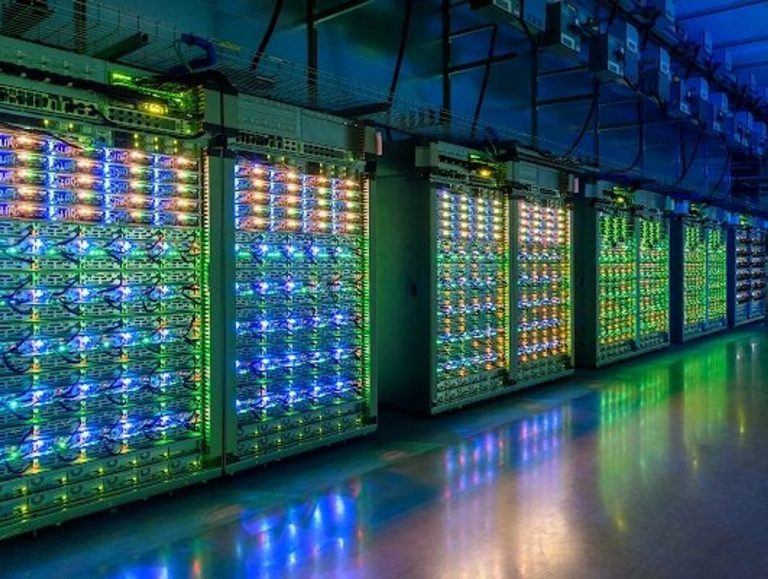
LinkedIn co-founder Reid Hoffman is pushing back against growing opposition to the U.S. data center boom, arguing that the enormous flow of capital into artificial intelligence infrastructure is supporting economic activity well beyond the technology companies driving the spending.
Speaking on the “Newcomer” podcast released Friday, Hoffman said the scale of investment in AI infrastructure may be helping the U.S. economy avoid a recession by creating demand across a wide range of industries.
“The only reason we’re not in a recession” is the capital being deployed behind the AI infrastructure buildout, Hoffman said.
Register for the next Tekedia Mini-MBA.
Register for Tekedia AI in Business Masterclass.
Join Tekedia Capital Syndicate and co-invest in great global startups.
The argument comes as data centers have become a contentious part of the AI boom. Developers are seeking land, electricity and water for facilities that can require billions of dollars in investment, while communities are raising concerns about environmental effects, power consumption, noise and the extent to which local residents benefit from the projects.
Hoffman said the economic impact of the construction boom is broader than many people assume.
“Most of that capital” does not flow directly into the communities where data centers are located, he said. “Most of that’s more distributed across the country. That’s great.”

The spending supports construction workers, electricians, carpenters, real estate agents and lawyers, among others, as companies build the physical infrastructure required to train and operate increasingly powerful AI systems.
“All of this capital infusion, people think, ‘Oh, that’s just going to the tech companies,’” Hoffman said, adding that a “massive percentage of it is going towards data center construction.”
The technology companies developing large AI models cannot scale their products without corresponding growth in computing capacity, making data centers a critical link between AI investment and commercial deployment.

Companies including OpenAI, Anthropic, Meta and Google are committing substantial resources to computing infrastructure. For these companies, data centers are not simply real estate projects. They are the physical foundation on which their AI businesses depend.
That has created an unusual tension. Investors are pouring money into AI on the expectation that increasingly capable systems will eventually generate substantial profits, while communities hosting the infrastructure are increasingly focused on the immediate costs associated with building it.
Hoffman said that the two interests do not necessarily have to conflict.
For him, the issue is whether data center developers can negotiate arrangements with local communities that provide sufficient economic benefits to justify the disruption and demands placed on local infrastructure. Data center development has increasingly become a political issue as the U.S. heads toward midterm elections. Governors from both parties have moved to restrict or scrutinize new projects, while residents in some communities have raised concerns over electricity demand, water consumption, and environmental effects.
A recent Pew Research Center survey illustrates the changing public perception. Among rural Americans surveyed in August, half said data centers were mostly bad for the environment, up from 32% in January.
The shift is remarkable because the AI industry’s infrastructure requirements are expanding at a time when electricity systems in many parts of the country are already facing pressure from rising demand.
The economic case for data centers therefore has to be weighed against their local costs. A project can generate construction employment, tax revenue and broader economic activity while simultaneously increasing demand on power grids and other infrastructure. The benefits may also extend well beyond the immediate location of a facility, while some of the costs are concentrated in the communities where the buildings are constructed.
That geographic mismatch is central to the debate Hoffman is addressing.
AI companies, meanwhile, have little choice but to continue building. Without sufficient computing infrastructure, they cannot train sophisticated models or provide the capacity required by rapidly expanding AI applications.
OpenAI CEO Sam Altman has suggested that future data centers could be located farther away from population centers, including in desert regions, potentially reducing some conflicts with residential communities. But moving facilities does not eliminate the underlying requirements for power, transmission infrastructure, water, and transportation.
Therefore, the industry’s challenge is shifting from whether more data centers will be built to where they will be located, who will pay for supporting infrastructure, and how the economic benefits will be distributed.
Hoffman’s argument also comes with an important qualification when it comes to the broader U.S. economy. His claim that AI infrastructure investment is the reason the country is avoiding recession is an interpretation rather than a conventional measure of economic performance.
The U.S. economy continues to generate growth outside technology investment. Real gross domestic product increased at a 2.2% annualized rate in the second quarter, while real personal income excluding transfers remained higher than a year earlier and consumer spending continued to expand. Unemployment also remained relatively low even after a weaker-than-expected September jobs report.
Those figures suggest that the economy’s performance cannot be attributed solely to AI infrastructure spending.
Still, the scale of capital flowing into data centers makes the sector important to the broader investment cycle. Construction spending creates demand for physical goods and services, while the infrastructure itself becomes an asset supporting future AI production. That creates a feedback loop for the technology industry. More AI adoption encourages companies to build more computing capacity; more capacity enables the development and deployment of more AI applications; and expectations of future demand encourage further investment.
The risk for investors is that the infrastructure boom eventually outruns the revenue generated by the AI products it supports. For communities, the concern is almost the reverse: they may bear some of the immediate costs of development before the promised economic benefits become clear. That concern has made the relationship between developers and local governments increasingly important. Hoffman’s position is that the answer is not to stop the buildout but to ensure communities receive a meaningful share of the benefits.
The debate is unlikely to disappear as AI investment accelerates. Data centers are becoming a new form of economic infrastructure, but unlike traditional infrastructure projects, much of their expansion is being driven by private companies pursuing commercial returns.
The U.S. is consequently confronting two questions at the same time: how much infrastructure the AI economy needs and how much disruption communities are willing to accept to accommodate it.