

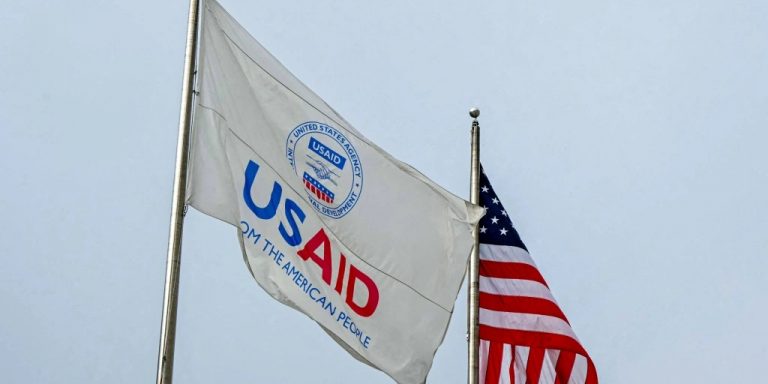
The United States Mission in Nigeria has issued a strong statement condemning Boko Haram and other terrorist groups, reaffirming its commitment to counterterrorism efforts in the region.
This comes in response to recent allegations that funds from the U.S. Agency for International Development (USAID) have been diverted to finance terrorist organizations, including Boko Haram.
In the statement released on Tuesday, the US Mission emphasized that “comprehensive monitoring and evaluation systems” are in place to ensure that U.S. financial assistance reaches its intended recipients and does not fall into the hands of extremists.
Register for Tekedia Mini-MBA edition 20 (June 8 – Sept 5, 2026).
Register for Tekedia AI in Business Masterclass.
Join Tekedia Capital Syndicate and co-invest in great global startups.
Register for Tekedia AI Lab.
“The United States condemns the violence and blatant disregard for human life perpetrated by Boko Haram and other terrorist groups in Nigeria and the region,” the statement read.
The mission also highlighted the long-standing U.S. policy on counterterrorism, noting that Boko Haram was officially designated a Foreign Terrorist Organization (FTO) on November 14, 2013. This designation enabled the U.S. government to block Boko Haram’s assets, disrupt its fundraising efforts, prosecute its members, and restrict their travel to the United States.
The statement follows recent accusations by Republican Congressman Scott Perry, who claimed that USAID funds were being funneled to terrorist organizations, including Boko Haram, ISIS, and Al-Qaeda.

Perry made these claims during the inaugural hearing of the Subcommittee on Delivering on Government Efficiency on Thursday, where he stated that USAID had become a conduit for terrorist financing under the pretense of humanitarian assistance.
During the hearing, titled “The War on Waste: Stamping Out the Scourge of Improper Payments and Fraud,” Perry alleged that $697 million in USAID funds is distributed annually, with some of it allegedly ending up in the hands of extremist groups and terrorist training camps.
“Who gets some of that money? Does that name ring a bell to anybody in the room? Because your money—$697 million annually, plus the shipments of cash—funds Madrasas, ISIS, Al-Qaeda, Boko Haram, ISIS Khorasan, terrorist training camps. That’s what it’s funding,” Perry declared.

His remarks have intensified scrutiny over U.S. foreign aid, particularly in conflict-prone regions like Nigeria and the Sahel, where terrorist groups operate with increasing sophistication.
USAID’s History of Controversy
This is not the first time USAID has faced accusations regarding the misuse of foreign aid. In 2020, the Trump administration suspended certain USAID programs, citing concerns that funds were being misappropriated and falling into the wrong hands.
Following the Taliban’s takeover of Afghanistan in 2021, similar concerns were raised about whether USAID funds were indirectly benefiting Islamist militants in regions of Africa, the Middle East, and South Asia.
Despite these concerns, the U.S. government has consistently maintained that robust monitoring mechanisms are in place to prevent financial misappropriation. The U.S. Mission Nigeria reiterated this in its latest statement, insisting that aid programs are carefully tracked to ensure accountability.
Over the years, the United States has continued to work closely with Nigeria to combat terrorism, particularly in the fight against Boko Haram, the Islamic State West Africa Province (ISWAP), and other extremist groups.
The U.S. has provided military assistance, intelligence-sharing, and training for Nigerian security forces as part of its broader counterterrorism strategy in West Africa.
The allegations against USAID come at a time when Nigeria continues to struggle with persistent terrorist attacks, particularly in the North-East and North-West regions. Despite military offensives and counterterrorism operations, Boko Haram and ISWAP remain active, carrying out attacks on military bases, villages, and public infrastructure.
The growth and resilience of the terrorist groups over the years have raised concerns about their financing, which passes through the Nigerian financial system undetected.
Against this backdrop, the allegations of USAID funds being misused are expected to trigger further investigations by U.S. lawmakers, potentially leading to stricter oversight and policy changes in how aid is distributed to conflict zones.