

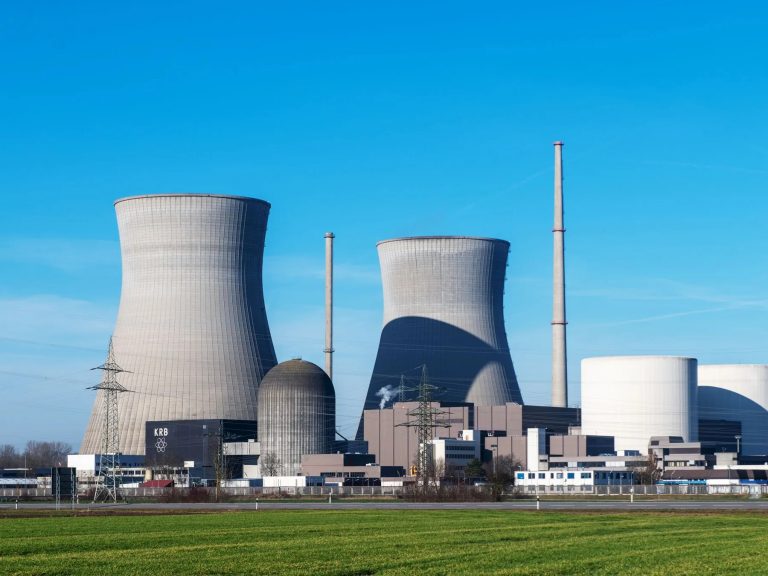
The U.S. government plans to lend about $4.2 billion to Vistra Corp. to increase electricity production from its existing nuclear power fleet, in a move that underscores Washington’s growing focus on nuclear energy as demand from artificial intelligence data centers and other power-intensive industries accelerates.
Energy Secretary Chris Wright is expected to announce the financing on Monday at one of Vistra’s nuclear facilities along Lake Erie in Ohio, according to a person familiar with the matter cited by Bloomberg.
The financing would support power uprates at at least three of Vistra’s four nuclear power stations. An uprate increases the amount of electricity a reactor can generate without constructing an entirely new plant, potentially allowing the company to add capacity more quickly than through a new-build project.
Register for the next Tekedia Mini-MBA.
Register for Tekedia AI in Business Masterclass.
Join Tekedia Capital Syndicate and co-invest in great global startups.
The proposed loan is significant because it targets existing nuclear assets rather than relying solely on the much slower process of developing new reactors. The approach could become an important part of the U.S. response to a rapidly emerging power constraint as electricity consumption begins to rise after decades of relatively modest growth.
Vistra operates six nuclear reactors across four U.S. plants with combined generating capacity of more than 6.5 gigawatts, enough electricity to supply roughly 3.25 million homes.
Nuclear plant uprates have been used in the United States for decades to extract more electricity from operating reactors.

The Nuclear Regulatory Commission says utilities can increase reactor output through several approaches, including refueling with slightly more enriched uranium, increasing the proportion of new fuel used during refueling, or carrying out major modifications such as replacing main turbines.
The NRC had approved more than 170 uprates as of 2022, according to the agency.
The significance for the current U.S. power market is speed. Building a new nuclear reactor requires substantial capital, lengthy construction periods, and regulatory approvals. Increasing output from reactors that are already operating can potentially add electricity to the grid without requiring an entirely new generation project.

The proposed Vistra financing is therefore consistent with the broader nuclear policy being pursued by the Trump administration. In May 2025, Trump issued executive orders directing the government to facilitate the expansion of U.S. nuclear capacity from roughly 100 GW in 2024 to 400 GW by 2050. The orders specifically instructed the Energy Department to prioritize efforts supporting power uprates at existing reactors, as well as restarting closed plants and developing new reactors.
The administration’s nuclear strategy has been linking reliable electricity generation to the country’s technological and industrial ambitions. The White House has specifically identified AI and other energy-intensive computing applications as areas requiring reliable, high-density power.
That connection is becoming more important as utilities confront an electricity-demand outlook that is markedly different from the one that prevailed for much of the past two decades.
U.S. power demand is growing as companies build increasingly large data centers to support AI models and cloud computing. Electrification of transportation and cryptocurrency mining are also contributing to demand.
The AI buildout is becoming crucial because data centers require large quantities of electricity around the clock. Unlike some industrial loads, advanced computing facilities can require highly reliable power, increasing the value of generation sources capable of operating continuously.
Nuclear plants are particularly suited to that role because they can provide steady baseload electricity without the fuel-price volatility associated with fossil-fuel generation.
The investment race in AI is therefore increasingly becoming an investment race in electricity infrastructure. Semiconductor manufacturing, data centers and other digital infrastructure can be built relatively quickly compared with power-generation projects, creating a potential mismatch in which computing capacity comes online faster than the grid can provide the electricity required to operate it.
That is helping change the economics of the U.S. nuclear industry. Existing reactors, which already have grid connections, operating workforces, and established infrastructure, can offer a potentially faster way to increase supply than waiting for new reactors to be completed.
The DOE’s May 2025 nuclear industrial-base order explicitly directed the department to facilitate 5 GW of power uprates at existing reactors and to prioritize financing for increasing output from operating plants. The Vistra loan would therefore fit into a broader policy shift rather than representing an isolated financing decision.
The federal government has also made hundreds of billions of dollars in potential financing available through its loan programs, while Wright has said nuclear power would account for a substantial portion of that capacity.
The policy challenge is that expanding nuclear generation is capital-intensive even when existing reactors are being upgraded. The government is attempting to reduce financing barriers while simultaneously changing the regulatory environment to make new nuclear projects faster to approve and construct.
Trump’s target of increasing nuclear capacity from about 100 GW to 400 GW by 2050 would require a substantial expansion from the current fleet. That makes the Vistra project a useful test of a more incremental approach: rather than waiting for hundreds of new reactors, the United States can first seek additional output from plants already operating.
The financing could turn Vistra’s existing nuclear infrastructure into a source of additional growth at a time when electricity demand is strengthening. For Washington, it offers a way to address near-term power requirements while pursuing a much larger nuclear expansion over the next two decades.