

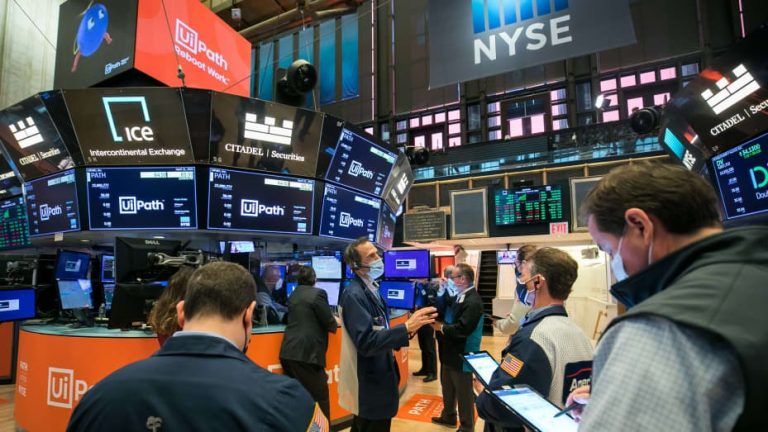
U.S. stocks staged a late-session rally on Wednesday, closing sharply higher after President Donald Trump said he had reached what he described as a “framework of a future deal” on Greenland, easing fears of an imminent escalation in trade tensions with Europe.
The market rebound followed a post by Trump on Truth Social after a meeting with NATO Secretary General Mark Rutte, in which he said the understanding would remove the need for tariffs that had been scheduled to take effect on February 1.
“This solution, if consummated, will be a great one for the United States of America, and all NATO Nations,” Trump wrote. “Based upon this understanding, I will not be imposing the Tariffs that were scheduled to go into effect on February 1st.”
Register for Tekedia Mini-MBA edition 20 (June 8 – Sept 5, 2026).
Register for Tekedia AI in Business Masterclass.
Join Tekedia Capital Syndicate and co-invest in great global startups.
Register for Tekedia AI Lab.
The president had earlier threatened to impose a 10% tariff on goods from eight European countries, with the levy set to rise to 25% by June if no agreement was reached. That threat, delivered earlier in the week, triggered a sharp sell-off on Tuesday that erased about $1 trillion from the S&P 500, as investors rushed to reprice the risk of a wider transatlantic trade confrontation.
Details of the Greenland framework remained sparse, but the lack of clarity did little to slow Wednesday’s buying spree. Investors moved quickly back into equities, reversing much of the prior session’s losses and signaling renewed confidence that the administration may be stepping back from its most aggressive trade posture.
Market strategists quoted by Business Insider pointed to the episode as a textbook example of the so-called TACO trade — shorthand for “Trump Always Chickens Out” — a phrase that has gained traction among traders who believe the president often uses maximalist threats as leverage, only to soften his stance once negotiations begin.

“The comments addressed two of the biggest headwinds hanging over markets,” said Art Hogan, chief market strategist at B. Riley Wealth Management. He noted that Trump’s remarks appeared to defuse both tariff risks and geopolitical anxiety. “Walk softly and carry a big stick, and you get that TACO reaction and the market can finally unclench. It’s an exhausting process, and this is the exact news investors were hoping to hear — some form of resolution.”
The sense of relief had already begun to build earlier in the day, when Trump told delegates at the World Economic Forum in Davos, Switzerland, that he would not use military force to take control of Greenland. That statement helped calm nerves after earlier rhetoric raised questions about how far the administration might push its territorial ambitions.
As equities rallied, other elements of what some traders have dubbed the “Sell America” trade began to unwind. The benchmark 10-year U.S. Treasury yield fell four basis points, signaling renewed demand for government debt, while the U.S. Dollar Index firmed modestly to 98.82, suggesting stabilizing confidence in dollar-denominated assets.

“President Trump’s statement that he won’t use military force to control Greenland is sparking a relief rally on Wall Street on the heels of yesterday’s sell-off,” said Jos Torres, senior economist at Interactive Brokers.
He described the market reaction as pent-up positioning being released once investors sensed a shift in tone.
“Traders piled into shares and Treasuries once the U.S. leader delivered a more conciliatory message than expected.”
For many analysts, the episode fits a familiar pattern. Matthew Ryan, head of market strategy at Ebury, said Trump’s use of tariffs remains largely tactical.
“As we know from recent history, Trump uses these tariffs as a blunt instrument and a negotiating lever to pull to get his way on the world stage,” Ryan wrote, adding that his base case remained a compromise between the U.S. and Denmark, with the TACO trade resurfacing as a dominant market theme.
The term gained prominence last April after Trump walked back some of his tariff proposals for Liberation Day, triggering a record-breaking rally in U.S. stocks. Chatter around the trade intensified again on Tuesday as markets absorbed the Greenland-related tariff threats, only to reverse course a day later.
Analysts at JPMorgan said they were interpreting the administration’s latest moves through what they called an “Art of the Deal” lens, arguing that Trump’s strategy often involves creating urgency through aggressive positioning.
“Trump creates noise and throws in a maximal stance designed to trigger negotiation and create leverage,” the bank wrote in a note to clients, adding that an eventual agreement with Denmark appeared the most likely outcome.
Other research firms echoed that view. BCA Research estimated there was a 40% chance the new tariffs would not be implemented at all, possibly due to what it described as Trump’s own retreat. Chief geopolitical strategist Matt Gertken said a familiar sequence could follow, with markets initially rattled, only for the administration to change course, as it did after Liberation Day.