

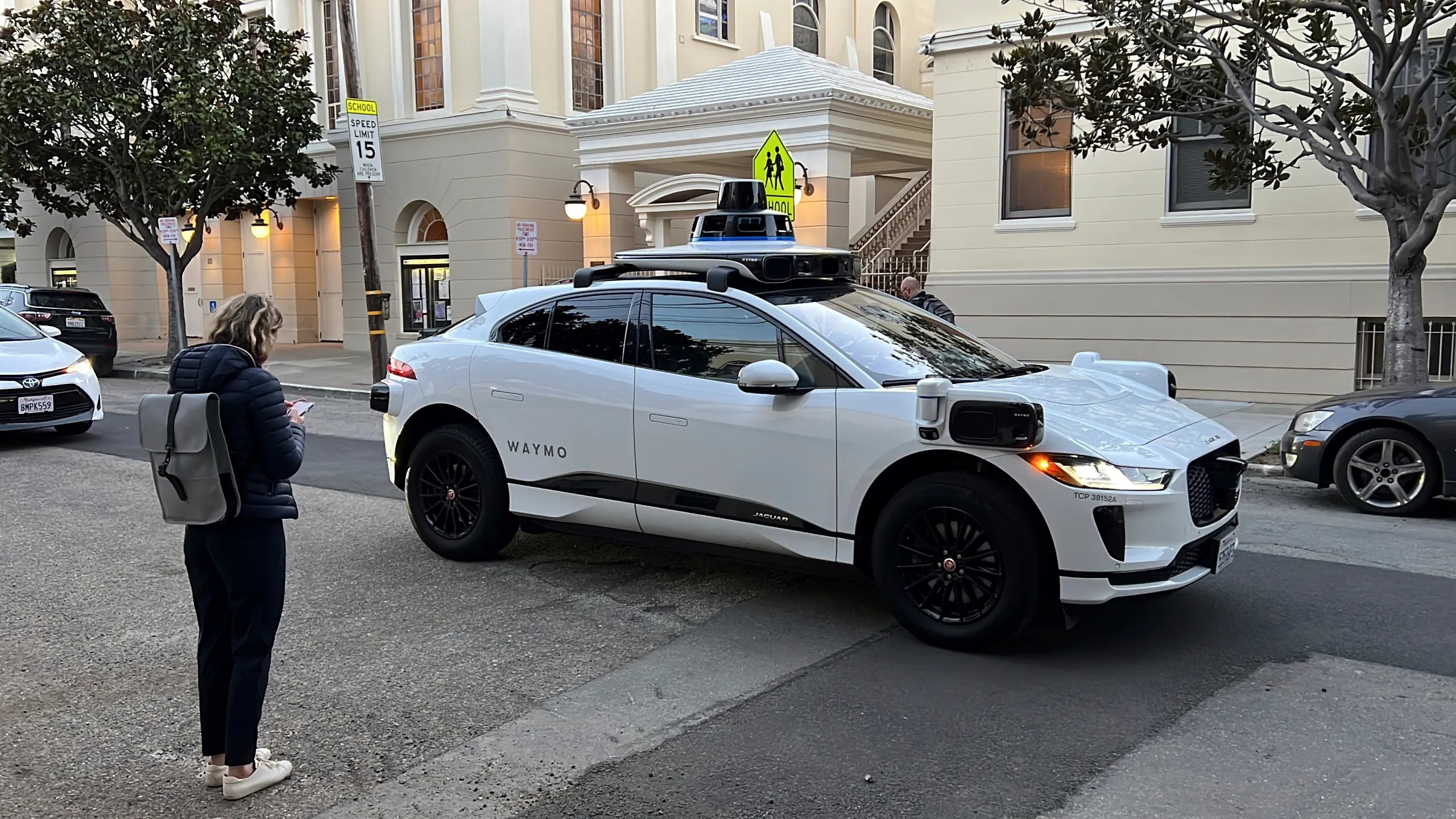
Waymo’s robotaxis may drive themselves on U.S. roads, but many of their most critical decisions are still made by human operators sitting thousands of miles away in the Philippines.
Waymo has long been held up as the gold standard of autonomous driving, a symbol of how far artificial intelligence has progressed beyond human control. Yet testimony at a recent U.S. Senate hearing has exposed a less visible but increasingly important reality: when Waymo’s vehicles encounter situations they cannot resolve on their own, responsibility often shifts to remote human workers, many of whom are based in the Philippines.
The disclosure by Waymo’s chief safety officer, Mauricio Peña, cut through years of marketing around “driverless” technology. Peña told lawmakers that in rare or complex scenarios, Waymo’s robotaxis can hand over control to remote operators who guide the vehicle through the situation. These workers act as a form of last-resort intelligence, stepping in when sensors, software, and pre-trained models are insufficient to safely navigate the real world.
What unsettled lawmakers was not simply the existence of human intervention, but where that intervention takes place. The Philippines has become a global hub for outsourced digital labor, from call centers to content moderation and data labeling. Waymo’s reliance on Filipino contractors places the country at the center of America’s most advanced autonomous driving program, even as public messaging continues to emphasize full autonomy.
Register for Tekedia Mini-MBA edition 20 (June 8 – Sept 5, 2026).
Register for Tekedia AI in Business Masterclass.
Join Tekedia Capital Syndicate and co-invest in great global startups.
Register for Tekedia AI Lab.
The logic is partly economic and partly structural for Waymo. Remote driving and support roles require a large, always-available workforce trained to respond quickly to unpredictable scenarios. The Philippines offers a deep labor pool with strong English proficiency and long experience supporting U.S. technology firms. Costs are lower than in the United States, and maintaining round-the-clock coverage across time zones is easier. In practice, this makes the Philippine workforce a quiet but critical component of Waymo’s safety architecture.
The arrangement, however, raises uncomfortable questions about what autonomy really means. If a robotaxi in San Francisco freezes at a construction zone or behaves unpredictably around emergency vehicles, a human operator in Manila or Cebu may be the one deciding how it proceeds. That human judgment, mediated through screens and networks, becomes part of the driving system itself. Autonomy, in this sense, is not the absence of humans but a reorganization of where and how their labor is used.
But this has prompted safety concerns. Senators pressed Peña on latency and reliability, given the physical distance between vehicles and operators. Even small delays in communication could matter in traffic situations unfolding in seconds. Peña maintained that Waymo has built safeguards into its systems and that remote intervention is tightly controlled. Still, the hearing underscored a basic tension: the more robotaxis are deployed at scale, the more edge cases arise, and the more human backup is required.

The focus on foreign workers also reflects a broader shift in Washington’s thinking about technology and national control. Massachusetts Senator Ed Markey called the use of overseas remote drivers “completely unacceptable,” framing the issue not just as a labor question but as one of sovereignty and security. Lawmakers voiced unease about critical transportation decisions being influenced by workers outside the United States, particularly as autonomous vehicles become more integrated into urban infrastructure.
Waymo’s case is especially sensitive because of its hardware choices. Unlike Tesla, which builds and controls its own vehicles, Waymo uses cars manufactured in multiple countries, including China. Although Peña emphasized that Waymo’s autonomous systems are installed and managed in the U.S., the combination of foreign-built vehicles and foreign-based operators has fueled suspicions about vulnerabilities in the system. In an era of heightened scrutiny over supply chains and data flows, even indirect links to China or other overseas networks attract political attention.
For the Philippine workforce itself, the role highlights another recurring pattern in the AI economy: essential labor that remains largely invisible. Much like the content moderators and data annotators who helped train large language models, remote operators supporting robotaxis occupy a gray zone. They are central to system performance but rarely acknowledged in public narratives about innovation. Pay, working conditions, and long-term career prospects for these workers are seldom discussed, even as their decisions can carry real-world consequences.

Although Waymo is not alone in this model, its prominence makes it a test case. The company has positioned itself as a leader in safe, scalable autonomy, operating commercial robotaxi services in multiple U.S. cities. As deployments expand, reliance on remote human support may grow rather than shrink, at least in the near term. That reality complicates claims that autonomy will soon eliminate human involvement in driving altogether.
The Senate hearing suggests that regulators are beginning to look past the surface of AI systems to examine the labor structures beneath them. Scrutiny of Waymo’s Philippine workforce is unlikely to fade. It touches on safety, labor practices, national security, and the credibility of autonomy itself. The technology may be cutting-edge, but its foundations rest on human judgment — relocated, outsourced, and largely unseen.