

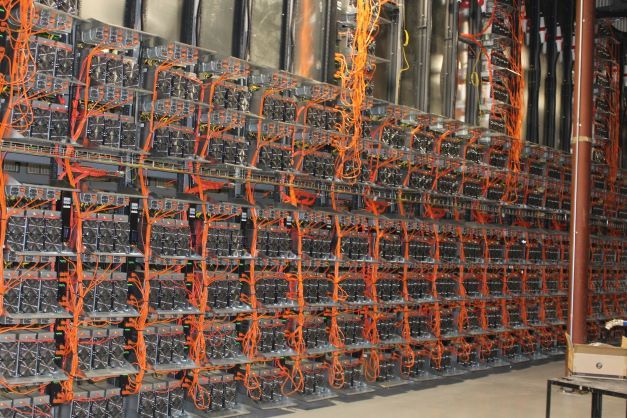
Today, data centers are becoming some of the most energy-hungry consumers of electricity in the world. Their role in the economy and technology is growing along with the spread of artificial intelligence, which places ever-increasing demands on computing power. However, behind this progress lies a pressing question: will the industry and society be able to support the development of digital services without data centers’ energy costs doubling by the end of the decade?
Growth of energy consumption amid AI development
The International Energy Agency (IEA) reports that in 2024, data centers worldwide consumed about 415 terawatt-hours (TWh) of electricity. According to expert forecasts, by 2030 this figure could reach 945 TWh per year—slightly more than the annual consumption of all of Japan. The main driver of this growth is the implementation of artificial intelligence. Training a single large neural network comparable to ChatGPT can result in emissions comparable to the annual emissions of 121 average American families. And although training AI models is the most energy-intensive stage, their subsequent application (inferencing) also requires considerable energy resources. Some estimates indicate that this stage can account for up to 90% of the model lifecycle.
The growth of data center energy consumption is not only related to AI and corporate computing. Mass digital services aimed at users around the world also make a significant contribution to the load on infrastructure.
Online entertainment, streaming, cloud platforms, and the iGaming industry require constant server availability and high fault tolerance. Even seemingly niche segments, such as websites with collections of promotions for online casinos, rely on distributed data centers and 24/7 data processing.
The authors of one of Canada’s popular sites, casinosbonusca.com, which collects information about no deposit bonuses, report that as competition grows and the number of such services increases, the total load on power systems also grows. Since 2021, they have faced an annual increase in the cost of renting dedicated space in commercial data centers, which indicates rising energy tariffs and a shortage of available capacity.
Such factors explain why the growth of data center energy consumption is systemic in nature. This directly affects infrastructure and local communities, especially in regions with a high concentration of server capacity.
The energy consumption of data centers is already comparable to that of entire countries, which underscores the strategic importance of energy efficiency for the industry and society. Against the backdrop of increasing load, energy efficiency is becoming not just a task, but a matter of the future of digital infrastructure.
Impact on infrastructure and communities
If we look at the situation in individual countries, the scale of the problem becomes even more tangible. According to a McKinsey study, by 2030 data centers in the United States could consume up to 12% of all the country’s electricity. In some regions, this share already sets records: for example, in Loudoun County (Virginia), one of the largest data centers in 2023 consumed 21% of the region’s electricity—more than all residential homes (18%). Local power grids are experiencing increasing load, creating risks of outages and forcing operators to build backup capacity. In 2024, a minor failure in a neighboring county led to 60 data centers switching to backup power, and the energy system barely coped with the sudden loss of capacity equivalent to the consumption of all of Boston.
A similar situation is observed in Europe, where the concentration of data centers in certain hubs causes power grid overloads. Industrial electrification is accelerating—will local infrastructure be able to cope with this challenge?
Problems of water consumption and material shortages
Data centers actively use not only electricity but also water. According to NPR, the average data center consumes about 300,000 gallons of water per day—and these figures are growing as energy consumption increases. Water is necessary for cooling equipment and maintaining stable system operation. The growth of energy costs leads to a corresponding increase in water consumption.
Materials are becoming another pressure point. The transition to green energy, actively used by data centers, is causing a sharp increase in demand for lithium and rare earth metals. The IEA forecasts that by 2030, demand for lithium will increase 40-fold. At the same time, the volume of electronic waste worldwide has reached 62 million tons per year—many of which contain valuable and rare components.
What path will allow data centers to reduce resource consumption while ensuring stable operation?
Key directions for sustainable development of data centers
Physical efficiency
Physical efficiency is the maximum reduction of energy costs for infrastructure, cooling, and placement of computing systems. Modern technologies make it possible to significantly increase this indicator. For example, the Lenovo Neptune water cooling system reduces energy consumption by up to 40% and makes thermal efficiency 3.5 times higher compared to air cooling. Efficiency assessment by the PUE (Power Usage Effectiveness) indicator clearly demonstrates progress: advanced centers operate with a PUE close to 1.1, which is about 84% more efficient than outdated solutions with a PUE of about 2.0. Innovations in the design and operation of physical infrastructure lay the foundation for sustainable development.
Workload efficiency
Another important element is the optimization of computing and competent distribution of tasks between equipment. Virtualization allows several applications to run on a single server at once, which maximizes the use of available resources. Among the optimization methods are:
- intelligent distribution of tasks between equipment;
- updating and upgrading servers;
- adapting workflows to new architectures.
Workload efficiency becomes especially important amid the spread of AI—up to 90% of the model lifecycle is associated with the application stage, which requires significant capacity. Even small improvements in each individual process over time add up to large-scale systemic changes.
Circular economy
The circular economy approach is based on the reuse and recycling of equipment and materials. Currently, a significant portion of data center components does not return to the recycling cycle, which exacerbates the shortage of rare metals and increases the burden on the environment. Manufacturers such as Lenovo are introducing services to extend the lifespan of equipment and return rare materials for reuse. The advantages of the circular economy are obvious:
- resource savings;
- reduction of waste volume;
- preservation of valuable metals for future production.
Operating on closed-loop principles reinforces the other two areas of sustainability, making data center infrastructure more balanced.
The importance of measurement and a comprehensive approach
A data center is a complex system where any decision affects a multitude of interconnected processes. Therefore, not only individual measures are important, but also a systemic, evolutionary approach. Constant measurement, monitoring, and adaptation of strategies make it possible to respond in a timely manner to new threats and opportunities. As industry experts note, sustainability is not a one-time initiative, but a continuously evolving strategy that requires attention to the entire ecosystem “organism” of the data center.