

The global dash toward humanoid robots is moving from sci-fi fantasy to a corporate arms race, and the heat around it keeps rising. A new research note from Morgan Stanley earlier this month placed a spotlight on the companies that stand to shape — and profit from — what it says could become a market worth more than $5 trillion by 2050.
The analysts did not limit their attention to flashy robot manufacturers. They focused instead on firms that build the core components that make humanoid machines function, including advanced AI chips, cameras, perception systems, sensors, movement hardware, and semiconductor architectures. According to them, these foundational suppliers are poised to be the true winners as humanoid robots eventually enter mainstream use.
Morgan Stanley’s analysts compiled a list of the twenty-five companies they believe are best positioned. The list spans a mix of American, European, and Asian giants such as Nvidia, Samsung, AMD, and Sony, alongside fast-rising players like Hesai, the Chinese lidar manufacturer whose sensing technology could help future robots better orient themselves in complex environments. Semiconductor design firm Synopsys also made the list, and analysts gave it special mention, noting the growing importance of chip-design platforms for building reliable humanoid “brains.” Nvidia underscored that potential by announcing a $2 billion investment in Synopsys on December 1.
Register for Tekedia Mini-MBA edition 20 (June 8 – Sept 5, 2026).
Register for Tekedia AI in Business Masterclass.
Join Tekedia Capital Syndicate and co-invest in great global startups.
Register for Tekedia AI Lab.
The researchers estimate that more than a billion humanoid robots could be deployed worldwide by 2050, a staggering figure that helps explain the current investor frenzy. Yet they also caution that adoption will take time, particularly through the next decade. In their assessment, the curve will stay slow until at least 2035 as engineering challenges continue to demand enormous research and development spending. Even so, long-term expectations remain high.
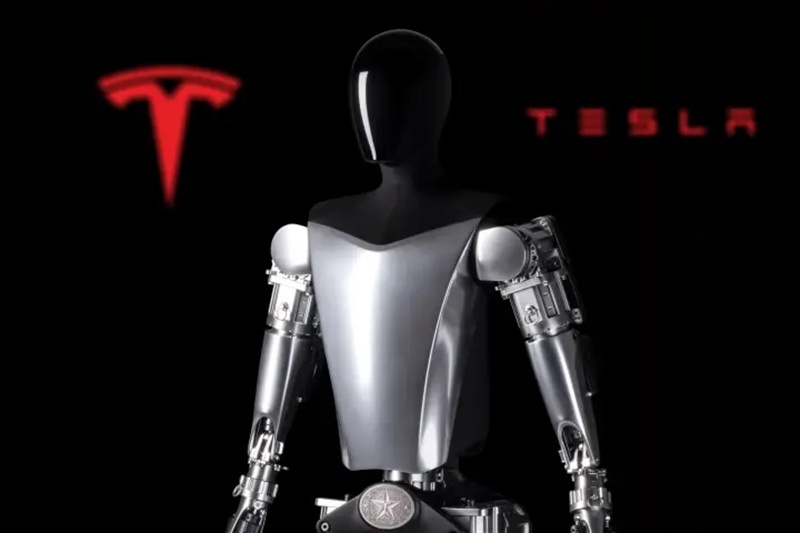
Enthusiasm is not limited to Wall Street. Elon Musk has been one of the most vocal advocates of a humanoid future. Last month, he said Tesla’s Optimus robot has the potential to “eliminate poverty” and boost global economic output tenfold. Tesla plans to begin mass production of Optimus by the end of next year, although it has not provided targets on how many units it intends to build.
Musk’s comments helped intensify attention around the sector, even as most experts agree that consistent breakthroughs in balance, agility, autonomy, safety, and cost will determine how soon humanoids begin to appear broadly in factories, logistics hubs, warehouses, and home environments.

Tesla is far from alone in this race. Chinese automaker Xpeng recently unveiled its eerily lifelike “Iron” humanoid robot, signaling that competition is widening and becoming more international. China itself is already showing signs of overheating, with authorities issuing a warning last week about a possible bubble forming in the domestic robotics industry. More than 150 Chinese companies are now working on humanoid robotics, a number that has raised concern inside the country’s own tech policy circles.
The broader landscape hints at a mix of promise and peril. Legacy industrial robots are already common in automotive factories, semiconductor plants, and logistics centers, but humanoid robots are far more complex. They need to navigate unpredictable spaces, process visual and spatial data on the fly, and execute tasks that require dexterity rather than repetitive motion. That means the companies supplying chips, sensors, and computational systems are becoming central to the next phase of robotics. This explains why Morgan Stanley’s list includes companies operating at nearly every layer of the hardware stack, from Baidu and iFlytek on the AI side, to ARM, Texas Instruments, Onsemi, Microchip, STMicroelectronics, Infineon, Melexis, ROHM, NXP, Ambarella, Renesas, Cadence, Desay, Horizon Robotics, and Joyson.
The growing energy around humanoids also feeds into a larger transformation in global AI markets. Massive investments in generative AI have pushed chipmakers and sensor firms into new levels of relevance, and the same technologies powering AI assistants, autonomous driving systems, and large language models are becoming essential to the mechanical coordination of humanoid robots. This overlap is leading analysts to treat the humanoid boom as an extension of the AI-chip boom rather than a standalone trend.

Even with the excitement, there are clear operational challenges ahead. Companies that want to bring humanoids into commercial environments will face steep barriers such as durability, battery limitations, safety certification, repairability, and workforce integration. Investors are betting that component suppliers, rather than robot manufacturers, will generate the early gains because their technologies can serve multiple markets, including autonomous vehicles, mobile devices, and traditional robotics. In that sense, the humanoid surge is already reshaping corporate strategy across sectors that historically had little overlap.
Below is Morgan Stanley’s list of the 25 companies at the forefront of the humanoid robot boom:
- Baidu
- iFlytek
- Desay
- Horizon Robotics
- Alibaba
- Samsung Electronics
- NVIDIA
- Cadence
- Synopsys
- ARM
- AMD
- Texas Instruments
- Samsung Electro-Mechanics
- Onsemi
- Microchip
- Sony
- Ambarella
- NXP
- ROHM Semiconductor
- Melexis
- STMicroelectronics
- Infineon
- Renesas
- Joyson
- Hesai
The next several years will determine whether these companies mature into a genuinely transformative humanoid robot industry or settle into a more modest role within automation.