DD
MM
YYYY

PAGES

DD
MM
YYYY

spot_img

PAGES

Home Blog

Crypto Market Structure Bill is on Track for Early 2026 Senate Debate

0

Recent developments in U.S. crypto legislation point to a potential breakthrough next year. The long-awaited digital asset market structure bill—aimed at clarifying regulatory oversight between the SEC and CFTC—has been a top priority for the industry.

Negotiations have dragged on through 2025, but as of mid-December, Senate Banking Committee Chair Tim Scott (R-SC) is pushing hard to finalize a bipartisan deal amid the incoming 2026 political landscape.

Drafts from both the Senate Agriculture and Banking Committees were advanced in late November, focusing on rules for digital commodities, stablecoins, and market intermediaries.

However, talks hit a snag over key sticking points like decentralized finance (DeFi) exemptions and custody standards, causing a likely delay. Industry insiders now expect the bill to slide into January 2026 for a full Senate floor vote, rather than wrapping up before the holidays.

This timeline aligns with optimism from senators like Cynthia Lummis (R-WY) and Kirsten Gillibrand (D-NY), who teased a draft reveal earlier this month. If passed, it could finally provide the regulatory clarity crypto advocates have been clamoring for—potentially unlocking billions in institutional investment.

SEC’s New Crypto Wallet and Investor Guide

In a timely move for retail traders dipping into digital assets, the SEC’s Office of Investor Education and Advocacy dropped a fresh “Crypto Asset Custody Basics for Retail Investors” bulletin just days ago.

This guide breaks down the nuts and bolts of holding crypto: from self-custody via hardware wallets like Ledger or Trezor to third-party custodians think Coinbase or Fidelity.

It emphasizes risks like private key loss, hacking vulnerabilities, and the “not your keys, not your coins” mantra, while urging investors to vet providers for insurance, audits, and bankruptcy protections.

The release comes amid a surge in tokenization pilots and bank crypto charters, serving as a subtle reminder that the SEC isn’t easing up on investor safeguards—even as broader regs evolve. Key tips include verifying wallet compatibility with your assets, enabling multi-factor authentication, and avoiding “hot wallets” for long-term holds.

It’s a straightforward read, about 10 pages and available for free on Investor.gov—definitely worth a skim if you’re HODLing more than pocket change. This feels like prep work for the market structure bill’s custody provisions, too.

DeFi exemptions—remains one of the biggest hurdles in finalizing the bipartisan digital asset market structure legislation often referred to as the Senate’s version of the CLARITY Act or Responsible Financial Innovation Act updates.

As of mid-December 2025, negotiations are ongoing, with Senate Banking Committee Chair Tim Scott pushing for a markup soon, but disagreements over DeFi treatment have delayed progress into early 2026.

Drafts from the Senate Banking and Agriculture Committees, building on the House-passed CLARITY Act (July 2025), propose significant exemptions for truly decentralized protocols.

Key elements include: Exempting non-custodial developers, node operators, validators, and software providers from broker-dealer, exchange, or money transmitter registration requirements—if they don’t hold user funds or exercise centralized control.

Safe harbors for activities like staking, airdrops, liquidity provision, and front-end interfaces on “mature” blockchains defined by decentralization criteria, e.g., no single entity controls >20% of tokens or governance.

Protections for DePIN and general DeFi operations, treating them more like open-source software than regulated financial intermediaries. This aligns with industry goals to avoid “regulating code” and foster innovation without forcing protocols to register as securities or commodities platforms.

Senate Democrats have pushed back with frameworks requiring: Registration for DeFi front-ends, platforms, or intermediaries that facilitate trading/lending if they generate revenue, influence governance, or pose illicit finance risks.

Expanded KYC/AML rules, Treasury oversight, and potential classification as “digital asset intermediaries” or money services businesses—even for somewhat decentralized setups.

Concerns focus on consumer protection, preventing money laundering/sanctions evasion, and closing loopholes where “decentralized” claims mask centralized control. Recent reports indicate talks involve the White House, with no full agreement yet. Some drafts leave DeFi sections partially blank or underdeveloped for further negotiation.

The SEC has signaled temporary “innovation exemptions” starting January 2026 to bridge the gap, allowing limited DeFi experimentation under lighter rules until the bill passes. DeFi exemptions are contentious because: Pro-exemption side argues overregulation drives innovation offshore and stifles peer-to-peer finance.

Anti-exemption critics like Sen. Elizabeth Warren’s allies warn broad carve-outs create risks for investors, enable illicit activity, and undermine traditional finance safeguards. If resolved favorably for exemptions, it could unlock massive growth in U.S.-based DeFi.

If stricter rules prevail, many protocols might need to restructure or face enforcement. Overall, the bill is seen as pro-crypto but balanced—expect a hybrid outcome with exemptions tied to verifiable decentralization metrics. Bullish if you’re in true DeFi; cautious if building anything with centralized elements.
EdgeX Surpasses Hyperliquid in 24-Hour Revenue

0

As of mid-December 2025, EdgeX, a decentralized perpetual futures exchange incubated by Amber Group has flipped Hyperliquid in daily fee/revenue generation, according to multiple sources tracking on-chain data including DeFiLlama.

Recent posts and reports from December 14, 2025, highlight EdgeX taking the top spot in 24-hour protocol revenue among perp DEXs. This marks a significant shift in the highly competitive on-chain derivatives space, where Hyperliquid has long dominated with $89.5M in monthly fees earlier in December.

EdgeX’s growth is attributed to deep liquidity, lower fees e.g., 0.015% maker / 0.038% taker, strong mobile experience, and real user activity without heavy incentives. Earlier in the month around December 9-10, both platforms were neck-and-neck at ~$1.8M in 24h fees, topping all blockchains.

This “flip” reflects rotating capital and intensifying competition among perp DEXs like EdgeX, Hyperliquid, Lighter, and Aster.

Hyperliquid Introduces Portfolio Margin

In response to growing competition, Hyperliquid announced and launched a major upgrade: portfolio margin functionality. Announced around December 11-12, 2025, and rolled out in pre-alpha on testnet shortly after.

Key features: Unifies spot and perpetual trading under a single balance for maximum capital efficiency. Allows spot holdings to offset perp positions like enabling carry trades with reduced liquidation risk via PnL offsets.

Unused borrowable assets automatically earn yield. Integrates with HyperEVM lending protocols. Initial testnet limits: Strict caps (e.g., < $1,000 recommended), only USDC borrowable and HYPE as collateral; more assets (USDH, BTC) planned before alpha/mainnet.

This is positioned as a game-changer for professional traders, similar to traditional finance portfolio margin systems that have historically boosted derivatives liquidity massively.

The timing aligns with EdgeX’s revenue surge, suggesting Hyperliquid is enhancing its product to retain dominance in trading volume, open interest, and long-term revenue. Both developments underscore the rapid evolution of on-chain perp trading in late 2025, with real fees/revenue not just volume as the key metric for sustainability.

Hyperliquid remains the overall leader in most categories, but EdgeX is closing the gap quickly. This flip highlights intensifying competition in a sector that has exploded in 2025, with cumulative perp volumes exceeding trillions and real fees becoming the key sustainability metric over inflated volume from incentives.

EdgeX’s edge comes from superior user experience— CEX-like mobile app, deep orderbooks, lower fees at ~0.038% taker/0.015% maker vs. Hyperliquid’s higher rates, organic growth without heavy points farming, and strong liquidity attraction.

Traders note it “feels product-first,” with real activity driving the surge. However, Hyperliquid still leads in monthly/annualized revenue ($89.5M in early December vs. EdgeX’s ~$61M), total volume, open interest, TVL ($4.5B), and active users. The 24h flip reflects capital rotation amid market volatility, not a permanent dethroning.

The perp DEX market is maturing into a multi-player race including Aster, Lighter. No single platform dominates indefinitely—traders chase best execution, fees, and liquidity, leading to rapid shifts.

Implications of Hyperliquid’s Portfolio Margin Introduction

Hyperliquid’s rollout of portfolio margin pre-alpha on testnet as of mid-December 2025 is a direct response to competitive pressure, including EdgeX’s revenue gains. Unifies spot and perp balances for cross-offsetting (e.g., spot BTC hedges perp shorts, reducing margin requirements and liquidation risk).

Enables advanced strategies like carry trades with PnL offsets. Unused assets auto-earn yield; integrates with lending protocols. In TradFi, similar systems added $7.2 trillion to derivatives liquidity by improving capital efficiency—a “substantial multiplier” for every new dollar inflow.

Boosts Hyperliquid’s stickiness for professional/high-volume traders, potentially reclaiming volume/share and sustaining long-term revenue dominance. Increases overall on-chain perp liquidity and efficiency, blurring lines with CEXs.

Early testnet limits < $1K recommended, limited assets mean gradual rollout; poor implementation could amplify systemic risks in volatile markets. Timing suggests defense against rivals—could accelerate adoption if mainnet launch succeeds, reinforcing Hyperliquid as the “infrastructure layer” for on-chain derivatives.

Lower fees, better UX, and features like portfolio margin/yield will attract more capital, pushing perp DEXs toward 10%+ of global derivatives market share. Real fees not incentive-pumped volume separate winners—Hyperliquid’s buybacks and EdgeX’s organic growth signal viable models.

Rotating platforms yields best rates/execution; expect more flips as products evolve. High leverage + efficiency could amplify liquidations in downturns; regulatory scrutiny (e.g., expanding CFTC oversight) looms for all.

EdgeX’s flip is a wake-up call showing challengers can close gaps quickly, but Hyperliquid’s portfolio margin positions it to widen its moat for capital-efficient trading. The 2025 perp wars are far from over—expect continued volatility in leaderboards.

Correlation of Major Cryptos has been Unusually High over the Past Week

0

Correlations among major cryptocurrencies like Bitcoin, Ethereum, Solana, and others appear to have been elevated in recent weeks as of mid-December 2025, aligning with broader market trends.

High correlations often occur during periods of market stress or consolidation, when investors treat crypto as a single risk asset class rather than differentiating between individual projects.

Bitcoin dominance has been rising hovering around 57-60% in recent data, meaning BTC is outperforming or falling less than most altcoins. This typically signals a “flight to safety” within crypto, where capital rotates into Bitcoin, causing majors to move more in lockstep often downward or sideways together.

The Crypto Fear & Greed Index is in Extreme Fear territory recent readings around 16-27, with some days as low as 21. Extreme fear has dominated over 30% of the past year’s readings, reflecting caution after Bitcoin’s ~30-36% drawdown from its all-time high.

In fearful environments, correlations spike because panic selling hits the entire market. Major coins have shown tightly linked price action: Bitcoin dipped below $90K recently amid thin liquidity and macro caution (e.g., ahead of U.S. data releases), pulling Ethereum, Solana, and others lower.

Longer-term rolling correlations e.g., SOL with BTC/ETH around +0.7 remain strong, and BTC’s correlation with risk assets like stocks has strengthened this year. This isn’t entirely “unusual” in a historical sense—crypto correlations frequently approach 1 during corrections—but it stands out if compared to periods of altcoin outperformance earlier in cycles.

The maturing market with ETFs, institutional flows, and ties to equities has made synchronized moves more common overall.If this persists, it could limit diversification benefits in crypto portfolios short-term, but extreme fear has historically preceded rebounds when sentiment shifts.

Historical Trends in Cryptocurrency Correlations

Cryptocurrency correlations—particularly between Bitcoin (BTC) and major altcoins like Ethereum (ETH), Solana (SOL), and others—have evolved significantly since the market’s early days.

Overall, correlations have trended higher over time as the asset class matures, with institutional adoption, ETFs, and shared macro influences (e.g., interest rates, risk sentiment) causing more synchronized movements.

Early Years (2013–2017): Bitcoin dominance started near 100% and declined as altcoins emerged (e.g., Litecoin, Ripple). Correlations were lower during altcoin booms, but BTC often led rallies. In bull markets like late 2017, altcoins outperformed, reducing correlations temporarily.

During the 2018 crash, correlations spiked as panic selling hit the entire market similar to stocks in crises. BTC dominance rose above 70% at times. In 2020’s “DeFi Summer,” ETH and DeFi tokens decoupled somewhat, lowering correlations briefly.

2021 Bull Peak: High correlations (BTC-ETH often >0.90) during the rally, but altcoins surged in “altseason” phases, with BTC dominance dropping to ~40%.

2022 Bear Market: Correlations approached 1.0 amid contagion (e.g., FTX collapse), with BTC seen as a “flight to safety.”

2023–2024: Post-Ethereum Shanghai upgrade, BTC-ETH correlation declined temporarily from 0.95 to ~0.82 due to ETH-specific narratives (e.g., staking, DApps). However, it remained strong overall 0.70–0.90 for majors. BTC dominance stabilized around 50–60%.

As of mid-December 2025, correlations elevated again during recent corrections, with BTC dominance ~57–60%. Altcoin correlations to BTC slipping slightly in some periods, signaling potential rebounds, but still high amid fear.

Studies show correlations often increase during downtrends and decrease during uptrends when altcoins shine on unique catalysts (e.g., ETH upgrades). The flagship pair (BTC-ETH) has shown rolling correlations fluctuating but trending upward.

Often 0.70–0.95+ in recent years. Spikes near 1.0 in stress; dips on ETH-specific events. Heatmaps reveal most majors cluster tightly with BTC, especially in recent years.

These trends highlight that while diversification within crypto was easier in earlier cycles, high correlations now limit it—especially short-term. Extreme fear like recent weeks often precedes shifts when sentiment improves.

Bitcoin, ETH, and ADA Investors Look Beyond Large Caps as New Solana Projects Surface

0

Investors who monitor the trading of Bitcoin, Ethereum, Cardano and Solana of the LXYZ project on a trading screen.

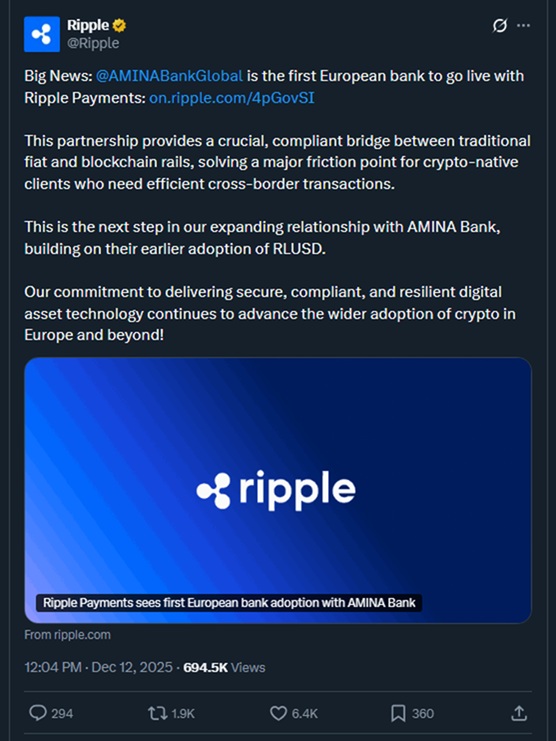
The recent collaboration of Ripple with AMINA Bank, the first European bank to implement Ripple Payments to facilitate near real-time cross-border settlements, has revived the interest towards the efficiency and interoperability of blockchain.

Source: X

The step will bridge the gap between fiat and digital assets and place blockchain networks as the backbone of global liquidity movements instead of speculative markets.

The project also fortifies the RLUSD custodial arrangement of Ripple, leading to the precedence of compliant settlement rails in Europe. The way these developments can spur wider institutional adoption is being carefully monitored by investors, particularly those jurisdictions that are transitioning to harmonized crypto frameworks.

LXYZ Protocol: The Top Presale Crypto Opportunity

The hybrid AMM and order-book format is redefining decentralizing trading to enable deep liquidity and accuracy of assets at LXYZ. LXYZ is based on Solana and supports sub-400ms settlement and more than 65,000 transactions per second, which allows almost instant execution and low costs. This infrastructure allows leveraged trading to a limit of 100x with a strong multi-signature protection and real-time protection against risk exposure.

With 1,101 holders, LXYZ has already attracted more than 111,000 dollars at only 0.10 per token at the moment, being the leading presale crypto in Phase 1. The following price will be increased to $0.15 which will place early adopters with high upside ahead of listing.

Triple-Audited Security and Institutional Reliability

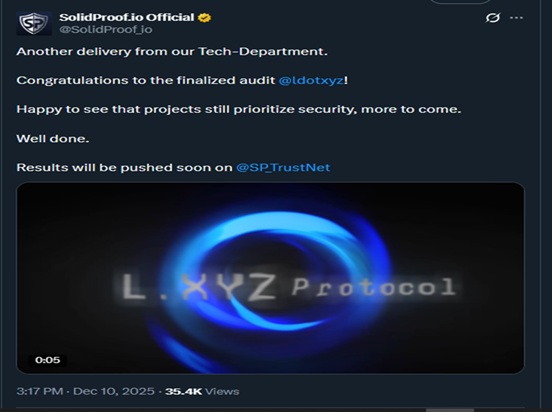
Source –  SolidProof X

Trust in LXYZ is supported by the extensive audits performed by SpyWolf and QuillAudits and SolidProof as some of the most popular cybersecurity agencies in the blockchain audit sector. This three-layer validation does not leave the ecosystem with significant vulnerabilities and operational security in line with the institutional standards.

The transparency and decentralized access is what makes the platform stand out compared to other presale tokens. LXYZ has no external market makers or benefits of privately held liquidity, as its liquidity is community-controlled with a DAO. All the tokenholders are involved in on-chain decision-making, which leads to real decentralization.

Secure, Scalable, and Community-Driven

The meta-pool architecture of LXYZ brings together asset liquidity, decreasing slippage and enabling cross-chain execution between Solana, Ethereum, BSC, Polygon, and Avalanche. Its system of buy-and-distribute recycles platform fees to the ecosystem – providing staking rewards, DAO incentives, and deflationary token burns.

This design offers predictable yield production at the same time maintaining economic sustainability, dealing with legacy inefficiencies of DeFi exchanges besieged with disjointed liquidity. As the presale live and the initial phase is approaching its culmination, LXYZ presents investors with a preliminary opportunity over what may become one of the staples of the next generation of decentralized exchanges in Solana.

Conclusion: Early Access Before the Price Surge

The rotation out of Bitcoin, Ethereum, and Cardano highlights an increasing investor interest in scaleable, compliant, and performance-based DeFi solutions. LXYZ, which is powered by Solana and enhanced with triple audits, is prepared to be the leading presale crypto among investors aiming to get high-throughput trading and early-stage possibilities. At a price of Phase 1 of $0.10 prior to the next phase raise of 0.15, this would be the best time to buy the allocations before the burst.

For more information about LXYZ visit the links below:


Website: https://l.xyz/

Buy Presale- https://l.xyz/#sale

Twitter/X: https://x.com/ldotxyz

Telegram:https://t.me/ldotxyz / https://t.me/lxyzgroup

Elon Musk – The Technoking on Voyage of Two Trillion-dollar Companies

0

In the Igbo Nation, the elders say that it takes the killing of one leopard to be called a killer of leopards. Excellence, once repeated, becomes legendary. In the startup world, fund managers celebrate when an entrepreneur builds a unicorn, a company valued at least $1 billion. But when that same entrepreneur builds two unicorns, legends begin to gather.

So what happens when one individual creates two trillion-dollar companies?

That is the question Elon Musk is now forcing the world to confront. Tesla has already crossed the trillion-dollar threshold. And SpaceX, by some market estimates, is expected to command a valuation above $1 trillion in a planned IPO in 2026.

The signals are becoming unmistakable. According to reports, investment banks are already positioning aggressively to underwrite the SpaceX offering. As The Wall Street Journal notes, SpaceX has begun interviewing potential underwriters, conducting a competitive “bake-off” as it takes concrete steps toward a public listing. Whoever secures that mandate will record historic fees, because SpaceX is not just another technology company, it is one of the most consequential enterprises of the 21st century.

Good People, nations rise when great entreprenuers emerge. Musk is making rains for investors and America, and this SpaceX IPO will be a heavy downpour in many bank accounts.