

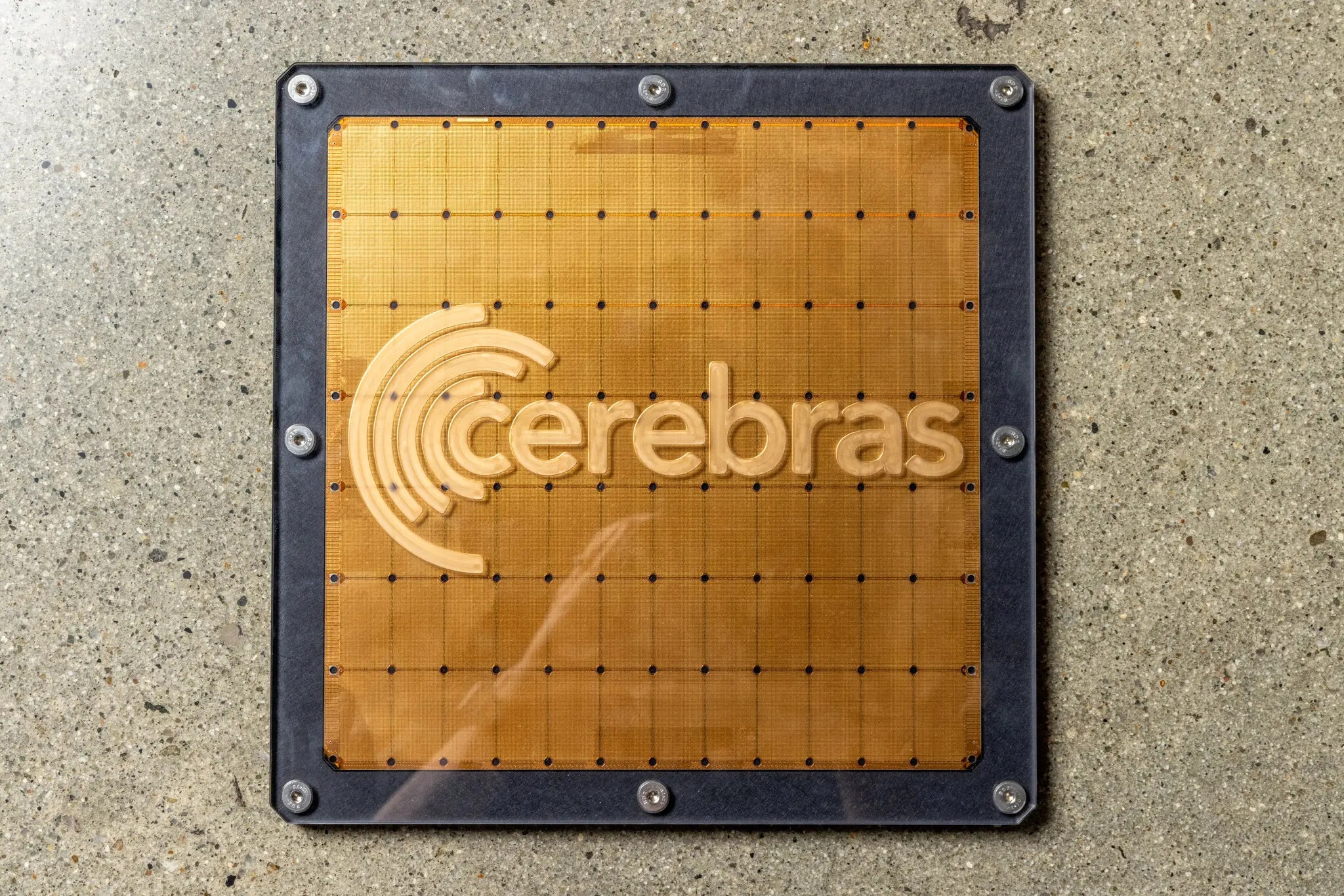
Cerebras shares rebounded sharply in premarket trading Monday after OpenAI CEO Sam Altman sought to reassure investors that the AI chipmaker remains a close partner, helping ease concerns that the loss of a high-profile workload to Nvidia could weaken its relationship with OpenAI.
The stock rose 6.3% in premarket trading to about $177, extending a recovery that began after Altman addressed speculation surrounding the partnership on Friday.
“There is some speculation about our partnership with Cerebras,” Altman said in a post on X. “Cerebras is a close partner, and we have a deep engagement pushing on the frontiers of speed.”
Register for the next Tekedia Mini-MBA.
Register for Tekedia AI in Business Masterclass.
Join Tekedia Capital Syndicate and co-invest in great global startups.
Cerebras shares had fallen 20% last week to their lowest level after reports revealed that OpenAI would use Nvidia graphics processing units rather than Cerebras chips to power the “Ultrafast” mode for GPT-6.1 Sol.
The selloff highlighted a major concern for Cerebras as it tries to establish itself as a credible alternative to Nvidia in the rapidly expanding market for AI computing: whether its relationship with leading AI developers can translate into sustained, large-scale commercial workloads.
Altman’s comments offered investors some reassurance, but they did not erase the concerns raised by the shift in hardware for a prominent OpenAI application.

Cerebras shares rose almost 3% in extended trading Friday after Altman’s comments before accelerating higher in premarket trading Monday. Even after the rebound, the stock remains nearly 50% below its post-IPO peak. Cerebras now has a market value of just over $39 billion, compared with about $95 billion during its May debut.
The dramatic swing illustrates how sensitive the company’s valuation has become to signals from frontier AI developers, particularly OpenAI, whose spending on computing infrastructure has become one of the most closely watched sources of demand in the AI semiconductor market.
Cerebras competes directly with Nvidia in AI infrastructure, but its approach differs fundamentally from the conventional GPU model.

The company develops large-scale AI processors and complete computing systems designed to execute AI workloads at very high speeds. Its flagship Wafer Scale Engine 3 is built on an unusually large wafer-scale architecture, which Cerebras says can deliver faster AI inference than Nvidia’s GPU-based systems in certain workloads.
That performance proposition has helped the company attract interest from AI developers looking to reduce latency and accelerate inference as models become increasingly sophisticated.
OpenAI is particularly important to that story.
Cerebras signed a $10 billion agreement with OpenAI in January to provide 750 megawatts of computing capacity through 2028. The agreement represented a major validation of Cerebras’ technology and gave investors a potentially significant source of future revenue.
The recent Nvidia decision therefore carried more weight than a single hardware deployment. It raised questions about whether OpenAI could increasingly rely on Nvidia for workloads that Cerebras had been expected to capture.
Altman’s statement indicates that the relationship remains broader than the particular GPT-6.1 Sol deployment.
Citi analysts likewise noted that investors may be reading too much into the immediate hardware decision.
“Our view of Cerebras’ revenue outlook between 2026 and 2028 remains unchanged,” the analysts said.
“We believe frontier-AI labs’ latest models would initially roll out on internal chips before running on third-party or Cerebras cloud, so it’s too early to read much into it,” they added.
That interpretation is important because the economics of AI infrastructure are moving beyond the question of which chip powers the initial launch of a model.
AI developers are building diverse computing architectures, using internal systems, Nvidia GPUs, and specialized accelerators depending on workload, latency, cost, and availability. A single model deployment therefore does not necessarily determine the long-term allocation of computing demand.
For Cerebras, the bigger test lies in the ability of its technology to secure sustained workloads at scale and convert those deployments into improving financial performance.
Valuation Puts Greater Pressure on Margins
Cerebras’ recovery in the stock market also comes against a more difficult valuation backdrop.
The company went public in a blockbuster debut in May, reaching a market capitalization of roughly $95 billion. Its current valuation of just above $39 billion represents a dramatic contraction even after Monday’s rebound.
Citi’s analysts said the next major catalyst for the stock could be evidence that the company’s gross margins are beginning to stabilize.
“We believe the stock’s ability to outperform is increasingly tied to evidence that gross margins are stabilizing,” they said.
“Any further delay in the gross margin trough would likely weigh on sentiment, particularly given Cerebras’ premium valuation.”
That puts the market’s focus beyond OpenAI’s immediate hardware choices.
The company has to demonstrate that its specialized architecture can produce attractive economics while competing against Nvidia’s enormous software ecosystem, installed base, and ability to supply increasingly powerful GPUs at scale.
Cerebras’ $10 billion OpenAI agreement provides an important foundation for future demand, but investors are likely to scrutinize how quickly that contracted opportunity translates into revenue and whether the associated infrastructure can generate sustainable margins.
The stock’s trajectory also reflects the unusual expectations surrounding AI semiconductor companies. Investors have been willing to assign very high valuations to companies perceived to be positioned to benefit from the explosive growth in AI computing. But those valuations can reverse quickly when doubts emerge about customer concentration, deployment timing, margins, or the durability of technological advantages.
Altman’s intervention has helped Cerebras to address one immediate concern: the suggestion that OpenAI’s relationship with the company is weakening.
The more consequential question is whether that relationship will translate into a broader and more durable role in the infrastructure behind frontier AI models.
While investors currently appear willing to give Cerebras the benefit of the doubt, the nearly 50% decline from its post-IPO peak shows that the market is demanding more than high-profile partnerships. It increasingly wants evidence that Cerebras can turn its technological differentiation and OpenAI relationship into scalable revenue and, ultimately, stronger margins.