

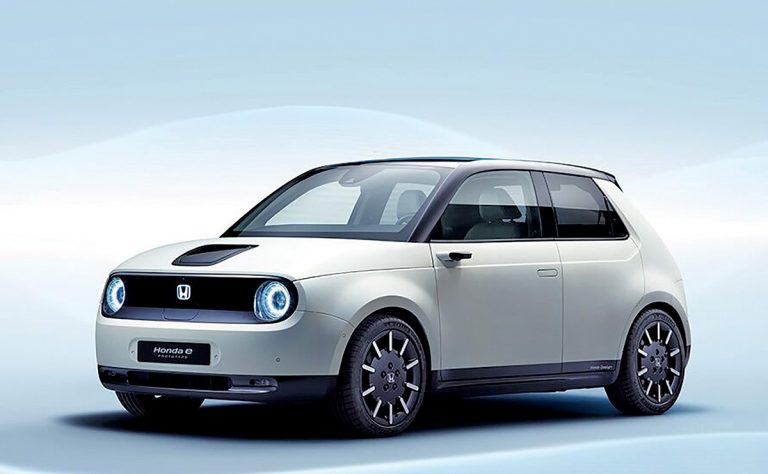
Honda Motor Co. is recalibrating its electric vehicle (EV) ambitions in the United States amid shifting market dynamics, high production costs, and uncertainty over policy direction under the Trump administration.
The Japanese automaker’s upcoming Series 0 electric SUV, set to debut next year, will be roughly the size of the popular CR-V but is expected to carry a much higher price tag—a prospect that could deter cost-conscious buyers.
Speaking with journalists in Japan last week, Honda CEO Toshihiro Mibe acknowledged the challenge of producing low-cost EVs in the current environment.
Register for Tekedia Mini-MBA edition 20 (June 8 – Sept 5, 2026).
Register for Tekedia AI in Business Masterclass.
Join Tekedia Capital Syndicate and co-invest in great global startups.
Register for Tekedia AI Lab.
“So, for the future, we will consider coming up with EVs under $30,000 as well,” he said, though he added that such plans are unlikely to materialize in the immediate term.
Mibe pointed to changing conditions in the U.S. market, noting that the removal of Inflation Reduction Act (IRA) subsidies and policy reversals under the Trump administration have dampened momentum for EV adoption.
“What’s making it difficult, of course, is with the IRA subsidies now gone, with the Trump administration in place, we have the sense that maybe EV growth has been moved back out, maybe out five years in the further future,” he explained.

The Honda boss said the company is watching political developments closely, including the upcoming midterm elections, to gauge the administration’s approach to environmental policy.
“If we think about whether we have to really come up with those affordable EVs right away, we get the feeling not really,” he said, suggesting the company may delay its push for mass-market electric models until closer to 2030.
Currently, Honda plans to lean on hybrid vehicles as a bridge to full electrification. Mibe said the automaker’s next-generation hybrid powertrains will begin rolling out in 2027 and are expected to reduce production costs by about 20%. That, he noted, will give Honda more flexibility to balance affordability and emissions goals in the near term.

Despite the short-term slowdown, Honda maintains its long-term target of achieving carbon neutrality by 2050. With the average vehicle lifespan exceeding a decade, Mibe said the company recognizes it must ramp up EV offerings toward 2040 to meet its climate commitments. He also reaffirmed the need for affordable, sub-$30,000 EVs in the U.S. market if electrification is to reach the mainstream.
On the technology front, Honda is intensifying efforts to collaborate with other automakers on software development—a key area of competition in next-generation vehicles.
“When it comes to software-defined vehicles, it doesn’t make sense for one company to try and develop everything,” Mibe said.
Honda’s earlier collaboration with General Motors on the Prologue and Acura ZDX—both electric models—helped the company recognize the complexity and financial burden of EV development. The Acura ZDX, notably, was recently discontinued. Mibe said sharing software development costs across partners could help make EV production more sustainable in the long term.
He cited both GM and Nissan as potential collaborators, though he stopped short of confirming any new partnerships.
Mibe’s outlook mirrors that of Volkswagen Group, which invested $5.8 billion last year in a joint venture with Rivian to access the startup’s zonal electrical architecture and software stack. That deal, much like Honda’s envisioned approach, underscores how legacy automakers are increasingly looking to pool resources in the software race while navigating a global EV slowdown.
For Honda, the near-term focus will remain on hybrids and strategic collaboration. Affordable EVs will have to wait—at least until political clarity and cost structures align with the company’s long-term vision.