

Nigeria has secured a $1 billion investment from China’s state-owned industrial giant, SINOMACH, in a new deal that signals a renewed push to scale up domestic sugar production and cut the country’s dependence on imports.
The partnership inked through a Memorandum of Understanding (MoU) with the National Sugar Development Council (NSDC), is designed to kickstart a large-scale sugarcane cultivation and processing project. It’s one of the first tangible deals to emerge from the Nigeria-China Strategic Partnership promoted by President Bola Tinubu as part of his administration’s efforts to revive local industry.
Executive Secretary of the NSDC, Mr. Kamar Bakrin, confirmed the agreement in Abuja, describing it as a major milestone in Nigeria’s long-stalled plan to attain self-sufficiency in sugar production.
“2025 is a pivotal year for Nigeria, and we must make bold moves towards food security and economic self-sufficiency,” Bakrin said, adding that the initiative aims to cut sugar imports, conserve foreign exchange, and drive industrialization in rural Nigeria.
From Import Reliance to Export Dreams
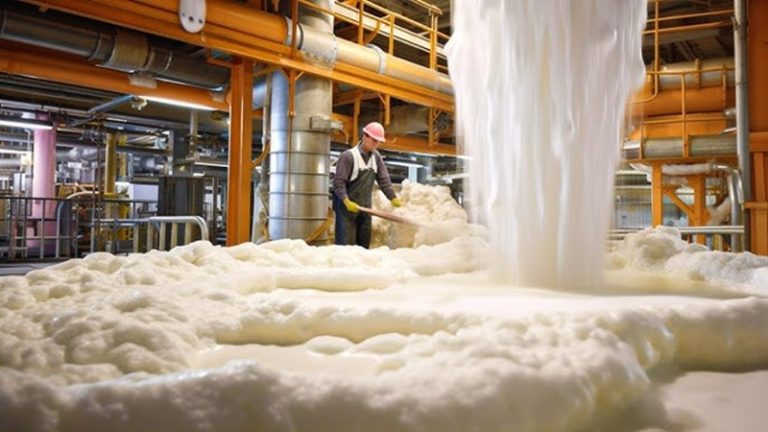
Under the MoU, SINOMACH will construct a sugar processing facility and establish an extensive sugarcane plantation. The project is expected to begin with an annual processing capacity of 100,000 metric tons, with an eventual target of hitting one million tons. That scale could dramatically reshape Nigeria’s sugar industry, which has struggled for decades to gain footing despite successive policy pushes.
“This partnership with SINOMACH is unique,” Bakrin said. “It combines engineering, procurement and construction (EPC) with development financing, an essential model for agro-industrial transformation.”
The NSDC plans to facilitate swift implementation by assisting with land acquisition, regulatory clearances, and all necessary approvals.
The Sugar Council was set up through a decree in 1993 to provide strategic planning and coordination for sugar development after previous government efforts fell apart due to mismanagement and weak institutional support. The goal has always been to meet at least 70 percent of the country’s domestic sugar demand from local production—an ambition that has remained out of reach.
Speaking on behalf of the Chinese conglomerate, SINOMACH Vice President Li Yu praised Nigeria’s commitment to reviving its sugar industry under the Nigeria Sugar Master Plan (NSMP), describing the policy as a “sweet revolution.”
“We believe this partnership will not only boost Nigeria’s sugar self-sufficiency but also promote rural development, create employment, and enhance agricultural modernization,” Li said.
He noted that the company is exploring innovative financing models using China’s Renminbi (RMB) currency, a move intended to cut financing costs and accelerate approvals from Chinese authorities.
SINOMACH, known for its involvement in major infrastructure and industrial projects across Africa, said the investment is part of its broader interest in Nigeria’s agricultural transformation, with the potential to make the host state the “Sugar Bowl of West Africa.”
Beyond Sugar: Rebuilding Industrial Nigeria
The $1 billion deal adds a new layer to President Tinubu’s effort to deepen economic ties with China amid growing concerns over Nigeria’s food insecurity, joblessness, and reliance on imports. With a battered naira, a shrinking foreign reserve base, and an economy struggling to find its footing post-COVID, the administration is leaning on foreign direct investment to fill financing gaps.
While details on the selected host state and project timelines remain under wraps, the NSDC says it is preparing a full implementation roadmap.
Bakrin emphasized that this deal isn’t just about sugar—it’s about rural revitalization and industrial independence. “It’s not just a transaction,” he said. “It’s a strategic intervention in Nigeria’s food and industrial ecosystem.”
The NSDC’s vision extends beyond sugar sufficiency. The council has plans to position Nigeria as a future exporter of refined sugar, a shift that could earn the country foreign exchange and reduce its vulnerability to global commodity price shocks.
However, experts caution that the road to sugar self-sufficiency won’t be easy. Past efforts to reform the industry have been derailed by land disputes, infrastructure deficits, and inconsistent policy support. Even the Nigeria Sugar Master Plan, launched in 2012, has achieved only modest gains.
Still, with backing from a global industrial heavyweight like SINOMACH and a renewed government drive, the latest partnership is expected to offer a fresh chance to rewrite that narrative. However, its success may depend on Nigeria’s ability to match political will with execution on the ground.