DD
MM
YYYY

PAGES

DD
MM
YYYY

spot_img

PAGES

Home Blog Page 110

Chips Are No Longer the Headache But Electricity s to Sustain Data Centers

0

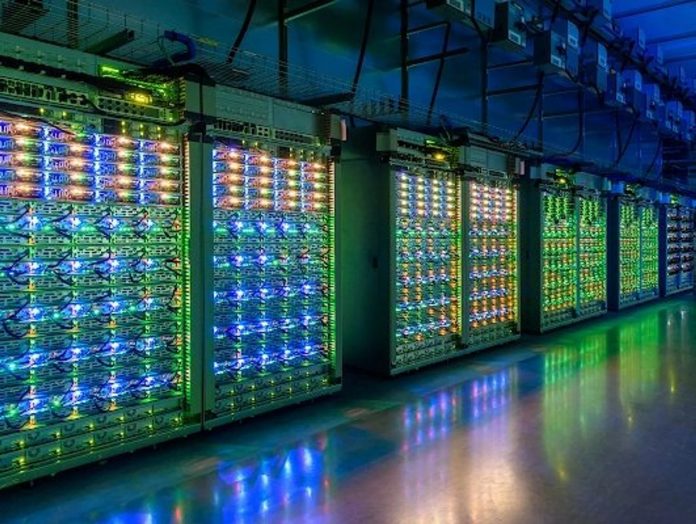
What started as a frenzy over insatiable demand for AI chips think Nvidia’s meteoric rise on the back of GPU shortages has morphed into acute anxiety over whether the power grids can keep up with the data centers gobbling up those chips.

By late 2025, the narrative has flipped: chip supply chains are stabilizing thanks to massive investments from TSMC, Intel, and others, but energy constraints are emerging as the real bottleneck, threatening to cap AI’s explosive growth.

Early 2024-early 2025 worries: Markets were laser-focused on demand outstripping supply for advanced semiconductors, especially Nvidia’s H100 and Blackwell GPUs.

Hyperscalers like Microsoft, Amazon, and Google were queuing up billions in capex, driving Nvidia’s market cap past $3 trillion at its peak. Fears of a “chip famine” dominated earnings calls and analyst reports.

As fabs ramped up like TSMC’s Arizona and Taiwan expansions hitting full stride, supply eased. Global semiconductor capacity grew ~15% YoY, per SEMI data, outpacing even AI-driven demand forecasts. Now, the chatter is about overcapacity risks if AI hype cools—echoing the 2022 crypto bust.

Nvidia itself dipped 10% in Q3 2025 on whispers of softening enterprise orders. The real plot twist is power. AI data centers aren’t just hungry for chips; they’re voracious for electricity—training a single large language model can guzzle as much as a small city’s annual usage. Goldman Sachs now forecasts global data center power demand surging 165% by 2030 from 2023 levels, hitting 92 GW by 2027 alone.

In the US, it’s set to account for nearly half of all electricity demand growth through 2030, outpacing manufacturing sectors like steel and cement combined. This isn’t abstract: utilities filed for $30 billion in rate hikes in H1 2025 to cover grid upgrades, passing costs to households and small businesses.

Data centers consumed 26% of Virginia’s electricity in 2023; by 2025, states like Iowa (11%) and Oregon (11%) are hitting similar walls. In PJM’s market serving 13 states, they drove a $9.3 billion capacity price spike for 2025-26.

Transmission delays—tied to permitting, supply chains, and NIMBYism—mean new capacity lags demand by 3-5 years. An October 2025 Sunrun survey found 80% of Americans fretting over AI-driven bill hikes, with 60% more concerned than excited about the tech.

Water scarcity is another flashpoint: cooling systems in arid spots like Georgia are prompting 33% rate jumps. Big Tech’s 2025 capex hit $370 billion (Microsoft, Alphabet, Meta, Amazon), but ROI is questioned if power shortages delay rollouts.

OpenAI’s 10 GW data center pact with Nvidia? It needs NYC’s summer peak load—good luck securing that amid blackouts. Stocks like Constellation Energy tanked 20% in January on feasibility doubts. AI training/inference boom; hyperscaler capex.

Grid capacity limits; $580B global data center spend in 2025. Double to 100 GW by 2028; 2% of global electricity by 2030. Geopolitical (e.g., Taiwan tensions); overbuild if AI plateaus. Rate hikes, $30B US in H1 2025; fossil fuel reliance worsening emissions.

Markets aren’t panicking yet—data center vacancy rates plunged to 6.6% globally in Q1 2025, signaling demand’s still red-hot—but the energy wildcard could trigger volatility. Expect more M&A in utilities and a nuclear renaissance.

Microsoft and others inked deals to restart plants like Three Mile Island, while small modular reactors (SMRs) could deliver 300 MW per site by 2030. They’re 90% of queued projects, but intermittency means gas/coal bridges the gap, clashing with net-zero goals.

Efficiency gains via Nvidia’s GB200 chips hitting 130 kW/rack densities might shave 20-30% off demand, but not enough to dodge the crunch. In short, chips were the accelerator; energy’s the brake.

If grids don’t scale and policy helps—Trump’s pro-build stance could fast-track permits but tariffs hike costs, we might see AI growth throttled, hitting semis harder than expected.

Bullish on utilities and nuclear plays, cautious on pure chip bets. What’s your take—energy the ultimate AI limiter?
DOGE May 15x, But Ozak AI’s 100x Path Is What Traders Are Watching

0

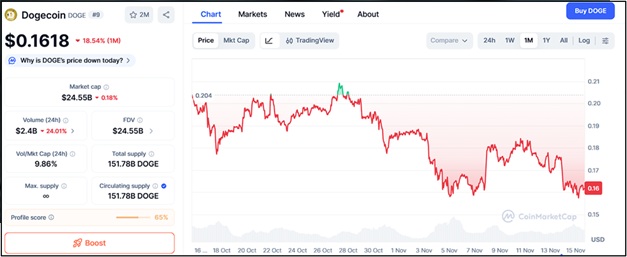
Dogecoin continues to ride a wave of renewed optimism as analysts forecast a potential 15x rally heading into the following bull segment. Trading around $0.1618, DOGE remains one of the most powerful meme coins available on the market thanks to its huge network, liquidity depth, and capability to spark viral market actions.

Yet, despite the bullish outlook, many investors are moving their attention toward Ozak AI (OZ)—a high-upside AI-pushed token whose early-stage positioning and hastily expanding surroundings suggest capability for a 100x boom. As investors search for the biggest winners of the imminent cycle, Ozak AI is rising as the top project with its effective mixture of application, innovation, and momentum.

Dogecoin and Ozak AI

Dogecoin’s price around $0.1618 highlights solid market consolidation, supported with the aid of enthusiastic network participation and ongoing meme-market tailwinds. Resistance stages sit at $0.1720, $0.1855, and $0.1980, each representing zones wherein upward momentum has historically slowed. Support stays reliable at $0.1530, $0.1460, and $0.1395, regions where DOGE buyers constantly step in to protect the fashion.

Analysts agree that a 10x–15x surge is possible during peak bull market conditions, especially if DOGE recaptures the cultural energy seen in previous cycles. However, its large and growing market cap makes extreme exponential gains increasingly difficult. This limitation is pushing traders to explore early-stage tokens like Ozak AI, where low valuation, utility depth, and rapid adoption create far more powerful upside potential.

Ozak AI (OZ)

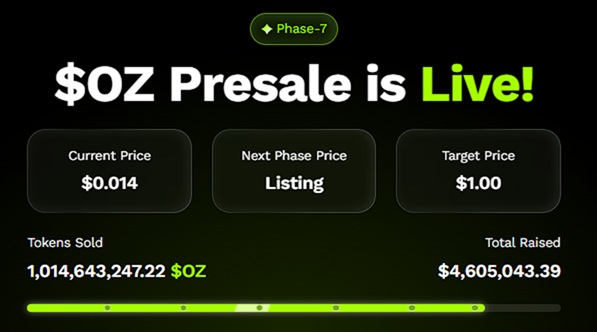
Ozak AI (OZ) is quickly becoming the centerpiece of the AI–crypto narrative thanks to its blend of prediction agents, autonomous trading tools, and real-time data intelligence systems. OZ  presale success has been remarkable, with over 1 billion tokens sold and more than $4.5 million raised, showing strong conviction from early investors. Unlike many emerging tokens that rely solely on hype, Ozak AI is backed by real technological partnerships with Perceptron Network, HIVE, and SINT—giving it access to high-speed 30 ms signals, trust-based data verification systems, cross-chain analytics, and voice-enabled AI agents.

These integrations position Ozak AI as a serious contender in the emerging decentralized AI landscape. Analysts believe its utility-driven ecosystem could become essential for traders, developers, and data platforms, creating the conditions for a massive surge once token listings and product rollouts begin.

Why Traders Believe Ozak AI Has a Clearer Path to 100x Than DOGE

Dogecoin thrives on excitement, but Ozak AI’s advantage lies in long-term viability and deep real-world functionality. Traders watching market sentiment identify three major reasons Ozak AI appears far more likely to deliver 100x potential:

  • Early-stage asymmetry: Ozak AI is still in its presale phase, making exponential growth far more achievable than DOGE’s mature market cap allows.
  • AI sector dominance: AI remains the strongest narrative in tech—and Ozak AI sits at the center of the crypto–AI convergence.
  • Real utility vs. meme speculation: Prediction agents, automated signals, cross-chain intelligence, and voice-enabled AI tools give Ozak AI lasting relevance.

Because of this, traders seeking life-changing gains are increasingly positioning early in Ozak AI rather than relying solely on meme-driven momentum.

Meme Hype vs. Artificial Intelligence

Dogecoin’s 15x potential still appeals to thousands of traders seeking fast gains, but the market’s smartest strategists are looking deeper. With AI accelerating globally and blockchain infrastructure evolving, Ozak AI offers a transformative opportunity that aligns with the most powerful trends of the next decade.

DOGE may still rally hard, but Ozak AI’s 100x path is what traders are truly watching—making it one of the most hyped and promising projects in the early stages of the 2025 bull run.

About Ozak AI

Ozak AI is a blockchain-based crypto venture that offers a technology platform that focuses on predictive AI and advanced records analytics for financial markets. Through machine learning algorithms and decentralized network technologies, Ozak AI permits real-time, correct, and actionable insights to help crypto fanatics and companies make the precise choices.


For more, visit:

Website: https://ozak.ai/

Telegram: https://t.me/OzakAGI

Twitter: https://x.com/ozakagi

Coinbase Derivatives Expands 24/7 Futures Trading to Multiple Altcoins

0

Coinbase’s derivatives arm, regulated by the U.S. Commodity Futures Trading Commission (CFTC), has announced plans to roll out round-the-clock (24/7) trading and “perp-style” futures contracts for a selection of popular altcoins.

This expansion builds on their existing 24/7 offerings for Bitcoin (BTC) and Ethereum (ETH) futures, aiming to provide U.S.-based retail and institutional traders with greater access to leveraged derivatives in a compliant environment.

Perp-style” futures are long-dated futures contracts specifically designed to behave almost exactly like the perpetual futures (perps) that dominate offshore exchanges like Binance, Bybit, OKX, etc., but they are structured to comply with U.S. regulations.

The move comes amid growing demand for perpetual futures, which now dominate over 75% of global crypto derivatives volume. Trading is slated to begin in early December 2025. Specific exact dates haven’t been confirmed, but this follows a pattern of phased rollouts seen in prior Coinbase futures updates.

The initial batch covers 11 assets, with a focus on established layer-1 tokens and meme coins. High-throughput blockchain platform. Perp-Style Futures. These are long-dated contracts up to 5-year expirations designed to closely track spot prices, offering leverage while adhering to CFTC rules.

Unlike traditional offshore perpetuals, they include built-in funding mechanisms to prevent divergence from underlying assets. Full 24/7 access, including weekends, with a brief weekly maintenance window e.g., Fridays 5-6 PM ET. Vary by asset, 1,000 ADA per contract, allowing for flexible position sizing.

0% maker / 0.03% taker fees on Coinbase Advanced Trade, plus up to 5.1% USDC rewards on collateral balances. Open to eligible U.S. users via Coinbase Derivatives Exchange; non-U.S. clients can access via Coinbase International for similar products.

This expansion follows earlier 2025 launches, such as 24/7 trading for SOL, XRP, and ADA in June, and the debut of U.S. perpetual-style BTC/ETH futures in July. It positions Coinbase as a leader in regulated crypto derivatives, competing with platforms like Kraken while capturing more of the $3+ trillion global derivatives market.

The announcement, reported by The Block on November 21, 2025, has sparked buzz on X, with traders highlighting potential volatility boosts for DOGE and SHIB amid broader market dips like DOGE down ~6% and SHIB down ~5% as of late November 21.

Perpetual futures enable hedging, speculation, and leverage without expiration pressures, but they carry high risk—especially for volatile assets like meme coins. This could drive increased trading volume (e.g., SOL futures already hit 23,000+ contracts post-launch) and attract institutional interest, though traders should note CFTC safeguards like position limits.

Coinbase is also integrating non-crypto futures like gold, oil, equities indices, signaling a push toward diversified, always-on markets. Coinbase lists contracts that expire far in the future (e.g., December 2029 or even 5-year contracts). Because the expiration is so distant, they trade almost identically to a true perpetual.

Funding rate keeps the price glued to spot. Every few hours usually every 4 or 8 hours, the exchange calculates the difference between the futures price and the actual spot price. If futures trade above spot ? longs pay shorts encourages selling futures, pushes price down.

If futures trade below spot ? shorts pay longs encourages buying futures, pushes price up. This is exactly how Binance/Bybit perps work. You can hold forever, when the current contract gets close to expiry, Coinbase automatically rolls your position into the next long-dated contract at no extra cost, so you never have to “close and reopen.”

Leverage + margin

You still only put up a small fraction of the position value which is initial margin. For most of these altcoin contracts, retail leverage is capped around 10–20× by CFTC rules much lower than the 100× you see offshore. Example: Trading DOGE Perp-Style Futures on Coinbase Spot DOGE price = $0.35

You open a 100,000 DOGE long position at $0.351 with 10× leverage. Initial margin required ? $3,510 instead of $35,100 notional. Every 4 hours, a funding rate is calculated. If the average premium stays positive, you pay a tiny amount to shorts; if DOGE moons and futures go to a discount, you collect funding.

Coinbase creates almost the identical economic experience while staying fully compliant. Bottom Line Perp-style futures = the closest thing U.S. traders can legally get to the 24/7, high-leverage perpetual contracts everyone uses on offshore exchanges — just with CFTC oversight, lower max leverage, and USD settlement.

Understanding the “Cascading Use Model” in GPUs

0

The term “cascading use model” isn’t a widely standardized phrase in GPU literature as of November 2025, but it aptly describes an emerging paradigm in GPU utilization where computational resources are reused and repurposed in a sequential, layered, or “cascading” fashion across different workloads, users, or stages of processing.

This model is particularly relevant in the context of AI, high-performance computing (HPC), and data centers, where GPU scarcity driven by demand from training large language models, simulations, and edge inference has pushed innovations in resource efficiency.

In traditional GPU usage, a high-end chip like an NVIDIA H100 or AMD MI300X might be dedicated to a single task (e.g., training a neural network for hours or days), leading to idle time and underutilization. The cascading model flips this.

Sequential Reuse: A GPU processes heavy compute tasks first (e.g., model training), then “cascades” the hardware to lighter tasks (e.g., inference, fine-tuning, or even non-AI workloads like video rendering).

Layered Allocation: Resources are dynamically partitioned—e.g., using time-slicing, MIG (Multi-Instance GPU) partitioning, or SR-IOV virtualization—to serve multiple users or applications in a waterfall-like hierarchy, where overflow from one layer feeds the next.

It emphasizes minimizing waste by cascading underutilized cycles, often integrated with software like Kubernetes schedulers or NVIDIA’s CUDA Multi-Process Service (MPS).

This contrasts with the “dedicated silo” model, where GPUs sit idle 50-70% of the time in many data centers. GPUs are experiencing a surge in value and adoption under this model for several substantiated reasons.

Data centers report 2-3x higher throughput. For instance, hyperscalers like Google and AWS have adopted cascading via tools like NVIDIA’s GPU Operator, boosting effective FLOPS floating-point operations per second by repurposing chips post-training for serving APIs.

With GPU prices hovering at $30,000+ per unit, cascading can cut effective costs by 40-60% through better amortization, making AI infrastructure more accessible to mid-sized firms.

Scalability for AI Workloads

In the AI boom, training which dominates 80% of GPU cycles cascades naturally to inference the “serving” phase, where models are queried billions of times daily. This is evident in systems like Grok’s backend, where xAI leverages cascading to handle real-time queries after model updates.

Consumer GPUs (e.g., RTX 40-series) benefit in gaming rigs that cascade from ray-tracing renders to AI upscaling via DLSS, extending hardware lifespan. GPUs consume massive power up to 700W per card, contributing to data center energy demands rivaling small countries.

Cascading reduces total hardware needs, lowering carbon footprints—e.g., Microsoft’s Azure reports 25% energy savings via dynamic cascading in their AI clusters. Open-source frameworks like Ray or Dask enable cascading across hybrid CPU-GPU setups, democratizing access.

NVIDIA’s GTC 2025 keynote emphasized “cascading compute fabrics” in Blackwell architectures, with partnerships like Meta’s Llama deployments showing 1.5x inference speedups. GPU shipment forecasts from Jon Peddie Research predict a 15% YoY growth in enterprise segments, partly attributed to cascading-enabled virtualization, countering supply constraints from TSMC fabs.

Not all workloads cascade seamlessly—e.g., real-time graphics may conflict with ML pipelines—requiring advanced orchestration like Kubernetes with GPU plugins.

In summary, the cascading use model is transforming GPUs from expensive bottlenecks into flexible powerhouses, fueling the AI revolution while addressing efficiency hurdles.

China, America, and the Confusion That Shapes Global Power

0

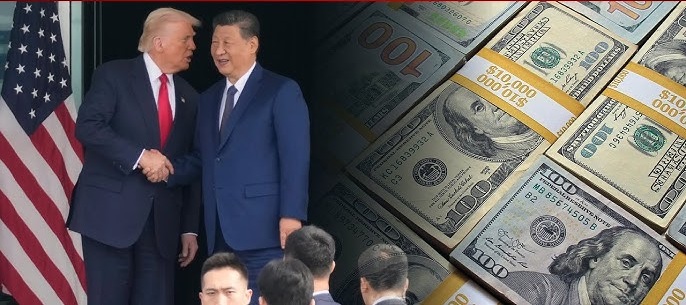
Geopolitics, by design, is built on confusion. Nations speak with one voice in public and act with another in private. It is a theatre of strategic ambiguity where what is declared is rarely what is done. And if anyone still doubted this reality, the latest revelation involving the United States and China should settle the matter.

For close to a decade, Washington has warned countries across the Global South to beware of Beijing’s “debt-trap diplomacy”, the idea that China extends massive loans not only to build bridges and roads, but to tighten geopolitical influence over developing nations. The narrative was clear: accept Chinese credit, and you may lose sovereignty.

Yet, a sweeping new investigation reveals a stunning irony. While the United States was urging the world to avoid China’s lending machine, America itself became China’s largest borrower. A major study by the AidData research lab at William & Mary has uncovered that China’s global lending has been vastly underestimated. Between 2000 and 2023, China extended $2.2 trillion in credit across the world. But the real revelation lies not in the scale of the lending, but in the destination. Instead of focusing solely on poorer nations through the Belt and Road Initiative, Beijing increasingly directed its financial power toward the wealthiest economies on earth. And topping that list is the United States of America.

For the better part of a decade, Washington has sounded a relentless alarm across the Global South, warning developing nations that Beijing’s deep pockets come with a heavy price: a “debt trap” designed to leverage infrastructure loans for geopolitical obedience.

Yet, a sweeping new investigation reveals a staggering economic irony. While American diplomats were cautioning the world against Chinese credit, the United States was quietly becoming its largest customer.

According to a landmark report released Tuesday by the AidData research lab at William & Mary, the sheer scale of China’s global lending has been vastly underestimated, totaling a colossal $2.2 trillion between 2000 and 2023. But the true revelation lies in the destination of these funds. In a stark pivot from the bridge-and-road building of the Belt and Road Initiative in developing nations, China has increasingly directed its financial firepower toward the world’s wealthiest economies.

This discovery highlights the foundational principle of global strategy: power respects power, and interests, not ideology, guide national behavior. Nations criticize publicly but transact privately. The world sees the speeches, but the real deals happen backstage.

History supports the trend we observe today. Over the last ten centuries, China has been the dominant global economy in at least six of them. The United States assumed that role in the late 1800s, propelled by industrialization and innovation. But as the 21st century unfolds, China appears increasingly visible in America’s rear mirror, economically, technologically, and financially.

For Africa, the lesson is profound: Build strategic friendships with both America and China, not as a passive participant, but as a continent that understands how power works. Yes, remember the words of Kwame Nkrumah: no west, no east, just forward. We can work with ALL even now everyone goes to China for money!