DD
MM
YYYY

PAGES

DD
MM
YYYY

spot_img

PAGES

Home Blog Page 222

Foxconn Approves $1.37bn Investment to Build AI Compute Cluster and Supercomputing Center

0

Taiwan’s Foxconn, the world’s largest contract electronics manufacturer, has approved a major investment plan worth up to NT$42 billion ($1.37 billion) to develop advanced artificial intelligence and supercomputing infrastructure.

The initiative marks another strategic move by the company to diversify beyond its traditional electronics and smartphone manufacturing business.

In a filing published late Monday, Foxconn—officially known as Hon Hai Precision Industry Co. Ltd.—said its board of directors had approved plans to procure equipment for an AI compute cluster and a supercomputing center. The investment will be funded internally and executed over 12 months, from December 2025 to December 2026.

According to the company, the project aims to “expand the cloud compute service platform and accelerate the development of the Group’s three smart platforms,” though Foxconn did not specify the exact locations or details of the facilities. However, a person familiar with the matter told Reuters that the investment will be made in Taiwan. The company has not yet issued an official response to follow-up requests for comment.

The move points to Foxconn’s increasing commitment to artificial intelligence and cloud infrastructure—areas it sees as crucial for long-term growth as global demand for consumer electronics stabilizes. The company has been steadily pivoting towards next-generation computing technologies to strengthen its role in the evolving digital economy.

Earlier this year, in May, Foxconn announced a partnership with Nvidia to establish an artificial intelligence center in Taiwan. The facility is expected to have a power capacity of 100 megawatts and will focus on high-performance computing for AI model training and data-intensive applications. Nvidia, the world’s leading AI chipmaker, has become a key partner in Foxconn’s bid to integrate AI capabilities into its operations and expand its presence in data infrastructure.

In August, Foxconn further revealed plans to collaborate with Japan’s SoftBank to manufacture data center equipment at its former electric vehicle factory in Ohio, United States. The initiative is part of the so-called “Stargate Project,” which aims to strengthen U.S. artificial intelligence infrastructure and reduce reliance on Chinese-made hardware.

Foxconn’s latest NT$42 billion plan signals a continuation of its transformation strategy under Chairman Young Liu, who has repeatedly emphasized that the company must evolve from a manufacturing powerhouse into a global technology and solutions provider.

Some analysts believe the investment is part of Foxconn’s growing ambition to position itself at the heart of the AI supply chain, mirroring similar moves by major technology companies racing to secure computing capacity and data infrastructure amid surging demand for generative AI systems.

The development also highlights Taiwan’s increasing role as a global hub for AI and semiconductor manufacturing. Alongside companies like TSMC and Nvidia, Foxconn’s continued investment in AI infrastructure could help bolster the island’s strategic importance in the world’s fast-expanding AI ecosystem.

Foxconn’s move to roll out multi-billion-dollar AI infrastructure projects over the next two years will mark a fundamental shift in its business focus, from assembly lines to advanced computing, marking what could become one of the most significant transformations in its 50-year history.

Upcoming Flying Tulip Perp DEX Releases Roadmap, as Boximus Limited Edition Otherside’s Avatar Goes Live

0

Flying Tulip ($FT) is a full-stack on-chain DeFi platform founded by Andre Cronje known for Yearn.finance and Fantom/Sonic Labs, designed as a unified “on-chain Binance” alternative.

It integrates spot trading, perpetual futures (perps), options, lending, stablecoins (ftUSD), and more into a single cross-margin system, emphasizing capital efficiency, up to 1000x leverage, and oracleless execution for reduced risks.

Built initially on Sonic ($S) with multi-chain support Ethereum, Avalanche, BNB Chain, Solana, it recently raised $200M in seed funding at a $1B FDV, with an $800M public sale planned on-platform.

A key innovation is the “perpetual put option,” allowing token holders to burn $FT for principal redemption (e.g., in ETH or ftUSD) anytime, creating a built-in price floor backed by yields from deployed capital (targeting ~4% APY via Aave, Ethena, Spark).

The project is pre-launch as of October 29, 2025, with no live products yet. The roadmap, released October 27, 2025, outlines a deliberate, audit-heavy rollout spanning 3-4.5 years each phase ~2-3 months, including dev, freeze, 3 audits, and prep.

Each phase releases independent, fully functional products, with $FT gaining utility progressively. Revenue from later stages funds $FT buybacks and burns.Roadmap PhasesThe roadmap is structured as a “waterfall” process: no phase advances until the prior one is audited and stable.

Focus is on permissioned testing before full openness, with internal pricing engines for perps to avoid oracle vulnerabilities. Expect $800M sale details soon, with yields ~$40M/year target funding incentives.

This activates $FT utility and the perpetual put.
Permissioned perps launch—core DEX functionality with internal engines, high leverage, and audited safety. Initial focus on Sonic for speed its EVM-compatible L1.

Permissionless perps and adaptive AMM, enabling open trading and liquidity bootstrapping. Full ecosystem with oracles/apps, turning Flying Tulip into a revenue-generating hub (e.g., prediction markets feeding $FT burns).

85% capital efficiency gains vs. fragmented DEXs; no team allocations; institutional compliance built-in; refundable model reduces FOMO-driven dumps. Long timeline may test patience; dependency on Sonic’s growth; competition from Hyperliquid/Drift V3.

What is the Perpetual Put Option in Flying Tulip?

The Perpetual Put Option is Flying Tulip’s flagship tokenomics mechanism — a built-in, always-on downside protection for $FT holders.

It allows any $FT holder to burn their tokens at any time in exchange for a guaranteed redemption of underlying principal value, paid in stable assets like ETH or ftUSD. Think of it as a non-expiring, American-style put option that the protocol itself writes and guarantees — without counterparty risk, without premiums, and without expiration.

Capital Raised via $FT Minting During the public sale (Phase 1), users mint $FT by depositing ETH, USDC, etc. 100% of raised capital is deployed into low-risk, yield-generating strategies (e.g., Aave, Ethena sUSDe, Spark DAI ? targeting ~4% APY).

$FT becomes a claim on this capital + yields.  Each $FT represents a pro-rata share of the total deployed treasury principal + accrued yields. This treasury grows over time from lending/perps fees. Burn $FT ? Redeem Principal Holder sends $FT to a burn address.

You made $40 profit just by holding and exiting safely. Even if $FT dumps to $0.50 on market panic, you can still redeem ~$1.04 per token. Team can’t dump — all capital is locked in audited, yield-bearing positions. Holders know they can exit at floor ? less panic selling.

New $FT mints only via public raises ? treasury grows proportionally. Treasury underperforms yields < 4%. Diversified across Aave, Ethena, Spark; dynamic rebalancing. Treasury is liquid; protocol can pause minting if needed.

Capital locked in safe yields ? no 100x moonshots. Not full upside protection. Only guarantees floor, not profit lock-in. $FT is a token you can always burn to get back your original capital + accrued yields — creating a rising, on-chain guaranteed floor price backed by real DeFi revenue.

Boximus Limited Edition Otherside’s Avatar Goes Live in Partnership with Amazon on Thursday

The limited-edition Boximus Voyager avatar for Yuga Labs’ Otherside metaverse is set to go live tomorrow, Thursday, October 30, 2025, in partnership with Amazon Gaming.

This collaboration marks a significant push to integrate Otherside into mainstream gaming, leveraging Amazon’s massive user base of over 300 million to onboard new players to the metaverse.

Boximus is a co-branded NFT character designed as a playful, stackable figure made of Amazon shipping boxes, serving as an explorer or “Voyager” in the Otherside world.

Availability is xclusively through the new Otherside brand store on Amazon’s gaming section. Otherside will also be prominently featured on the front page of Amazon Gaming for broader visibility.

Maximum is supply 2,222 units. Priced at $65.99 per edition. Purchase limit is 2 per basket to encourage wider distribution. Boximus is a tokenized NFT avatar built using Yuga Labs’ new Voyager system, allowing holders to customize and use it in Otherside’s virtual worlds.

Holders get exclusive perks like boosted loot drops in game modes (e.g., “Otherside Outbreak” zombie survival), early access to Amazon-themed skins, and staking multipliers on the Arbitrum blockchain. It’s interoperable, meaning it can potentially be used across compatible metaverses.

This drop coincides with the upcoming launch of Otherside’s Phase One: the Koda Nexus social hub on November 12, 2025. The Nexus acts as the metaverse’s central living space, accessible via web browser with optional NFT integration—no wallet required for basic entry.

It’s part of a three-layer rollout:Social Layer: Hubs like Koda Nexus for chatting, audio “Bubbles,” and exploring user-built spaces. Gaming Layer: Quests, battles, and modes like shooter “Bathroom Blitz.” Development Layer: Otherside Development Kit (ODK) for creators to build and publish content.

The Amazon tie-in is Yuga’s strategy to lower barriers for non-Web3 users, blending Roblox/Fortnite-style gameplay with blockchain ownership. As one Yuga exec noted, it’s about exposing millions to digital assets without friction.

This is one of two initial Voyager partnerships—the other is a 300-piece collection with artist Daniel Arsham. Head to Amazon Gaming tomorrow morning. If it sells out quickly likely, given the limited supply, enable restock notifications. Koda Nexus is the central social hub and “living center” of Yuga Labs’ Otherside metaverse.

It’s designed as an always-on starting point—a vibrant, BAYC-themed digital town square where users can gather, socialize, host events, and establish a persistent presence in the virtual world, much like a blend of Fortnite lobbies and Roblox hangouts but with Web3 ownership.

Boximus from Amazon partnership or Daniel Arsham’s 300-piece edition as playable, interoperable characters with ownership perks like boosted loot or staking. Non-NFT users can create/import avatars; BAYC/MAYC holders get 3D models.

Shooter/survival modes like Bathroom Blitz, Otherside Outbreak integrated for seamless social-to-action transitions. Otherside Development Kit (ODK) lets creators build/publish games, outfits, and worlds—superior to Roblox/Minecraft tools.

Blockchain items (avatars, skins) are ownable/resellable; economy on ApeCoin ($APE) with revenue buybacks. Powered by Improbable’s M2 tech for 10,000+ simultaneous players, natural voice chat in crowds, AI/physics, and metaverse interoperability.

Kodas celestial NFT beings tie into the lore as guardians, with holders getting perks like multipliers. This low-friction launch aims to revive Otherside post-2022 hype, blending mainstream gaming with blockchain ownership.

For Web3 users, minting via Otherside’s ecosystem could offer additional rewards, potentially drawing Amazon newcomers into crypto transactions. This partnership has generated buzz in the NFT community, with early reactions highlighting its potential to revive interest in BAYC/Otherside amid a post-2022 crypto cooldown.

BlockDAG Dominates Crypto Buzz with Major Coinbase & Kraken Leak While Blazpay & Magacoin Lose Momentum

0

Magacoin Finance has now crossed the $16.5 million mark in its presale, while Blazpay’s AI-based DeFi rollout is about 75% complete. Yet, market focus is shifting rapidly. Projects once seen as experimental are becoming new presale leaders. With attention moving fast, one question stands out: Are you ready before the next big wave hits? The FOMO countdown has started, and many are keeping a close eye on what unfolds next.

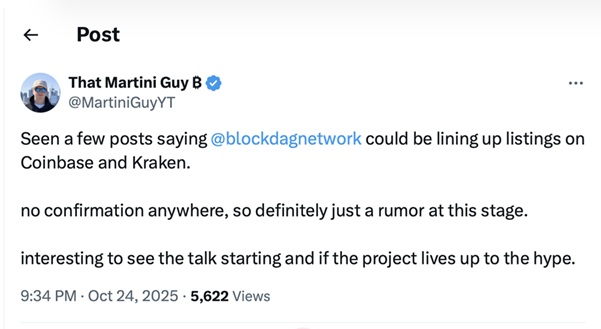
That Martini Guy recently hinted at what could define 2025, the rumored Coinbase and Kraken listings for BlockDAG (BDAG). Internal sources indicate this might not be just talk but a structured plan with liquidity setup, marketing funds, and complete KYC documentation. If validated, this could push BlockDAG ahead as the best presale crypto in 2025.

Leak Sparks Speculation Around BlockDAG’s Exchange Launch

That Martini Guy’s leak about BlockDAG’s potential listings on Coinbase and Kraken has set the market buzzing. What started as a rumor now appears credible, as documents point to pre-launch agreements with both exchanges. The Kraken deal reportedly involves $300,000 for liquidity and another $300,000 for marketing, while Coinbase’s memorandum includes BDAG/USDT and BDAG/USD trading pairs, along with a possible spot in Coinbase Earn. These developments, paired with KYC verification and dual audits, make BlockDAG stand out as one of the best presale crypto projects of 2025 with strong institutional preparation.

Beyond these listing talks, BlockDAG’s performance speaks volumes. The presale has raised over $433 million, selling more than 27.2 billion coins across 31 batches. Over 312,000 holders have joined ahead of its mainnet launch, which is priced at $0.05. The TGE phase still lets users obtain BDAG at $0.0015, suggesting a strong potential upside.

Its verified audits by CertiK and Halborn reinforce transparency at a stage where few projects can claim such validation. If Coinbase and Kraken listings are confirmed, BDAG would move from presale success to full Tier-1 liquidity, making it a leading contender for the best presale crypto in 2025 before official trading begins.

Magacoin Finance Reaches $16.5M Milestone in Its Presale Journey

Magacoin Finance has gained traction with a presale that recently crossed $16.5 million, making it one of the most discussed community projects this quarter. Running on Ethereum and audited by CertiK and HashEx, it promotes transparency, limited supply, and verified security, features not often seen in meme-based coins.

Its early presale price stayed below $0.01, supported by a 50% PATRIOT50X bonus for first-round buyers. With over 16,000 backers already on board and rising global attention, Magacoin Finance is emerging as a strong name among the best presale crypto in 2025.

Aside from presale excitement, the team has confirmed full KYC checks and third-party audits, adding more reliability to its profile. Analysts predict growth ranging from 30× to 100× after listings, linking this to the project’s liquidity structure and long-term market strategy. With exchange listings expected soon and the presale nearing its final phase, Magacoin Finance stands at a turning point that could decide if its strong start leads to lasting success among the best presale crypto in 2025.

Blazpay’s AI DeFi Project Closes in on 75% Completion

Blazpay is drawing attention by combining artificial intelligence with decentralized finance to simplify crypto payments and trading across chains. The presale began in October 2025 at $0.006 and entered Phase 2 at $0.0075, now nearing 75% completion.

The project has already gathered about $800,000 and formed partnerships with Pilot AI for conversational wallet support and ArtGIS Finance for real-world asset connectivity. Its upcoming ecosystem will feature multi-chain wallets, automated trading, and smart liquidity routing, placing it among the best presale crypto in 2025 for its AI-led model.

Blazpay’s appeal also comes from its transparent roadmap and CertiK-verified contracts. The team has shared plans for a Token Generation Event in early 2026, with prices expected to rise in future stages. By focusing on low entry costs, easy access, and interoperability with Ethereum and Solana, Blazpay is reaching those who want greater flexibility and automation in DeFi. Though still developing, its AI-driven framework and detailed presale data make it a notable contender among the best presale crypto in 2025.

The Best Presale Crypto in 2025

Magacoin Finance and Blazpay are both shaping discussions around 2025’s most promising presales. Magacoin’s $16.5 million achievement and double audit show that meme projects can still maintain structure, while Blazpay’s AI-powered DeFi model adds technology depth to the list. Each has drawn attention for its unique approach and early engagement, securing spots among the best presale crypto in 2025.

However, BlockDAG currently leads the conversation. Talks around its potential Coinbase and Kraken listings, combined with a presale that has raised over $433 million and sold more than 27.2 billion coins, set it apart from other contenders. If those exchange integrations are confirmed, BlockDAG could move from presale growth to major exchange visibility, placing it firmly among the best presale cryptos expected to make waves in 2025.

Presale: https://purchase.blockdag.network

Website: https://blockdag.network

Telegram: https://t.me/blockDAGnetworkOfficial

Discord: https://discord.gg/Q7BxghMVyu

Antony Turner’s Leadership Makes BlockDAG the Most Trusted Crypto Coin: Why Traders Choose BDAG Over ASTER & VET

0

Recent updates show the ASTER price facing turbulence, with the coin struggling to stay above major support levels. Meanwhile, the VeChain (VET) price momentum shows clear weakness as bearish pressure continues. In such uncertain conditions, many traders are wondering where real growth and confidence can be found in 2025.

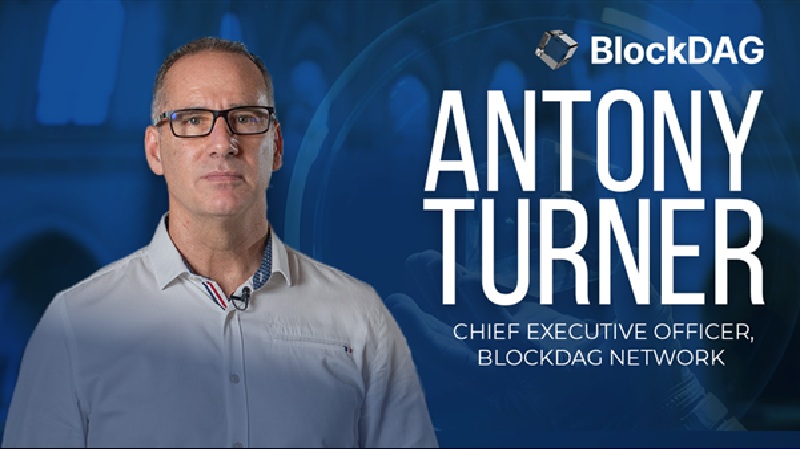
This question has guided growing attention toward BlockDAG (BDAG). Unlike projects with secretive teams, BlockDAG builds its reputation on full accountability. Many see CEO Antony Turner as the project’s “1000x Accountability Shield.” For those searching for crypto coins to watch, this transparent leadership model stands out. It shows total dedication to the 1000x roadmap, giving people the confidence to support a visible and responsible leader rather than just a nameless codebase.

Antony Turner’s Transparency Builds BlockDAG’s Trust Advantage

In a market often shaken by uncertainty, BlockDAG’s open leadership creates a powerful sense of security. With Antony Turner taking full public responsibility, the project’s direction is clear and dependable. Many large-scale backers describe this openness as the “1000x Accountability Shield.” It replaces doubt with trust and makes BlockDAG one of the crypto coins to watch in 2025.

Anonymous developers have caused countless rug-pulls, leaving communities anxious. BlockDAG’s public CEO changes that narrative. People know who is steering the project and what roadmap they are following. Turner’s name and face connect directly to the 1000x growth plan, proving that the team is serious about reaching its long-term goals.

The support behind this effort is massive. The ongoing presale has already brought in more than $433 million, showing strong belief in the project. Over 27.2 billion BDAG coins have been sold, and there are now 312,000+ holders worldwide. The special offer in batch 31, priced at $0.0015, remains available for a short period and also gives access to a priority airdrop through the TGE code.

BlockDAG’s credibility extends beyond hype. Over 20,000 mining rigs have been sold, and 3.5 million X1 users are already active. This steady community growth shows real-world traction, not just talk. Turner’s transparency, combined with measurable progress, helps people see BlockDAG as one of the crypto coins to watch that could deliver genuine stability and long-term value.

ASTER Price Update Shows a Battle to Stay Above $1.00

The most recent ASTER price update shows a tough market environment. After dropping below the key $1.00 mark, ASTER now trades between $0.98 and $1.07. This volatile pattern appeared despite positive developments, including a new Robinhood spot listing, which briefly lifted prices before sellers stepped in again.

Technical data paints a worrying picture. The MACD has formed a “death cross,” which is often a strong bearish sign. The coin’s Total Value Locked (TVL) has fallen sharply, suggesting weaker demand. In addition, a new Solana-based DEX has entered the field, pulling liquidity away from ASTER.

Traders are watching the $0.94 level closely. If buyers cannot defend this zone, the price could slide further. For now, the market remains cautious, waiting for stronger volume to confirm any potential recovery.

VeChain (VET) Price Momentum Slows as Sellers Dominate

The VeChain (VET) chart shows a continued downward trend. The coin trades below its 7-day and 30-day moving averages, near $0.017, which signals ongoing weakness. The MACD confirms bearish control, and the RSI remains low, pointing to a clear lack of buying energy.

A recent policy shift by Binance made things worse by reducing the collateral ratio for margin traders holding VET. This forced selling pressure across the market and pushed prices down further. Even a short 7.5% spike on October 21 could not change the negative outlook. Now, all eyes are on the $0.017 support line. If it breaks, traders expect a drop toward $0.014, marking a deeper retracement in VeChain’s ongoing bearish phase.

Final Say: Why BlockDAG Is a Top Crypto Coin to Watch

The ASTER price update shows intense volatility, and VeChain’s weak momentum adds more doubt to the market. Many traders are seeking steadier options in an uncertain environment.

This is where BlockDAG separates itself. Instead of relying on speculation, it builds confidence through visible leadership. Antony Turner’s “Accountability Shield” brings a human face to trust, something rare in digital finance. With over $433 million raised and millions of active users, BlockDAG stands out among the crypto coins to watch for anyone looking for real, consistent growth backed by a leader who stands behind every promise.


Presale: https://purchase.blockdag.network

Website: https://blockdag.network

Telegram: https://t.me/blockDAGnetworkOfficial

Discord: https://discord.gg/Q7BxghMVyu

US Congressman Ro Khanna Announces Bill to Ban Elected Officials from Owning or Creating Crypto

0

US Representative Ro Khanna (D-CA), Vice Chair of the Congressional Progressive Caucus and a member of the House Oversight Committee, announced plans to introduce legislation prohibiting the President, Vice President, members of Congress, and their immediate family members from owning, trading, or creating cryptocurrencies while in office.

The bill extends similar restrictions to individual stock trading, building on Khanna’s 2023 Ban Congressional Stock Trading Act. Officials would be required to divest existing crypto holdings or place them in blind trusts, limiting investments to diversified funds or government bonds.

Khanna’s announcement came during MSNBC interviews on Morning Joe and The Last Word, where he described the proposal as a response to “blatant corruption” in US politics. He specifically criticized President Donald Trump’s October 23, 2025, pardon of Binance co-founder Changpeng “CZ” Zhao, who had pleaded guilty to money-laundering charges in 2024 and served four months in prison.

Khanna alleged Zhao’s company provided financial and technical support to the Trump family’s World Liberty Financial (WLFI) crypto project—a stablecoin venture—creating a conflict of interest. “It’s money going into someone at the White House, and the White House taking official actions like pardons in exchange,” Khanna stated.

This isn’t the first such effort in 2025, in February, California State Rep. Sam Liccardo proposed the Modern Emoluments and Malfeasance Enforcement (MEME) Act to bar high-ranking officials from profiting from crypto.

In May, Sen. Michael Bennet (D-CO) introduced the STABLE GENIUS Act to prevent officials from issuing or endorsing digital assets without blind trusts. In June, Sen. Adam Schiff (D-CA) filed the COIN Act targeting the Trump family’s crypto promotions, including memecoins, NFTs, and stablecoins.

Khanna’s bill aims to address broader ethics concerns, including insider trading risks and foreign influence via crypto donations. It aligns with bipartisan pushes like the September 2025 Restore Trust in Congress Act, which bans stock and securities trades by lawmakers.

While the full bill text is pending formal introduction expected this week, details include: Ownership ban which prohibits holding, trading, or issuing crypto (e.g., Bitcoin, stablecoins, memecoins) by covered officials and immediate family.

Bars officials from launching or endorsing crypto projects to avoid self-dealing. Prevents accepting foreign-backed crypto investments or donations. Existing assets must be sold or placed in blind trusts; penalties for concealment (e.g., via private wallets).

Mirrors crypto rules for individual stocks, allowing only broad index funds or bonds. The measure seeks to “restore public confidence” by preventing officials from profiting on policies they influence, similar to the 2012 STOCK Act’s disclosure rules.

Ethics watchdogs and progressives praise it as a step toward integrity, especially amid crypto’s $1B+ ties to the Trump family. It could deter foreign lobbying, as seen with Binance’s alleged WLFI support.

Crypto advocates, including Coinbase CEO Brian Armstrong, argue it risks deterring tech-savvy leaders needed for balanced regulation. Some see hypocrisy, noting Khanna’s own stock holdings. Industry figures like Charles Hoskinson have slammed similar Democratic proposals as “power grabs.”

On X, reactions range from support (“common sense against corruption”) to mockery (“explain decentralization to him”). Passage is uncertain in a divided Congress, but it could gain traction via amendments to stock-trading bills.

If enacted, it might inspire global standards but tighten crypto firms’ lobbying. This development highlights escalating tensions between crypto innovation and political ethics, especially post-Trump’s pro-crypto executive actions.