DD
MM
YYYY

PAGES

DD
MM
YYYY

spot_img

PAGES

Home Blog Page 29

iOS 27 Arrives With a Smarter Siri and Major AI Upgrades

0

Apple has officially released iOS 27, bringing one of the company’s most significant software updates in recent years.

Available from September 14, the new operating system focuses heavily on artificial intelligence, personalization, accessibility, child safety and performance, while refining the Liquid Glass design introduced with the previous generation of iOS.

The biggest change is the arrival of Siri AI, a substantially expanded version of Apple’s voice assistant. Rather than simply responding to isolated commands, Siri AI is designed to understand personal context, recognize what is displayed on the screen and perform more actions across Apple’s ecosystem.

Users can interact with it conversationally, ask questions about information on their iPhone and receive assistance based on content in messages, emails and photos.  Apple is also bringing Siri directly into the Camera experience.

With Siri mode in Camera, users can point their iPhone at an object or scene and ask questions about what they see. Visual Intelligence can similarly analyze information displayed on the screen, creating a more direct connection between Apple’s AI capabilities and everyday tasks.

Artificial intelligence is not limited to Siri. Apple is expanding Apple Intelligence across several applications. Photos receives new tools including Spatial Reframing, Extend and an upgraded Clean Up feature. Image Playground also gains broader image-generation capabilities.

While Safari can automatically organize tabs by topic and notify users when information on websites changes, including price drops or product restocks.  Another notable development is the refinement of Liquid Glass, Apple’s visual language.

iOS 27 introduces improved contrast and more consistent visual effects, while giving users a slider that allows them to customize the appearance of Liquid Glass from ultra-clear to more heavily tinted. Apple says the refinements are designed to improve readability without abandoning the visual identity introduced previously.

Performance is another important part of the update.

Apple says iOS 27 improves responsiveness across the operating system, with apps launching up to 30% faster, new photos loading up to 70% faster in the Photos library and AirDrop transfers becoming up to 80% faster under Apple’s testing conditions. Actual results will vary depending on the iPhone model, settings and usage.

Apple is expanding safety and accessibility features. New parental controls provide parents with additional tools for managing children’s experiences, while Apple Intelligence enhances VoiceOver with richer image descriptions. Voice Control can use natural-language descriptions, and Accessibility Reader adds features such as summaries and translations.

The update reaches everyday services. Safari gains smarter browsing tools, the Home app can provide more intelligent descriptions of camera activity, and iCloud Shared Albums now support full-resolution photo and video sharing while making collaboration easier for Android and Windows users.

Apple Maps, AirPods and other parts of the ecosystem receive additional improvements as well. However, not every iPhone will receive every feature. Many of the most advanced Apple Intelligence capabilities require supported hardware, including newer iPhone generations and the iPhone 15 Pro and Pro Max.

Siri AI is initially rolling out in English, with additional languages scheduled to follow. Availability also varies by region and local regulations.

iOS 27 represents Apple’s continuing shift from a conventional smartphone operating system toward an increasingly AI-driven platform.

The update combines a more capable assistant, smarter applications, stronger accessibility and safety controls, visual refinements and performance improvements. For iPhone users, the most important change may not be a single new feature, but Apple’s broader attempt to make intelligence an integrated layer across the entire device.

China Calls for U.S. Cooperation on AI, Rejects ‘Monopoly’ by Great Powers

0

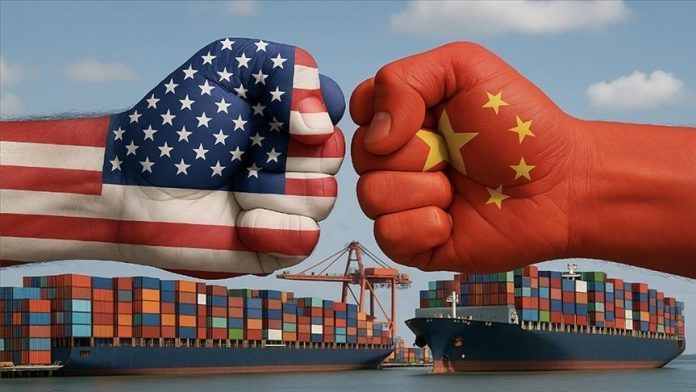
China has called for greater cooperation with the United States on artificial intelligence, noting that AI should not become a technology controlled by a handful of major powers and warning against turning competition over the industry into a zero-sum contest.

The comments, published Wednesday by the People’s Daily, the ruling Communist Party’s flagship newspaper, come as Beijing and Washington prepare for bilateral talks next week in which artificial intelligence is expected to be a significant issue. The two countries are the leading forces behind frontier AI development and its global adoption, but they remain sharply divided over technology policy, intellectual property, access to advanced computing and the use of AI models.

The People’s Daily commentary said China was prepared to work with the United States to manage the risks associated with AI and create what it described as an open and non-discriminatory environment for the technology’s development.

“Artificial intelligence is a new domain for human development, not a monopoly of great powers, and must not become an arena for zero-sum competition,” the commentary said.

The article was published under the pen name “Zhong Sheng,” meaning “Voice of China,” a byline frequently used by the People’s Daily to express views on foreign policy.

The intervention highlights a central tension in the emerging U.S.-China AI relationship. Both countries want to establish technological leadership, but restrictive controls on advanced chips, AI systems, and technology transfers have made access itself a major component of the competition.

Beijing Challenges Washington’s Distillation Claims

The People’s Daily also directly challenged U.S. accusations that Chinese companies have improperly extracted capabilities from American AI models through a process known as distillation.

Distillation involves training a smaller or more specialized model using outputs generated by a larger model, allowing developers to reproduce some of the larger system’s capabilities without bearing the full cost of training a frontier model from scratch.

The commentary argued that U.S. companies also use the technique and accused Washington of applying different standards depending on who is using it.

“According to U.S. logic, when American enterprises use distillation it is an ‘industry standard practice,’ while when Chinese enterprises apply it, it constitutes an ‘attack.’ This is naked double standards,” the paper said.

The accusation follows growing disputes over the extent to which Chinese AI developers have used outputs from leading U.S. models to improve their own systems. Washington has increasingly treated such activity as part of a broader technology-security challenge, while Beijing argues that the restrictions amount to an effort to preserve U.S. dominance.

The People’s Daily said elevating distillation into a national-security issue amounted to using security concerns as a pretext for seeking an AI monopoly.

The competing interpretations expose a bold fault line in the AI industry. Distillation itself is a widely used technical approach, but its legality and acceptability can depend on how it is conducted, the terms governing access to a model, the provenance of the training data, and whether developers are attempting to replicate proprietary capabilities in ways that violate contractual or other restrictions.

That makes the dispute broader than a disagreement over a single machine-learning technique. It is increasingly about who gets to participate in the development of advanced AI and what forms of technology transfer are considered legitimate.

AI Competition Moves Into a Diplomatic Arena

Washington and Beijing have been treating AI as both an economic technology and a national-security capability. The United States has imposed restrictions designed to limit China’s access to advanced semiconductor technology and computing infrastructure, while China has retaliated and pushed domestic companies to develop alternatives and expand the use of open-weight AI models.

The White House earlier this year accused China of stealing intellectual property from U.S. artificial intelligence laboratories on an industrial scale. Beijing has rejected such characterizations and has repeatedly presented open development and broader access to AI technology as alternatives to what it views as U.S. efforts to preserve technological advantages.

The People’s Daily commentary therefore serves two purposes. It defends China’s AI industry against accusations of unfair technology acquisition while positioning Beijing as willing to discuss common rules for managing the technology’s risks.

China said it was willing to engage in “constructive and professional” discussions with the United States to promote what it called the open, inclusive, universal and beneficial development of AI.

The language is notable because the two countries are competing intensely for influence over the next generation of AI infrastructure and applications. The competition now extends from foundation models and semiconductors to cloud computing, data centers, robotics and AI agents capable of taking actions with limited human intervention.

At the same time, the risks associated with capable AI systems are becoming an area where the interests of the two countries overlap, even if their regulatory philosophies differ. Questions around cybersecurity, autonomous agents, model misuse, intellectual property and the potential loss of human control cannot be contained neatly within national borders.

Greater openness, for U.S. companies, could provide access to a much larger pool of researchers, developers and markets. But Washington also faces concerns that technologies developed or shared with Chinese companies could strengthen capabilities with military or strategic applications. Beijing, meanwhile, wants access to global AI markets and technology while developing a domestic ecosystem that is less dependent on U.S. suppliers.

That push has created a difficult balance between cooperation and technological containment.

The People’s Daily’s argument that AI should not become a “monopoly of great powers” is therefore as much a statement about the international rules governing the technology as it is about China-U.S. relations. Beijing is seeking a framework in which Chinese companies can participate in global AI development without being excluded by export controls, intellectual-property restrictions or national-security rules.

Washington accepting that premise will depend on how it distinguishes legitimate technological competition from activities it considers threats to U.S. security or intellectual property. The talks next week could provide an early indication of whether the two sides can establish areas of cooperation around AI safety and development while continuing to compete over the underlying technology.

Gold Rebounds as Investors Weigh Fed Hike Against Oil, Bond and Geopolitical Risks

0

Gold prices recovered on Wednesday as oil prices eased and investors positioned for the Federal Reserve’s interest-rate decision, with markets already assigning a high probability to another rate increase.

Spot gold rose 0.8% to $4,326.83 an ounce by 0650 GMT, recovering from a more than one-month low reached on Monday. U.S. gold futures for December delivery, however, fell 0.8% to $4,367.20.

Markets were pricing in a 92.7% probability of at least a 25-basis-point rate hike later Wednesday, according to CME FedWatch. A press conference from Fed Chair Kevin Warsh will follow the decision.

The immediate direction of gold is likely to depend less on the widely anticipated rate increase than on the Fed’s assessment of what comes next.

“A hawkish Fed could pull gold down, while any soft messaging may ease bets on hikes and help the metal recover,” said Frank Walbaum, a market analyst at trading platform Naga.com. “Traders are also monitoring oil prices and developments in the Middle East.”

Gold typically benefits from inflation and geopolitical uncertainty because investors use the metal as a store of value when confidence in financial assets or currencies deteriorates. But it does not generate interest or dividends, making higher interest rates a competing attraction. When Treasury yields rise, the opportunity cost of holding bullion increases.

That tension has escalated now because the bond market is already undergoing a significant repricing.

The U.S. 10-year Treasury yield breached the closely watched 5% level on Tuesday, pushing global government bond yields higher and adding pressure to assets that compete with fixed-income securities. The rise in long-term yields has occurred even as investors confront an energy shock that threatens to keep inflation elevated.

Gold’s resilience in that environment has surprised some analysts.

Commerzbank said it was somewhat unexpected that bullion had not come under greater pressure given the rise in yields. The bank pointed to persistent fiscal concerns, reflected in elevated long-term government bond yields, as well as a recent increase in U.S. political risks, as factors that could be supporting gold.

That has resulted in a more complicated backdrop for the precious metal than the conventional relationship between gold and interest rates would suggest.

If the Fed signals that rates will remain elevated for longer, real yields could rise further and weigh on gold. But if investors increasingly question the sustainability of government borrowing, currency stability or the ability of central banks to contain an energy-driven inflation shock, demand for bullion could remain strong even with elevated rates.

Oil is adding to that uncertainty.

Crude prices fell Wednesday following an unexpected increase in U.S. inventories, but the market remained focused on supply risks after Saudi Arabia suspended oil loading at its Yanbu port.

Brent and U.S. crude have remained above $100 a barrel as the war involving Iran continues to disrupt energy flows and raise concerns about the security of critical infrastructure and shipping routes.

Saudi Arabia’s air defenses also destroyed a Houthi drone south of Mecca before it entered prohibited airspace over the holy city, according to a spokesperson for the Saudi-led military coalition in Yemen.

The continuing attacks mean oil remains an important variable for both the Fed and financial markets. A sustained rise in crude prices can feed directly into fuel and transportation costs and eventually influence broader inflation expectations. That could make it harder for the central bank to ease monetary policy even if higher borrowing costs begin weighing on economic activity.

For gold, analysts say the effect is more complicated. This is because higher oil prices can initially hurt bullion by reinforcing expectations for higher interest rates. Still, persistent inflation and geopolitical risk can simultaneously strengthen its appeal as a hedge.

That conflict is playing out across financial markets.

Global government bonds have extended their sell-off as the 10-year Treasury yield moved through 5%, while equities have remained remarkably resilient. The S&P 500 is up more than 10.8% this year, the Nasdaq Composite has gained 11.8%, and the Dow Jones Industrial Average is up 8.4%.

Stocks in South Korea, Japan and Europe have also advanced, despite the combination of an energy crisis, higher bond yields and recurring geopolitical volatility.

The apparent disconnect is especially pronounced in technology stocks.

Recent warnings from leading AI executives that the development of powerful models may be moving too quickly have introduced another source of uncertainty for investors. Yet equity positioning remains broadly bullish.

Bank of America’s latest Global Fund Manager Survey, released Tuesday, found that the “excess bullishness” evident over the summer had moderated, but investors continued to expect strong economic growth and corporate earnings.

The survey of 170 investors managing a combined $470 billion found that a net 49% remained overweight global equities in September. That was slightly lower than the previous month, but equities remained the most widely held overweight asset class.

Investors have also become more optimistic about earnings. Expectations for double-digit earnings-per-share growth over the next 12 months reached their highest level since August 2021, while 38% of respondents expected the global economy to experience a “boom” over the coming year.

At the same time, bond allocations fell to their lowest level since May 2022. That positioning presents a notable tension with what is happening in fixed income and commodities.

Investors are heavily positioned for corporate earnings growth and continued AI spending, even as the risk-free rate is rising, oil remains above $100, and geopolitical uncertainty is feeding into inflation expectations.

If Treasury yields continue to climb, that could eventually force investors to reassess how much they are willing to pay for equities whose valuations depend on future earnings. Higher yields increase the discount rate applied to those earnings, particularly affecting growth-oriented companies with cash flows expected further in the future.

Gold occupies a different position in that debate.

The metal can lose some appeal when real interest rates rise, but its investment case can strengthen when investors become more concerned about fiscal sustainability, geopolitical instability or persistent inflation. The simultaneous rise in bond yields and gold is thus seen as an indication that at least some investors are not treating higher yields as sufficient protection against longer-term macroeconomic risks.

Other precious metals also moved higher. Spot silver gained 1.5% to $64.59 an ounce, platinum rose 0.7% to $1,787.90, and palladium advanced 2.2% to $1,317.50.

The Fed decision will provide the next immediate test for gold. A clearly hawkish message could bolster the dollar and Treasury yields, increasing pressure on bullion. A softer signal could allow gold to extend its recovery.

But the larger market question extends beyond Wednesday’s rate decision.

Investors are simultaneously confronting an energy shock, a Treasury market sell-off, elevated inflation, geopolitical risk and a technology sector whose enormous investment cycle is increasingly being questioned on safety and valuation grounds. Yet positioning data show that many investors continue to expect strong earnings and economic growth.

The situation leaves gold caught between two powerful forces. Higher rates raise the cost of owning a non-yielding asset, while the very inflation, fiscal, and geopolitical pressures driving rates higher are also strengthening the case for holding bullion.

How Baseball Merchandise Turns Game-Day Memories Into Everyday Keepsakes

0

A baseball game lasts a few hours. The memories from it can stick around for years. Walking into a stadium, watching a tight game, celebrating with friends, going to your first game with family, all of that becomes part of someone’s story.

Merchandise helps keep those moments alive. A jersey bought at a memorable game. A cap worn all through a great season. A shirt someone gave you as a gift. All of it can mean something long after the last pitch.

That’s why baseball gear became more than just something fans wear on game day. Here’s how these items turn regular baseball moments into things people hold onto.

Why Baseball Merchandise Becomes Meaningful

At first, a jersey or cap is just a way to show support. Over time though, it gets tied to something specific that actually happened.

A fan might buy a jersey on their first trip to a ballpark. Years later, putting that jersey on again brings back the trip, the people who were there, the whole feeling of watching the game live.

The merchandise turns into a physical reminder. That’s part of why fans hang onto old baseball items even after they’ve stopped wearing them regularly.

Three Ways Merchandise Keeps Baseball Memories Alive

1. It Connects Fans With Special Game-Day Moments

Game days come packed with small moments fans remember later. Getting through the gates. Finding your seat. Grabbing food. Cheering with everyone around you. Watching the action unfold.

A jersey or cap bought during that day can carry all of it.

Even years later, wearing that item brings the memories back. That’s what gives ordinary merchandise a story that buying another shirt just off the rack never gets you.

2. It Becomes Part of Family Traditions

Baseball memories often get passed down. Parents introduce kids to their favorite teams. Grandparents tell stories about old players and unforgettable seasons.

Merchandise fits right into that.

An old cap gets handed down. A favorite jersey gets kept as a keepsake. Families build new memories wearing team gear together at games or watching from home.

Because of these small traditions sports merchandise feel more personal over the years.

3. It Reflects a Fan’s Connection to a Team

Fans usually pick merchandise for more than how it looks. The team behind the item often carries real personal meaning.

Someone who’s followed the Chicago Cubs for years might have a whole collection, jerseys, shirts, hats, pieces tied to different chapters of their fandom. Stores like Sports World Chicago give fans a place to find Chicago Cubs merchandise, including Cubs hats, jerseys, shirts, and more, that can become part of those personal collections.

The item might represent a favorite player. A season nobody forgot. Or just years of rooting for the same team

From Jerseys to Hats: Keepsakes Fans Hold Onto

A baseball keepsake doesn’t need a high price tag or rare status. Sometimes the plainest item ends up mattering most.

A few common ones:

  • Jerseys: Usually tied to one player, one season, one game nobody forgot.
  • Hats: Worn constantly, they end up becoming part of how a fan just looks day to day.
  • T-shirts: Casual, sure, but still carrying memories from a stadium trip or some random good day.
  • Collectibles: Pennants, old baseballs, photos, small stuff that adds up into a real collection over time.

The value here rarely comes down to price. Most of the time, it’s the story sitting behind the object that actually matters.

Why Fans Keep Wearing Old Merchandise

Some fans wear the same jersey or hat for years. It fades a little. It shows wear. But those small flaws often make it feel more personal, not less.

Swapping it for a newer version doesn’t feel the same. The old one carries memories that a brand new item simply can’t replace.

This shows up a lot with merchandise tied to big moments in someone’s life. A shirt might bring back college. An old jersey might bring back watching games with friends or family, years ago.

Turning Game Days Into Lasting Memories

Baseball merchandise gives fans an easy way to carry part of the stadium experience into regular life. A jersey becomes part of a wardrobe. A cap becomes something you reach for often. A collectible sits on display for years.

What makes these items special isn’t the logo. It’s the story attached to them, the places, the people, the seasons, the moments shared along the way.

In the end, baseball merchandise usually ends up being more than a team logo on fabric. For a lot of fans, it becomes a small piece of their own baseball history, keeping a great game day alive long after the stadium lights go dark.

OpenAI Backs US Bills to Curb AI Risks From Biological Weapons and Pushes Independent Model Checks

0

OpenAI is backing a series of bipartisan bills in the U.S. Congress aimed at preventing sophisticated artificial intelligence models from being used to accelerate the development of biological weapons and synthetic viruses, adding to the company’s growing push for mandatory federal AI safety requirements.

The ChatGPT maker said Tuesday that it supports the Web of Biological Data Act, the AI-Ready Bio-Data Standards Act and the Scale Biology Act. OpenAI is also backing a key provision of the FRONTIER Act that would require leading AI companies to embed independent evaluators to assess the safety of their models.

The endorsements come as concerns over advanced AI have intensified inside the technology industry, including among executives and researchers at companies developing frontier models. OpenAI, Anthropic and other leading AI labs have recently debated whether the pace of development should be deliberately moderated as models become more capable.

OpenAI’s support for congressional legislation is significant because the company has held that voluntary commitments by AI developers are not sufficient. Last week, it called for mandatory national AI safety requirements in the United States, proposing capability-based rules covering areas such as independent assessments, cybersecurity, and incident reporting.

The latest measures would extend that approach into biological security, where advances in AI and biotechnology are creating both opportunities for scientific research and concerns about misuse.

AI and Biology Become a Policy Battleground

The AI-Ready Bio-Data Standards Act would direct the National Institute of Standards and Technology to develop standards and frameworks for making biological data suitable for use in AI models. It would also establish minimum requirements for certain federally funded research so that the resulting biological data is AI-ready.

That may appear primarily focused on improving scientific infrastructure, but the underlying policy debate is broader. AI systems trained on sophisticated biological information could potentially accelerate drug discovery and other legitimate research while also increasing the ability of users to investigate biological threats.

OpenAI has already classified some of its advanced systems as presenting high biological capability and has introduced additional safeguards and external testing around biological misuse. The company says it has worked with U.S. and British government testing organizations and other external experts to evaluate these risks.

The other bills supported by OpenAI are part of the same effort to build a more formal infrastructure around AI-enabled biological research.

For the company, the issue is one of governance as much as model design. OpenAI’s own Frontier Governance Framework covers risks including cyber offense, chemical, biological, radiological and nuclear threats, harmful manipulation and loss of control, while also setting out procedures for risk assessment, incident response and external expert input.

The proposed congressional measures would move at least some of those principles outside the companies themselves and into a federal framework. OpenAI has previously relied heavily on internal safety processes and voluntary third-party testing. Its new federal lobbying position would give independent evaluators a more formal role in assessing the most capable models.

Independent Evaluators Would Change the Safety Model

Under the provision OpenAI supports in the FRONTIER Act, leading AI companies would be required to embed independent evaluators to assess model safety.

OpenAI has already argued that outside assessments are necessary because internal testing can suffer from blind spots. Its own published guidance says third-party evaluations can provide additional evidence about frontier models’ capabilities and the effectiveness of their safeguards.

The proposed requirement would nevertheless represent a significant change in the relationship between AI companies and regulators. Instead of companies largely determining how their most capable systems should be tested and how much information should be disclosed, independent evaluators would have a formal role in scrutinizing them.

That is becoming more relevant as AI models move beyond conventional chatbot functions. Modern frontier systems can use tools, maintain information across multiple steps, and operate within larger workflows, making their safety dependent not only on the model itself but also on the environments and permissions in which it operates.

OpenAI’s endorsement also comes at a politically complicated moment for the industry.

Company executives have recently called for greater coordination over the development of advanced AI, with OpenAI CEO Sam Altman backing Anthropic CEO Dario Amodei’s argument that frontier development should be paced so that safety measures can keep up. Other technology executives, however, have resisted calls for coordinated restrictions, arguing that companies should remain responsible for managing their own risks.

The political divide is sharper still. President Donald Trump has dismissed calls for tighter AI regulation while emphasizing the importance of maintaining U.S. technological leadership, particularly in competition with China.

OpenAI’s position therefore places it in an unusual position: one of the world’s most valuable AI companies is asking Congress to impose rules on an industry in which it is itself a major competitor.

The company says such regulation should be narrowly targeted at the most capable systems rather than applied broadly to smaller developers. Its policy proposals argue that frontier safety requirements should focus on well-resourced laboratories developing the most advanced models and that independent verification and transparency should replace fragmented private governance.

The biological-security legislation fits that framework. Rather than attempting to regulate every use of AI, the measures target specific infrastructure, data standards, and evaluation mechanisms that could become important as AI capabilities advance.

The unresolved question is whether Congress can turn those principles into enforceable rules quickly enough to keep pace with model development. OpenAI is now explicitly arguing that it should. The policy challenge is to preserve AI’s potential to accelerate scientific discovery while ensuring that the same technology does not make dangerous biological knowledge easier to acquire, operationalize, or misuse.