DD
MM
YYYY

PAGES

DD
MM
YYYY

spot_img

PAGES

Home Blog Page 3

Anthropic Strikes $40bn Infrastructure Deal with xAI’s, Turning Musk’s AI Ambitions Into a Compute Landlord Business

0

Anthropic has struck one of the largest infrastructure agreements yet in the artificial intelligence race, committing to pay more than $40 billion over four years for computing capacity from xAI, according to disclosures contained in SpaceX’s S-1 filing.

The agreement gives Anthropic access to 300 megawatts of compute capacity at xAI’s Colossus 1 data center near Memphis, effectively securing the facility’s entire output. Anthropic will pay approximately $1.25 billion per month through May 2029, although the first two months come at a discounted rate while xAI completes deployment ramp-ups.

The transaction indicates that the economics of artificial intelligence are rapidly shifting from purely model development toward control of power-intensive infrastructure. In the AI industry, access to electricity, advanced chips, and large-scale data centers has increasingly become as strategically important as the models themselves.

For xAI, the agreement offers a massive new revenue stream at a critical moment. Elon Musk’s AI company has spent aggressively building GPU clusters to compete with rivals, including Anthropic, OpenAI, and Google. But maintaining unused compute infrastructure is extraordinarily expensive, particularly as companies race to deploy hundreds of thousands of Nvidia AI chips.

SpaceX described the arrangement as a way to “monetize unused compute capacity in our infrastructure,” adding in the filing that it expects to pursue “additional similar services contracts.”

The language points to an emerging hybrid strategy in the AI sector. Rather than using infrastructure solely for internal AI development, xAI is increasingly acting like a commercial cloud provider, leasing excess capacity to outside companies when utilization drops below planned levels.

That model has become known in Silicon Valley as the “neocloud” approach, where AI firms attempt to offset the staggering cost of building hyperscale computing clusters by selling spare compute to rivals, startups, or enterprises.

The agreement also reveals how quickly competitive lines are blurring in the AI race. Anthropic and xAI are direct rivals in foundation models and AI assistants, yet Anthropic is now relying on Musk’s infrastructure to expand its own capabilities.

The deal may also signal that xAI built more infrastructure than it currently needs. The company has invested heavily in Colossus, which was promoted as one of the world’s largest AI supercomputing clusters. However, recent reports of slowing usage for xAI’s Grok chatbot suggest parts of that capacity may not have been fully utilized.

xAI can convert idle assets into recurring revenue while preserving its long-term expansion plans by leasing the infrastructure to Anthropic.

The arrangement also reflects mounting financial pressure across the AI industry. Training and operating frontier AI systems now require enormous capital expenditures, forcing companies to search for alternative monetization strategies.

Infrastructure spending across the AI ecosystem has surged dramatically over the past two years. Hyperscalers and AI labs are collectively projected to spend hundreds of billions of dollars annually on data centers, networking equipment, advanced cooling systems, and power procurement.

At the center of the spending boom is Nvidia, whose AI chips remain the industry standard for training large language models. But acquiring GPUs alone is no longer sufficient. Companies now need access to reliable electricity grids, land, fiber connectivity, and advanced cooling systems capable of handling increasingly dense AI clusters.

The scale of the Anthropic-xAI agreement highlights how compute itself is becoming a tradable commodity in the AI economy. The structure also gives both sides flexibility. According to the filing, either company can terminate the arrangement with 90 days’ notice. That clause could prove important in an industry where technological shifts, regulatory changes, and competitive dynamics move rapidly.

For Anthropic, securing long-duration compute access helps reduce dependence on traditional cloud providers while guaranteeing access to scarce infrastructure as demand for AI accelerates. The company has been aggressively expanding capacity in recent months amid rising adoption of its Claude models across enterprise and developer markets.

The deal is expected to strengthen investor confidence ahead of any future public market ambitions. Generating stable, long-term infrastructure revenue may help offset concerns about the profitability and adoption trajectory of Grok and other consumer-facing AI products.


SpaceX Releases IPO Filing, Reveals Costly Bet on AI, Starship, and Musk’s Vision for a Space-Based Economy

0

SpaceX has unveiled the clearest picture yet of a sprawling technology empire that has evolved far beyond reusable rockets, as the company prepares for what could become the largest stock market debut in history.

The company’s long-awaited S-1 filing, released after markets closed Wednesday, reveals a business increasingly driven by satellite internet, artificial intelligence infrastructure, and orbital computing ambitions, even as founder Elon Musk continues to frame Mars colonization as the company’s ultimate mission. When SpaceX lists on the Nasdaq later this year under the ticker “SPCX,” it is expected to debut at a valuation of roughly $1.75 trillion while targeting as much as $75 billion in fresh capital, potentially making it the biggest IPO ever attempted.

The filing lays bare the enormous costs behind Musk’s ambitions. SpaceX generated more than $18 billion in revenue in 2025 but still posted a net loss of about $4.9 billion, extending cumulative losses since inception to more than $37 billion. The document also highlights how aggressively the company is repositioning itself around artificial intelligence and data infrastructure, areas now consuming a substantial portion of its capital spending.

AI Push Deepens Financial Strain

A major focus of the filing is the integration of Musk’s artificial intelligence company xAI into the broader SpaceX ecosystem, a move that has dramatically altered the company’s spending profile. According to the filing, roughly 60% of SpaceX’s capital expenditure in 2025, or about $20 billion, was directed toward its AI division, which houses chatbot Grok and related computing infrastructure.

Yet the AI unit remains deeply unprofitable. The division lost billions of dollars last year while revenue growth reached only about 22%, significantly below the growth rates reported by several competing frontier AI firms.

The filing underscores how Musk is increasingly positioning SpaceX not simply as a launch company, but as a vertically integrated infrastructure platform spanning satellites, AI models, cloud computing, and space-based communications. Legal complications tied to the integration of Musk’s artificial intelligence and social media businesses are also becoming more visible. SpaceX disclosed that ongoing legal disputes connected to those consolidations could cost the company approximately $530 million.

Despite the heavy AI spending, Starlink remains the financial backbone of the company.

The satellite internet business generated about $11 billion in revenue in 2025, accounting for more than half of total company sales and reinforcing its importance in funding SpaceX’s broader ambitions. Starlink has become increasingly central to global communications infrastructure, particularly in remote regions, military operations, and emerging markets where traditional broadband deployment remains limited.

Its success has helped transform SpaceX from a capital-intensive aerospace startup into one of the world’s most valuable private companies. Still, the filing makes clear that much of SpaceX’s future remains tied to Starship, the fully reusable heavy-lift rocket that Musk sees as the foundation for both interplanetary travel and a radically cheaper orbital economy.

Starship Remains the Critical Gamble

The company disclosed that its space segment spent $3 billion on Starship research and development in 2025 alone, followed by another $930 million in the first quarter of 2026.

Those investments come after years of technical setbacks, explosions, and redesigns that have repeatedly delayed the rocket’s operational timeline. SpaceX now says it expects Starship to begin payload delivery missions in the second half of 2026, leaving little room for additional delays given the scale of infrastructure projects tied to the rocket’s success.

Assuming the timeline holds, SpaceX plans to begin deploying Starlink satellites via Starship later in 2026, followed by next-generation V2 mobile satellites in 2027.

The company’s ambitions stretch even further. The filing outlines plans to use Starship for Mars exploration, ultra-heavy cargo missions, and orbital AI data centers, an idea that reflects Musk’s broader vision of moving large-scale computing infrastructure into space.

SpaceX argues that Starship could reduce the cost of reaching orbit by more than 99% relative to historical launch costs, potentially reshaping economics across telecommunications, defense, manufacturing, and AI infrastructure. That argument forms a central pillar of the IPO narrative. Investors are not simply being asked to fund a rocket company, but a platform seeking to dominate multiple strategic industries simultaneously.

The filing also confirms the extent of Musk’s control over the company. Musk currently owns 93.6% of SpaceX’s Class B shares, which carry 10 votes each, giving him about 85.1% of total voting power before the IPO. Although that figure is expected to decline after the listing, Musk is still projected to retain majority voting control, allowing SpaceX to avoid certain governance requirements tied to independent board oversight.

The structure mirrors Musk’s broader approach across his companies, where he has consistently maintained outsized control even as outside investors poured in billions of dollars.

The IPO arrives at a pivotal moment when investor demand for artificial intelligence infrastructure companies has surged since the launch of ChatGPT in 2022, while governments increasingly view space, semiconductors, and AI as strategically linked sectors.

SpaceX now sits at the intersection of all three.

OpenAI Reportedly Moves To File Historic IPO in Coming Days

0

OpenAI is preparing to confidentially file draft paperwork for an initial public offering as soon as Friday, setting the stage for what could become one of the largest and most closely watched stock market debuts in modern corporate history.

The move comes as the artificial intelligence company accelerates efforts to formalize its structure, deepen relationships with major financial institutions, and secure the massive capital required to sustain the global AI infrastructure race currently reshaping the technology industry.

People familiar with the matter told CNBC that OpenAI is working with Goldman Sachs and Morgan Stanley on preparations for a confidential IPO filing in the coming days or weeks. The company, currently valued at more than $850 billion by private investors, has emerged as the central force behind the generative AI boom triggered by the launch of ChatGPT in late 2022.

A confidential filing would allow OpenAI to begin discussions with regulators while keeping detailed financial information away from public view until closer to the listing date. Such filings are commonly used by high-profile technology companies seeking flexibility before formally launching an IPO roadshow.

“As part of normal governance, we regularly evaluate a range of strategic options,” an OpenAI representative said in a statement. “Our focus remains on execution.”

The planned listing would mark a defining moment not only for OpenAI but for the broader AI economy that has sparked an unprecedented scramble for computing power, semiconductors, data centers, and enterprise software infrastructure.

OpenAI’s public market debut is expected to test investor appetite for companies operating at the center of the AI spending boom. Analysts estimate that hundreds of billions of dollars will flow into AI infrastructure over the next several years as technology giants race to build increasingly advanced models.

The company has already signaled the scale of its ambitions. OpenAI recently announced a new “Guaranteed Capacity” programme allowing customers to secure long-term access to computing power for AI products, agents, and enterprise workflows.

Chief Executive Officer Sam Altman said customers were increasingly demanding certainty around compute availability as the industry faces mounting capacity constraints.

“As models get better, we expect that the world will be capacity-constrained for some time,” Altman wrote in a post on X.

OpenAI has reportedly told investors it could spend roughly $600 billion on compute infrastructure by 2030, underscoring the enormous financial demands associated with training and operating frontier AI systems.

The IPO preparations also arrive amid growing pressure on OpenAI to evolve from a research-focused organization into a more mature commercial enterprise capable of handling the scrutiny of public markets. Chief Financial Officer Sarah Friar told CNBC last month that it was “good hygiene” for a company of OpenAI’s scale to “look and feel and act” like a public company, although she declined to comment on a specific listing timeline.

OpenAI’s transformation has been rapid. Founded in 2015 as a nonprofit research lab by Altman, Elon Musk, and other Silicon Valley figures, the company was originally positioned as a counterweight to the dominance of large technology firms in artificial intelligence research.

However, the soaring costs of developing advanced AI models pushed OpenAI toward a capped-profit structure and deep commercial partnerships, most notably with Microsoft, which has invested tens of billions of dollars into the company and integrated OpenAI technology across its products and cloud infrastructure.

That evolution triggered years of criticism and legal disputes, particularly from Musk, who accused OpenAI of abandoning its original nonprofit mission. Earlier this week, however, a California jury cleared Altman, OpenAI, and Microsoft of liability in Musk’s high-profile lawsuit, handing the company a major legal victory as it moves closer to the public markets.

The timing of the IPO push is also significant for Wall Street. Investment banks have been searching for a blockbuster technology listing after years of sluggish IPO activity caused by high interest rates, geopolitical tensions, and market volatility. A successful OpenAI flotation could reignite the broader U.S. listings market and generate enormous underwriting fees for participating banks.

The company’s valuation trajectory already places it among the most valuable private firms in the world, rivaling the scale of major public technology giants. Investors have continued pouring capital into AI companies amid expectations that generative AI will fundamentally alter industries ranging from finance and healthcare to software engineering and manufacturing.

OpenAI’s rise has simultaneously intensified competition across Silicon Valley. Rivals including Google, Anthropic, Meta, and Musk’s xAI have dramatically increased spending on AI chips, data centers, and research talent in an effort to keep pace.

The company’s growing influence has also drawn increasing scrutiny from regulators globally over competition, data governance, copyright issues, and the concentration of AI infrastructure within a handful of dominant firms. Still, investor enthusiasm around AI remains strong. Semiconductor makers, cloud providers, and AI infrastructure companies have seen their valuations soar over the past two years as demand for advanced computing systems surged.

For OpenAI, going public would provide access to even deeper pools of capital needed to finance the next phase of AI expansion while giving existing investors and employees a clearer path to liquidity. If completed at anything close to current private market valuations, the listing could rank among the largest technology IPOs ever attempted, cementing OpenAI’s position at the center of the global AI economy.

The Fusion of Gemini Flash 3.5 with Google Maps

0

At this year’s, the headlines were dominated by familiar themes. The industry obsessed over agentic AI, benchmark wars, and whether Gemini Flash 3.5 justified the expectations surrounding Google’s latest generation of models. Yet beneath the noise of chatbot demos and productivity assistants, Google DeepMind may have quietly unveiled one of the most important breakthroughs in artificial intelligence this year: the fusion of Project Genie with Google Maps.

The significance of this move cannot be overstated. Genie 3, DeepMind’s real-time world model, is no longer operating as a disconnected experimental simulation engine. By integrating it with the immense geographic memory of Google Maps and Street View, the company has effectively created a system capable of generating explorable, interactive 3D environments rooted in the physical world itself.

The scale is staggering: over 280 billion Street View images collected across two decades and spanning 110 countries now serve as training and grounding data for an AI that can reconstruct navigable digital worlds in real time.

For years, AI development has largely focused on language. Large language models became astonishingly capable at generating text, writing code, summarizing documents, and mimicking conversation. But language intelligence alone has limitations. Human beings do not experience reality as streams of tokens. We live in space. We navigate environments, understand geometry, predict motion, and interact physically with the world around us.

Spatial intelligence is the missing layer between artificial reasoning and embodied understanding. That is what makes Genie 3 potentially transformative. Rather than merely responding to prompts with static outputs, the system models environments dynamically. A user can move through generated spaces, explore streets, navigate buildings, and interact with coherent 3D representations derived from real geographic data. This is not simply image generation at a larger scale. It is world generation.

The implications extend far beyond gaming or virtual tourism. By anchoring AI-generated worlds to Google Maps infrastructure, DeepMind is building something closer to a planetary simulation layer. Imagine robotics systems trained inside accurate digital replicas of real cities before deployment in the physical world. Imagine autonomous vehicles rehearsing millions of driving scenarios across photorealistic reconstructions of actual roads. Urban planners could simulate traffic flows, disaster responses, or infrastructure changes in living digital twins of entire metropolitan regions.

Education and accessibility could also change dramatically. A student in Lagos could walk virtually through ancient ruins in Greece, dense Tokyo neighborhoods, or remote national parks using AI-generated environments that respond interactively rather than functioning as passive videos. Architects and engineers could collaborate inside persistent world models before construction even begins. Emergency responders could rehearse operations inside AI-generated replicas of dangerous environments without real-world risk.

More importantly, Genie 3 hints at the direction artificial general intelligence may ultimately require. Intelligence is not just linguistic prediction. It involves understanding persistence, causality, depth, movement, and interaction within environments. A system that comprehends how objects behave in space acquires a more grounded form of reasoning.

In many ways, DeepMind’s work echoes the cognitive development of humans themselves: babies learn physical reality long before they learn language. The strategic advantage for Google is equally profound. No other company possesses a mapping dataset remotely comparable to Google’s. The combination of Street View, Maps, satellite imagery, and years of geographic indexing gives Google a unique foundation for training world models at planetary scale.

Competitors may have strong language models, but spatial data of this magnitude is extraordinarily difficult to replicate. OpenAI, Anthropic, and xAI can build conversational agents, but constructing a real-time, explorable simulation of Earth requires decades of geographic accumulation and infrastructure investment. This also reframes the future competitive landscape of AI.

The next major frontier may not be smarter chatbots, but intelligent systems capable of modeling reality itself. Whoever controls the best world models could dominate robotics, autonomous systems, simulation training, AR interfaces, and eventually humanoid AI agents that must operate safely in physical environments. Ironically, the most consequential announcement at I/O 2026 may have arrived almost quietly.

While audiences debated model latency and benchmark scores, DeepMind revealed something much larger: an AI system beginning to understand the structure of the world humans actually inhabit. If large language models taught machines to speak, Genie 3 may represent the moment they started learning to see, navigate, and experience reality spatially.

China Confirms 200 Boeing Mega-Order in Major Signal of Stabilizing U.S.-China Trade Ties

0

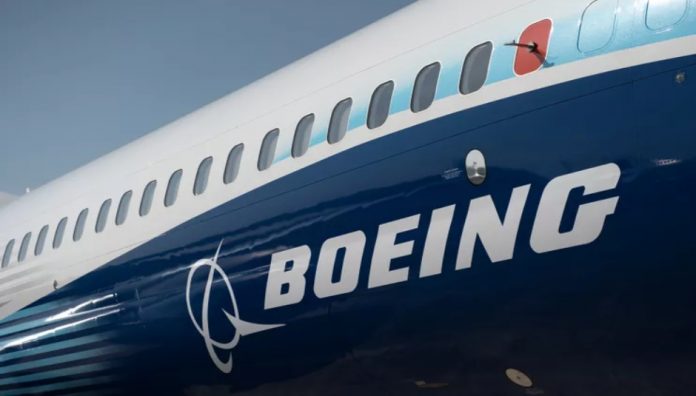
China on Wednesday confirmed an agreement to purchase 200 aircraft from Boeing, alongside engines and spare parts, marking Beijing’s largest publicly acknowledged order from the U.S. aerospace giant in years and a significant breakthrough in strained trade relations between the world’s two biggest economies.

The announcement gives Boeing a badly needed commercial and geopolitical win after years of deteriorating ties between Washington and Beijing, regulatory disputes, and supply-chain turbulence that sharply curtailed Chinese purchases of U.S.-made aircraft.

A spokesperson for China’s Commerce Ministry said the transaction was aligned with understandings reached during recent talks between Chinese President Xi Jinping and U.S. President Donald Trump.

“In accordance with the important consensus reached by the Chinese and U.S. leaders, China’s aviation industry will introduce 200 Boeing aircraft based on commercial principles and its own needs for air transport development,” the official said.

The ministry added that aviation cooperation remained an important pillar of broader U.S.-China economic relations.

The confirmation follows remarks by Trump last week in which he told Fox News that China had agreed to purchase 200 Boeing planes. At the time, the absence of official Chinese confirmation had raised questions about whether the deal had been finalized.

While the order size fell below some analyst expectations, it still represents the first major Chinese commitment to Boeing aircraft since 2017 and could signal a broader reopening of one of the world’s most strategically important aviation markets. The order is especially important for Boeing because China is projected to become one of the largest sources of global aircraft demand over the next two decades as rising incomes and expanding international travel fuel growth in passenger traffic.

The U.S. planemaker has effectively been locked out of substantial Chinese orders for years amid trade tensions, political friction, and safety concerns surrounding the 737 MAX following two fatal crashes earlier in the decade. During that period, China increasingly shifted purchases toward Airbus, allowing the European manufacturer to strengthen its foothold in the Chinese market while Boeing struggled with production disruptions, regulatory scrutiny, and financial strain.

The latest agreement, therefore, carries significance beyond the commercial value of the aircraft themselves. Analysts see the deal as part of a broader effort by Washington and Beijing to stabilize economic ties even as strategic competition intensifies across technology, semiconductors, artificial intelligence, and national security.

A recent meeting between Trump and Xi produced a series of preliminary understandings involving tariffs, agriculture, and aviation, although many details remain under negotiation. China’s confirmation also suggests Beijing may be attempting to demonstrate goodwill toward U.S. manufacturing industries while maintaining leverage in wider trade talks.

Boeing has spent years attempting to recover from overlapping crises involving aircraft safety investigations, supply-chain disruptions, production delays, and mounting competitive pressure from Airbus. A large Chinese order would help reinforce Boeing’s long-term delivery pipeline and provide fresh momentum as global aviation demand rebounds strongly.

Industry officials in Washington state, where Boeing manufactures most of its commercial aircraft, welcomed the announcement enthusiastically.

“We are very happy to hear about this announcement,” said Andrea Chartock, assistant director at the Washington State Department of Commerce’s Office of Economic Development and Competitiveness.

The state hosts a vast aerospace supply chain tied to Boeing operations, including manufacturers involved in aviation systems, satellites, and space technologies.

“Boeing has a lot of demand, a little bit of a waitlist, so I believe that it’s only logical to me that there would be more orders in the future,” Chartock told CNBC.

The comments underscore expectations that the 200-plane deal may only represent the beginning of a broader recovery in Boeing’s China business.

China’s civil aviation regulator also disclosed earlier this week that it had recently met with Boeing Chief Executive Kelly Orthberg during Trump’s visit to Beijing. Orthberg was part of the U.S. delegation accompanying the president, highlighting how closely intertwined major corporate deals have become with high-level diplomacy.

The agreement additionally includes engines and spare parts, an important detail because after-sales maintenance, servicing, and component contracts often generate substantial recurring revenue for aerospace manufacturers over decades.

For the broader market, the Boeing order serves as another indication that, despite deep rivalry, the United States and China remain economically intertwined in sectors where mutual commercial dependence remains difficult to unwind completely. The aviation industry may now emerge as one of the few areas where both governments still see room for practical cooperation.