DD
MM
YYYY

PAGES

DD
MM
YYYY

spot_img

PAGES

Home Blog Page 30

US–Japan $1 Billion Tech Alliance for AI, Quantum Computing, Fusion Energy, and Biotechnology

0

The United States and Japan have announced a $1 billion partnership aimed at accelerating breakthroughs in artificial intelligence, quantum computing, nuclear fusion, and biotechnology. The initiative reflects a shift toward integrated technological alliances among advanced economies seeking to maintain leadership in frontier science.

The agreement signals coordinated research agendas, shared infrastructure development, and deeper alignment between public institutions, national laboratories, and private sector innovators. It also highlights concerns about technological fragmentation, supply chain resilience, and the strategic control of next-generation computing and energy systems.

In artificial intelligence, the partnership focuses on model development, semiconductor optimization, and safety-aligned deployment frameworks.

Both countries aim to pool compute resources, accelerate chip design innovation, and improve energy efficiency in large-scale training systems. Japan contributes robotics integration and industrial automation expertise, while the United States provides foundation model research and cloud-scale infrastructure.

Joint initiatives will prioritize secure AI systems for defense, healthcare, and manufacturing, while reducing dependency on single-vendor ecosystems through diversified hardware and software stacks, alongside talent exchange and joint funding mechanisms efforts.

Quantum computing is a pillar of the agreement, targeting advances in qubit stability, error correction, and scalable architectures. Collaborative research will involve national laboratories, universities, and quantum startups. The goal is to accelerate quantum advantage in cryptography, materials science, and optimization problems.

By aligning standards and hardware roadmaps, the United States and Japan aim to avoid fragmentation in early-stage ecosystems while positioning themselves ahead of competitors in Europe and China, with interoperability and secure quantum communication as priorities.

Fusion research under the partnership centers on accelerating plasma confinement breakthroughs and advancing tokamak and stellarator designs. Both countries aim to integrate computational modeling with experimental reactor data to reduce time to commercial fusion energy.

Shared investment in supercomputing and advanced materials is expected to improve reactor stability and yield.

The collaboration also seeks common regulatory frameworks for fusion safety and commercialization pathways, positioning fusion as a long-term clean energy alternative, including pilot plant coordination efforts and validation. Biotechnology forms a pillar emphasizing genomic research, bio-manufacturing, and pandemic preparedness.

The United States and Japan will collaborate on synthetic biology platforms, drug discovery pipelines, and AI-driven protein modeling. Investments will enhance vaccine development and strengthen medical supply chains. Ethical frameworks for gene editing and biosecurity will be jointly developed to ensure responsible innovation.

The initiative reflects recognition that biotech is strategically important as digital and energy technologies in national security planning across public and private sectors globally. Geopolitically, the partnership underscores coordinated response to global technology competition.

By aligning research priorities, the United States and Japan aim to reinforce democratic leadership in emerging technologies while reducing reliance on concentrated supply chains. Economically, the initiative is expected to catalyze private investment, stimulate startups, and accelerate commercialization of frontier research.

Challenges remain, including regulatory harmonization, intellectual property management, and high costs of scaling experimental technologies into industrial systems, alongside sustained cross-border coordination efforts and governance alignment efforts.

The $1 billion United States–Japan partnership represents convergence of science, industry, and security priorities. By jointly investing in AI, quantum computing, fusion energy, and biotechnology, both nations position themselves at the forefront of the next technological era.

Success will depend on execution, sustained funding, and coordination across sectors. If successful, it could redefine global innovation leadership and allied technological collaboration long term framework.

Grayscale Report Warns Strategy (MSTR) Faces Growing Constraints in Future Bitcoin Buying Power

0

A recent report from Grayscale Investments has drawn renewed attention to one of the most influential corporate Bitcoin accumulation strategies in the market, focusing on whether Strategy can sustain its aggressive pace of purchasing Bitcoin going forward. The analysis does not question the historical success of the model in isolation, but rather the structural constraints that may increasingly shape its future trajectory.

At the center of the discussion is Strategy’s treasury framework, which relies heavily on capital market access to fund Bitcoin acquisitions. Over the past several years, the company has combined equity issuance, convertible debt, and opportunistic balance sheet engineering to steadily expand its BTC holdings.

This approach has been highly effective during periods of strong investor appetite for Bitcoin-linked equity exposure, particularly when the company’s stock traded at premiums tied to its BTC-per-share growth narrative.

However, Grayscale’s concerns focus on a potential inflection point in that dynamic. As capital markets become more selective and Bitcoin’s volatility cycle matures, Strategy may face increasing friction in raising funds under favorable terms. If equity issuance occurs at lower premiums—or at persistent discounts to net asset value—each incremental Bitcoin purchase could become more dilutive to existing shareholders, reducing the efficiency of the accumulation strategy.

Another structural constraint highlighted is the evolving funding environment for crypto exposure itself. The rise of spot Bitcoin ETFs has altered the competitive landscape for investors seeking BTC exposure without holding the asset directly. These products provide direct, low-friction access to Bitcoin, potentially reducing the unique appeal of corporate wrappers like Strategy’s equity.

As a result, marginal demand for Strategy’s stock as a proxy for Bitcoin exposure may weaken over time, which in turn limits the company’s ability to raise capital at scale. Grayscale’s report also implicitly underscores the feedback loop that has historically supported Strategy’s model. Rising Bitcoin prices tend to lift the company’s balance sheet value, which improves investor sentiment, which then enables more capital raising for additional purchases.

In a less favorable market regime—where Bitcoin consolidates or enters extended drawdowns—that loop can reverse. Equity issuance becomes more expensive, investor enthusiasm wanes, and leverage dynamics become more pronounced. Debt capacity is another focal point of risk. While convertible instruments have provided a relatively flexible funding channel, they are still ultimately tied to market conditions and equity valuation.

If Strategy’s stock fails to maintain strength relative to its liabilities, refinancing or issuing new instruments could become more costly.

This introduces a sensitivity not just to Bitcoin’s price, but to equity market liquidity and risk appetite more broadly. Importantly, Grayscale does not frame these concerns as immediate threats to solvency or operational viability. Instead, the emphasis is on marginal efficiency: whether the next phase of Bitcoin accumulation can be executed with the same capital efficiency as the previous cycles.

In financial engineering terms, the question is whether the “BTC yield per unit of dilution” remains attractive. The broader implication extends beyond Strategy itself. The company has functioned as a high-profile leveraged proxy for Bitcoin exposure within traditional markets. Any slowdown in its acquisition pace could reduce a visible source of institutional demand, potentially altering short-term liquidity dynamics in the Bitcoin market.

At the same time, continued growth in ETF-based holdings may offset some of this effect, redistributing rather than eliminating institutional flows. Grayscale’s report highlights a maturing phase in the Bitcoin capital cycle. The early-stage arbitrage between equity markets and digital asset accumulation may be narrowing, forcing participants like Strategy to operate in a more efficient, competitive, and capital-constrained environment.

Whether the company can adapt its funding strategy will likely determine whether it remains a dominant force in Bitcoin accumulation or transitions into a more incremental role in the evolving institutional landscape.

Trump Hints At Taking A Stake in OpenAI, Floats Public Ownership of AI Wealth

0

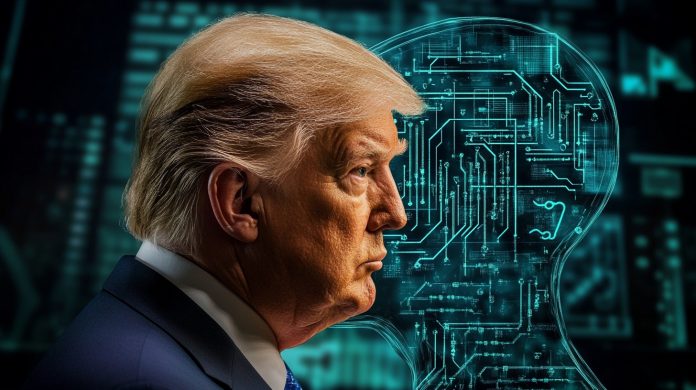
President Donald Trump has signaled growing interest in ensuring Americans share directly in the financial gains generated by artificial intelligence, revealing that his administration has been discussing arrangements with leading AI companies that could give the public a stake in one of the most transformative technologies of the modern era.

Speaking to reporters aboard Air Force One on Friday, Trump said he had held conversations with executives from artificial intelligence firms about potential structures that would allow ordinary Americans to benefit financially from the sector’s explosive growth.

“I’ve been talking to them about concepts where pieces could be given to the American public, where the American public essentially becomes a partner with the companies,” Trump said.

The remarks offer the clearest indication yet that the administration is exploring mechanisms that would link the fortunes of AI companies with the broader public, a concept that would represent a significant departure from the traditional model in which the rewards of technological breakthroughs accrue primarily to founders, venture capital investors, and public shareholders.

While Trump did not identify specific companies, attention has increasingly focused on OpenAI, the developer of ChatGPT and one of the world’s most valuable private technology firms.

Reports indicate that administration officials have discussed the possibility of the U.S. government acquiring an equity stake in OpenAI. Such a stake could potentially help fund a proposed “Public Wealth Fund,” an idea championed by the company as a way to spread the benefits of AI-driven economic growth more broadly across society.

Under OpenAI’s proposal, proceeds from the fund could be distributed directly to citizens, allowing Americans to participate in wealth creation generated by artificial intelligence regardless of their income level or investment portfolio.

The discussions highlight how rapidly AI has moved from being a technology story to a political and economic issue. As valuations of leading AI companies soar into the hundreds of billions of dollars, policymakers across the political spectrum are increasingly debating whether the gains should be shared more widely.

The idea appears to have been under discussion for months. According to reports, OpenAI Chief Executive Officer Sam Altman has explored the concept of government ownership stakes in major AI firms since early 2025.

The initiative also aligns with Trump’s growing willingness to consider government ownership in strategically important industries. Last year, the federal government took a 10% stake in struggling chipmaker Intel, a move that marked an unusual intervention in the private sector and reflected Washington’s determination to preserve domestic technology capabilities.

The emerging debate has created an unusual convergence between elements of the political right and left. This week, Democratic Senator Bernie Sanders proposed a one-time 50% tax on leading AI companies, including OpenAI, Anthropic, and xAI, with the tax paid in shares rather than cash.

Sanders argued that public ownership would provide citizens with a direct stake in the future of artificial intelligence while helping ensure that wealth generated by the technology benefits society as a whole.

The senator said such a structure would “give the public a direct role in determining the future of this technology” and “guarantee that the trillions of dollars potentially generated by A.I. are used to improve the lives of all of us.”

The proposal comes off growing concern that AI could create unprecedented concentrations of wealth. Industry leaders themselves have warned that advanced AI systems may eventually automate large segments of the workforce, potentially disrupting labor markets while creating enormous profits for technology companies.

Not everyone is convinced that government ownership is the answer.

David Sacks, an investor who recently stepped down from his role as Trump’s AI and crypto adviser, acknowledged the political appeal of the idea but warned about its broader implications.

He said he understood why Sanders’ proposal resonated “including with many on the right,” but cautioned that it could “accelerate the corporate-government fusion we’re already sliding toward.”

The debate has also fueled speculation about the financial health of some AI companies. Former Microsoft executive Dare Obasanjo suggested on social media that discussions around public ownership could eventually pave the way for government support of major AI firms if financing conditions become more difficult.

“The groundwork is already being laid for a government bailout of OpenAI,” he wrote.

The move comes when several leading AI firms, including OpenAI and Anthropic, are widely expected to pursue public listings, potentially creating trillions of dollars in new market value. Combined with the anticipated IPO of SpaceX, the listings are expected to reshape global equity markets and concentrate even more investor attention on artificial intelligence.

Register for Tekedia Capital Markets Masterclass and Mini-MBA Program

0

Greetings! We are excited to share two programs beginning in June and invite you to consider participating:

1. Tekedia Nigeria Capital Market Masterclass
This program is designed to provide a comprehensive understanding of Nigeria’s capital market ecosystem, one of the most important sectors of the nation’s economy. Participants will gain practical insights into how the market functions – from legislation and regulation to technology, market products, infrastructure, core operators, etc.

Delivered by industry experts, the program provides a structured understanding of how the capital market works in practice. The program also includes internship opportunities and is being delivered in partnership with Contisx Securities Exchange Plc, an upcoming securities exchange in Nigeria.

Program Start Date: The eight-week program begins on June 15, 2026. To learn more and register, click here.

2. Tekedia Mini-MBA
Our award-winning management and innovation program will begin its 20th Edition on June 8, 2026. The Mini-MBA has become one of Africa’s leading executive education programs, bringing together participants from around the world to learn innovation, growth strategy, business execution, and digital transformation. Early bird discounts are currently available.

To learn more and register, click here.

Why Mega-IPOs Won’t Get Early Index Inclusion in 2026

0

In a move that reinforces the conservatism of US equity benchmarking, index operators overseeing the S&P 500 and the Dow Jones Industrial Average have confirmed they will not alter eligibility rules to allow upcoming mega-IPOs to enter indices ahead of established schedules.

The decision underscores a commitment to stability, liquidity standards, and methodological consistency at a time when capital markets are increasingly shaped by unusually large initial public offerings. Rather than accelerating inclusion timelines for high-profile listings, the index committees associated with S&P Dow Jones Indices reaffirmed that existing criteria, including minimum market capitalization, profitability requirements, float adjustment, and trading liquidity, remain the primary gatekeepers for entry.

Proponents of faster inclusion argue that mega-IPOs, often representing transformative technology platforms, bring significant capital inflows and improved market representation that delayed inclusion can distort index tracking for passive funds. However, index providers counter that early entry risks amplifying volatility, introducing valuation uncertainty, and undermining the reliability of benchmark construction.

For investors, particularly passive funds tracking the S&P 500 and Dow Jones Industrial Average, the decision preserves predictability in index composition and helps avoid sudden weight shifts that could arise from volatile post-IPO price discovery phases.

In this sense, the rule stability functions as a safeguard for long-term benchmark integrity. The refusal to relax index entry rules reflects a broader philosophy that benchmark indices should represent mature investable universes rather than speculative enthusiasm at listing time. While mega-IPOs will continue to attract outsized attention, their path into the S&P 500 and Dow Jones Industrial Average remains governed by disciplined rules rather than market excitement.

The broader implication for mega-cap listings is that even highly anticipated entrants such as large artificial intelligence firms or consumer technology giants must still pass through the same sequential review process applied to traditional equity issuers. This reinforces the role of index committees as slow-moving arbiters of structural market inclusion.

In modern markets where passive investment vehicles dominate equity ownership across the S&P 500 and Dow Jones Industrial Average, any change to inclusion rules would have amplified consequences for exchange-traded funds, index derivatives, and risk parity strategies. Maintaining consistent eligibility thresholds therefore helps reduce tracking error and systemic rebalancing shocks.

As mega-IPOs continue to reshape global capital formation dynamics, index governance bodies are signaling that methodological discipline will remain intact even under pressure from issuers, bankers, and market participants seeking faster inclusion timelines. The decision ultimately preserves confidence in benchmark construction across both institutional and retail investors.

Market participants note that the stance also reflects historical precedent in which both the S&P Dow Jones Industrial Average and S&P 500 have periodically resisted ad hoc changes to inclusion methodology even during periods of intense IPO activity. By preserving rule-based entry frameworks, the indices maintain comparability across time, allowing investors to evaluate performance without structural distortions introduced by discretionary timing adjustments.

This consistency is particularly important for global asset allocators benchmarking US equity exposure against competing indices worldwide.

The decision reinforces that index construction is governed less by market hype and more by systematic rules designed to protect investability, transparency, and long-term benchmark stability in global equity markets while avoiding reactive structural changes driven by short-term listing cycles or speculative inflows that could destabilize benchmark reliability across global institutional portfolios reinforcing long-term confidence in US equity indices worldwide capital markets.