DD
MM
YYYY

PAGES

DD
MM
YYYY

spot_img

PAGES

Home Blog Page 3409

The Verdict From The O’Level Economics Teacher

1

I always quote him, and when Nigeria floated the Naira, I relied on his books which I read in secondary school to posit that it would destroy Nigeria’s economy. Magically, it turned out that everything I was saying, the great Economics teacher who wrote a really popular WAEC Economics teacher, was also saying.

“RENOWNED economist and author, Dr. O.A Lawal has told the Central Bank of Nigeria (CBN) to stop the Naira floating policy it introduced on the advice of the World Bank and the International Monetary Fund (IMF).

“Lawal, who spoke in an interview with the Nigerian Tribune said that the nation’s economy cannot withstand a floated Naira, adding that the World Bank and the IMF would destroy the Naira completely if care is not taken.

“He recommended the adoption of “managed currency” system adding that the country cannot afford to leave its currency at the mercy of certain forces, thereby expanding the frontiers of inflation and instability”, in July 31 2023, Tribune Newspaper 

In a piece on LinkedIn, a member of our community shared a link in the comment section. That link was an interview by Dr. OA Lawal. Dr. Lawal wrote a very popular O’level Economics textbook for secondary school education.

I did not do Economics in secondary school; I did Further Mathematics. Typically, because of the WAEC restrictions to a maximum of 9 subjects which I found strange, I had to find alternative ways to add some additional subjects I could not register for my senior secondary education. So, in SS1, I studied for those subjects and in my first term  in SS2, I took GCE (external WAEC). 

To prepare for those subjects, I bought some books under self-study. For the Economics subject, I used Dr. Lawal’s textbook. I passed with A2 (Distinction).  Reading his book influenced my basic understanding of economics, and he was a distant teacher. I did not attend Economics classes in school as Further Math was scheduled to clash with Economics in the timetable.

So, when Nigeria floated its currency, in a June 2023 article, I wrote that it was a bad policy. I quoted what Dr. Lawal wrote in his  textbook. Magically, yesterday, I just realized that he also spoke out: “CBN’s currency floating policy will kill the Naira —O. A. Lawal”, Tribune published on July 31, 2023. Indeed, floating the Naira without life jackets of production has sent Naira to uncontrollable seas!

That is from the teacher. If you read his book, you would have understood that most things the big experts were saying about Naira were nonsense. It is very refreshing that Dr Lawal found time in his retirement to share these insights.

The Tribune interview is on click; he posits the same thing I have recommended: managed or controlled exchange rate because the Naira does not have production-anchored economic resilience to be under the full influence of market forces.

Congrats Tekedia Mini-MBA edition 13 Graduates; You’re #Ready2Lead

0

Congratulations to the Tekedia Nation.  Our Tekedia Mini-MBA edition 13 co-learners have graduated, and they’re now #Ready2Lead the world of market systems. During the ceremony, I delivered a graduation message titled “It’s Time to Build” ; vide below.

To all graduates, thank you for choosing Tekedia Institute. Knowledge brings the liberation of the mind, and I am confident that we delivered as promised, through our program.

The certificates are now ready; follow the steps in the classboard for yours.  #Win the future. You are #ready2lead the world. Congratulations!

For Nigeria to Develop, This Must Happen

0

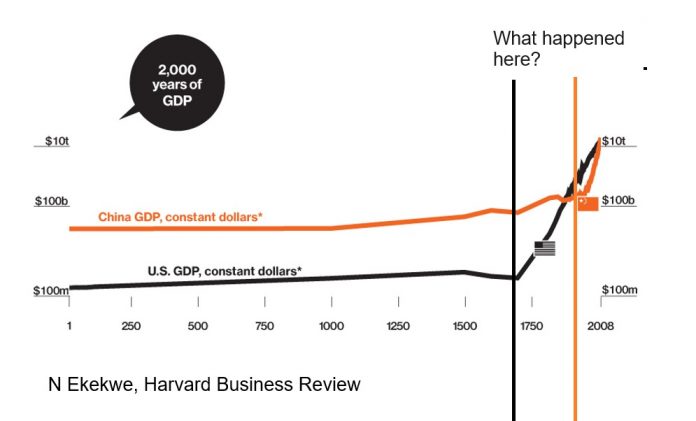
In my book which won IGI Global 2010 Excellence in Technology Research ‘Book of the Year’ Award, I tracked the development of many economies over centuries, and how technology and innovation systems have transformed economies. Yes, besides being “smart”, nations develop when they have platforms, and the most important platform is Rule of Law (or simply property rights) in different forms which make it possible to protect properties, physical and intellectual. 

So any person who thinks a nation can advance by sheer efforts and energies of the people without Rule of Law is wasting time. Rule of Law attracts capital, and property rights enable a transition from Invention to Innovation phases of development.

Without the Rule of Law, nations operate largely with Money. With Rule of Law, nations advance into Capital formation which creates and expands opportunities across territories. Poor and inventive nations operate with Money, rich and innovative nations work with Capital. 

Good People, no matter how hard Nigerians work, we have a ceiling we can attain on development, until the Rule of Law becomes part of our national system. 

Why Nations Remain POOR [Video]

What is Bitcoin Call Option?

0

In the dynamic world of cryptocurrency trading, Bitcoin call options have become a focal point for traders seeking to capitalize on market movements. A recent development in this arena involves traders selling $80,000 BTC call options that are set to expire at the end of May. This strategy, highlighted by the algorithmic trading firm Wintermute, is a calculated risk that traders are willing to take.

Call options are financial contracts that give the buyer the right, but not the obligation, to buy an asset at a specified price within a certain time frame. In the case of Bitcoin call options, if the price of BTC surpasses the strike price of $80,000 by the end of May, the option buyers can exercise their right to buy at this predetermined price, potentially reaping significant profits if the market price is higher.

However, the current trading strategy observed involves selling these call options while Bitcoin is trading significantly lower, around $58,000. By doing so, traders are essentially betting that Bitcoin will not reach the strike price by the expiration date. If their prediction holds true, and BTC ends May below $80,000, these traders will retain the entire premium received from selling the options—a premium that represents the maximum profit they can achieve from this trade.

This approach is not without its risks. Should Bitcoin experience a surge in price and exceed the $80,000 mark, the sellers of the call options could face losses, especially if they have not hedged their positions or hold corresponding long positions in the spot market. The balance between potential profit from premiums and the risk of a price surge makes this a nuanced strategy that requires careful consideration and market analysis.

The resurgence of call option selling as a strategy is indicative of the shifting sentiments in the cryptocurrency market. With the collapse of the bitcoin futures premium, the appeal of the cash and carry arbitrage strategy has diminished, leading traders to pivot back to option selling strategies. This shift is further evidenced by the decline in implied volatility, as measured by the Deribit’s implied volatility index (DVOL), which suggests a decreased expectation of price volatility over the next 30 days.

The cryptocurrency market is known for its volatility, and options trading is one of the methods traders use to navigate this uncertainty. By selling out-of-the-money call options at higher strike prices, traders aim to generate yield while managing their risk exposure. This strategy reflects a broader trend in the market where traders are adapting to changing conditions and exploring different avenues to optimize their investment returns.

As the end of May approaches, the outcome of these $80,000 BTC call options will be a point of interest for many in the cryptocurrency community. It will serve as a testament to the predictive capabilities of traders and the ever-evolving strategies employed in the pursuit of financial gain in the digital asset space. For those involved, it is a waiting game, with the hope that their strategic decisions align with the market’s trajectory.

Sovereign Wealth Funds and Pensions Eye Bitcoin ETFs

0

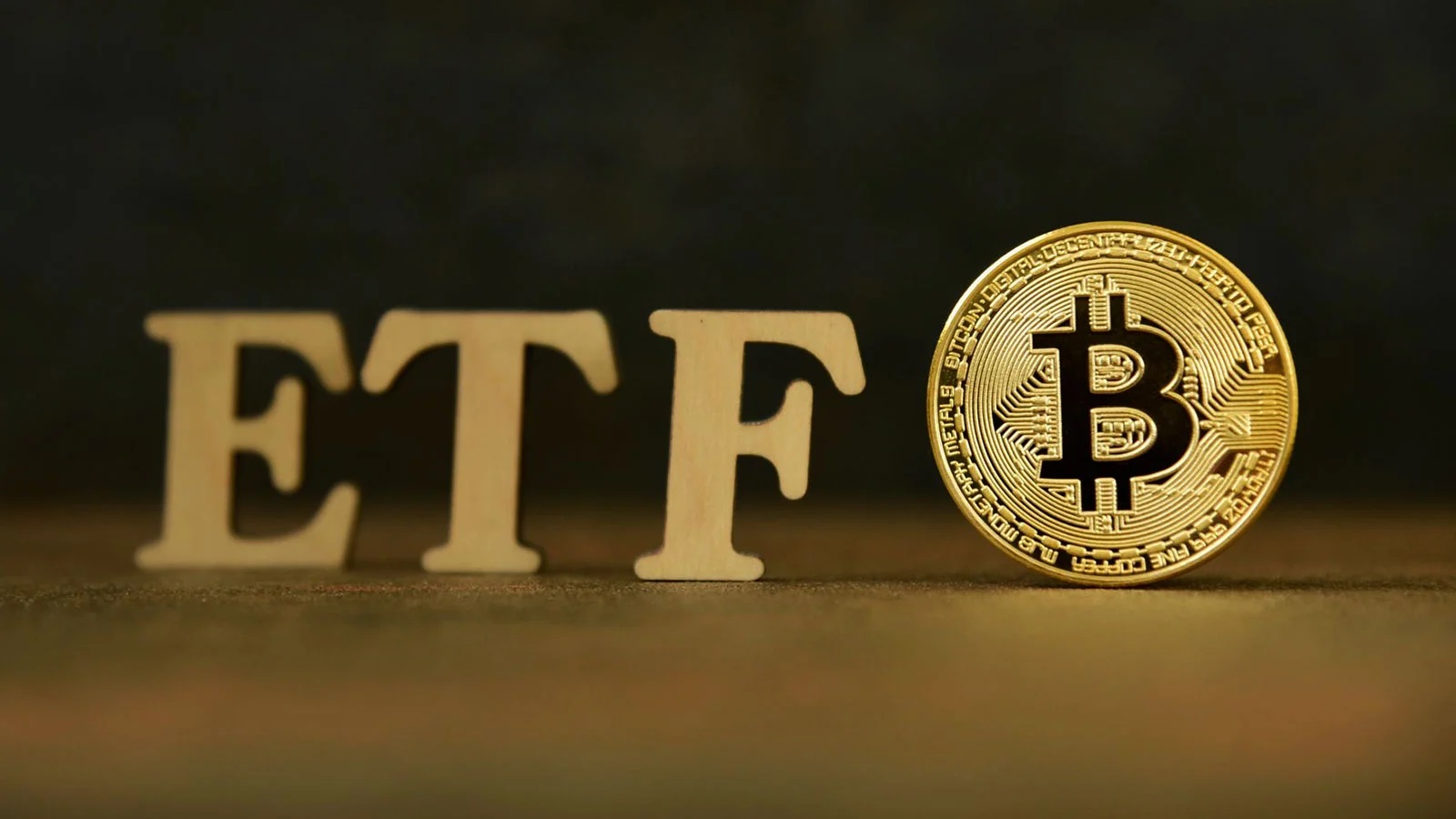
In the dynamic world of finance, investment strategies are continually evolving, with institutions constantly seeking diversified portfolios to hedge against market volatility and inflation. A significant development in this arena is the growing interest of sovereign wealth funds and pension plans in Bitcoin Exchange-Traded Funds (ETFs). BlackRock, the world’s largest asset manager, has been at the forefront of this shift, playing a pivotal role in educating these institutional investors about the potential of Bitcoin ETFs.

The Bitcoin ETF market has seen a remarkable surge in 2024, with the price of Bitcoin stabilizing around $60,000, marking a 50% increase since January. This stability is attributed to the introduction of new U.S. spot Bitcoin ETFs, which have garnered attention from heavyweight financial entities, signaling a new wave of investment from large financial institutions.

BlackRock’s head of digital assets, Robert Mitchnick, highlighted the firm’s educational efforts with various institutions, including pensions, endowments, and sovereign wealth funds, about the new spot Bitcoin ETF products. The firm’s initiative is not just about promoting investment but also about re-initiating discussions around Bitcoin and its role in portfolio construction.

The interest in Bitcoin ETFs is not a sudden phenomenon. BlackRock has been engaging in conversations with these institutions for several years, and the pent-up demand for the much-anticipated ETFs has led to more than $76 billion being accumulated across these products since their approval in January. Registered Investment Advisors (RIAs) have already begun offering BlackRock’s IBIT ETF on an unsolicited basis, and the next step could see the unrestricted offering of Bitcoin ETFs to clients of large wealth advisory firms like Morgan Stanley.

Despite a recent cooldown and outflows from Bitcoin ETFs amidst market volatility, BlackRock remains bullish on institutional demand in the long term. The firm expects that the current lull will be followed by a new wave of buying from deep-pocketed institutional players. This optimism is grounded in the belief that as more institutions like BlackRock build multi-billion-dollar Bitcoin reserves, it validates Bitcoin as an investable asset class.

The growing institutional interest in Bitcoin ETFs is a testament to the recognition of cryptocurrencies as legitimate investment assets within the institutional space. This shift could potentially lead to a broader acceptance and integration of cryptocurrencies in mainstream finance, altering the investment landscape significantly.

As the world’s largest asset manager observes, the dive of sovereign wealth funds and pensions into Bitcoin ETFs could intensify competition in the market, further establishing the credibility and viability of cryptocurrencies as a component of diversified investment portfolios. With over $76 billion invested in Bitcoin ETFs, the competition between BlackRock’s IBIT ETF and Grayscale’s GBTC is a clear indicator of the market’s growth and the increasing institutional confidence in cryptocurrency investments.

The move by sovereign wealth funds and pension plans to consider Bitcoin ETFs reflects a strategic approach to investment, one that is informed, pragmatic, and indicative of the continued growth of the Bitcoin ETF market. As the financial landscape evolves, the integration of digital assets into traditional investment portfolios could become the norm, reshaping the way institutions and individuals alike approach investment in the digital age.