DD
MM
YYYY

PAGES

DD
MM
YYYY

spot_img

PAGES

Home Blog Page 371

Intercontinental Exchange (ICE) Announces $2 Billion Investment in Polymarket

0

Intercontinental Exchange Inc. (ICE)—the Atlanta-based global exchange operator and parent company of the New York Stock Exchange (NYSE)—revealed a strategic cash investment of up to $2 billion in Polymarket, the leading cryptocurrency-based prediction market platform.

This deal values Polymarket at approximately $8 billion pre-investment or $9 billion post-money, per some reports, potentially giving ICE a stake of up to 25%.

The announcement comes amid surging interest in prediction markets, which have seen billions in trading volume in 2025 alone, particularly around politics, economics, and pop culture events.

The $2 billion is in cash and won’t impact ICE’s 2025 financial results or its capital return plans to shareholders. It’s positioned as a long-term bet on integrating prediction data into institutional finance.

Beyond the funding, ICE will become a global distributor of Polymarket’s event-driven data, providing thousands of financial institutions with real-time sentiment indicators on topics like elections, economic policies, and cultural trends. This could supercharge Polymarket’s credibility and reach.

The collaboration explicitly targets “tokenization initiatives,” blending blockchain with traditional assets to digitize real-world assets (RWAs) like securities or commodities. ICE CEO Jeffrey Sprecher emphasized opportunities in markets where the two companies can “uniquely serve” users, signaling a push toward a tokenized financial future.

ICE shares up ~4% in premarket trading; retail sentiment on platforms like Stocktwits shifted to “extremely bullish”. Polymarket has evolved from a niche DeFi experiment into a powerhouse for crowd-sourced forecasting.

It allows users to buy “shares” in yes/no outcomes (e.g., “Will the US government shut down by December?”), with prices reflecting collective probabilities—often outperforming traditional polls.

In 2022, the CFTC fined Polymarket $1.4 million and forced it offshore for operating unregistered derivatives markets accessible to US users. A federal probe including an FBI raid on Coplan’s home in late 2024 was dropped in July 2025 after exemptions.

Earlier this year, Polymarket acquired QCEX a licensed US derivatives exchange and clearinghouse for $112 million, paving the way for a compliant relaunch. It also snagged backing from high-profile investors like Peter Thiel’s Founders Fund, Ethereum co-founder Vitalik Buterin, and—more recently—1789 Capital backed by Donald Trump Jr.

Polymarket handled $9 billion in trading volume in 2024, with 2025 markets buzzing on everything from Taylor Swift streams to crypto price swings. Coplan celebrated the deal in a lengthy X post, calling it a “monumental step forward for DeFi” and crediting his team’s persistence: “From a write-off to creating a category… nothing is more valuable than the truth.”

He highlighted ICE’s founder-led ethos under Sprecher as a perfect match for tokenization ambitions. This isn’t just a big check—it’s a bridge between Wall Street’s gatekeepers and crypto’s disruptors.

Prediction markets like Polymarket aggregate information efficiently, potentially revolutionizing how institutions price risks. The tokenization angle could accelerate RWAs, making illiquid assets like real estate or art tradable on blockchains, with ICE’s infrastructure providing the regulatory moat.

However, risks linger: Prediction platforms face ongoing CFTC scrutiny over derivatives classification, and tokenization’s promise hinges on clearer US regs. Critics worry about investor protection in volatile, crowd-driven bets.

Overall, this validates Polymarket’s model and positions ICE as a TradFi-crypto hybrid leader. As Coplan put it: “The best is yet to come.” If you’re trading ICE or eyeing DeFi, this could spark short-term volatility.

Ken Griffin’s Warning on the “Debasement Trade” On Concerns of Erosion of USD Value

0

Ken Griffin, founder and CEO of the hedge fund giant Citadel, highlighted a significant shift in investor behavior during a Bloomberg interview.

He described how individuals and institutions are increasingly allocating capital to gold, silver, and Bitcoin as part of what’s being called the “debasement trade”—a strategy to hedge against the erosion of the U.S. dollar’s value due to inflation, excessive money printing, and rising sovereign debt risks.

This trend, Griffin noted, reflects broader efforts to “de-dollarize” portfolios and mitigate exposure to U.S. fiscal uncertainties, including an ongoing government shutdown and expectations of Federal Reserve rate cuts.

Griffin attributed the move to several interconnected factors: The U.S. dollar has declined about 10% year-to-date in 2025, its worst performance in decades, amid inflation running above the Fed’s 2% target and forecasts suggesting it will persist into 2026.

He likened the U.S. economy to being on a “sugar high” from recession-level stimulus measures, fueling asset inflation across markets like stocks, gold, and crypto—despite no actual recession.

With U.S. debt levels soaring and political gridlock (e.g., the shutdown), investors are seeking “non-sovereign” assets that aren’t tied to government promises.

Griffin called this dynamic “really concerning,” as it signals eroding global confidence in the dollar as the ultimate safe haven. This strategy has propelled gold, silver, and Bitcoin to new heights in 2025, with unusual correlations emerging between them and even traditional equities like the S&P 500.

Investors are increasingly viewing gold as a safer store of value than the dollar, with portfolios being “de-risked” against U.S. government debt and fiscal policies. Griffin noted that this includes a surge in crypto assets like Bitcoin, whose “unbelievable” appreciation underscores the trend.

He likened the U.S. economy to being on a “sugar high,” propped up by recession-like stimulus measures amid persistent inflation currently above the Fed’s 2% target and projected at 2-3% next year. Despite booming equities driven by AI and high-performance computing, underlying risks like a weakening dollar are being masked.

Griffin warned that this could erode global confidence in the U.S. as a financial hub, potentially accelerating moves by countries to settle trade in local currencies or digital assets. He also expressed concerns over policies like higher H-1B visa fees, which might deter international talent in STEM fields from coming to the U.S.

Gold and Bitcoin, in particular, have never before been the top two performing asset classes year-to-date, underscoring the novelty of this trade. Analysts like Yan Lee from Bitget describe them as “dual debasement trades,” emphasizing their scarcity and independence from central banks.

Wall Street echoes this: Goldman Sachs recently forecasted even higher gold prices, and ETF inflows into Bitcoin have accelerated, with firms like MicroStrategy pausing buys after amassing $79B in holdings.

While Griffin views this as a red flag for U.S. economic health, it validates Bitcoin’s maturation as a mainstream hedge—once dismissed by traditional finance, now grouped with gold and silver.

If the government shutdown drags on Polymarket odds favor it extending past October 15, or if inflation data disappoints, these assets could rally further, tightening their correlation and pressuring the dollar more.

For investors, it’s a reminder that in times of fiat uncertainty, “hard money” alternatives—physical or digital—are gaining traction as portfolio diversifiers.

BNB Flips XRP in Market Capitalization and Closing In On USDT

0

BNB the native token of the Binance ecosystem has flipped XRP in market capitalization and is now neck-and-neck with USDT, positioning itself as a top contender for the #3 spot behind Bitcoin and Ethereum.

This comes amid a blistering rally that’s pushed BNB to new all-time highs (ATHs), fueled by ecosystem growth on BNB Chain, token burns, and broader market momentum.

BNB’s cap has exploded from around $150B earlier this month to over $172B–$180B, driven by a ~50% monthly price surge. Slight variances exist due to real-time fluctuations and exchange differences—BNB briefly hit $180B today, overtaking XRP outright but trailing USDT by a razor-thin margin under $1B gap.

A full flip of USDT could happen with another 1–2% pump, given BNB’s volatility. The Rally to New ATHsPrice Action: BNB smashed its previous ATH set in late 2024 at ~$800–$900 and peaked at nearly $1,300 today, marking a 45–50% YTD gain. It’s up 28% in the last week alone, outpacing most alts.

BNB Chain (formerly BSC) led with $4.14B in 24h DEX volume and $2.48M in fees, thanks to DeFi activity on PancakeSwap and other dApps. Binance’s quarterly burns reducing circulating supply and short liquidations amplified the squeeze.

Broader crypto rally post-U.S. regulatory clarity, plus rotation from ETH/SOL into “exchange tokens” like BNB. Analysts eye $1,300+ as the next target if momentum holds, with some calling for $1,500 by year-end on continued adoption.

Some iinvestors called it “manipulation, not organic growth,” citing Binance’s control over 64% of supply and a $40B cap jump vs. just 5% total market growth. BNB surpassing Spotify $151B cap and nearing Pfizer, signaling its “global finance” flex.

While the flip is a massive win for Binance and CZ’s vision, USDT’s stablecoin status makes it a tougher nut to crack long-term—its cap is tied to fiat reserves, not price pumps.

XRP holders are grumbling one post quipped it’s “on life support”, but Ripple’s institutional focus could spark a rebound. For BNB, watch for regulatory heat on centralized exchanges; a pullback to $1,100 could test supports if BTC cools.

BNB’s climb to a $172B–$180B market cap, overtaking XRP and briefly USDT, signals a pivotal shift in crypto’s hierarchy. This isn’t just a price pump—it reflects changing investor priorities, competitive dynamics, and structural trends.

BNB’s surge underscores a preference for platform utility over stablecoin safety (USDT) or payment-focused assets (XRP). BNB Chain’s 18.8M daily transactions and $4.14B DEX volume highlight its role as a DeFi and dApp hub, pulling capital from stables as investors chase yield in a risk-on market.

This could redefine the “safe haven” meta, with utility tokens like BNB and SOL gaining over USDT’s $177B reserve-tied cap. BNB’s rally strengthens Binance’s grip as a centralized-decentralized hybrid.

Its validator growth more decentralized than 2024 and AI-driven liquidity tools position BNB Chain as a global financial OS, potentially challenging Ethereum’s $564B dominance if scaling continues. Some call this a “corporate nation” play, with BNB as a “digital GDP” proxy.

USDT’s flip signals declining trust in fiat-pegged assets amid regulatory noise like MiCA in Europe. If BNB holds #3, it could sap liquidity from USDT/DAI, forcing Tether to innovate or risk irrelevance in speculative flows.

XRP’s $178B cap and $2.45 price lag BNB’s momentum, despite Ripple’s institutional wins. BNB’s retail-driven pump 50% YTD vs. XRP’s 27% steals speculative thunder, with X posts noting XRP’s “life support” vibe. Ripple must lean on ETF hopes or BRICS adoption to counter, but its 0.5% daily gain vs. BNB’s 6–8% shows a short-term rout.

BNB’s rise could ignite a tiered altseason, boosting BSC-native tokens by 10–20% as inflows follow. However, SOL ($126B) and ADA face pressure to match BNB’s utility narrative. If BNB hits $1,500 (18% upside), its $200B+ cap could pull $50B from smaller alts, per historical rotation patterns.

BNB’s flip validates exchange tokens as growth assets, potentially sparking mini-rallies. But Binance’s 64% BNB supply control raises manipulation flags, as one X skeptic noted, risking volatility if trust wanes.

BNB’s burns 139M supply, -2% quarterly contrast USDT’s reserve growth and XRP’s fixed 100B supply. This scarcity, paired with BNB Chain’s low fees $0.001/tx, could cement BNB as a BRICS-friendly asset, challenging SWIFT in emerging markets. Analysts project a $700–$1,000 floor by 2026 if adoption scales.

BNB’s centralized roots invite scrutiny—U.S. and EU regulators may target Binance post-2024 clarity, capping upside. XRP’s SEC wins give it a regulatory edge, potentially flipping BNB back if retail flows cool.

BNB Chain’s Greenfield data storage and AI integrations position it as a Web3 backbone, rivaling ETH’s smart contract lead. If validator decentralization hits 50% by 2026, BNB could become a “neutral” global utility.

BNB’s 45% YTD gain makes it a portfolio anchor for momentum traders, with $3B OI signaling strong longs. However, its 0.59 correlation with BTC ties it to macro dips—$1,100 is a key support if BTC drops to $60K. XRP holders may pivot to BNB for short-term alpha.

BNB’s flip of XRP and USDT marks a turning point: Utility tokens are king in a risk-on market, but regulatory and centralization risks loom. BNB Chain’s DeFi and AI bets could make it a $200B+ asset, but XRP’s institutional moat and USDT’s fiat anchor won’t fade quietly.

For investors, BNB’s momentum screams opportunity, but diversification and stop-losses are critical—$1,300 is a ceiling to watch. Long-term, BNB’s global finance play could reshape crypto’s hierarchy, assuming Binance navigates the regulatory maze.

Three Fundamental Eras of World Economic History and the African Future

0

Across the arc of human progress, I have divided the world economic history into three fundamental eras: the Invention Society, the Innovation Society, and the Accelerated Society. The Invention Society was when humankind discovered the building blocks of science— gravity, electromagnetism, and calculus—yet lacked the ability to commercialize them. The Innovation Society took those inventions and converted them into products—light bulbs, automobiles, vaccines, and transistors. But now, we are in the Accelerated Society: a civilization where ideas scale instantly through digital fabrics, where code replaces factories, and where intelligence—human or artificial—becomes the new oil.

For Africa, this transition offers the greatest promise in its history. The continent largely missed the full benefits of the industrial and early innovation ages. But in the Accelerated Society, the marginal cost of intelligence is near zero. The same AI algorithm that powers a Silicon Valley startup can also power a logistics company in Lagos or a healthcare agent in Nairobi. The barriers of geography, infrastructure, and even scale have been flattened. What remains is ambition, execution, and knowledge accumulation—three factors that now define competitiveness.

Startups in the Era of Acceleration

Future African startups will not merely copy Western models; they will reframe problems around the continent’s unique realities. A fintech in Lagos will not just digitize payments but reimagine credit scoring for people without formal data footprints. A logistics startup in Kampala will use predictive AI to organize informal transport routes. The startups that win will be those that combine deep local insight with universal intelligence systems.

The Accelerated Society demands that African founders become systems builders, not just app creators. They must design ecosystems—data, APIs, and algorithms—that make AI the engine of inclusion. Just as the Industrial Revolution rewarded those who owned steam and steel, the Accelerated Society will reward those who own intelligence pipelines: the datasets, domain expertise, and adaptive AI models built from Africa’s context.

AI as Africa’s Development Shortcut

Artificial Intelligence represents Africa’s most potent development shortcut. In the past, building national capacity required decades of industrial policy. Today, an AI-trained system can offer near-human diagnostic support to a rural doctor in Sokoto or recommend precision fertilizers to a farmer in Eldoret. This is the power of exponential systems: they compress time, democratize capability, and compound learning.

But to extract this dividend, Africa must build local AI capacity. That means universities that teach prompt engineering, startups that train models on African languages, and governments that deploy AI to predict floods, manage traffic, and optimize public finance. The AI age is not just about technology; it is about institutional redesign, where data becomes a national asset, and intelligence becomes a public utility.

The Future: From Adoption to Creation

In the coming decade, the defining African startups will not be those that merely use AI but those that create AI tuned to local nuances—voice agents that understand Pidgin and Swahili, credit models trained on market transaction data, and educational tutors that teach mathematics through local examples. These are not dreams; they are blueprints for AI-enabled prosperity.

My message is simple: while the West leads in invention and Asia perfects innovation, Africa’s chance lies in acceleration. By leaping over industrial bottlenecks and harnessing AI as the great equalizer, the continent can transform from consumer to creator, from imitator to innovator. The future startup in Africa will not just chase profit; it will code development itself.

AMD’s Multi-Billion-Dollar Chip and Equity Deal with OpenAI Includes Supply Of 6GW Of Compute Capacity

0

OpenAI’s landmark deal with AMD marks one of the most significant GPU supply and equity partnerships in the artificial intelligence industry to date.

The deal, which is projected to generate tens of billions of dollars in revenue for AMD, underscores the fierce race among AI firms to secure the computing power required to sustain large-scale model training and deployment.

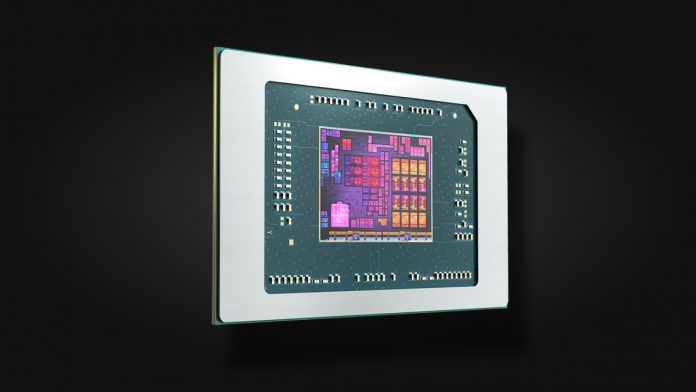
Under the partnership, AMD will provide multiple generations of its Instinct graphics processing units (GPUs), beginning with the Instinct MI450 series, which the company says will outperform Nvidia’s forthcoming Rubin CPX chips. The first gigawatt of capacity will be deployed in the second half of 2026, when the MI450 enters production.

AMD said the agreement extends beyond a traditional supply contract, describing it as a “strategic alignment” that integrates OpenAI’s software and hardware optimization feedback into AMD’s GPU design process. The collaboration is expected to shape AMD’s AI roadmap through 2030, with OpenAI serving as both a customer and a development partner.

The six-gigawatt supply commitment — enough to power about 4.5 million homes — marks one of the largest single orders in AMD’s history. AMD’s current Instinct MI355X and MI300X GPUs are already used in certain OpenAI workloads and are recognized for their performance in large language model (LLM) inference, thanks to their expanded memory bandwidth and capacity.

As part of the deal, OpenAI will also receive the right to purchase up to 160 million AMD shares — roughly a 10% equity stake — tied to performance milestones and chip deployment schedules. The first tranche will vest when OpenAI receives the first gigawatt of compute capacity, with subsequent tranches tied to additional purchases up to the full 6 GW.

OpenAI’s ownership stake will further depend on AMD’s stock performance, with the final tranche vesting once the stock hits $600 per share. AMD’s shares closed Friday at $164.67 but surged nearly 35% to $222.24 by Monday after news of the partnership broke — signaling strong investor confidence in AMD’s growing relevance in the AI compute space.

Dr. Lisa Su, AMD’s chair and CEO, described the partnership as transformative. “We are thrilled to partner with OpenAI to deliver AI compute at massive scale,” Su said. “This partnership brings the best of AMD and OpenAI together to create a true win-win enabling the world’s most ambitious AI buildout and advancing the entire AI ecosystem.”

OpenAI CEO Sam Altman echoed the sentiment, calling the deal “a major step in building the compute capacity to realize AI’s full potential.” Altman has made chip diversification a central part of OpenAI’s long-term strategy, seeking to avoid dependency on Nvidia, whose GPUs remain the backbone of most AI systems globally.

The AMD deal follows a wave of agreements OpenAI has announced in recent weeks as it races to secure AI compute infrastructure for its expanding “Stargate” network — a global buildout of supercomputing data centers with planned capacity exceeding seven gigawatts.

Last month, Nvidia agreed to invest up to $100 billion in OpenAI and supply at least 10 gigawatts of AI compute capacity. Around the same time, OpenAI and Broadcom signed a $10 billion deal to co-develop and manufacture custom AI accelerators. The company also inked partnerships with Samsung Electronics and SK Hynix to supply DRAM memory chips and support data center construction in South Korea.

Analysts say the AMD-OpenAI partnership signals a new phase in the global chip race, as OpenAI diversifies suppliers and AMD positions itself as a credible challenger to Nvidia’s near-monopoly in AI GPUs. The collaboration could also reshape competitive dynamics in AI infrastructure, especially as OpenAI pushes forward with projects designed to power the next generation of artificial general intelligence (AGI).

With this deal, AMD moves squarely into the center of the global AI buildout — one that could redefine its market standing and challenge Nvidia’s dominance over the most lucrative sector in modern computing.