DD
MM
YYYY

PAGES

DD
MM
YYYY

spot_img

PAGES

Home Blog Page 3901

How Working Against Jinn’s Pleasure Triggers Mental Health Challenge

0

Jinns feel that whatever they can lay their hands on or own should be appreciated in the same manner as humans want to possess tangible things and enjoy them to the maximum. As our analyst and his contributing writer have discussed in recent weeks, Jinns reside in a variety of locations, particularly enclosed ones such as toilets, bathrooms, and waste bins.

Most of the time, they regard these settings as appropriate for them because they are intended for them. While it would be ludicrous to see a human eating or signing inside the toilet or bathroom, the places are better for the Jinns. In previous pieces, we stressed the importance of practicing suggested prayers before entering and leaving such places in order to avoid being possessed by Jinns. In this piece, we look at recent situations in which a Jinn exacted revenge when his feasting period was interrupted by Haafidh, a young Muslim child. Once again, Haafidh is not his real name. It was used to protect his identity.

The Caller: Salaam ‘alaykum (Peace be unto you) sir. I got your number from a radio programme I listened to. I need your help with my son’s mental unconsciousness. I think he’s possessed.

The Exorcist: Can we meet next week, please? I’m going to school right now.

The Caller: Hmmm, if Allah wishes!

The Exorcist: (Disturbed by the caller’s hidden emotions, called back) Can we meet now even if it’s for 30 minutes? You know I’m a teacher; I need to go to work.

The Caller: (Very delighted) We’re on our way now!

This was a conversation that occurred between a distressed father of Haafidh, a 12-year-old boy and Ustadh Musa two years ago in Ibadan, Nigeria. The boy, who was about to complete his Quranic memorization, was possessed by a Jinn. His symptoms? Anytime he was praying in the mosque in a congregation, he would keep screaming and distracting the congregation. His sudden behavioural change baffled everyone. What could have happened to a 12-year-old Haafidh?

Read How Do You Bring Jinns Into Your Life?

A meeting with Ustadh Musa, the exorcist

To show how disturbed Haafidh’s father was, he got to Ustadh Musa’s office before him that Thursday morning. As usual, the exorcist, through Ruqyah, began the spiritual diagnosis to identify the presence of Jinn(s). Shortly after his recitation, the Jinn spoke through Haafidh. What did he tell Ustadh?

Ustadh Musa: Why did you possess him? Were you sent by anyone?

The Jinn: I wasn’t sent by anyone. I possessed him myself. One day when he was going to school, he saw a sacrifice placed at a T-junction. He kept looking at the sacrifice while I was there eating it. I thought he was looking at me. Later, he threw a stone at the sacrifice, but the stone hit me. I then decided to punish him for hurting me. Since that day, I had possessed him.

Ustadh Musa preached to the Jinni; he repented and left Haafidh’s body. Haafidh is now 14 and has completed his Quranic memorization.

Haafidh’s father, an elderly man, kept echoing, “I have never seen something like this in my entire life!” To the father and many Muslims and some non-Muslims, Jinn possession and exorcists’ conversations with Jinns are not make-believe scenes from Nollywood, Hollywood or Bollywood fictional movies.

Read How to Identify Authentic Islamic Exorcists

What did we learn from this case?

Like humans, some Jinns revenge or avenge. They always assume we humans see them. The Jinn thought Haafidh saw him eat the sacrifice. Also, anytime we come across sacrifices, we should instantly seek Allah’s protection with protective verses/remembrance. Lastly, we should never joke with this remembrance before leaving the house every day, at least 100 times: ?? ??? ??? ???? ???? ?? ??? ?? ?? ????? ? ?? ????? ? ??? ??? ?? ??? ???? (La ilaha illallahu wahdahu la sharika lahu, lahul-mulku wa lahul-hamdu wa Huwa ‘ala kulli shai’in Qadiir).

Umar Olansile Ajetunmobi, an independent, interdisciplinary researcher with special interests in political, (mental) health, development, and digital media communication, contributes to the development of this piece through his skills and knowledge garnered over the years.

A Culture of Equity In The Workplace

0

Today, let’s talk about equity in the workplace. Since the conversations about equity, diversity, and inclusion in the workplace started becoming recurrent, many employers have adopted the culture (at least, they say they have). You will find on many company websites that statements suggest that they have an inclusive culture and do not discriminate in their recruitment.

A culture of equity is crucial for both employee satisfaction and overall business success, so no doubt, we should be pleased. However, maybe we should be concerned about how much they do beyond the information on their website. Can the employees attest to an inclusive culture? Are there employees who think playing office politics is critical to getting promotions and opportunities?

Equity goes beyond equality, emphasizing fairness and justice in distributing opportunities and resources In the workplace, recognizing and addressing systemic barriers that may disproportionately affect certain groups. Equity strives to level the playing field, ensuring that every employee has the chance to thrive and contribute to their full potential.

If you are trying to build a culture of equity in your workplace, I think some things should be essential.

Leadership Commitment

Leadership plays a pivotal role in setting the tone for an equitable workplace. Executives and managers should demonstrate a genuine commitment to diversity, equity, and inclusion through words and actions. When employees see, sense, and feel the leadership’s commitment to ensuring equity, they will understand that it is no longer “business as usual.”

They must see it at play because they clearly cannot read your mind. Implementing policies promoting fairness and addressing existing biases within the organization are crucial steps toward building an equitable culture.

Inclusive Policies and Practices

Review and update HR policies to eliminate any unintentional biases. This includes recruitment, promotion, and performance evaluation processes. Also, implement flexible work arrangements to accommodate diverse needs, such as remote work options, flexible hours, and parental leave policies.

Diverse Representation

Look into having diverse representation at all levels. This involves recruiting and promoting individuals from various backgrounds, ensuring that decision-making bodies reflect the diversity of the workforce. Try to have this diversity on the management team, board, etc. Encourage employee resource groups to provide support and a sense of community for underrepresented employees.

Education and Training

Offer regular diversity, equity, and inclusion training for all employees to raise awareness of unconscious biases and promote cultural competence. Provide leadership training that emphasizes the importance of equity and inclusion in decision-making processes.

Open the Communication lines

Foster a culture of open communication where employees feel comfortable expressing their concerns about equity issues. Establish channels for anonymous feedback to encourage honest input and address potential concerns without fear of reprisal.

Address behaviors that are inconsistent with EDI principles through education, understanding, and awareness, and support people who challenge such behavior. Identifying and addressing appropriate EDI learning and development needs at all levels within an organization

Equal Access to Development Opportunities

Ensure all employees have equal access to professional development opportunities, mentorship programs, and training initiatives. Create clear pathways for career advancement, focusing on eliminating barriers that may hinder specific individuals’ progress.

What does the law say about it?

The New UK Code of Practice on Equality, Diversity, And Inclusion (EDI) In The Workplace provides some guidance and tools that help. Key among the recommendations is that the organization’s leadership must demonstrate commitment to EDI at all levels and even in their recruitment and retention strategies.

Graham Mitchell (Clyde & Co) and CorEDEinna Harris (Clyde & Co) explained this code in their article. What I find most practical is their recommendation that employers apply a phased approach in their implementations to avoid sudden shockers. Employers must also have means or tools to track their progress or results.

Why?

Without clear metrics for measuring results, you may discover that the company is carrying out several activities and any clear movement in their desired direction.

Building an equitable workplace culture is an ongoing process that requires commitment, awareness, and continuous improvement. Organizations that prioritize equity not only enhance the well-being of their employees but also position themselves as leaders in their industries. By embracing diversity and fostering an inclusive environment, businesses can unlock the full potential of their workforce and contribute to a more just and equitable society.

Why Nigerians Should Commend The Customs Team But NOT Celebrate The High Revenues

1
  • Customs generated N2.2trn revenue in 2022
  • Customs generated N2.2trn revenue in 2021
  • Customs generated N1.56trn revenue in 2020
  • Customs generated N1.34trn revenue in 2019
  • Customs projected to generate N3trn revenue in 2023 (projected)

Nigerians should stop celebrating the always records-breaking revenue of Nigerian Customs. Yes, yearly, we are informed that the Customs has generated another huge revenue. Good People, there is nothing to celebrate for those numbers.

As I have written here since about 2017 when I came back fully to LinkedIn, there is a clear correlation between increase in Customs revenue and de-industrialization rate in Nigeria. In other words, that P&G will fold its factories in Nigeria, and then begin to export to Nigeria, making it possible for Customs to “earn” more fees, does not make us a better country. When Michelin folded in PHC, it did not stop us from using Michelin tyres. What happens now is that we have to import the tyres – and as that happens, our Customs revenues will go up!

Left and right, Nigerians must ask tough questions: are we better increasing Customs revenue targets or do we want to produce things within Nigeria, and reduce imports?

This post is not about the men and women working in Customs. For one thing, I commend them for being super-efficient to even collect this money, and the new team seems amazing.

As a teacher, I am asked to speak to company Boards and they do pay to cover amala, nkwobi and zobo. I was trying to examine the economy, focusing on de-industrialization in the nation. I am using ten indicators to make my point (you need to offer something amazing to be invited next year) and one is the growth on Customs revenue. Follow me: the agency has a monthly target of N307 billion monthly: “I am delighted to announce that we have consistently exceeded the monthly target collection of N307 billion, marking a remarkable departure from previous performances”, noted the Comptroller-General of Nigeria Customs Service recently.

As I write, the Customs has improved revenue remarkably: “the service collected an average revenue of N202 billion in the first half of the year [2023], but by October, the monthly revenue collected had reached N333.9 billion, showing a 65.5 per cent increase.” In other words, the Customs was collecting about N202 billion in say May 2023, but now collects about N334 billion monthly. They are doing great and kudos to the team.

The newspapers and TV pundits hailed that for the nation. Yet, if you look deeper, you will notice one thing: Nigeria is becoming a trading hub as companies shift to export instead of make in Nigeria, since the Customs revenue is not coming from exports as ships are still leaving our ports largely empty. Also, these are not equipment and machinery; these are basic imports of household and business consumables which ought to be made in Nigeria.

Again, we commend the Customs team but we must not celebrate these huge numbers. For everything, the double digit growth we’re seeing in the customs revenue will remind us that Nigeria is being de-industrialized!

The Revenue will keep going up

We are learning from Leadership that henceforth, the Customs will be using an exchange rate of N951.941 to a dollar. Simply, more revenue is coming.

“The federal government has increased the Dollar exchange rate, from N422.30 to N589.45, then to N770.88. In November, it was moved to N783.174 ans now, we are at N951.941 to a dollar. What it implies in simple terms is that, if clearing agents have a Debit Note that has not been paid on the system or Pre-Arrival Assessment Results (PAAR) or they have given you the value and you have not captured, it has affected you directly.

“We just believe that maybe with time, we will see low exchange rate and it will become beneficial to the importers as well because once there is a change in the portal, there is nothing anybody can do about it. But if you have captured or accessed your work, you are good to go and your consignment would be released for you if you don’t have any infraction.”

She explained that only clearing agents that had done the capturing of their consignments would pay with the old exchange rate.

Do You Understand Food Inflation and Why It is High?

0

Food inflation is the increase in the prices of food items over time. It affects everyone who buys food, whether it is for consumption or production. Food inflation can have various causes, such as supply shocks, demand shocks, monetary policy, exchange rate fluctuations, climate change, and trade policies.

Supply shocks are sudden disruptions in the availability of food items due to natural disasters, wars, pests, diseases, or other factors. For example, a drought can reduce the crop yield and increase the cost of irrigation, leading to higher prices for farmers and consumers. A flood can damage the transportation infrastructure and spoil the stored food, creating shortages and wastage. A pandemic can disrupt the labor force and the supply chain, affecting the production and distribution of food.

Demand shocks are sudden changes in the demand for food items due to population growth, income growth, preferences, or other factors. For example, a population boom can increase the number of people who need food, putting pressure on the existing supply. An income boom can increase the purchasing power of consumers, allowing them to buy more or better-quality food. A preference shift can alter the consumption patterns of consumers, increasing the demand for certain food items and decreasing the demand for others.

Monetary policy is the action taken by central banks to control the money supply and interest rates in an economy. It affects the inflation rate of all goods and services, including food. For example, an expansionary monetary policy can increase the money supply and lower the interest rates, stimulating the economic activity and increasing the demand for food. However, it can also reduce the value of the currency and make imports more expensive, raising the cost of food. A contractionary monetary policy can have the opposite effects.

Exchange rate fluctuations are changes in the value of one currency relative to another. They affect the prices of imported and exported food items. For example, a depreciation of the domestic currency can make imports more expensive and exports more competitive, increasing the domestic prices of imported food items and decreasing the domestic prices of exported food items. An appreciation of the domestic currency can have the opposite effects.

Climate change is the long-term alteration in the global weather patterns due to human activities. It affects the production and consumption of food in various ways. For example, climate change can increase the frequency and intensity of extreme weather events, such as droughts, floods, heat waves, storms, and wildfires, damaging the crops and livestock and disrupting the supply chain. Climate change can also alter the suitability of land for agriculture, reducing the arable land and affecting the crop diversity and quality.

Trade policies are the rules and regulations that govern the international trade of goods and services. They affect the availability and affordability of food items across countries. For example, trade liberalization can reduce or eliminate tariffs, quotas, subsidies, and other barriers to trade, increasing the competition and efficiency in the global food market. However, it can also expose domestic producers to foreign competition and price volatility, affecting their income and livelihood. Trade protectionism can have the opposite effects.

Economic Benefits of Second Niger Bridge in Nigeria

0

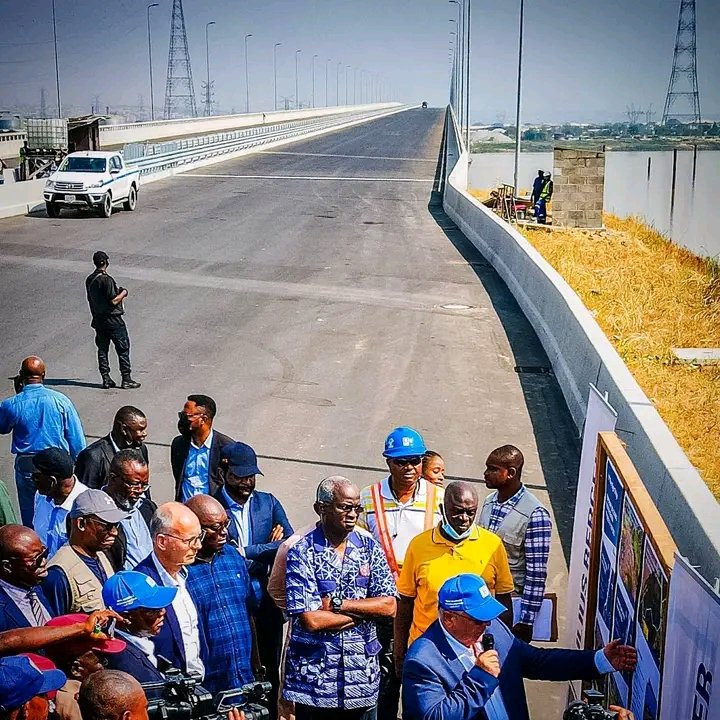
Julius Berger, the leading construction company in Nigeria, has completed the construction of the Second Niger Bridge and handed it over to the Federal Government. The bridge, which spans 1.6 km across the Niger River, connects Asaba in Delta State with Onitsha in Anambra State. It is expected to ease traffic congestion, enhance trade and commerce, and improve the socio-economic well-being of the people in the South-East and South-South regions.

The handing over ceremony was held on Thursday, December 7, 2023, at the bridge site. Federal government of Nigeria commended Julius Berger for delivering the project on time and within budget. He also praised the company for its high standards of quality and safety, as well as its corporate social responsibility initiatives. He said the bridge was a testament to his administration’s commitment to infrastructural development and national integration.

The bridge, which connects Asaba in Delta State with Onitsha in Anambra State, is expected to have the following impacts:

– Ease traffic congestion: The bridge will reduce the pressure on the existing Niger Bridge, which was built in 1965 and is often overcrowded and prone to breakdowns. The new bridge will provide an alternative route for travelers and commuters and improve the flow of traffic between the South-East and South-South regions.

– Enhance trade and commerce: The bridge will facilitate the movement of goods and services across the Niger River and boost the economic activities of the region. The bridge will also link the Onitsha Main Market, which is the largest market in West Africa, with other markets in Delta State and beyond. The bridge will also create opportunities for new businesses and investments in the region.

– Improve the socio-economic well-being of the people: The bridge will improve the access to education, health care, and other social amenities for the people living in the region. The bridge will also create employment opportunities for the local communities, especially during the construction and maintenance phases. The bridge will also enhance the security and safety of the people, as it will reduce the risk of accidents and criminal activities on the road.

The Second Niger Bridge is a landmark project that demonstrates the commitment of the Federal Government to infrastructural development and national integration. The bridge is designed to have a service life of 120 years and to withstand earthquakes, floods, and heavy loads.

It has four lanes of 3.75 meters width each, two emergency lanes of 3 meters width each, and a pedestrian walkway of 1.5 meters width on both sides. It also has streetlights, traffic signals, CCTV cameras, and other modern features. The bridge is expected to reduce travel time between Asaba and Onitsha from two hours to 15 minutes.

The Chairman of Julius Berger Nigeria Plc, Mr. Mutiu Sunmonu, expressed his gratitude to the President and the Federal Ministry of Works and Housing for entrusting the company with the landmark project. He said Julius Berger was proud to be part of Nigeria’s history and development and assured that the company would continue to provide excellent services to its clients and stakeholders. He also thanked the host communities, the security agencies, and the media for their support and cooperation throughout the project.

The Second Niger Bridge project started in 2014 under the administration of former President Goodluck Jonathan. It was initially estimated to cost N117 billion and to be completed in 2018. However, due to funding challenges, design modifications, and security issues, the project suffered several delays and cost overruns.

The project was eventually revived by the Buhari administration, which secured a $500 million loan from the African Development Bank (AfDB) and increased the budget to N336 billion. The project also included the construction of 10.3 km of link roads and toll plazas on both ends of the bridge.

The bridge is designed to have a service life of 120 years and to withstand earthquakes, floods, and heavy loads. It has four lanes of 3.75 meters width each, two emergency lanes of 3 meters width each, and a pedestrian walkway of 1.5 meters width on both sides. It also has streetlights, traffic signals, CCTV cameras, and other modern features. The bridge is expected to reduce travel time between Asaba and Onitsha from two hours to 15 minutes, and to boost economic activities in the region.