DD
MM
YYYY

PAGES

DD
MM
YYYY

spot_img

PAGES

Home Blog Page 3973

Nigeria Opens the Central Bank of Nigeria (CBN) Books And Bad Things Are There!

2

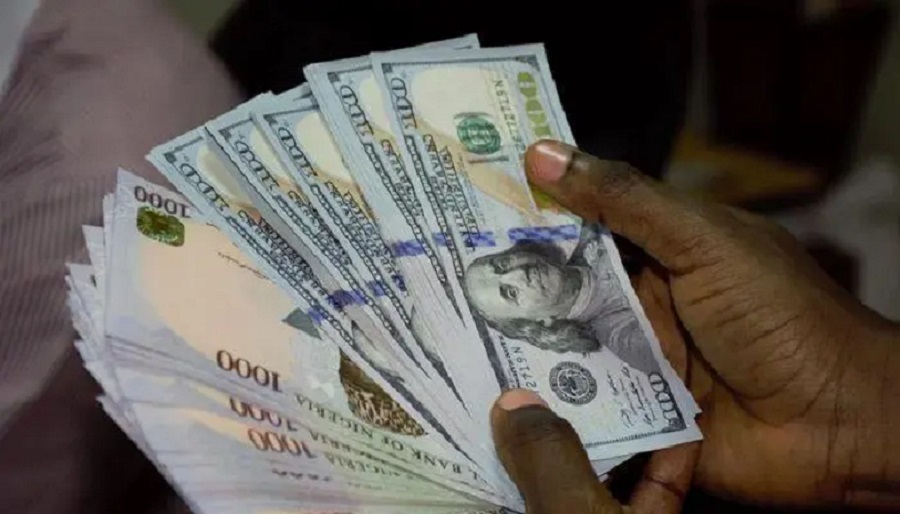
For years, including just last week, I have been demanding that the Central Bank of Nigeria (CBN) opens its books for the public to see what we have there. Amazingly, they have done that, after seven years,  and there are many bad things there: “Also, the CBN owes JP Morgan and Goldman Sachs a combined sum of $7.5bn as of the financial year ended December 2022. Included as part of its liabilities is another $6.3bn owned in foreign currency forwards.”

The Central Bank of Nigeria has released the Consolidated Financial Statements for the last seven years, making it the first time since 2015 that the apex bank will be making its book available for public scrutiny.

The Consolidated Financial Statements, which were released by the CBN, are for 2016, 2017, 2018, 2019, 2020, 2021 and 2022 financial periods.

The CBN declared a profit after tax of N103.8bn in 2022, up from N75.13bn reported a year earlier.

Also, the CBN owes JP Morgan and Goldman Sachs a combined sum of $7.5bn as of the financial year ended December 2022.

Included as part of its liabilities is another $6.3bn owned in foreign currency forwards.

The apex bank, however, stated it owes Goldman Sachs $500 million and JP Morgan $7 billion in what it classified as securities lending.

The 2022 financial statement read, “The Group entered into a securities lending agreement with Goldman Sachs and J. P. Morgan and as part of the agreement, the Group pledged its holdings on foreign securities in return for cash. The cash received from Goldman Sachs is N0.23tn ($500m), 2021: N0.22tn ($500m), and JP Morgan N3.23tn ($7bn), 2021: N3.05tn ($7bn) is recognised in other foreign securities.”

Securities lending forms part of the CBN’s total external reserves of about N14.3tn or $29bn using the official exchange rate of N494/$1 as of 2022.

However, the apex bank also owes another N3.15tn ($6.3bn) in foreign currency forward which are forex obligations it needs to make to foreign investors.

The financial statements uploaded on the CBN website is an indication that the apex bank, under the leadership of acting Governor Folashodun Shonubi, is ready to open its book to public scrutiny.

Comment on Feed

Comment 1: As Buhari became president, the CBN stopped publishing its report. What we witnessed in the past 8 years was a unique combination of ineptitude and impunity, it’s both unbelievable and unbeatable.

We are yet to know the true debt we are owing and the people we are owing. Everything that could go wrong went wrong, and up till now many are still in denial as to whether Nigeria is progressing or regressing. NNPC did its own magic.

You cannot wake up people who are pretending to be asleep.

Comment 2: It’s truly eye-opening to see the Central Bank of Nigeria’s finances being made public after seven long years. The startling revelation that the Central Bank of Nigeria owes JP Morgan and Goldman Sachs a whopping $7.5 billion raises important questions about financial management.

Let’s hope this is a game-changer for Nigeria’s accountability and economic progress.

The financial kinetics and mathematics continue.

But my simple questions include: is this figure complete? Or we should still be expectant? Why is it taking 7 years to show what is in there? Are they mutilating the data like the election results?


The Plea for Likes and Shares in Nigeria’s Content Creation Market

0

Nigeria’s skitmakers and pranksters have emerged as dynamic figures within the country’s digital landscape, blending creativity with humor to capture the attention of audiences across social media platforms.

However, they have adopted a peculiar rallying cry: “Please, like, share, and comment.” This seemingly innocuous phrase carries a deeper significance when examined through the lens of Karl Marx’s insights on capital accumulation.

Imagine these content creators as modern-day artisans, crafting digital skits and pranks to captivate their audience. In Marx’s worldview, their labor is the wellspring of value, yet under the sway of capitalism, this value often flows elsewhere. The content they produce is designed to beckon likes, shares, and comments – the lifeblood of social media platforms. As users engage, the value of their labor accumulates, akin to the hidden surplus labor that underpins capitalist economies.

But a more intricate story emerges when we look at these creators’ aspirations. Beyond the lure of viral fame, they are vying for a place of influence within their digital realm. The refrain, “Please, like, share, and comment,” is their plea for recognition, an attempt to establish themselves as authorities in a realm where attention is the new currency. It’s as if they are striving to build a following, akin to Marx’s vision of workers seeking validation for their contributions within a system that often disregards their true worth.

However, a twist of irony permeates this narrative. While these creators endeavor to shape the digital landscape, they remain ensnared within the very system they hope to conquer. The likes and shares they amass contribute to the profit margins of the social media platforms they use, echoing Marx’s concerns about the concentration of wealth in the hands of those who own the means of production.

The phrase “Please, like, share, and comment” carries a weighty significance. It encapsulates the creators’ quest for recognition and validation, a yearning for influence within a realm dominated by unseen forces of capitalism. It’s a reminder that even in the age of digital innovation, the echoes of Marx’s observations on labour, value, and the struggle for a fair share continue to reverberate.

United States Unadjusted Annual Consumer Price Index (CPI) Rate in July Accelerates to 3.2%

0

The latest data from the Bureau of Labor Statistics shows that the US unadjusted annual CPI (consumer price index) rate in July rose to 3.2%, the highest level since June 2022. This indicates that inflationary pressures are still present in the economy, despite the easing of some pandemic-related restrictions and supply chain disruptions. This means that the average prices of goods and services in the US increased by 3.2% over the past year, exceeding the Federal Reserve’s target of 2%.

The main drivers of the increase in the CPI rate were energy, food, and shelter costs, which rose by 23.8%, 3.4%, and 2.8%, respectively, compared to a year ago. These categories account for more than half of the consumer basket and reflect the rising demand and limited supply of essential goods and services.

The core CPI rate, which excludes food and energy, also accelerated to 2.9% in July, up from 2.7% in June. This suggests that inflation is not only driven by transitory factors, but also by underlying structural changes in the economy, such as labor shortages, wage growth, and higher production costs.

The CPI is used to measure inflation, which is the general rise in the level of prices in an economy. Inflation reduces the purchasing power of money, meaning that consumers can buy less goods and services with the same amount of money over time. The CPI is also used to compare the cost of living between different countries or regions, by converting the prices into a common currency using exchange rates. The CPI is also used to index the real value of wages, salaries, pensions, and other payments that are affected by inflation.

The CPI is not a perfect measure of inflation or the cost of living, because it does not capture all the changes in consumer preferences, quality, availability, or substitution effects that may occur over time. The CPI also does not include some items that are important for consumers, such as income taxes, investments, or savings. The CPI may also differ from the personal experience of individual consumers, depending on their specific spending habits and consumption patterns.

Food prices rose by 3.4%, reflecting the impact of supply chain disruptions, labor shortages, and droughts on agricultural production. Transportation prices surged by 10.7%, as the demand for air travel, car rentals, and public transit rebounded from the pandemic lows.

The high inflation rate poses a challenge for the Fed, which has maintained an accommodative monetary policy stance to support the economic recovery from the Covid-19 crisis. The Fed has argued that the current inflation spike is transitory and will subside as the economy returns to normal. However, some economists and market participants are worried that inflation may persist or even accelerate, forcing the Fed to raise interest rates sooner than expected.

The Fed’s next policy meeting is scheduled for September 21-22, where it will review the latest economic data and discuss its plans for tapering its bond-buying program. The market will be closely watching for any signals from the Fed on how it intends to balance its dual mandate of price stability and maximum employment in the face of rising inflationary pressures. However, some analysts and policymakers have expressed concerns that inflation could become more persistent and entrenched, requiring a faster and more aggressive monetary policy response.

The Fed is expected to announce its plans for tapering its asset purchases later this year, which would be the first step toward normalizing its monetary policy stance. However, the timing and pace of tapering will depend on the evolution of inflation and other economic indicators, as well as the risks posed by the Delta variant of the coronavirus and other potential shocks.

The July CPI report adds to the uncertainty and complexity of the Fed’s decision-making process, as it shows that inflation is not only high, but also accelerating. The Fed will have to balance the need to support the economic recovery with the need to prevent inflation from becoming a long-term problem.

Is Crypto Airdrops Sustainable for Growth of New Project?

0

Airdrops are often used as a marketing strategy to raise awareness, generate interest, and attract new users to a new project. But are they sustainable for the long-term growth of the project? What are the benefits and drawbacks of airdrops? And how can they be done effectively and ethically?

Crypto airdrops are the process of sending free tokens or coins to selected recipients, usually based on some criteria such as holding a certain amount of another token, signing up for a newsletter, following a social media account, or completing a survey. The purpose of airdrops is to create a buzz around a new project, increase its user base, and incentivize loyalty and engagement.

Airdrops can be classified into two types: hard forks and bounty programs. Hard forks are when a new coin is created from an existing one, such as Bitcoin Cash from Bitcoin, and the holders of the original coin receive the new coin in proportion to their holdings. Bounty programs are when a new project rewards users for performing certain tasks, such as sharing a post, inviting friends, or providing feedback.

Crypto airdrops can have several benefits for both the project and the recipients. Some of the benefits are: They can generate exposure and awareness for a new project, especially if it has a unique value proposition or solves a real problem. They can create a network effect and viral growth, as more people learn about the project and invite others to join. They can build trust and loyalty among the users, as they feel rewarded for their participation and support. They can provide valuable feedback and data for the project, as they can collect information about the users’ preferences, behavior, and opinions. They can increase the liquidity and adoption of the token or coin, as more people hold it and use it for transactions or trading.

Over the past two years, cryptocurrency airdrops have surged in popularity as a powerful method for blockchain projects to attract users and distribute free tokens. For those eager to profit from these opportunities, understanding how to obtain crypto airdrops can offer significant, real-world advantages.

Some examples of successful airdrops are:

Uniswap: The decentralized exchange platform Uniswap launched its own governance token UNI in September 2020 and distributed 400 UNI to each user who had ever used its service before September 1. The value of UNI surged to over $8 per token shortly after the launch, making some users instant millionaires. The airdrop was widely praised as a fair and generous way of rewarding the early adopters and supporters of Uniswap.

Stellar: The Stellar Development Foundation partnered with Blockchain.com, one of the largest cryptocurrency wallets, to distribute $125 million worth of Stellar Lumens (XLM) to its users in November 2018. The aim was to introduce millions of new users to the Stellar network and its fast, low-cost, and scalable transactions. The airdrop was one of the largest in history and helped boost the adoption and awareness of Stellar.

Brave: The Brave browser, which offers privacy and ad-blocking features, launched its Basic Attention Token (BAT) in May 2017 to reward users and publishers for their attention. The project allocated 300 million BAT for an initial coin offering (ICO) and another 300 million BAT for user growth pool (UGP). The UGP was used to distribute BAT to users who downloaded and used the Brave browser, as well as to publishers who joined the Brave platform. The airdrop helped increase the user base and engagement of Brave.

Crypto airdrops can also have some drawbacks or challenges for both the project and the recipients. Some of the drawbacks are: They can be costly and time-consuming for the project, as they have to allocate resources and funds for the distribution and promotion of the tokens or coins.

They can attract low-quality or fake users, who are only interested in selling the tokens or coins as soon as they receive them, without engaging with the project or its community. They can dilute the value and scarcity of the token or coin, as more supply is created and distributed without increasing the demand or utility. They can create legal and regulatory risks for the project, as they may be considered as securities offerings or taxable events in some jurisdictions, depending on how they are structured and executed.

Crypto airdrops can be a powerful tool for marketing and growth if done properly. Here are some tips and best practices for doing crypto airdrops effectively and ethically: Have a clear goal and strategy for your airdrop. Define what you want to achieve, who you want to target, how you want to distribute your tokens or coins, and how you want to measure your success.

Choose your recipients carefully. Segment your audience based on their interests, needs, behavior, and potential value. Avoid spamming random people or bots who have no connection or relevance to your project.

Provide value and utility for your tokens or coins. Make sure your tokens or coins have a clear use case and benefit for your users. Educate them on how to use them, where to store them, where to trade them, and what to expect from your project.

Communicate clearly and transparently with your users. Inform them about the details and terms of your airdrop, such as how much they will receive, when they will receive it, what they need to do to claim it, and what are their rights and responsibilities. Be honest and upfront about any risks or limitations involved. Follow the rules and regulations of your jurisdiction. Consult with legal experts and comply with any applicable laws or guidelines regarding securities offerings, taxation, anti-money laundering, consumer protection, data privacy, etc.

Crypto airdrops are a double-edged sword for new projects. They can be a powerful tool for gaining traction, visibility, and support, but they can also backfire if they are not executed well or aligned with the project’s vision and mission. Therefore, new projects should carefully weigh the benefits and costs of crypto airdrops, and design them in a way that maximizes their positive impact and minimizes their negative consequences.

X (Twitter) Lowers Eligibility Threshold for ADs Revenue Sharing

0

In a surprising move, X announced today that it is lowering the eligibility threshold for its ADs revenue sharing program. This means that more creators will be able to monetize their content on the platform and earn a share of the advertising revenue generated by their videos.

Previously, the eligibility criteria for the program required creators to have at least 1,000 subscribers and 4,000 hours of watch time in the past 12 months. Now, the new threshold is only 500 followers, must have subscribed to X Blue platform with a minimum of 5 million impression over three months and 2,000 hours of watch time. This change will take effect on September 1, 2023.

According to X, this decision was made to support the growth and diversity of its creator community, especially in emerging markets where access to digital tools and opportunities is limited. X also said that it wants to reward creators who produce high-quality and engaging content that attracts and retains viewers.

The ADs revenue sharing program allows creators to earn money from ads that are displayed before, during, or after their videos. The amount of revenue depends on various factors, such as the type, length, and placement of the ads, as well as the viewer’s location, device, and preferences. X takes a cut of 45% of the ad revenue, while the remaining 55% goes to the creator.

The main benefit of X ADs Revenue Sharing is that you get to keep 80% of the revenue generated by your ads, while X ADs only takes 20%. This is much higher than the industry average, which is usually around 50% or less. This means that you can earn more money from your content and invest it back into your business. You can also benefit from X ADs’ network of publishers and advertisers, who can help you grow your audience and exposure.

The program is one of the main sources of income for many creators on X, especially those who have large and loyal audiences. However, it is also a source of controversy, as X has been accused of unfairly demonetizing or removing videos that violate its community guidelines or advertiser-friendly policies. Some creators have also complained about the lack of transparency and consistency in X’s decisions regarding monetization.

By lowering the eligibility threshold, X hopes to attract more creators to its platform and encourage them to produce more and better content. However, it also means that X will have to deal with more videos that may not meet its standards or expectations. It remains to be seen how X will balance its interests with those of its creators and advertisers.

Firstly, let’s look at the benefits of this partnership with creators on Twitter now X. For X, it can leverage Twitter’s large user base and social network to gain exposure and attract more creators and viewers. It can also benefit from Twitter’s expertise in content moderation and advertising technology. For Twitter, it can diversify its revenue stream and offer more engaging content to its users. It can also tap into the growing market of short video entertainment, which is dominated by TikTok.

However, there are also some challenges and risks involved in this partnership. For X, it has to share a significant portion of its revenue with Twitter X Blue subscribers, which may limit its profitability and growth potential. It also has to compete with other platforms that offer similar or better features and incentives for creators and viewers, such as YouTube Shorts, Instagram Reels, and Snapchat Spotlight.

For Twitter, it has to invest in the infrastructure and resources to support X’s video hosting and streaming, which may increase its costs and complexity. It also has to deal with the legal and ethical issues that may arise from the content and ads that appear on X’s videos, such as copyright infringement, misinformation, hate speech, and privacy violations.

X-Twitter ADs Revenue Sharing is not a sustainable business model in the long run. It may generate some short-term benefits for both parties, but it also exposes them to many uncertainties and challenges that may outweigh the advantages. I suggest that X should explore other ways to monetize its platform, such as subscriptions, donations, or branded content. I also suggest that Twitter should focus on improving its own core features and services, such as live audio, newsletters, and e-commerce.