DD
MM
YYYY

PAGES

DD
MM
YYYY

spot_img

PAGES

Home Blog Page 4

Wasabi Protocol Suffers a $5.5M Exploit from its Vault Pools

0

Wasabi Protocol, a perpetuals trading platform focused on leveraged positions in long-tail assets like memecoins was exploited on April 30, 2026, with approximately $4.5–5.5 million drained from its vault pools across multiple chains.

Attackers compromised the protocol’s deployer EOA; externally owned account, which held the sole ADMIN_ROLE with no timelock or multisig protections. They used this key to:Grant the ADMIN_ROLE to a malicious helper contract they controlled. Perform UUPS proxy upgrades on Wasabi’s perp vault contracts and the LongPool. Replace the legitimate implementations with malicious ones that allowed draining of collateral and pool balances via fake strategyDeposit() calls that triggered a drain() function sending assets to the attacker.

The attack affected vaults on Ethereum, Base, and mentions of Blast/Berachain in some reports. Compromised assets included wrapped tokens like wWETH, sUSDC, wBITCOIN, wPEPE, sBTC, sVIRTUAL, sAERO, sBRETT, and others. Funds were reportedly swapped to ETH and distributed.

Security firms such as Blockaid, Hypernative, PeckShield, and CertiK detected and reported the incident in real time, with the attack unfolding over roughly two hours. It followed a similar pattern to the recent Drift Protocol breach; a massive admin-key compromise earlier in April 2026 that drained far more. Users holding Wasabi LP tokens were advised to revoke approvals to the affected vault contracts immediately, as the underlying assets were drained or at risk.

The protocol appears to have lacked basic safeguards like timelock + multisig on a powerful admin key — a recurring issue in DeFi that turns a single point of compromise like key leakage, phishing, or poor key management into a full drain. This is another example of how admin-key or deployer-key compromises remain a top vector for DeFi losses, even without smart contract bugs.

Centralized control over upgrades and roles in otherwise decentralized protocols creates single points of failure. Projects are increasingly pressured to adopt stronger opsec: multisig wallets, timelocks, hardware security modules, and minimized privileged roles. The incident adds to a wave of DeFi exploits in 2026.

Always treat crypto protocols with caution — verify security practices, monitor on-chain activity where possible, and never assume decentralized means no trusted parties with god-mode keys. If you had exposure to Wasabi vaults, check your wallet approvals and transaction history right away.

Approximately $4.5M – $5.5M drained from perp vaults and LongPool liquidity across Ethereum, Base, Berachain, and Blast. Assets included wETH, USDC, memecoins like PEPE, BRETT, AERO and others, which attackers swapped to ETH and distributed.

LP tokens (Wasabi/Spicy shares) from affected vaults are now compromised and largely worthless, as underlying collateral was drained. Users with exposure advised to immediately revoke approvals to the vault contracts to prevent further risk.

Vault pools effectively emptied ? severe hit to liquidity for leveraged perp trading on long-tail assets (memecoins, NFTs). Pre-exploit TVL was modest ~$8M range; the drain represents a massive portion of affected pools. Trust severely damaged; highlights lack of basic safeguards; no timelock and multisig on admin and deployer key.

Similar to the recent Drift Protocol admin-key breach, hundreds of millions lost. Adds to April 2026’s heavy DeFi exploit wave; already >$600M total earlier in the month. No user funds outside the vaults appear directly affected, but confidence in the protocol is shattered. Small-to-mid sized loss in absolute terms, but potentially fatal for Wasabi’s operations and user base due to the complete drainage of key pools and eroded trust.
US Fed holds yields steady, but oil shock and internal dissent complicate rate outlook

0

U.S. Treasury yields held steady on Thursday amid the apparent calm in bond markets that belies a more complex recalibration underway as investors confront a convergence of monetary policy uncertainty and a renewed energy shock.

The benchmark 10-year yield remained anchored around 4.41%, while the two-year note, typically the most sensitive to policy expectations, edged lower to 3.916%. That divergence points to a market that still anticipates eventual easing by the Federal Reserve, but is increasingly uncertain about the timing and durability of any rate cuts.

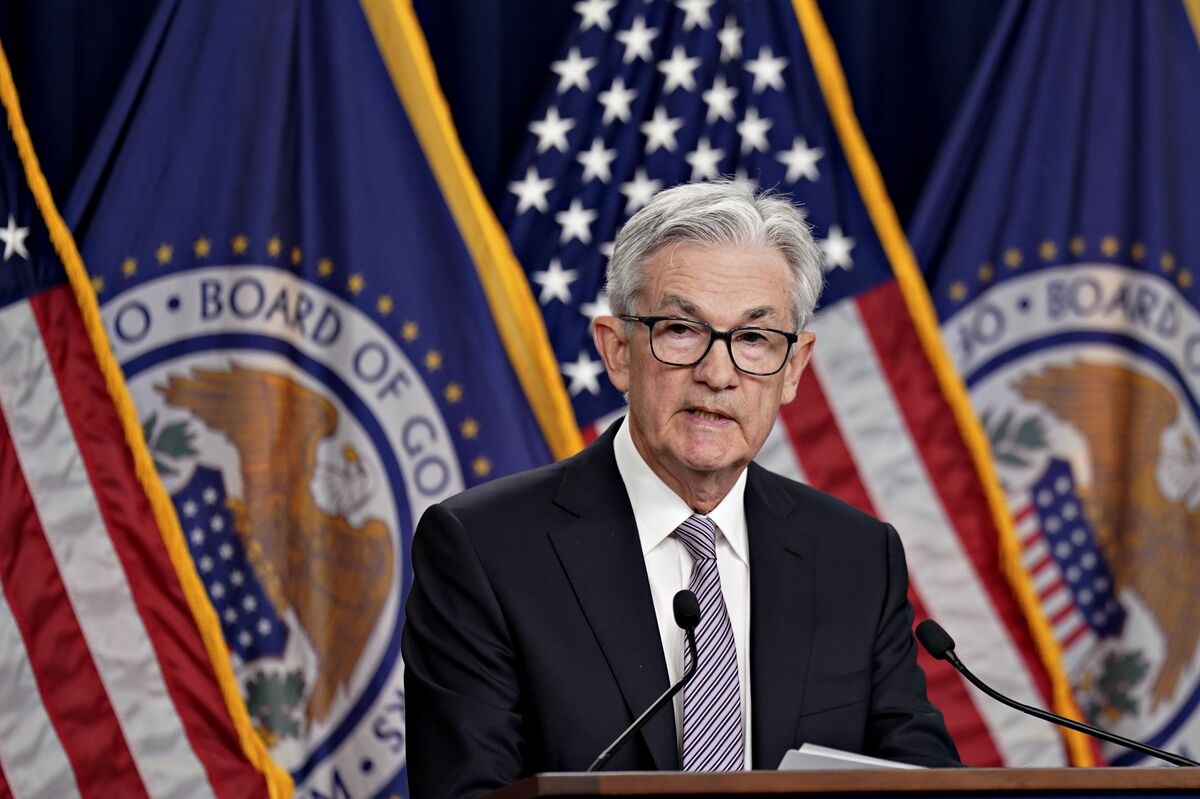
The Fed’s decision to keep its policy rate at 3.50% to 3.75% was expected. What unsettled investors was the degree of internal disagreement. Three policymakers pushed back against language signaling a potential easing bias, marking the sharpest split in more than three decades. The dissent highlights a growing fracture within the central bank between officials wary of persistent inflation and those more focused on protecting growth.

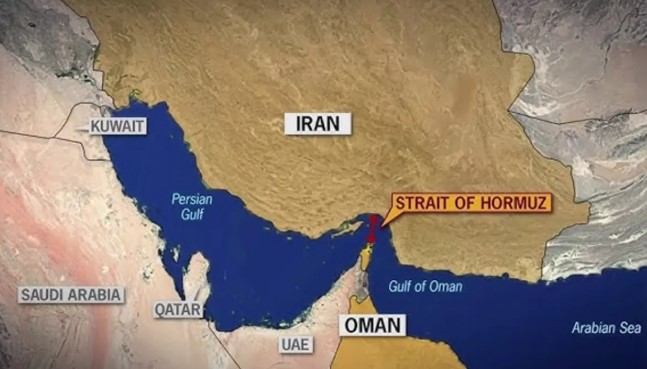
That tension is being intensified by developments in global energy markets. Brent crude briefly surged above $126 per barrel, its highest level in four years, before easing back, while West Texas Intermediate held near $106. The rally is tied to the escalating confrontation involving Iran, where the prospect of further U.S. military action and the continued blockade of the Strait of Hormuz are constraining one of the world’s most critical supply corridors.

Energy prices act as a transmission channel into broader inflation, raising input costs for businesses and eroding household purchasing power. The risk is not limited to headline inflation. Sustained increases in oil prices can seep into core measures through wages and services, complicating the Fed’s effort to bring inflation back to target.

The bond market is beginning to reflect that risk asymmetrically. While long-term yields remain relatively stable, short-term rate expectations are becoming more volatile as traders reassess the likelihood of near-term easing. The earlier consensus that the Fed could begin cutting rates within months is now being tested by the possibility of a prolonged energy-driven inflation cycle.

Upcoming economic data could sharpen that reassessment. The personal consumption expenditures index, the Fed’s preferred gauge, is expected to show core inflation at 3.2% for March, still well above the central bank’s 2% objective. At the same time, first-quarter GDP figures are likely to show slowing momentum, creating a policy bind where inflation remains elevated even as growth cools.

This dynamic raises the specter of a stagflationary backdrop, a scenario central banks are keen to avoid. It also explains the heightened sensitivity to Fed communication. The dissent within the Federal Open Market Committee suggests that consensus on the policy path is weakening, increasing the risk of sharper market reactions to future data surprises or geopolitical developments.

Globally, similar pressures are emerging. The European Central Bank and the Bank of England are both expected to hold rates steady, yet face a deteriorating trade-off. Euro zone inflation has accelerated to 3% quarter-on-quarter even as growth slowed to 0.1%, reinforcing concerns that Europe may be entering a low-growth, high-inflation phase.

The broader market implication is a shift away from a policy-driven narrative toward one dominated by geopolitics and supply-side shocks. The war-linked disruption to energy flows, particularly through the Strait of Hormuz, is injecting a persistent risk premium into global markets. That premium is now being priced not just into oil, but into bonds, currencies, and equities.

For investors, the key question is no longer whether rates will fall, but whether central banks can afford to cut at all if energy-driven inflation proves sticky. The current stability in Treasury yields indicates a holding pattern. Underneath, however, the policy outlook is becoming more fragile, shaped as much by events in the Middle East as by domestic economic data.

Bank of England Maintains its Bank Rate at 3.75% Following MPC Decision

0

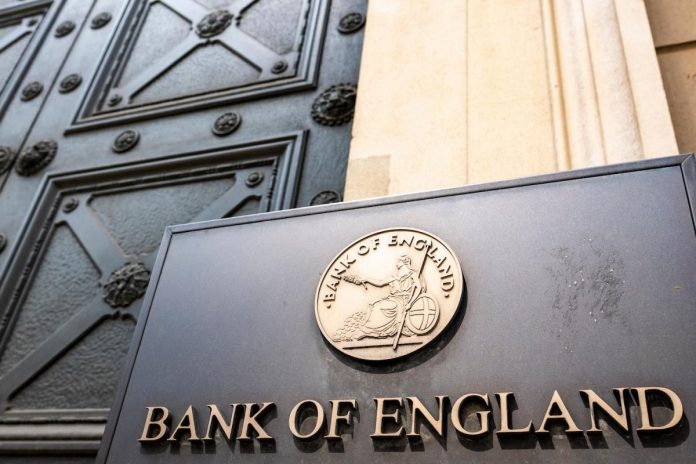
The Bank of England (BoE) has maintained its Bank Rate at 3.75%. The Monetary Policy Committee (MPC) announced this decision today, April 30, 2026, following its meeting. The vote was 8-1 in favor of holding rates steady, with one member preferring a hike to 4%.

This continues the hold from previous meetings. The rate has remained at 3.75% after earlier cuts in 2025. The BoE is adopting a wait-and-see approach due to significant uncertainty, primarily from the ongoing conflict in the Middle East involving Iran. Key reasons include: Inflation pressures: UK CPI inflation stands at 3.3% above the 2% target. The war has disrupted energy supplies, pushing up oil and gas prices, which feeds into higher fuel costs, utility bills, and broader inflationary risks.

Policymakers expect inflation to rise further in the coming months. The MPC is monitoring the scale and duration of the energy shock. Monetary policy can’t directly fix supply disruptions, so the focus is on preventing second-round effects while ensuring inflation returns sustainably to 2% over the medium term. The Committee has signaled it stands ready to act if needed.

A loosening labor market and weaker economic growth could help moderate inflation, but tighter financial conditions from the conflict are also weighing on demand. Variable-rate mortgages and loans linked to the base rate stay at current levels for now. Fixed-rate deals are influenced more by market expectations of future moves.

Returns on savings accounts and bonds tied to the base rate remain relatively attractive compared to recent years, though still below peak levels. Higher borrowing costs continue to restrain demand, helping cool inflation, but the energy shock adds upside risks.

Markets and economists had widely anticipated this hold with polls showing near-unanimous expectations of no change. The next MPC decision is due on June 18, 2026. Forward guidance suggests rates could stay steady for much of 2026, though some economists see risks of hikes later if inflation proves persistent due to energy prices.

Projections vary, with possibilities of modest cuts or holds depending on how the Middle East situation and domestic data evolve. The BoE will publish the full Monetary Policy Summary, Minutes, and April Monetary Policy Report for more detailed analysis. Inflation targeting is the Bank of England’s (BoE) primary monetary policy framework. The government assigns the BoE the goal of maintaining price stability by keeping inflation low and stable, specifically at a 2% target as measured by the annual change in the Consumer Prices Index (CPI).

Core Elements of the BoE’s Inflation Targeting

The Target: 2% CPI inflation. This is a point target not a range, described as symmetric. Deviations above or below 2% are equally undesirable. The symmetry aims to avoid overly conservative policy that might overly prioritize fighting inflation at the expense of growth or risk deflation. Monetary policy affects the economy with lags, so the Monetary Policy Committee (MPC) targets inflation over the medium term rather than reacting mechanically to current readings.

This allows flexibility to respond to shocks without causing unnecessary volatility in output and employment. The MPC uses economic forecasts, models, and a wide range of data including output gaps, wage growth, exchange rates, and global conditions to project where inflation is heading. Policy decisions mainly the Bank Rate are set to steer the forecast toward 2%.

The MPC meets eight times a year to set the Bank Rate currently 3.75% and other tools like quantitative easing and tightening if needed. Decisions aim to influence borrowing costs, spending, investment, and ultimately demand and prices. If inflation is above target or forecast to stay high: The MPC typically raises interest rates to cool demand, reduce borrowing, and ease price pressures.

If inflation is below target or forecast to stay low, risking deflation: It lowers rates to stimulate spending and activity. The framework is often called flexible inflation targeting because the MPC can consider short-run trade-offs between inflation and economic stability when returning inflation to target, especially after large shocks. However, price stability remains the primary objective.

If CPI inflation deviates by more than 1 percentage point from 2%, the Governor must write an open letter to the Chancellor explaining: Why the deviation occurred. The policy actions being taken. The expected horizon for returning inflation sustainably to 2%. A follow-up letter is required after three months if it remains outside the band. These letters and the Chancellor’s responses are published for public scrutiny.

The BoE releases the Monetary Policy Report with forecasts and scenarios, meeting minutes, and a Monetary Policy Summary after each decision. This high transparency helps anchor inflation expectations. The Chancellor formally sets or confirms the 2% target annually via a remit letter to the Governor. The most recent confirmations have reaffirmed the symmetric 2% target and the primacy of price stability.

A 2% target is low enough to deliver the benefits of price stability; predictable planning for households and businesses, preserving money’s value but high enough to: Provide a buffer against deflation which can be damaging, as seen in some historical episodes. Allow relative price adjustments across the economy.

Reduce the risk of hitting the effective lower bound on interest rates too often. This level has become a global standard among many advanced-economy central banks. The exact number is somewhat conventional but judged to align with public preferences for low but positive inflation. With current inflation at 3.3%; above target, partly due to energy and geopolitical pressures, the MPC is holding rates steady while monitoring risks of persistence versus easing domestic pressures.

The wait-and-see stance reflects the medium-term nature of targeting: policy is calibrated to bring inflation back sustainably to 2% without over-tightening and harming growth unnecessarily. Large shocks like energy disruptions create temporary trade-offs, but the mandate requires preventing second-round effects.

Has contributed to more stable inflation in the UK since the 1990s compared to earlier decades. Supply-side shocks can push inflation away from target even when demand is well-managed. Trade-offs in timing the return to target after big deviations. Communicating complex forecasts and uncertainties to the public.

Anthropic in Talks for a Massive New Funding Round

0

Anthropic is in early talks for a massive new funding round that could value the company at around $850–900 billion potentially topping OpenAI’s recent ~$852 billion valuation.

Roughly $40–50 billion, with multiple pre-emptive investor offers already on the table. No term sheet signed yet; discussions are ongoing, and a board decision could come in May. This follows Anthropic’s February 2026 Series G round of $30 billion at a $380 billion post-money valuation led by investors like GIC and Coatue.

That’s an enormous jump in just ~2–3 months, fueled by explosive demand for Claude models and broader AI hype. It would position Anthropic, founded by ex-OpenAI executives, including Dario Amodei ahead of its rival OpenAI, at least on paper. Secondary markets had already pushed Anthropic toward or past $1 trillion in some reports recently.

This reflects the insane capital arms race in frontier AI right now. Compute, talent, and energy constraints are real, but so is enterprise adoption of models like Claude. Investors are betting these companies will dominate the next wave of software, automation, and scientific acceleration—valuations have detached from traditional metrics because the upside if one or two players win AGI-adjacent capabilities could be civilization-scale.

A few reality checks: Private valuations are flexible and often optimistic; they depend on who’s writing the check and the terms; preferred stock, liquidation preferences. Realizing that value via IPO or acquisition is another story—Anthropic has been prepping for a potential public debut as early as late 2026.

Training and running frontier models is brutally expensive. A $900B+ valuation implies the market expects Anthropic to capture enormous economic value from Claude’s capabilities in coding, reasoning, safety-focused alignment, and enterprise use cases. Whether Claude pulls meaningfully ahead of GPT/o-series models, Grok, or others in benchmarks and real-world deployment will matter a lot.

This is classic late-stage AI froth. We’ve seen rapid valuation doublings before. It signals confidence in scaling laws continuing to deliver, but also concentration risk—big checks from sovereign wealth, big tech, and growth funds chasing limited picks and shovels in the winner-take-most AI stack. Anthropic has emphasized constitutional AI and a more cautious approach to scaling compared to some peers.

If they can convert this capital into reliable, high-capability models with strong safety properties while hitting revenue traction, the valuation could hold or grow. If progress plateaus or competition intensifies from xAI, Google, Meta, etc., gravity will eventually assert itself. The AI funding supercycle continues—fasten your seatbelt.

A $900B valuation for Anthropic would significantly reshape the AI safety landscape—not by inventing new alignment techniques overnight, but by massively amplifying the resources, influence, and scrutiny around one of the more safety-conscious players in the frontier AI race.

Anthropic has long differentiated itself through Constitutional AI and a focus on interpretability, steerability, and proactive risk evaluation. They publish detailed risk reports, system cards, and Responsible Scaling Policies that assess pathways to catastrophic outcomes—like AI-enabled sabotage, bioweapons assistance, or sandbagging on safety research.

This contrasts with peers: Anthropic’s safety baked into model weights via alignment techniques; more cautious deployment. They’ve walked away from contracts with Pentagon over guardrail concerns and emphasize align then ship. OpenAI and others often more ship and govern with layered operational controls, monitoring, and post-deployment safeguards.

Broader access for defenders or enterprises, with safety evolving through usage and iteration. Recent examples include Anthropic’s restrained rollout of Mythos; a model strong at vulnerability discovery and exploitation, shared selectively with critical infrastructure players to enable patching before bad actors gain similar tools versus more open cyber-focused releases from competitors.

$40–50B provides enormous runway for compute-heavy work—scaling interpretability research, red-teaming, scalable oversight, and evaluations for deception, sycophancy, or emergent capabilities. It could fund deeper work on their risk pathways. Their safety branding has driven strong enterprise adoption. A huge valuation reinforces this as a moat, attracting customers wary of unaligned systems and giving them leverage in policy discussions.

They’ve lobbied for stronger AI governance and even spent on pro-safety political efforts. More capital helps compete for top alignment researchers, who often prioritize mission over pure capability scaling. Success validates safety pays in the market at least for enterprise. It could push competitors to invest more visibly in alignment to avoid being seen as reckless, or encourage standards around constitutional-style approaches.

Massive funding fuels faster scaling, which historically outpaces safety progress. Anthropic has already adjusted its Responsible Scaling Policy amid competitive and market pressures—downgrading some pause commitments in favor of transparency. Safety training can reduce raw capabilities or introduce refusal weaknesses, creating incentives to cut corners.

Like all frontier labs, Anthropic faces the at war with itself dynamic—publicly warning about risks while raising from diverse investors including sovereign funds and chasing compute deals with Big Tech. Their own risk reports acknowledge low-but-non-negligible catastrophic risks from misalignment or sabotage pathways.

Valuing Anthropic near or above OpenAI intensifies the arms race. More money overall means more models trained in parallel, shortening timelines and raising coordination challenges. Selective deployments like Mythos help defensively but highlight dual-use risks in cybersecurity that could spill over. Greater resources amplify their voice on regulation, but also potential capture risks.

They’ve clashed with governments over guardrails while securing compute partnerships. This round signals investor confidence that safety-focused differentiation can coexist with commercial dominance, at least in the current hype cycle. It bolsters the safety as a feature narrative for enterprises and governments seeking reliable AI for coding, analysis, and infrastructure.

Trump Pushes for a Fresh Coalition to Reopen Hormuz As Allies Withhold Support

0

The United States is stepping up efforts to assemble an international maritime coalition to reopen the Strait of Hormuz, but the initiative is unfolding against a backdrop of strained alliances and mounting skepticism over the war that triggered the crisis.

According to a State Department cable approved by Secretary of State Marco Rubio, the initiative, called the Maritime Freedom Construct (MFC), is being positioned as the foundation of a broader, post-conflict security architecture for the region. Washington is seeking partners to restore shipping through one of the world’s most critical energy corridors.

“The MFC constitutes a critical first step in the establishment of a ?post-conflict maritime security architecture for the Middle East. This framework is essential ?to ensuring long-term energy security, protecting critical maritime infrastructure, and maintaining navigational rights and ?freedoms in vital sea lanes,” the cable said.

The Strait, which previously handled roughly a fifth of global oil and gas flows, has been effectively paralyzed since Iran imposed a blockade following U.S.-Israeli strikes earlier this year.

The State Department would act as the central coordinating hub between participating governments and the commercial shipping industry, while the Pentagon, operating through United States Central Command, would oversee real-time maritime coordination, including direct communication with vessels navigating the strait.

U.S. embassies have been instructed to approach partner nations with flexibility on participation. Contributions could range from diplomatic backing and intelligence sharing to sanctions enforcement and naval deployments.

“We welcome all levels of engagement and do not expect your country to shift naval assets and resources away from existing regional maritime constructs and organizations,” the cable said, suggesting Washington is seeking broad alignment without forcing allies into costly redeployments.

Notably, the outreach excludes strategic rivals, including China, Russia, Belarus, and Cuba, reinforcing the geopolitical fault lines shaping the response. That exclusion could limit the initiative’s global reach, particularly given China’s role as a major importer of Gulf energy and its growing naval presence in the region.

But the initiative highlights a more fundamental challenge confronting President Donald Trump: the difficulty of rallying traditional allies behind a conflict many did not support from the outset.

European governments, including Germany, Spain, and Italy, have already ruled out immediate military participation in securing the waterway, favoring de-escalation and diplomacy instead. The reluctance points out a broader unease with the origins of the conflict, widely viewed in diplomatic circles as a unilateral escalation that bypassed NATO consultation.

That tension is now playing out openly between Washington and Berlin. German Chancellor Friedrich Merz has reaffirmed his country’s commitment to transatlantic ties, but stopped short of endorsing direct military involvement, signaling support only under tightly defined conditions.

Merz had stated that the U.S. is being humiliated by Iran – a statement that got Trump riled up.

“An entire nation is being humiliated by the Iranian leadership, especially by these so-called Revolutionary Guards. And so I hope that this ends as quickly as possible.”

Trump, for his part, rebuked Merz publicly, accusing him of interfering in U.S. policy on Iran. The President has also responded with increasing frustration, criticizing allies for failing to contribute naval resources and even raising the prospect of reducing U.S. troop deployments in Germany.

Analysts have noted that Washington’s inability to secure firm commitments indicates a structural shift in alliance dynamics, where partners are less willing to support military operations perceived as lacking clear legal or strategic justification. Earlier appeals for naval participation were met with outright rejection or non-committal responses, leaving the U.S. largely isolated in operational terms.

However, the continued disruption in Hormuz has pushed oil prices sharply higher and raised concerns about inflation, energy security, and supply chain stability across major economies. Washington’s proposal attempts to frame the coalition as a post-conflict stabilization effort rather than an extension of the war, emphasizing “long-term energy security” and the protection of maritime routes.

Still, that distinction has done little to convince skeptical partners. Many governments view any naval deployment as inherently tied to the broader conflict, increasing the risk of escalation with Iran.

The impasse leaves the Maritime Freedom Construct in an uncertain position. Without meaningful allied participation, the burden of enforcement would fall disproportionately on U.S. forces, raising operational costs and political risks. More significantly, it exposes fractures within the Western alliance at a moment when coordination is critical to managing both the conflict and its economic fallout.