DD
MM
YYYY

PAGES

DD
MM
YYYY

spot_img

PAGES

Home Blog Page 4077

Tinubu Explains Why He Suspended Central Bank of Nigeria Governor Godwin Emefiele

0

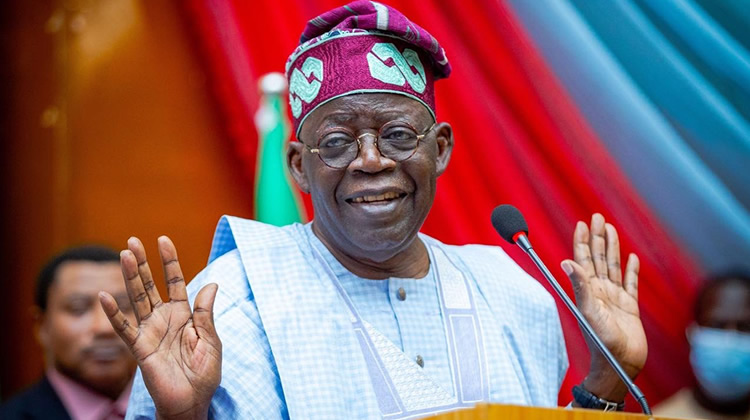
Weeks after the suspension of Godwin Emefiele, the former governor of the Central Bank of Nigeria, President Bola Tinubu has explained why he made the decision at a critical phase of Nigeria’s economy.

The President said, while holding an interactive session with Nigerians in France and neighboring countries, that he decided to suspend the CBN Governor because he messed up the nation’s financial system.

Emefiele was suspended on June 9, 2023, to give room for investigations into allegations leveled against him as the head of Nigeria’s apex bank.

“Then the financial system was rotten. Few people made bags of money and then you yourself, you stopped sending money home to our poor parents. Several windows. But that is gone now. It’s gone.

“The man is in the hands of the authorities. Something is being done about that. They will sort themselves out,” the president said.

Before his suspension, the Department of State Services (DSS) had made attempts to arrest Emefiele, alleging that he was involved in terrorism financing and other financial crimes. Perceived to have been protected by Buhari’s government, Emefiele was subsequently arrested following the presidential inauguration of Tinubu.

The DSS has listed in an affidavit of facts presented in court while seeking an order to detain the embattled ex-governor, allegations bordering on economic crimes and undermining national security.

The secret service said Emefiele was arrested “upon reasonable suspicion of committing acts which constitute a criminal breach of trust, incitement to violence, criminal misappropriation of public funds, economic sabotage, economic crimes of national security dimension and undermining the security of the Federal Republic of Nigeria.”

On these grounds, the DSS and the Office of Attorney General of the Federation (OAGF) on Tuesday asked the Federal Capital Territory High Court not to grant Emefiele bail, describing him as a “flight risk.”

However, despite Tinubu’s explanation, the belief that he is being vindictive over the naira redesign policy, which he decried during the presidential campaign as a ploy to scuttle his presidential ambition, has continued to be upheld by many.

Emefiele introduced the naira redesign policy late last year, before electoral campaigns. The president believed the policy, which resulted in a nationwide cash scarcity, was part of a ploy by elements in Buhari’s government who did not want him to succeed.

Emefiele’s involvement in politics was also fingered as part of the reasons the present administration is prosecuting him. The former CBN head had obtained a presidential nomination form under the ruling All Progressive Congress (APC) while still in office.

In March, Senator Shehu Sani, who represented Kaduna Central Senatorial District in the 8th Assembly, predicted that Emefiele’s life would be made miserable by the incoming administration of ‘president-elect’, Tinubu. The former lawmaker said “When Baba [Buhari] is gone, Emefiele will be like Zebra in the hands of Tigers.”

However, in its affidavit, the OAGF debunked the belief that Emefiele is being scapegoated. It said the former central bank head is neither being held for terrorist-related crimes nor being victimized for his involvement in politics and the botched naira redesign policy.

“Issues of terrorism financing and fraudulent activities are not part of the grounds for the arrest and detention of the applicant,” the OAGF stated.

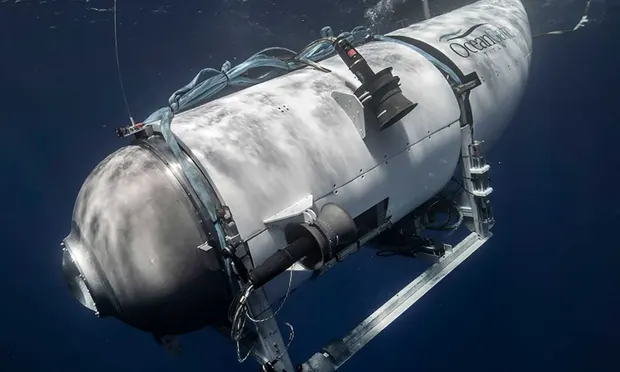
The Political Economy of Deep-Sea Exploration and Titan OceanGate Submersible

0

Among all the creatures God created, humans have always had more opportunity to explore Earth because of the high reasoning level they possess. From land to water, God provides different resources for humans to live life the best way they can. However, what they wanted to enjoy positively sometimes becomes sour because of direct or indirect contravention of natural order to enjoy what interests them. Like the creation of different industries and businesses on land, humans, in their quest to explore water for more resources that would make them live a better life and experience life underwater, have over the years formed industries and created businesses that address different segments of the deep sea, which many sources describe as parts of the ocean between 200 and 500 meters.

The ocean, which invariably means blue economy, includes industries such as renewable marine energy, tourism, fisheries, and maritime trade. This economy has been exploited over the years for fish, minerals, and other uses. Our checks reveal that the exploitation of the ocean started becoming easier in the late 1950s, when technology started to advance enough to have machines that could dive deeper than 1000 feet (300 m) below sea level. This period was 38 years after the Royal Mail Ship (RMS) Titanic tragically sank. Information has it that thousands of people who believed in exploring the ocean paid different amounts for them to be passengers of the ship.

As noted previously, the advancement of technology has made people who have interest in exploring places and also possess the financial power see the reason for diving deep into the ocean. For instance, a submarine dive is an unforgettable experience that provides peace, silence, and insight into uncharted territory. It enables yacht owners and guests to explore deep underwater, where they may encounter whales, sharks, ancient shipwrecks, unusual rock formations, and rare creatures. This uncharted territory offers a one-of-a-kind and unforgettable experience.

People and businesses are not only diving into the depths of the ocean for fun. Another significant factor is the idea of improving life on Earth through resources in the ocean. Several reports and experts have stated that people, countries, and organisations that explore the bottom of the ocean are most likely to be the leaders in the global blue economy in the next two decades. This is premised on the fact that many of the land resources are nearing their depletion stage. Hence, there is a need to see and explore what water has to offer for human survival on Earth. Seafloor massive sulphides, cobalt-rich crusts, and polymetallic nodules are often mentioned as critical resources on the seabed that can provide copper, manganese, zinc, cobalt, platinum, and a host of other valuable metals for human usage on Earth.

While this background indicates that humans can explore both land and water for their survival on Earth, it is, however, imperative to examine the politics and economics of survival in light of the recent sinking of the Titan OceanGate submersible. Our examination of different views across the world about the incident underscores the need for transparent funding models for deep-sea exploration. We must ensure that scientific research and environmental preservation are prioritised over profit-driven motives.

The sinking of the Titanic Explorer is a reminder of the risks involved, but we should not shy away from innovation. Balancing economic interests and responsible practices is key. It has also highlighted the importance of international collaboration and regulatory frameworks for deep-sea exploration. A harmonised approach is needed to ensure equitable access, sustainable practices, and the protection of underwater cultural heritage.

The political economy of deep-sea exploration demands ethical considerations. The Titanic Explorer incident raises questions about the value we place on preserving historical sites and the responsibility of researchers and companies. We must prioritise ethical conduct and societal benefits.

Deep-sea exploration is a complex endeavour that requires substantial funding. The sinking of the Titanic Explorer is a reminder of the financial risks involved. Public-private partnerships and government support are essential to driving research, technological advancements, and safety measures.

As discussions continue, it is evident that the sinking of the Titanic Explorer has brought the political and economic aspects of deep-sea exploration to the forefront. Stakeholders, policymakers, and industry experts will need to navigate these complex issues to ensure that deep-sea exploration remains a force for scientific advancement, economic growth, and environmental stewardship.

Titanic Tragedy and Critical Discussion on Deep-Sea Exploration

0

The sinking of the Titanic Explorer submarine during the OceanGate expedition has sparked a critical discussion on various themes that connect with the Titanic and deep-sea exploration. Beyond the immediate concerns of safety and tragedy, this incident has prompted a deeper exploration of topics such as historical preservation, technological advancements, environmental impact, and the human fascination with the mysteries of the deep. Our analyst extracts these themes from a number of views expressed since June 11, 2023, when the Titan submarine vessel went missing.

Technological Advancements

The sinking of the Titanic Explorer has raised questions about the reliability and safety of deep-sea exploration technologies. Critics argue that despite significant advancements in submersible technology, accidents like this highlight the need for constant improvement in safety measures and the avoidance of complacency. The incident serves as a reminder that even with cutting-edge equipment, the depths of the ocean remain an inherently risky environment.

Environmental Impact

Environmentalists have seized upon the tragedy as an opportunity to emphasize the importance of responsible deep-sea exploration. They argue that the delicate ecosystems and fragile marine life found in the deep-sea should be protected from potential harm caused by research activities. Calls for stricter regulations, greater adherence to sustainable practices, and increased collaboration between scientists and conservationists have gained traction in the wake of the Titanic Explorer sinking.

Human Fascination

The enduring allure of the Titanic and the depths of the ocean has captivated the human imagination for over a century. The sinking of the Titanic Explorer, while tragic, has reminded us of our unyielding curiosity about the mysteries concealed beneath the waves. Some argue that this incident should not deter exploration but instead spur a renewed commitment to safer, more responsible deep-sea expeditions, driven by a shared fascination with the unknown.

Historical Preservation

The Titanic holds an iconic place in maritime history, and the tragedy has reignited the debate on how best to preserve its legacy. Some argue that deep-sea exploration is crucial for uncovering the past and learning from historical events, emphasizing the need for responsible expeditions. However, others question whether disturbing the resting place of the Titanic and other shipwrecks is ethical, urging a more conservative approach to preservation.

As discussions unfold around these critical themes, experts and stakeholders are engaging in thought-provoking debates. James Cameron, who directed the 1997 blockbuster Titanic and has previously dived to the wreck, compared the situation in which OceanGate was warned about the craft’s safety mechanisms but continued to make diving expeditions to the luxury liner’s wreckage to the Titanic’s sinking.

“I’m struck by the similarity of the Titanic disaster itself, where the captain was repeatedly warned about ice ahead of his ship and yet he steamed at full speed into an ice field on a moonless night. And many people died as a result,” the Oscar winner told ABC News.

In an interview with The Guardian UK, Stefan Williams, a professor of marine robotics at the University of Sydney said: “When you are putting people in a potentially dangerous position like this you want to be absolutely sure everything’s checked through before getting under way.”

Belgium’s FSDA Orders Binance to Stop Offering Crypto Services in the Country

0

Binance, the world’s largest cryptocurrency exchange by trading volume, has been ordered by Belgium’s Financial Services and Markets Authority (FSMA) to stop offering any digital currency services in the country. The regulator said in a notice on Friday that Binance is not authorized to provide any investment services or to operate as a market infrastructure under Belgian law.

The notice also warned Belgian consumers that they should be wary of investing in cryptocurrencies and that they should check whether the platforms they use are registered and supervised by the FSMA. The regulator said that it has received several complaints from Belgian investors who have faced problems with Binance, such as difficulties in withdrawing their funds or accessing their accounts. The regulator also said that Binance does not comply with the rules on consumer protection, market integrity and transparency. The FSMA urged Belgian investors to stay away from Binance and to check its website for a list of unauthorized companies offering crypto services.

Binance has been facing increasing regulatory scrutiny and pressure from various authorities around the world, including in the UK, Japan, Germany, Italy, Thailand, Singapore and Canada. The exchange has said that it is committed to complying with local laws and regulations and that it is working with regulators to address their concerns. Binance has also announced several changes to its platform, such as limiting leverage trading, discontinuing stock tokens and futures products, and enhancing its KYC procedures.

Binance offers a wide range of services related to cryptocurrencies, such as trading, lending, staking, derivatives, savings, mining and education. The exchange also operates its own blockchain network and issues its own native token, BNB. According to its website, Binance has more than 15 million users globally and supports over 300 cryptocurrencies.

In a different twist, if you are a TUSD user you may have received an email recently that informed you that you can no longer redeem or create new TUSD due to issues with Prime Trust, one of the technology partners of TUSD. I wrote about the implications of incessant minting of TUSD and USDT by platforms.

This email caused some confusion and panic among TUSD users, as they feared that their funds were at risk or that TUSD had lost its dollar peg. In this blog post, we will explain what happened, why it happened, and what you can do about it. On June 10, 2023, TrueUSD announced on Twitter that the minting of TUSD via Prime Trust was paused until further notice. This means that users who wanted to create new TUSD by depositing US dollars or redeem existing TUSD for US dollars through Prime Trust were unable to do so.

The reason for this pause was not disclosed by TrueUSD or Prime Trust, but some speculate that it was related to the recent rumors of insolvency surrounding Prime Trust. Prime Trust is a fintech infrastructure provider based in Nevada that offers custody, payment, and compliance services for various crypto and traditional finance companies.

Prime Trust was also acting as a middleman for Binance.US, holding its customer funds through banking partners amid the debanking of crypto businesses in the United States. Prime Trust is set to be acquired by crypto custodian BitGo in a deal that was announced on June 8. If you are holding this stable coins you might want to consider monitoring and evaluating your portfolio to mitigate against future complications.

Will Court Sack Hamzat Obafemi as the Deputy Governor of Lagos State?

6

The Lagos state governorship election petition took a dramatic turn in court the other day when an expert witness, Olubusayo Fasidi, a United State-based immigration lawyer, testified on oath in the election petition tribunal that the deputy governor, Mr Obafemi Hamzat had earlier renounced his Nigerian citizenship and acquired the citizenship of the United States of America.

If the Labour Party legal counsels decide to build their case around this corner, they are definitely gunning for the disqualification of Mr Hamzat Obafemi as the deputy governor-elect and by extension, the disqualification of Mr Babajide Sanwolu with whom they both shared the joint ticket and as well the nullification of the election that got Mr Babjide Sanwolu elected as governor and Mr Hamzat Obafemi elected as deputy Governor respectively on the constitutional ground of section 182 of the constitution of the federal republic of Nigeria, 1999 (as amended).

It is a constitutional provision that anybody that has renounced his Nigerian citizenship and acquired the citizenship of another country is disqualified and barred for life from contesting for the office of the president of Nigeria or the office of the governor of a state. In the same vein, a person who has relinquished his Nigerian citizenship and has sworn the oath of allegiance to another country is automatically ineligible to contest for the office of the governor or share in the joint ticket and contest for the office of deputy governor.

This is the unequivocal provision of S 182 (1)(a) and it reads thus;

182. (1) No person shall be qualified for election to the office of Governor of a State if –

(a) subject to the provisions of section 28 of this Constitution, he has voluntarily acquired the citizenship of a country other than Nigeria or, except in such cases as may be prescribed by the National Assembly, he has made a declaration of allegiance to such other country.

This is a valid constitutional ground for the annulment of the certificate of return issued to Mr Babajide Sanwolu by the Independent National Electoral Commission as the governor-elect and disqualification of Mr Hamzat Obafemi as the deputy governor of Lagos state and by extension the sack of Mr Babajide Sanwolu with whom they both share the joint ticket on the ground that the Deputy Governor is ineligible to have contested in the election due to the fact that he is no longer a Nigerian citizen. This will possibly happen if the court holds in judgment that Mr Hamzat Obafemi is no longer a Nigerian citizen since he has relinquished his citizenship for the United States passport as testified by the expert witness.

The case of perjury (lying on oath) might as well raise its ugly head against the deputy governor because he must have ticked while filling out the deputy governorship nomination form that he is not a citizen of any other country other than Nigeria.

Readers should note that there was a similar incident in 2003 and the court of appeal gave a judgment on it in 2004. The court of appeal held in the case of HON. DR. WILLIE OGBEIDE  v. MR. R. E. ARIGBE OSULA & ORS (2013)LCN/6371(CA) that it is only a citizen who acquired the Nigerian citizenship by naturalization that can lose his Nigerian citizenship if he acquires the passport of another country but a Nigerian citizen by birth can enjoy dual citizenship; ie acquire the citizenship of another country without losing his Nigerian citizenship status but strongly believe that this court of appeal judgment will be overturned in the Supreme Court as this court of appeal position is a misrepresentation of the provisions of S182 of the constitution.