DD
MM
YYYY

PAGES

DD
MM
YYYY

spot_img

PAGES

Home Blog Page 4164

What Did Max Weber Mean By Embracing “Verstehen” in the Analysis of Social Behaviours and Actions?

0

Max Weber was a German classical sociologist who lived in the 20th Century. Max is one of the founding fathers of Sociology. He founded interpretive sociology as an alternative worldview to Positive Sociology. The interpretive sociology also developed to bridge the ideological difference between the consensus theory led by Emile Durkheim, August Comte etc and the Conflict theory led by Karl Marx and Fridrich Engel, etc.

Unlike its predecessor, Positive Sociology, where the social world is seen as a fact that is observable through scientific methods, Interpretive Sociology sees the social world as constantly being constructed and reconstructed through meanings that develop from the day-to-day actions and interactions of humans in society. Therefore, according to Interpretive Sociology, social phenomenon is to be understood based on three principles which include meaning, context and subjective reality.

It is believed that we experience Society subjectively because we give it meaning by the way we behave. In other words, we create and recreate our sense of the world on a daily basis. For instance, every time that we go to school, this behaviour helps to recreate the structure of education.

On the contrary, when we think of society as real or as something forcing us to act in certain ways, we are simply creating a convenient (fictional) explanation for our behaviours. Basically, society does not make anyone do anything. People do.

The sociological paradigm also presents knowledge as a social construction and is therefore relative based on context. For instance, one’s account of behaviour is just as reliable and as valid as anyone else’s account. Even though facts about behaviour can be established, they are always context-bound. That is why a particular construction or belief may not apply to all people at all times; they may not even apply to different people in the same situation.

Essentially, since the social world is interpreted differently by different people in different contexts, everything in the social world therefore is relative. Nothing can ever be held as wholly true or outright false. The best we can do is to describe reality from the perspective of those who define it or those whose behaviour we seek to understand. Therefore, according to Max Weber’s interpretive Sociology, Sociological understanding or analysis should be about understanding and appreciating how people as a group or culture define and interpret their social realities.

Max Weber used the German concept, Verstehen, which literally interprets in English as ‘’empathetic understanding’’ to describe how Interpretive Sociologists must seek to unearth the hidden meanings of human action or behaviours. In doing Verstehen two things are quite germane to uncover the hidden meaning of people’s behaviours. These include the non-verbal expressions and the motivations of people when they act or interact. Therefore, Max identified two types of Verstehen which are discussed as follows:

Observational Verstehen: Observational Verstehen entails analyzing body language or non-verbal communications such as facial expressions to uncover the motive of people’s behaviours.

Explanatory Verstehen: This is when behaviours or actions are analyzed in terms of the motivations of the people. This according to Max Weber is a more thorough and empathetic Verstehen.

Support and Criticism

Empathy which in the context of Interpretive Sociology is “Verstehen” has generally been accepted as an ideal type of knowledge and a more humane way of reaching an understanding even beyond the realm of Sociology. Some define empathy as the height of emotional intelligence.

However, the flip side of adopting verstehen or empathy in interpreting and understanding behaviours is that such endeavour is indeterminate. For example, people could lie about their true feelings or motivations, and many actions could follow from a given motive.

WAEC Set to Introduce CBT for Its Examinations

0

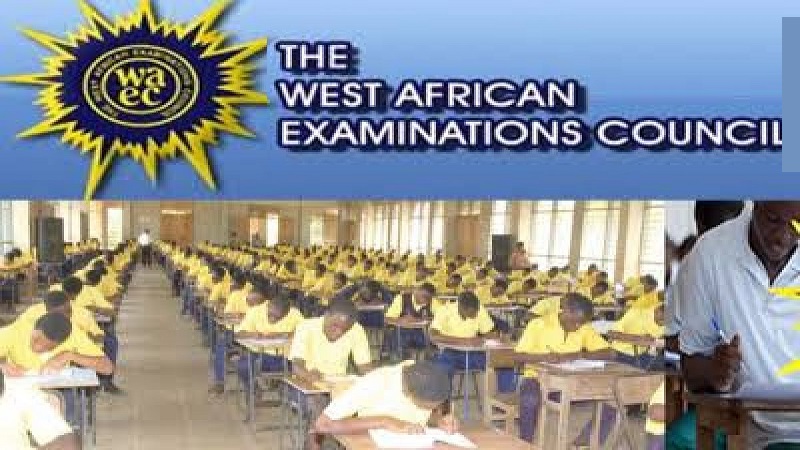
The West African Examinations Council (WAEC) is concluding plans to fully digitalize the administration of its examinations.

The outgoing Head of National Office (HNO), WAEC, Mr Patrick Areghan disclosed this in an interview with the News Agency of Nigeria (NAN) on Saturday in Lagos.

According to Mr Areghan, the council had already concluded plans on conducting its examinations using the CBT platform which will start soon with the objective questions and  theory and practicals to follow shortly afterwards.

His words: ”We have already started something in terms of CBT examination. We have gone far with our planning and all of that, even in the sub region, the registrar to council is also doing something. But this is not as easy as some people will think. This is because we ask ourselves, how do we conduct CBT for practicals and essay papers?

“We can only readily do that in the case of objective questions. But so many people will not see it from that angle. They argue that some others are doing it, why can’t WAEC do same.

“Now, no one even talks about energy; how many schools are exposed to computer literacy? How many have computer facilities and how many have electricity to run these things?

“Even where you have all these things on ground, how do you handle the issue of theory and practical papers? So, these are the issues, but that is what I want the council to do in the very near future.

“We should be able to conduct CBT examinations, even if it means starting with the objective questions,” he said.

The WAEC boss noted that the council anticipate that some schools may not be ready for the CBT. Hence, the council will have to retain the paper mode for such schools.

“But you can still be sure that not all schools will be ready. Maybe we can have a segregated market. Those who cannot afford the CBT will go for the pencil and paper mode. So, I will like to see WAEC in that light,” he said.

Areghan said he would also like to see all the operations of the council fully digitalised in the near future, noting that almost every section of the council had been digitalised under his watch.

“I have almost digitalised everywhere now. Talk of certificate, checking of results and verification of results and more.
“I will live to see more massive deployment of technology so that the vision of council can change from just being a world class examination body to a technology-driven examination body.

“I also want WAEC to be more visible in the international stage. I want to see, through the cooperation of the sub region, how we can take WAEC overseas, that is, how Nigerian children in the diaspora can sit for WASSCE overseas.

“I also want to see its digital certificate that we have successfully launched in Nigeria replicated in the entire sub region, so that any candidate that has taken WASSCE, can be in any part of the world to access the digital certificate; that is a legacy.

Mr Arghen stated other significant milestones recorded in his administration which include establishment of the council’s Digital Security Printing Press and the introduction Staff Bus scheme to cushion the effect of high transportation fare on staff due to the fuel-subsidy removal.

Mr Arghen said he is counting on his successor to continue with the upward trajectory already set by his administration and even surpass his achievements.

Safaricom Increases Transaction Limit on M-Pesa to $1,697

0

Kenyan Telecommunications giant Safaricom, had increased the per transaction limit on its mobile money platform M-Pesa, to Ksh 250,000 ($1,697).

The telco said the move will see the addition of a new transaction band of Ksh 151,000 to Ksh 250,000 for Send money, Lipa Na M-Pesa BuyGoods, Paybill and all other transactions.

Announcing the transaction increase, Safaricom CEO Peter Ndegwa said,

“We welcome the move by the Central Bank of Kenya to increase M-Pesa transaction limits to Ksh. 250,000. The increased transaction limits are a timely intervention as they will provide customers and businesses with additional convenience when doing business empowering them to do more from their phones”.

Safaricom’s increase in transaction limit, follows the approval by the Central Bank of Kenya (CBK), and comes on the heels of the previous approval for daily limit and M-Pesa limit increase of account limits to Ksh. 500,000 in August 2023.

M-Pesa has on several occasions increased its transaction limits, as the Fintech platform continues to play a crucial role in expanding financial inclusion in Kenya.

The Safaricom Fintech subsidiary has connected tens of millions of customers with access to financial services, contributing to a more than three-fold growth in formal financial inclusion across Africa. By increasing financial inclusion, M-Pesa has contributed to economic growth in Kenya, empowering individuals and small businesses to participate more fully in the economy.

The fintech has equally transformed the standard of living in Kenya, especially in rural areas, and empowered women with access to and control over their finances.

Beyond basic money transfer services, M-Pesa has introduced various financial products and services, including savings accounts, microlaons, bill payments and merchant transactions. This diversification has increased the utility of M-Pesa for users.

It has also played a pivotal role in empowering small businesses and entrepreneurs by facilitating transactions, improving cash flow, and enabling access to credit through products like M-Shwari.

Notably, M-Pesa has formed partnerships with banks, government agencies, utility providers, and businesses, enabling users to access a wide range of services, from paying bills and taxes to receiving government benefits.

Overall, the safaricom Fintech subsidiary has been a transformative force in Kenya, significantly expanding access to financial services and improving well-being of many Kenyan citizens.

It had transformed the way people manage their money and conduct financial transactions, making it an integral part of daily life for millions of Kenyans.

Also, it has significantly served as a model for mobile money services in other African countries, contributing to the global advancement of financial inclusion efforts.

Why FTX is Suing Most of its Past Business Associates

0

FTX, the cryptocurrency exchange founded by Sam Bankman-Fried, has recently filed lawsuits against several former business partners, alleging breach of contract, fraud, and misappropriation of trade secrets. We will examine the reasons behind FTX’s legal actions and the implications for the crypto industry.

According to the complaints filed by FTX in various jurisdictions, the defendants are former service providers, consultants, or affiliates of FTX who had access to confidential information and proprietary technology of the exchange. FTX claims that these defendants either violated their contractual obligations, stole or leaked FTX’s trade secrets, or engaged in unfair competition or deceptive practices that harmed FTX’s reputation and business.

Some of the defendants named in the lawsuits are:

Alameda Research, a crypto trading firm co-founded by Bankman-Fried and also a major shareholder of FTX. FTX accuses Alameda of breaching its fiduciary duty and loyalty to FTX by secretly trading against FTX’s interests, manipulating FTX’s order books and prices, and diverting FTX’s customers and business opportunities to Alameda’s own platforms.

CoinMarketCap, a popular crypto data aggregator that ranks exchanges by their trading volume and liquidity. FTX claims that CoinMarketCap deliberately manipulated its ranking algorithm.

CryptoCompare, another crypto data provider that competes with CoinMarketCap. FTX asserts that CryptoCompare conspired with CoinMarketCap to falsify and suppress FTX’s data, spread false and misleading information about FTX, and damage FTX’s reputation and credibility in the industry.

FTX is seeking injunctive relief, damages, and restitution from the defendants for their alleged misconduct. FTX argues that its legal actions are necessary to protect its intellectual property rights, business interests, and competitive position in the crypto market. FTX also hopes that its lawsuits will deter other potential wrongdoers from infringing on its rights or harming its operations.

However, some observers have questioned the merits and motives of FTX’s lawsuits, suggesting that they are part of a broader strategy to intimidate or eliminate its competitors and consolidate its dominance in the crypto space. Some critics have also pointed out that FTX itself has been accused of engaging in similar practices as the defendants, such as copying features from other exchanges, manipulating prices and volumes, and influencing data providers.

The lawsuits allege that the affiliates, who were supposed to promote FTX’s products and services to potential customers, violated the terms of their agreements by diverting traffic to rival platforms, misusing FTX’s trademarks and confidential information, and making false or misleading statements about FTX. FTX is seeking damages and injunctive relief from the defendants, as well as a declaration that FTX owns the rights to its intellectual property and trade secrets.

The outcome of these lawsuits is uncertain and may take a long time to resolve. However, they are likely to have significant impacts on the crypto industry as a whole, as they may affect the trust, transparency, and innovation of the sector. The lawsuits may also set precedents for future legal disputes involving crypto exchanges and other stakeholders.

Electoral Tribunals, NYSC Certificates, and Necessity of INEC Reforms in Nigeria

4

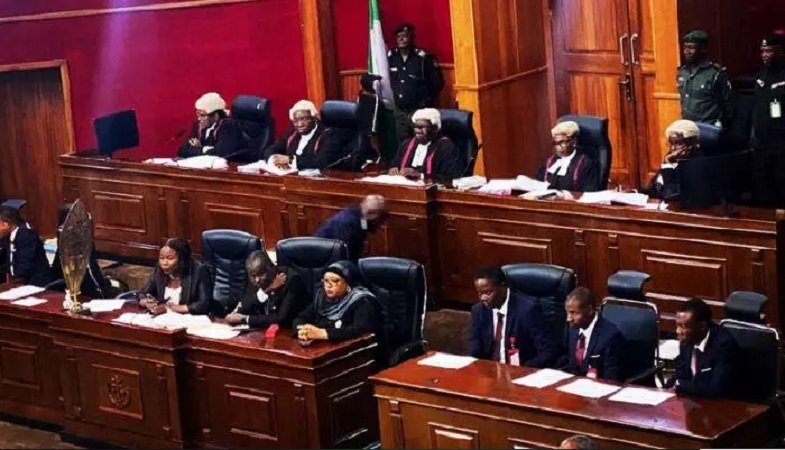
When I write here, I write with no agenda. I am apolitical and non-partisan. My efforts are always geared to see a better Nigeria. The latest ruling where a governorship tribunal ruled that NYSC is not a requirement and cannot be used to annul an election surprised me. It came the same way as the one in Kano where a candidate was punished because INEC neither stamped nor signed some documents. 

Good People, note this: if you go to the presidential IREV, there are thousands of polling units across Nigeria without results, not to talk of being un-signed or unstamped. So, how did the same judiciary allow those units without results to stand, but went to punish a candidate in Kano because INEC presented results, though unsigned?

My message is clear: the judiciary has to be consistent in these rulings. That a tribunal is saying that NYSC is not a requirement is not my concern. My burden is that the judiciary has not been consistent.

The Supreme Court sacked Abdulra’uf Abdulkadir Modibo of Adamawa State in 2019. In a unanimous judgment, a five-man panel held that Modibo was not qualified to stand for election, having not properly participated in the National Youth Service Corps (NYSC) scheme. What would they tell Modibo now they are saying NYSC is never a requirement?

As I have said, INEC needs to be reformed. It needs to do some fundamental checks on the forms these politicians submit. If the minimum requirement for presidency is WAEC or equivalent, it can at least verify that . In other words, Tinubu and Atiku will not be embarrassing Nigeria in Chicago, if INEC had done its job: verify all secondary school education since university degrees are not even required! In other words, only those who meet the minimum requirements (WAEC) will progress.

Comment on Feed

Comment 1: Prof Ndubuisi Ekekwe,

Contrary to your claim, you certainly have an agenda, albeit misplaced and misinformed. And I worry about the subtle shaping of public opinion against the judiciary by your so called “unbiased” call out of the Nigerian judiciary, which sadly is borne out of your interpretation of recent rulings on electoral issues.

With respect to the case you reference, i.e. case of Abdulrauf Abdulkadir Modibbo vs Mustapha Usman, the Supreme Court ruling was NOT that the NYSC is a compulsory requirement for elective office!

The Supreme Court simply upheld the Petioners claim that AS A SERVING NYSC MEMBER at the time of the primaries, Modibbo was NOT qualified to contest the primaries by virtue of the NYSC Act.

Effectively, the Supreme Court ruling means if you are a serving NYSC member or yet to finish your NYSC mandatory service, you are ineligible to contest for an elective position by virtue of the non partisan requirements of the NYSC.

In refencing the Supreme Court ruling, you should have provided this crucial and salient background to your readers. Note this is not same as the Mbah case, which the petitioners claim Mbah forged the NYSC certificate.

My Response: “With respect to the case you reference, i.e. case of Abdulrauf Abdulkadir Modibbo vs Mustapha Usman, the Supreme Court ruling was NOT that the NYSC is a compulsory requirement for elective office!…The Supreme Court simply upheld the Petioners claim that AS A SERVING NYSC MEMBER at the time of the primaries, Modibbo was NOT qualified to contest the primaries by virtue of the NYSC Act.”

I do not understand what your issue is. You believe that the Supreme Court is right to annul an election, positing that someone was yet to complete a process which is NOT even a requirement. That is the Nigerian problem: yes, Modibbo cannot keep his job for not doing something which is NOT even required for that job. You simply made my case.

How? If the Supreme Court is telling us that NYSC is not a requirement, it should not have even cared if someone was enrolled or not enrolled in it, because it is immaterial. But what happened to Modibbo was that he was enrolled in something which is not a requirement and that disqualified him.

Comment 1R: My intervention is not to interpret the Supreme Court ruling on the Modibbo case.

The ruling and the basis for it is clear. Modibbo wasn’t eligible to contest the APC primaries (not the election even) at the time he did. At no point did the Supreme Court say that a NYSC certificate is a mandatory requirement to stand for election. That is your own (mis)interpretation of the SC ruling.

On the SC ruling, I expect NYSC members at some point to challenge the jurisprudence on this ruling as I believe it is discriminatory to serving Corp members. However, one also recognises that serving officers and men of the police force and armed forces are also precluded from contesting electoral positions while still serving.

My Response“My intervention is not to interpret the Supreme Court ruling on the Modibbo case.” – you did when you said that my interpretation was wrong. So, you did.

“The ruling and the basis for it is clear. Modibbo wasn’t eligible to contest the APC primaries (not the election even) at the time he did. ” – again, you have cleverly picked sections of the NYSC and Electoral Acts as they favoured you, dismissing the NYSC Act which said that all qualified youth must have NYSC to get a job in Nigeria. (I extrapolate that because I argued that the Tribunal is wrong to write in Enugu that NYSC was not required because it was not listed on the Electoral Act, even though the NYSC Act has that. You cannot claim that Modibbo wasn’t eligible to contest because he participated in NYSC)

“At no point did the Supreme Court say that a NYSC certificate is a mandatory requirement to stand for election. ” – it does not have to say it when it can rule that not completing it disqualifies someone.

Comment 1RR: I read the This Day article you posted, and Ndubuisi Ekekwe is correct about the inconsistencies in judgment.

In the Modibo case, the appellant posited that falsified NYSC documents were presented, and this led the court to consider if Modibo has breached the NYSC act.

In the Mbah case, the appellant also claimed that NYSC certificate was falsified, similar to the Modibo case, but the tribunal refused to consider if the forgery was true or not, based on their belief that NYSC isn’t a requirement.

In summary, the issue of NYSC was considered in the first case, but not in the second despite both having a common denominator, which is falsified information.

The article you posted also referenced the Omehia vs Amaechi case, which was an error in judgment that was corrected in the Modibo case.

Comment 2: A – Governor of a state

  1. (1) There shall be for each state of the Federation a Governor.

(2) The governor of a shall be the Chief Executive of that state

  1. A person shall be qualified for election to the office of Governor of a state if

(a) he is a citizen of Nigeria by birth;

(b) he has attained the age of thirty-five years;

(c) he is a member of a political party and is sponsored by that political party; and

(d) he has been educated up to at least School Certificate level or its equivalent.

C – Qualifications for Membership of national assembly and Right of Attendance

  1. (1) Subject to the provisions of section 66 of this Constitution, a person shall be qualified for election as a member of:

(a) the Senate, if he is a citizen of Nigeria and has attained the age of 35 years; and

(b) the House of Representatives, if he is a citizen of Nigeria and has attained the age of 30 years;

(2) A person shall be qualified for election under subsection (1) of this section if:

(a) he has been educated up to at least School Certificate level or its equivalent; and

(b) he is a member of a political party and is sponsored by that party.

This is the constitution which is the supreme law in the country.

Comment 3: I have stopped taking Nigeria judiciary seriously. They are one of the biggest problems of the country and I am sometimes ashamed of the kind of judgments that emanates from them.

The way they change the law through several funny and ridiculous judgements is very ridiculous. Sometimes, they do not even employ common sense in dispensing judgements and you wonder what the heck is going on.

Oyetola won in court the lady time because, one of the tribunal judges missed a sitting, and ruled in Adeleke’s Favour, but Appeal and Supreme Court stated that, since the judge was not on sit on a particular day, he cannot entered a judgment and consequently returned Oyetola as governor.

I mean, how does that make sense? If a judge refused to do his work, should another person bear the brunt of that?

Another one is how Orji Uzor Kalu won in court because a particular judge who have been promoted to a higher court sat and gave judgement, and Kalu was set free! How does that make sense?

We will continue to even see more ridiculous judgments in the coming days because the guys at the Aso now understand the game even better.

I can only wish Nigeria and Nigerians the best of luck.

Comment  4: In a case where the candidate did not submit any document showing that they met the minimum but included a document signifying that they have a higher qualification, would that not amount to a breach of the procedure?

I think that it is wrong to assume that they have met the minimum qualification or have documents to back up the minimum qualification just because they have tendered a higher certificate.

I would like to read your view on my submission, Prof. Ndubuisi Ekekwe#HRwithEM

My Response: That is the reform I have been pushing. Just verify the minimum requirements and leave the rest. But INEC does not care. It is easier to verify WAEC than university degrees because only one or two bodies handle the secondary level while at the university level, you have thousands.

Comment 5: SC did not state that NYSC is mandatory to contest. However, NYSC act states that serving corps members are to be non-partisan. So contesting an elected position as a serving corps member violates the NYSC act. This will nullify the electoral steps taken at this point.

My Response: ” So contesting an elected position as a serving corps member violates the NYSC act. ” – now that you’re quoting the NYSC Act, let us focus on it. That Act also says that any grad below the age of 30 must do NYSC to work in Nigeria, including a governor and House Rep.

I hope you will  agree that the Supreme Court cannot pick that NYSC members should be non-partisan (from the Act) while  ignoring where the  same Act says if you graduate before 30, you must serve.