DD
MM
YYYY

PAGES

DD
MM
YYYY

spot_img

PAGES

Home Blog Page 4230

Three Major Ways To Launch An AI Company

1

This is the age of AI and many startups are emerging. Over the last few weeks, I have been looking at ways how innovative AI companies are launching.  From America to China, here are the main three paths:

Partner with a company with a large user base. OpenAI’s ChatGPT partnered with Microsoft which has millions of users. Microsoft is providing the feedstuff (yes, the data) to advance ChatGPT at scale.

Spend a huge amount of money via promos and advertisements to get data which will improve your AI models as quickly as possible. This is the Temu path; Temu uses AI to power shopping in its ecosystem. It spent $5 million for a 30-second advert during America’s Superbowl game, the largest yearly sports event in the nation. Without the data, the mission will be limited. Sure, many will launch but without the data, scaling may be challenging.

Bake AI into existing in-house data. If you are lucky, and you have the data as Google does, you can launch your Bard equivalent once your code is ready. So, Google was able to launch. The same has happened in Baidu and Alibaba as those firms also have tons of data.

The successful AI companies are going to be those with access to data. This is typical because in the internet age, influencing and controlling demand offers more strategic positioning than influencing supply. Supply is the algorithm/model but without data, it offers limited value. If you are out there in Africa, planning to launch an AI business, you must have a clear view where the data will come. Yes, this goes beyond mathematics and coding!

If you plan to run an internet business, think about how you can control demand. You have already lost the power and capacity to control supply. Yes, anyone can use a credit card, irrespective of geography to buy anything online. The quantity you bring will not have material impact in the total pool in the market.

Nonetheless, you still need to find ways to create a separation. That could be by creating perception demand or simply by building massive data ecosystems which will give you access to be the digital kingmaker in a specialized sector since the ICT utilities like Google and Facebook, as I noted in a recent Harvard Business Review piece, have control of the broad internet.

AI in Business at Tekedia Institute

0

It is an AI race and we also want to use AI to teach AI in business. No matter how you evaluate the possibilities, AI will rewire the architecture of modern systems and bring new orders in markets. 

Instructions – “AI, have access to my emails, my articles on blogs, etc. Today, I want you to look at my previous works to create an article on Shared Prosperity in Africa”. 

Magically, in seconds, you have a 1000-word document. Yes, AI has relied on your previous works to create a new article. Do you have a plan as AI moves into production at scale? Have you checked how it could disrupt your business? This is the time to #plan because AI will unleash a new order. #Tekedia Mini-MBA

SUI Blockchain Tokenomics, ICO and Airdrops

0

Following the growth enmeshed by Crypto Airdrops in recent times, Ethereum Layer-2 infrastructure— Sui Blockchain has released Tokenomics about the project.

Sui Blockchain—Mysten Labs startup company has in the past one year of it’s testnet and mainnet launch raised over $300 million at $2 billion valuation with participation from Binance Labs, Coinbase Ventures, a16z crypto, Jump Crypto, Circle Ventures, and other prominent VC heavyweights.

Mysten Labs launched in 2021 and comprises former Meta employees who have previously worked at Novi research, the Diem blockchain, and the Move programming language. The company’s inaugural product will be Sui, a Proof-of-Stake based blockchain which will cater to developers and creators regardless of their background.

“Sui marries the safe asset-centric features of Move with a new object-centric data model. This pairing enables new approaches to several blockchain scaling challenges and unlocks a more direct, accessible programming style for the next generation of smart contract developers,” said Sam Blackshear, Mysten’s co-founder.

According to a Twitter publication posted on SUI’s official page, the layer2 blockchain formation is streamlined to front run speed and low cost gas transactions on EVM. The goal of Sui’s tokenomics is a flourishing economy where: fees are low enough for people to use the chain.

Apparently, the building costs are low plus predictable for a sustainable business model and the activity is high/reliable for operators to plan their budget.

However, The Sui economy has three main sets of participants: Users who create, change, or transfer digital assets or use apps on Sui; SUI holders who either stake funds to validators or pay fees to interact with assets and apps on-chain; validators who manage transactions processing and execution.

SUI participants interact in a variety of ways across the network, and that interplay informs the three core components of Sui’s tokenomics:

Proof-of-Stake Mechanism

Gas Mechanism

Sui’s Storage Fund

SUI tokens serve four purposes. They can be staked to a validator in order to secure the network which can be used to pay gas fees to execute transactions and other operations.

Sui tokens can be used as a native asset for on-chain transactions and it gives holders’ the right to participate in future governance. With Delegated Proof-of-Stake, Sui allows for the broadest possible participation of SUI holders in its operations.

Staked SUI is a proxy for voting power, providing the right degree of “skin in the game” – those who care most about Sui get a larger voice in its operations. Unfortunately, the SUI chain has rebutted it will not issue out SUI token airdrops to its community but will institute an ICO on whitelisted addresses— a situation which has been greeted with intense resentment on Crypto Twitter as many claim the chain rode on the hype around airdrops in 2022.

Consequently, the Sui’s gas pricing mechanism achieves several important outcomes; delivering users with low, predictable transaction fees and incentivizing validators to optimize their transaction processing operations and finally preventing spam and denial of service attacks.

Sui’s Storage Fund redistributes past transaction fees to future validators. Users pay fees for processing plus storage, which are then put into the fund. If storage needs are trending upwards validators receive additional stake rewards to cover the costs, and vice versa when needs are.

Rethink That Business Model And Win

0

Scaling that online business is not by force or by working 60 hours in a week. The most important element is your business model. If that business model does not align, your efforts will offer marginal value. Greatness comes in companies when unit economics improves. And how do you do that? You look at your marginal cost.

Until you can deal with that marginal cost, improving your distribution and transaction costs, scaling may be hard. Wear your thinking cap and revamp that business model, the most important element for the success of firms.

Sure, the Board hires the  CEO. And the CEO commits a company to a business model, which is the construct upon which value is captured in firms. If you run an expired business model, no matter how hard you work, you have no market mission. #examine #rethink and #win.


Money does not solve most fundamental business growth problems; product improvements do! Work hard to understand your customers, and do all to retain them, before you begin to spend on massive scaling.

 Never try to scale a business until you can retain customers. That customer retention is a validation of your business hypothesis via a product-market fit. 

A growth playbook which begins when a company cannot retain customers wastes resources. You are likely going to onboard customers, but the day that marketing or promotion blitz stops, the customers will move. 

Build. Pursue product-market fit. Then Scale. #glory


Money over Legacy

0
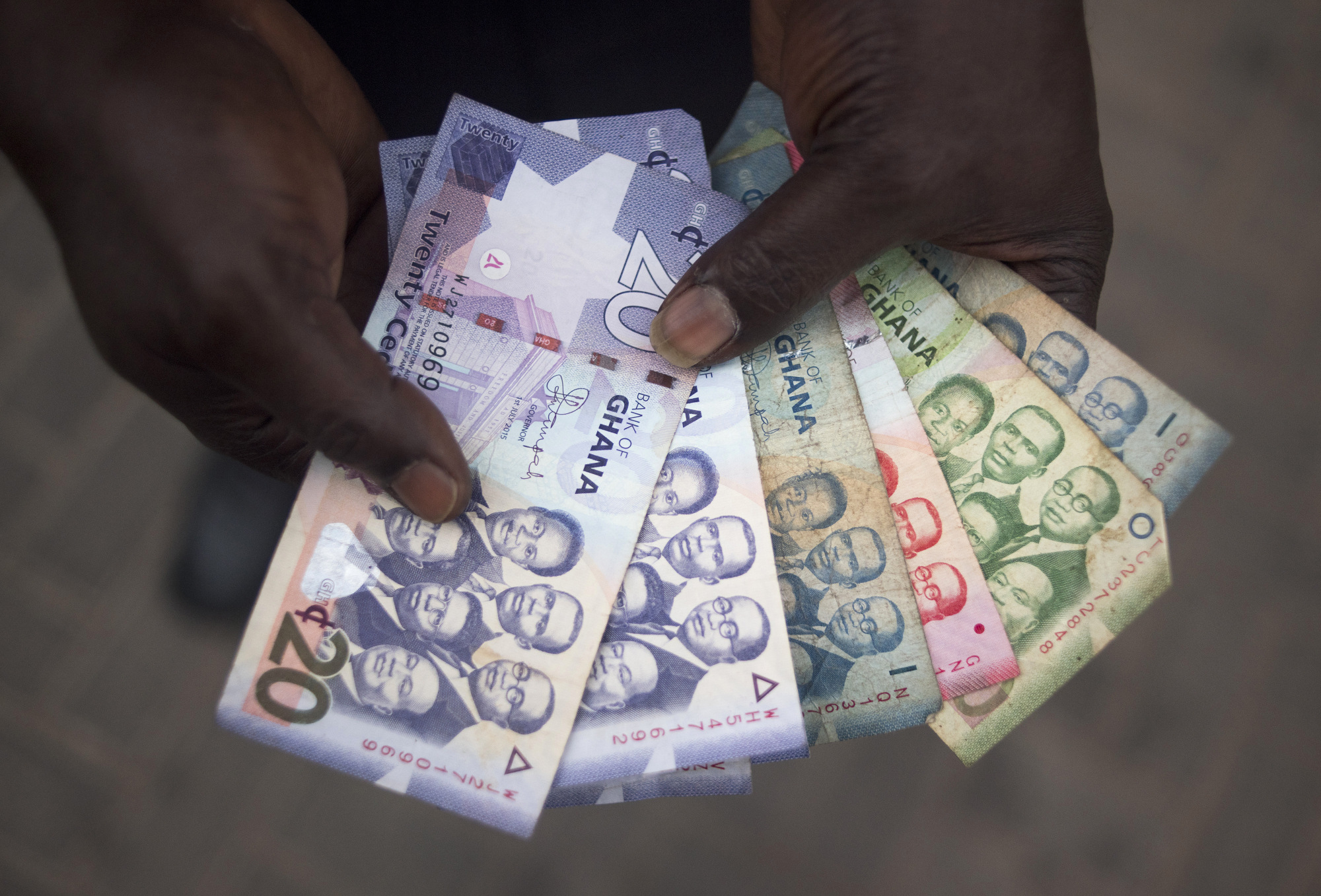
A man holds Ghanian currency in his hands on September 20, 2016 in Accra, Ghana. Ty Wright/Bloomberg News

In case you have been out of the loop or you haven’t checked Twitter recently, Emperor Elon Musk has yanked off legacy verification (blue tick) from every legacy-verified account including that of renowned world politicians, celebrities, journalists, athletes etc; no matter who you are, emperor Musk has taken away your blue tick and you are expected to pay a monthly recurring fee of  $8 if you want to have your blue tick back.

What could possibly be the reason for this move by Twitter management?
In case you are also wondering their reasons; according to Twitter Public Relations, this decision came as part of Elon Musk’s efforts to get rid of the so-called “lords & peasants system for who has or doesn’t have a blue checkmark.” This implies that Elon Musk wants every animal to be equal in the Twitter kingdom; if you want to be more equal than others, then you will have to pay a stipend of $8 for it and to maintain that status you will have to be paying $8 every month.

This is what we were told by Twitter for being the reason for the removal of the legacy verification and the new payment for blue tick but we all know that the reason stated by Twitter HQ is just so as to make them look cool; the primary reason as we all can tell for the introduction of the payment of the Twitter blue tick is for revenue generation. This is a money-generating model for Twitter. Twitter introduced this format as a means to raise its income and I am so sure that other social media platforms especially Meta will follow suit. 

Twitter can only afford to make this move without the fear of losing its users because they are aware of the total reliance of its users on the platform. I don’t think any other platform which is yet to attain the status of Twitter, Facebook or Instagram can afford to make this move. The day WhatsApp or Telegram request users to start paying for verification I’m so sure that half of its users will abandon the platform and port; especially iPhone users will quickly abandon the platform totally for iMessage. 

So far be it, I can predict that the long-term effect of this may be disastrous. When individuals have to pay to be on a platform and to enjoy the full services of a platform which ought to be totally free then the advocacy for free speech should be reconsidered.

Monetization is good but it should be carefully done so as not to flush away the core value of the platform. We have always known Twitter to be a strong preacher of free speech but since Elon Musk took over the helm of power, Twitter only became interested in cutting costs, generating revenues and monetization of its products. 

The development has affected several individuals including famous Nigerians as Twitter insists on an $8 monthly payment to subscribe to its ‘Twitter Blue’ if account holders must retain their verification badge, or for those who want to get the blue tick newly.