DD
MM
YYYY

PAGES

DD
MM
YYYY

spot_img

PAGES

Home Blog Page 458

CPPE Urges CBN to Ease Monetary Policy, Pushes for Credit Flow to SMEs Amid Inflation Slowdown

0

The Centre for the Promotion of Private Enterprise (CPPE) has urged the Central Bank of Nigeria (CBN) to adopt a more flexible monetary policy stance that will ease access to credit for small and medium enterprises (SMEs) and critical sectors of the economy.

In a policy advisory issued on Sunday, CPPE’s Chief Executive Officer, Dr. Muda Yusuf, said the apex bank must recalibrate its approach by reducing both the Cash Reserve Ratio (CRR) and the Monetary Policy Rate (MPR) in line with recent signs of moderating inflation.

“Calibrate CRR and MPR downward as inflation moderates to create a more enabling credit environment. Complement monetary tightening with supply-side measures to address structural inflation drivers,” Yusuf advised.

The CPPE call comes on the back of fresh inflation data showing consumer prices eased in August to 20.12%, continuing a recent trend of moderation for the fifth month. The development has fueled growing calls from economists, business leaders, and market analysts for the CBN to review interest rates downward to stimulate investment and support economic activity.

Analysts argue that while inflation remains elevated, the steady decline offers the apex bank an opportunity to shift focus toward growth, particularly as businesses and households remain weighed down by high borrowing costs.

Yusuf noted that the CBN’s current tight monetary policy—designed to contain inflation—has come at a cost, inadvertently restricting the flow of affordable credit to businesses and households. SMEs, which account for a majority of Nigeria’s employment and economic activity, have been particularly squeezed by high interest rates and limited financing options.

To bridge the financing gap, Yusuf called for the introduction of innovative funding models. He proposed credit guarantee schemes and concessionary financing programs tailored to small businesses and key sectors such as agriculture, manufacturing, and renewable energy.

“Develop credit guarantee schemes and concessionary financing programs for SMEs and critical sectors of the economy. Promote development finance instruments and deepen the domestic bond market to mobilize resources for infrastructure,” CPPE stated.

Commendation for CBN reforms under Cardoso

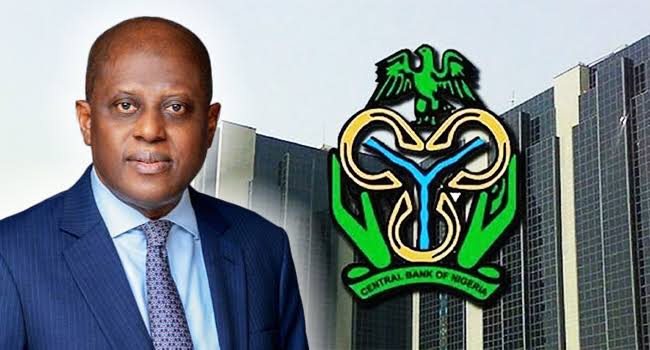
Despite its call for a policy shift, CPPE commended CBN Governor Yemi Cardoso for what it described as a “significant transformation of Nigeria’s financial system, with gains in transparency, credibility, and stability.”

The group noted that under Cardoso’s leadership, the CBN has rolled out broad reforms aimed at restoring confidence, improving governance, and repositioning the financial system to drive inclusive growth.

One of the most notable reforms, according to CPPE, has been the liberalization and unification of Nigeria’s foreign exchange (FX) market. By eliminating multiple FX windows, the CBN closed off avenues for arbitrage and rent-seeking, a move that market analysts say has helped strengthen credibility in currency management.

At its 301st Monetary Policy Committee (MPC) meeting in July, the CBN held the benchmark MPR at 27.5%. All 12 MPC members voted unanimously in favor of retention.

However, with inflation now trending lower, analysts predict that the MPC may cut the MPR by between 25 and 50 basis points at its 302nd meeting this week. They cite easing inflationary pressures, relative naira stability, and global monetary trends as key factors.

Economists say such a move could give Nigeria’s struggling real sector some breathing space by reducing borrowing costs and unlocking liquidity for SMEs that have been starved of credit.

Trump Says Murdochs, Larry Ellison, and Michael Dell Poised to Join TikTok Deal as U.S.-China Talks Advance

0

President Donald Trump has indicated that conservative media baron Rupert Murdoch and his son Lachlan may play a role in the pending agreement to safeguard TikTok’s operations in the United States.

In an interview aired Sunday on Fox News’ The Sunday Briefing, Trump said: “A man named Lachlan is involved. Lachlan Murdoch … Rupert [Murdoch] is probably gonna be in the group, I think they’re going to be in the group.”

He went on to confirm that other high-profile U.S. business leaders are expected to take part, naming Oracle executive chairman Larry Ellison and Dell Technologies CEO Michael Dell.

“Couple of others, really great people, very prominent people,” Trump added. “And they’re also American patriots, you know, they love this country. So I think they’re going to do a really good job.”

Although Trump mentioned Lachlan Murdoch by name, a person familiar with the negotiations told CNBC that Murdoch is unlikely to participate individually. However, Fox Corporation, where Lachlan serves as executive chair and CEO, could take part through corporate involvement.

White House outlines deal structure

The White House, providing fresh details on Saturday, said the deal envisions a seven-member TikTok board where six directors will be Americans, ensuring overwhelming domestic oversight. In a significant concession, the U.S. will also control TikTok’s recommendation algorithm — a key point of leverage in the standoff with China. Oracle will oversee U.S. user data and privacy, addressing concerns raised by lawmakers and regulators about potential access by Beijing.

Press secretary Karoline Leavitt said this structure is intended to guarantee that TikTok’s American presence operates independently from its Chinese parent company ByteDance, while complying with U.S. national security requirements.

The framework follows a direct call on Friday between Trump and Chinese President Xi Jinping, where both leaders discussed the deal. Trump later characterized the agreement as “well on its way,” noting that investors were “getting ready.”

China, however, has signaled that the negotiations remain far from settled. Through a readout published by state-run news agency Xinhua, Beijing said: “The Chinese government respects the will of companies and is pleased to see companies conduct business negotiations on the basis of market rules and reach solutions that comply with Chinese laws and regulations and balance interests.”

The statement further urged Washington to “provide an open, fair, and non-discriminatory business environment for Chinese companies investing in the United States.”

Congress passed legislation in 2024 mandating that TikTok be banned in the U.S. unless ByteDance divested its American operations, citing national security risks linked to data access and Chinese influence. That law has fueled urgency around the negotiations, with lawmakers and regulators insisting that divestment is the only way for the app — used by more than 170 million Americans — to continue operating in the country.

For Washington, the deal is intended to place control of TikTok firmly in American hands, mitigating risks tied to both its vast trove of user data and its powerful algorithm. For Beijing, the negotiations are about preventing what it views as U.S. overreach into Chinese corporate interests.

If finalized, the investor group is expected to include a combination of U.S. tech heavyweights and influential media interests. Ellison’s Oracle has long been central to talks over TikTok, particularly as it was chosen under Trump’s earlier administration as the U.S. data security partner.

Trump emphasized that the group reflects not only business clout but also political alignment, calling them “patriots” who “love this country.”

The fate of TikTok now rests on balancing political demands in Washington, corporate interests in the U.S., and regulatory red lines in Beijing. The outcome could determine whether TikTok maintains its strong foothold in its second-largest market. It, however, represents an opportunity to gain influence over one of the world’s most powerful social media platforms for U.S. tech and media players.

The deal has also become a litmus test of U.S.-China relations. As Trump pursues a nationalistic strategy to “Americanize” TikTok’s operations, Beijing is signaling it will defend its companies from what it sees as discriminatory treatment abroad.

LILPEPE Crypto Price Prediction for the 2025 Bull Run

0

All eyes are on tokens that can give huge gains as the cryptocurrency market prepares for the highly anticipated bull run of 2025.  Little Pepe (LILPEPE) is one of the most popular ones.  LILPEPE is different from other meme coins that are only popular because of hype. It is making a name for itself by combining cultural power with blockchain innovation. Currently in presale, the project has already raised over $25.7 million, selling more than 15.8 billion tokens across its rapidly sold-out stages. This presale momentum reflects retail speculation and growing conviction that LILPEPE could define the next meme coin supercycle.

Record-Breaking Presale Performance

LILPEPE’s presale performance has set it apart from competitors in the meme coin sector. Each stage has sold out faster than the last, showing strong investor confidence in the project’s roadmap. At its current presale price of just $0.0022, early buyers are positioning themselves for significant upside before exchange listings unlock broader liquidity.

This surge reflects the growing community behind the token. The project has launched a $777k Giveaway and a Mega Giveaway valued at over 15 ETH, ensuring continuous engagement and excitement. For meme coins, where community is often the defining driver of growth, these strategies have already given LILPEPE a competitive advantage.

What Makes LILPEPE Different?

Meme coins often thrive on speculative energy, but LILPEPE backs its cultural appeal with real substance. The industry’s first Layer 2 blockchain dedicated to memes is at the heart of the project. This game-changer features very low fees and protection from sniper bots that distort early trading activity.  By introducing this technology, little Pepe is presenting itself as the cornerstone for future meme projects.

Beyond the blockchain, the team has introduced a meme launchpad, creating a pipeline for new meme tokens and communities to thrive on its chain. LILPEPE has completed a CertiK audit to reinforce trust and adopted a vesting schedule that prevents sudden team sell-offs. Combined with confirmed CEX listing plans immediately after the presale, these factors point to a project built for longevity rather than short-lived speculation.

LILPEPE Price Prediction for 2025

From its presale entry position below $0.0025, analysts say LILPEPE has enormous upside.  After exchange listings, the token is expected to trade between $0.20 and $0.25, a 100x return from presale prices.  LILPEPE might hit $2.00 by Q1 2026 if its Layer 2 ecosystem grows adoption, consolidating its place among the top meme coins.

Multiple factors support this bullish outlook.  The presale has seen exceptional traction, institutional-grade audits provide validity, and community participation has been unsurpassed in recent months.  Meme currencies generally drive bull market speculative jumps, offering LILPEPE a positive macro backdrop.

Why a 100x Return Is Possible

Five important drivers support LILPEPE attaining 100x its all-time high.  First, its early-stage edge maximizes presale buyer upside.  Second, verified listings on two large centralized exchanges will boost liquidity and exposure.  Third, its Layer 2 meme utility distinguishes it from SHIB, DOGE, and PEPE.  Fourth, its giveaways and presale success built a loyal following.  Finally, bull market tailwinds could boost LILPEPE beyond present expectations.

If these factors coincide, LILPEPE may transcend Shiba Inu and Pepe Coin buzz and become one of the next cycle’s defining tokens.

Conclusion

As the bull run of 2025 picks up speed, LILPEPE has become one of the top candidates for massive development.  Its record-breaking presale, unique Layer 2 blockchain, strong community involvement, and clear tokenomics make it stand out from other meme coins.  Shiba Inu and Pepe were the first to make memes popular in crypto. Little Pepe is changing the game with new ideas and community-driven power.

For investors seeking the next 100x story, LILPEPE offers a compelling case. With presale prices still below $0.0025 and exchange listings on the horizon, the window of opportunity may close quickly. If projections hold, the coming bull cycle could see Little Pepe rise and dominate, establishing itself as the new standard in meme coin investing.


For more information about Little Pepe (LILPEPE) visit the links below:

Website: https://littlepepe.com

Whitepaper: https://littlepepe.com/whitepaper.pdf

Telegram: https://t.me/littlepepetoken

Twitter/X: https://x.com/littlepepetoken 

Apple iPhone 17 Series Sparks Massive Upgrade Wave, Surpassing Wall Street Expectations

0

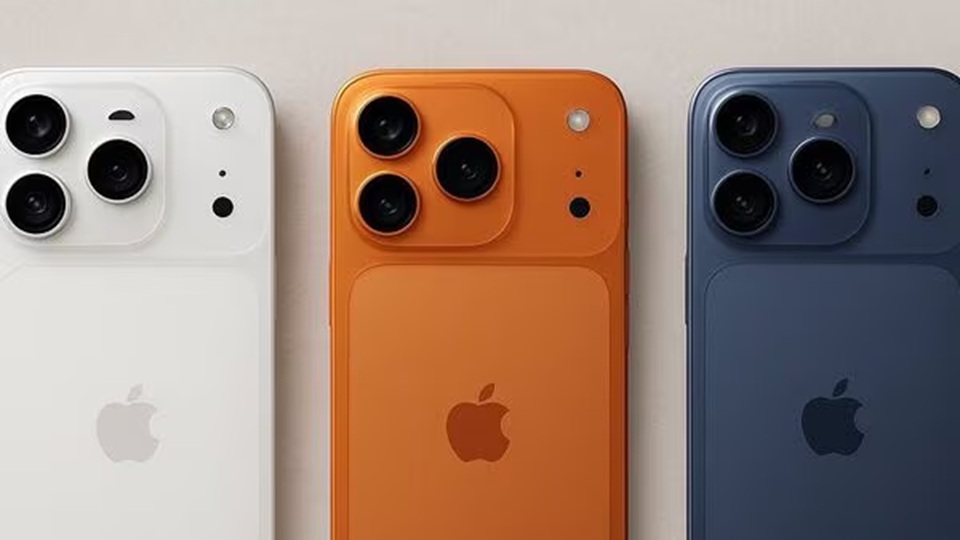
Apple’s iPhone 17 lineup is off to a strong start, marking a dramatic turnaround for the company’s flagship device after years of sluggish demand.

The Cupertino giant has reportedly ramped up production of its iPhone 17 standard model by at least 30%, according to the information reports, citing anonymous sources.

Despite reports of scratch concerns, the iPhone 17 has delivered major hardware upgrades that address users’ most pressing requests, including improved battery life, advanced cameras, and enhanced durability. According to Bloomberg, these improvements are fueling a bigger upgrade wave than Wall Street had anticipated.

These newest iPhones have met with mixed reactions from analysts. Morgan Stanley described the iPhone Air as “a small positive surprise,” while others said they are waiting for AI-powered updates to the lineup that could give Apple’s stock, the sole underperformer among the Mag 7 tech giants, a bigger catalyst for gains. 

Mark Gurman, Apple’s Chief Correspondent, highlighted the stark contrast between this year’s launch and last year’s lackluster iPhone 16 rollout. In a LinkedIn post, Gurman recalled how analysts once hyped the iPhone 16 as the start of a super-cycle driven by Apple Intelligence features.

He wrote

Last year, industry analysts tried to spin Apple Inc.’s iPhone 16 as the start of a super-cycle fueled by its Apple Intelligence features. The reality didn’t come close. The iPhone 16 sold decently in its opening quarter, but nothing about its performance was super. The artificial intelligence push was doomed from the start the features were delayed, underwhelming, and available on older models.

Beyond the AI hype, the lineup offered little: the supposed “ground-up” redesign was false marketing spin, screen size changes were trivial and the Camera Control button proved forgettable for most users. Twelve months later, the script has flipped. Apple has delivered a genuine standout with the iPhone 17 Pro and 17 Pro Max devices that close in on deserving mention alongside milestone models like the iPhone 4, 5, 6, X, and 12.”

Data from digital market intelligence firm Similarweb, shared with Sherwood News, revealed a surge in online traffic during Apple’s iPhone 17 launch event, the highest since 2022. Preorder traffic also hit record levels, suggesting stronger demand than at any point in the past three years.

Apple analyst Ming-Chi Kuo reports that initial orders for the iPhone 17 are already outpacing those of last year’s iPhone 16. His analysis, based on supply chain data and preorder shipping timelines, indicates that demand is particularly strong for the iPhone 17 Pro Max.

Kuo estimates that total production volume for Q3 2025 across the Pro Max, Pro, and standard models is 25% higher year-over-year (YoY) compared to the iPhone 16 lineup. While shipping times have extended by about one week, the relatively modest delay points to a healthy balance of supply and strong demand.

CNBC also disclosed that demand is especially strong for the Pro and Pro Max models, with lines in London “notably longer” than they were for the iPhone 16, and consumers in Beijing queuing up the night before to get their hands on the models following strong pre-order sales in China. 

2025 A Key Upgrade Year For Apple iPhone

While exciting new features play a role, most consumers upgrade their iPhones when their current devices become obsolete, damaged, or suffer from poor battery performance.

The year 2025 represents a critical point in this natural replacement cycle. During the early pandemic years, Apple experienced a massive “supercycle” of iPhone purchases as consumers stuck at home spent stimulus money and extra savings on tech.

Many of those devices including popular iPhones purchased in 2020 and 2021 — are now aging, with declining performance and battery life. This timing aligns perfectly with the iPhone 17’s release, fueling another wave of upgrades as consumers look to replace their older phones.   

The iPhone 17 series has not only met customer expectations but also reignited excitement in Apple’s product lineup. With strong preorders, increased production, and a favorable upgrade cycle, the stage is set for Apple to deliver one of its most successful iPhone launches in years.

LemFi Secures State Bank of Pakistan Approval to Operate Remittances Into Pakistan

0

LemFi, a Nigerian digital bank for the African diaspora, has secured approval by the State Bank of Pakistan to facilitate inbound remittances in Pakistan.

The approval enables LemFi to operate in partnership with United Bank Limited (UBL), one of Pakistan’s largest and most trusted financial institutions.

This milestone means that Pakistanis in the United Kingdom, Canada, the United States, and Europe can continue to send money home securely with low fees and competitive exchange rates.

Speaking on the expansion to Pakistan, LemFi CEO Ridwan Olalere via a post on LinkedIn wrote,

“Delighted by the State Bank of Pakistan’s approval of LemFi’s strategic partnerships, such as with United Bank Limited (UBL). It reinforces the trust our customers already place in LemFi globally and in one of the world’s most important remittance corridors”.

Also commenting, Philip Daniel, LemFi’s Head of Global Expansion & Growth, said,

“UBL allows us to combine our innovative platform with their trusted banking network and legacy, ultimately delivering on our shared vision of a more inclusive and accessible financial future for all Pakistanis.”

LemFi’s State Bank of Pakistan’s approval aligns with their broader strategy to promote financial inclusion and facilitate legitimate cross-border transactions. It follows a comprehensive review process that evaluates the company’s technical capabilities, financial stability, risk management, and commitment to consumer protection.

Key Benefits for Users

  • Compliance Users Can Trust: Full adherence to the State Bank of Pakistan’s guidelines and international anti-money laundering standards.
  • Trust and Reliability: LemFi customers can rest assured of quality service delivery, delivered through extensive coverage.
  • Competitive Offerings: Competitive exchange rates, low-cost fees, and other innovative financial service offerings are enhanced.

Notably, LemFi’s expansion to Pakistan is significant, as the country is one of the world’s most essential remittance corridors, with a record estimated inflow of over US$33 billion in personal remittances in 2024.

Recognising this by the fintech, it noted via a blogpost that Pakistan represents one of the most significant remittance corridors, and it welcomes every opportunity to demonstrate its commitment to making sending money home more reliable, affordable, and cost-effective for Pakistani families worldwide.

It is worth noting that LemFi’s expansion to Pakistan comes two weeks after the company partnered with GCash, the Philippines’ leading mobile wallet, to help 94 million Filipinos receive instant remittances. With this partnership and the now-concluded integration, Filipinos in North America and Europe (including the United Kingdom) can send money directly to their GCash wallets right within the LemFi app.

This partnership follows key achievements this year, including a Series B fundraise, the strategic acquisition of a money remittance license in Europe, and, more recently, the acquisition of Pillar, a credit fintech, to expand access to financial services for the broader diaspora community.

Founded in 2021 by Ridwan Olalere (CEO) and Rian Cochran (CFO), LemFi focuses on making cross-border remittances fast, affordable, and accessible. The company, formerly known as Lemonade Finance, has grown rapidly, processing over $1 billion in monthly payment volume as of early 2025.

In January 2025, LemFi raised $53 million in Series B funding to expand into more Asian and European markets, including partnerships like Modulr for embedded finance in Europe. The company now employs over 300 people across 20+ countries and is building a broader financial ecosystem for immigrants, beyond just payments.

It’s backed by prominent investors like Y Combinator, Highland Europe, and Left Lane Capital, with a total of $86 million in funding raised to date.

Key Services Include

Remittances: Users can send money from countries like the UK, US, Canada, and several European nations (e.g., France, Germany, Spain, Belgium, Italy, Ireland, Portugal, Netherlands) to over 30 destinations, including Pakistan, India, Nigeria, Ghana, China, Uganda, Kenya, Senegal, Brazil, Tanzania, Ivory Coast, Cameroon, Benin, Rwanda, Ethiopia, and more.

Fees and Speed: LemFi offers low or zero transfer fees (depending on the route), competitive exchange rates, and real-time notifications for arrivals. Transfers are typically instant or near-instant to mobile wallets, banks, or cash pickup points.

As LemFi expand across key markets and corridors, it will continue to leverage cutting-edge technology, strategic partnerships, and key acquisitions to deliver secure, reliable, and innovative financial services, while maintaining regulatory compliance and cooperation with relevant stakeholders.