DD
MM
YYYY

PAGES

DD
MM
YYYY

spot_img

PAGES

Home Blog Page 4601

House Summons Central Bank of Nigeria Governor, Asks Him to Suspend New Cash Withdrawal Policy

0

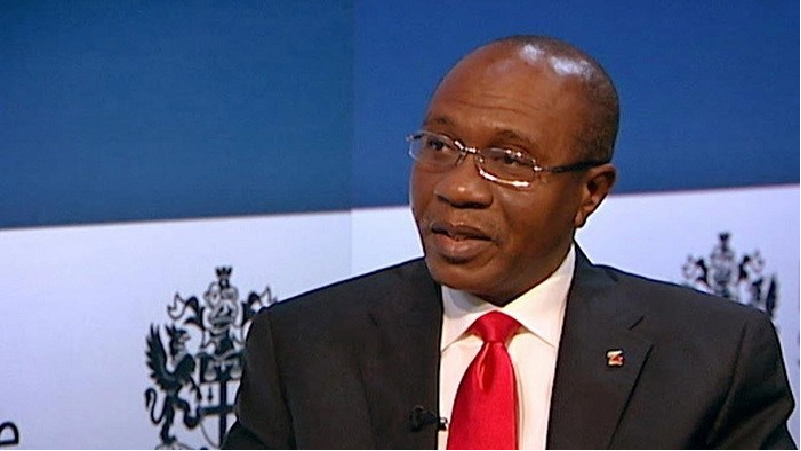
Amid the flurry of criticism trailing the decision of the Central Bank of Nigeria (CBN) to limit over the counter and ATM cash withdrawal to N100,000 weekly and POS to N20,000 daily, the House of Representatives on Thursday summoned the Central Bank of Nigeria (CBN) Governor, Godwin Emefiele, and asked him to suspend the policy.

The CBN governor has been widely criticized by both experts and laymen over the apex bank’s new cash withdrawal policy.

Thus, following a motion of Urgent Matter of Public Importance presented by Rep. Aliyu Magaji (APC-Jigawa) at plenary, the House decided to summon Emefiele to answer relevant questions respecting the cash withdrawal policy. The House urged the governor to appear on Thursday, Dec. 15.

Magaji, who led the debate, said the policy has pushed his constituency among others into pressure. He noted that most of the affected Nigerians live in rural areas where access to financial services is significantly limited.

“I do not know how my people will go and change this money, I do not know where my people will go and get it; the best we have is the POS, our people still deal in physical cash.

“The issue affects everyone, most of our people are in rural areas and everything is being done in Naira and cash and somebody will wake up and make a policy that will start tomorrow, no consultation.

“People have forgotten that 80 to 90 percent of our people are in the rural areas, we must do something to save the situation, if there were enough banks and facilities, why not, it will work,” he said.

Supporting the motion, Rep. Aminu Suleman (APC-Kano) said that the policy could cause the exit of many lawmakers as it was unpopular and erase the progress the country has recorded in the fight against banditry.

“Yet the CBN under Emiefele woke up and introduced this decision; this will completely eradicate all the successes we have gathered as a country in order to arrest restiveness and banditry.

“This is because the little intervention we have made by introducing small scale businesses will be completely whipped out; thousands of Nigerians have come to live and to do business through the POS.

“All these will go away with the introduction of this policy and I cannot understand how Nigerians will be able to manage our businesses that is predominantly in cash with a withdrawal of N100, 000 per day,” he said.

Speaking on the impact of the policy on the informal sector, Rep. Nnolim Nnaji (PDP-Enugu) said the CBN decision was totally against commerce. He noted that it will further compound Nigeria’s economic situation which requires more spending than savings. He explained that people need to spend to pull Nigeria out of its present economic predicament.

“We cannot at this point subject ourselves to one man, the decision is total wrong and all of us must rise and say no because it affects the people it affects.

“Yes the CBN has the power to do so but we also represent the people and before you let such decision out, we as the representatives should be aware so we can see how we can face the people,” he said.

Rep. Mark Gbillah (PDP-Benue), who noted that Emefiele has flouted several sections of the CBN Act, said the governor must appear before the house as summoned.

“Section 8 (4) of the CBN Act states that the governor shall appear before the National Assembly at semiannual hearings as specified in subsection 5 regarding,” he said.

He explained that the CBN Act stipulated that the governor should brief the parliament on efforts, activities, objectives and plans of the board with monetary policy, economic development, prospects for the future described in the report required in sub-section 5 (b).

He said that the Act also stipulated that the governor, shall from time to time, keep the President informed of the affairs of the bank, including a report of its budget.

He said Emefiele was also expected to make a formal presentation of the activities of the bank and the performance of the economy to the relevant committees of the National Assembly.

But in response to the summon, Emefiele said on Thursday that he has the backing of President Muhammadu Buhari to implement the new withdrawal policy.

“The president said we should carry on with our work, no need to fear, no need to bother anybody,” Emefiele said in Daura, Katsina State.

The Senate is set to deliberate on the matter on Tuesday.
The Nigeria’s Greatest Illusion – And Why New Generation Leaders Must Fix It

2

Great comments on my postulation that Nigeria should tax real estate (i.e. property tax) across the nation: urban and rural. Many of our community members posit that Nigeria should not go there on the construct that Nigeria has money! I do not buy that since even rich America taxes properties including primary residence. The average rate is 1% of the value and you pay that yearly. It is through property tax that America separates cities and communities. 

How? If you are growing up in a poor neighbourhood, you will likely attend poor performing schools since schools are funded from taxes on properties. The tax collected in Potomac will be used to fund world-class basic education in Potomac even as schools in Baltimore underperform; both are in the same state. 

The argument is this: you can live in a mansion and the government should not tax it as you may not be cash rich even though you are asset-rich. Nigerian leaders are to be blamed for that mindset:  no one has told us that we are relatively “severely” poor, and exceedingly underperforming as a nation. Nigeria does not have an excess spending problem – the fact remains that Nigeria does not even have enough to spend (sure, we need to improve on how we use the little we have).

Nigeria’s national budget is $42 billion when South Africa will do more than $120 billion even though Nigeria’s population is more than 3 times South Africa’s. Yes, no matter how efficient you manage that $42b, you cannot deliver better value than South Africa on its people.

When a poor nation is seen by the citizens as being super-rich, it calls for a new generation of leaders to fix that mindset so that the nation can get to work.  Until then, most will think this country has so much that it does not need help.

Yet, as CBN goes after the small marginal boost on tax revenue, I challenge the apex bank and the government to go after the real deal: real estate tax. Nigeria is a place where rich people do not pay taxes. They build mansions and pay zero taxes. That is the reason why South Africa budgets more than $120 billion when Nigeria can muster $42 billion yearly. In South Africa, the government has the money; in Nigeria, the money stays with the citizens. The problem though is this: with no public funds, the government cannot fund initiatives to help many who need help!

If Nigeria implements an effective real estate tax policy, our national budget will hit at least $80 billion. You may ask why can’t this be done? Answer: real estate tax will affect the 1% who unfortunately have the power to influence who makes it to the government houses. They cannot fund you (the politician) only for you to make them less whole!

But if CBN wants to fix Nigeria, that is the real deal. If you tax all the mansions in your village as the Americans do (real estate tax funds basic education), your local school will have resources to make it a top-grade primary and secondary school system. Magically, the local government will have real budgets, out of the resources on its land.

Comment on Feed

Comment: South Africans enjoy the dividends of true nationhood. They enjoy stable power supply, good roads and security. What has the Nigerian government done with the tax we have been paying to merit more taxes from the real estate? I don’t think we have a government. They should all go home.

They always take and take and take! What have they given to us? Death, sorrow, pain and suffering!

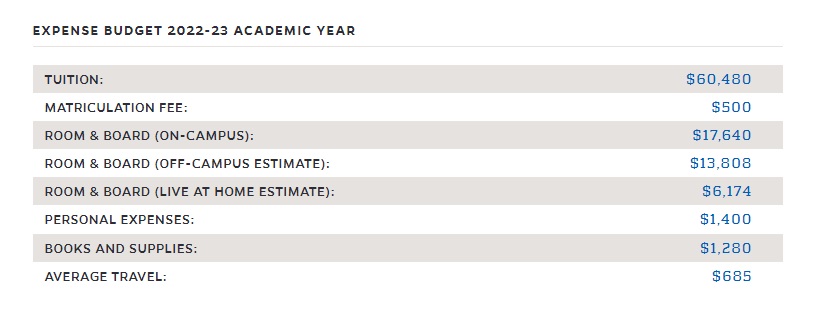
My Response: SopuruChukwu Nwadi It is the chicken and egg thing. You want it but you do not want to fund it. Just like a general without an army, a governor without funds cannot do magic. The budget of Harvard University is more than 3x the total education budget of Nigeria. Then you want to have a Harvard level education? We need to be realistic. I studied in Johns Hopkins University where students spend close to $80,000 per year on school fees and board (I went on scholarship). Someone in FUTO will ask for the same standard on a $500 expense. Good soup needs money! Nigeria needs funds, instead of hope. A new leader must discover that so that we can improve service and quality.

Comment 1b: Ndubuisi Ekekwe our leaders should account for the one we have given them first before asking for another one. They tax us to death and use the proceeds to fund their ostentatious lifestyle and drive all intelligent and able bodied youths away from the country in search of hopes

My Response: “our leaders should account for the one we have given them first before asking for another one.” – I noted that when I wrote “(sure, we need to improve on how we use the little we have).” But a bad school does not shut down to open when it can improve. What happens, the school stays in operations and keeps improving. If you think all FEDERAL schools and ministry of education will get better by spending 30% of Harvard University budget, think again. You either fund them or they remain mediocre,

Comment 2: I once had the same mindset that Nigeria is very rich, probably based on hearsay, until I realised just a school, for example, Purdue West Lafayette campus budgeted over 2 billion dollars in an academic year.

Probably, Nigeria may be rich in people, natural resources but not monetary. Mining the resources to money and spending it optimally is a pressing call for a shift we desire!

My Response: Harvard University spends at least 3x the whole of Nigeria’s ministry of education budget.

Comment: If the Property Tax was at work in Nigeria, people won’t be building or owning up to 5 houses upadan as you will pay tax for each.

More painful for them is that some of these properties may have been abandoned by their owners but they must pay tax whether you frequent there or not.

But Prof. Ndubuisi Ekekwe , could you explain further on Tenement rate as I thought it should suffice for Property Tax. Thank you

My Response: It is possible to have any law in the books. The issue is implementation and execution. Tenement rate has that “occupied” component and many “abandoned” mansions can claim to be unoccupied. But a direct property tax will apply, occupied or otherwise. In US, if you do not pay, government takes over the property!

Coingecko Joins Access Protocol as Launch Partner

0

CoinGecko is about to drop another lambo. I don’t know whether you have been claiming the ‘Candy’ coin. But I’m sure they asked if we are ready for an airdrop. The Access Foundation is excited to announce that the world’s largest independent cryptocurrency data aggregator, CoinGecko will be joining Access Protocol as a launch partner.

Users who stake in CoinGecko’s Access pool will receive access to Gecko Ramblings, a bi-weekly newsletter by CoinGecko research analysts covering projects, trends and topics of interest happening in the crypto space.

Additionally, CoinGecko users will receive the opportunity to claim $ACS via airdrop through their Candy Rewards store. Details on how users can claim the airdrop will be released on Friday, December 9

Access Protocol is reimagining digital media monetization in a way that delivers values for publishers, creators and consumers in an equitable manner. COO and co-founder of CoinGecko, Bobby Ong, commented. “We are excited to be a launch partner in this evolving ecosystem”.

Since 2014, CoinGecko has been a trusted source of information by millions of cryptocurrency investors. Their mission is to empower the cryptocurrency community with an in-depth, 360-degree overview of the market, and currently tracks over 13,000 crypto assets from over 500 exchanges worldwide.

CoinGecko joins Access Protocol’s growing list of creators and service providers including AB Media, Crypto Briefing, CryptoSlate, Crypto-Times, and The Block.

Relatively, Starbucks has launched its Polygon-based loyalty program and NFT community to beta testers.

Investment Firm Goldman Sachs Set to Capitalize on FTX Upheaval

0

Following the collapse of FTX that has negatively impacted the crypto industry, leading global investment firm Goldman Sachs is set to capitalize on the recent upheaval by acquiring affected crypto firms.

The collapse of FTX reportedly led to the drop in the valuation of some crypto companies as Goldman Sachs is currently watching closely to invest millions or purchase some of these firms as their prices have declined.

In a recent interview, Goldman Sach’s head of digital assets Matthew MC Dermott disclosed that the FTX debacle intensified the need for regulation within the crypto industry, noting that big banks are currently seeing opportunities in the space.

He added that his firm is doing the due diligence of observing the industry closely as it has spotted some interesting opportunities, in which it seeks to invest or purchase some of the affected crypto firms.

In his words, “We do see some really interesting opportunities, priced much more sensibly. FTX collapse definitely set the market back in terms of sentiment, there’s absolutely no doubt of that.

“FTX was a poster child in many parts of the ecosystem. But to reiterate, the underlying technology continues to perform.”

He further disclosed that the ripple effects from FTX’s collapse have boosted Goldman’s trading volumes, as investors sought to trade with regulated and well-capitalized counterparties.

What’s increased is the number of financial institutions wanting to trade with us, I suspect a number of them traded with FTX, but I can’t say that with cast iron certainty,” he said.

Also, Goldman Sachs CEO David Solomon disclosed that as the FTX drama unfolds, while he views cryptocurrencies as highly speculative, he sees much potential in the underlying technology as its infrastructure develops.

It is often said that crisis creates opportunity, and Goldman Sachs is one firm that is doing due diligence by being on the lookout for opportunities in the recent FTX collapse which it claims to have spotted.

So far, the investment firm has invested in 11 digital asset companies and is also developing its private distributed ledger technology.

On the other hand, the FTX collapse has had a serious effect on some companies who are currently bearing the brunt of the upheaval that has so far affected their valuations.

A case study of African fintech giant Chipper cash which saw its valuation drop from $2 billion to $1.25 billion. Reports reveal that FTX financed more than a quarter of Chipper’s cash extension round at $40 million.

Few analysts are skeptical that the fintech firm will maintain its current valuation in the next priced round seeing that its lead investor FTX is currently bankrupt.

In the broader crypto market, the collapse of FTX has fueled big volatility in the price of crypto assets.

Bitcoin has fallen to an all-time low, currently trading at $16,929, with other major cryptocurrencies falling sharply, as the impact of the dramatic collapse of FTX continues to ripple through the market.

Also, a report by cryptocurrency data aggregator Coingecko, reveals that FTX’s native utility token FTT, has since collapsed alongside the centralized cryptocurrency exchange, as it plunged by 90%, wiping out over $2.6 billion.

The crypto market has no doubt come under pressure as investors are unclear how the FTX saga will end, with the fear of a possible contagion across the industry.

Indiana Sues TikTok for Misleading Users About Child Safety and Data Security

0

TikTok on Wednesday received a pair of lawsuits from the US state of Indiana, increasing the high-flying short-form video platform’s troubles in the United States.

The lawsuits accused TikTok of lying about its child safety measures, alleging that it has exposed children to many forms of danger.

The legal salvo from Indiana came in addition to steps taken by other US states such as Maryland to ban the use of TikTok for government officials, thus escalating security-based apathy toward the social media company.

“The TikTok app is a malicious and menacing threat unleashed on unsuspecting Indiana consumers by a Chinese company that knows full well the harms it inflicts on users,” said Attorney General Todd Rokita in a statement.

“With this pair of lawsuits, we hope to force TikTok to stop its false, deceptive and misleading practices, which violate Indiana law.”

The lawsuit said TikTok algorithms served up “abundant content depicting alcohol, tobacco, and drugs; sexual content, nudity, and suggestive themes” to users as young as 13.

The US authorities have been wary about the use of TikTok, particularly by government employees due to concern that the platform could serve as a conduit of espionage for the Chinese government.

TikTok has repeatedly denied that it has ties with Beijing and has promised to protect users’ data. But it has not stopped the growing concern that the platform poses a national security threat to the US. In June, a report emerged that TikTok employees in China can access personal data of American users.

The state also sued TikTok for allegedly deceiving customers into believing that “reams of highly sensitive data and personal information” were protected from the Chinese government.

In a statement, a TikTok spokesperson did not comment specifically on the case but said:

“The safety, privacy and security of our community is our top priority. We build youth well-being into our policies, limit features by age, empower parents with tools and resources, and continue to invest in new ways to enjoy content based on age-appropriateness or family comfort.”

TikTok has enjoyed unprecedented growth buoyed by youth adoption around the world. However, the US remains its biggest market. The company has been seen as a potential enemy to the US because of its ties to Beijing.

In 2020, former President Donald Trump issued an executive order halting TikTok’s business in the US. Though his successor Joe Biden reversed the order, Washington’s feeling about TikTok has not changed.

Calls for TikTok to be banned are growing across the US and states are increasingly taking steps to limit the use of the app.

Last week, FBI director Chris Wray warned that TikTok poses a national security threat, sparking fresh calls for the platform to be banned. On Wednesday, Texas called for “aggressive action” against TikTok.

TikTok has made changes to its operations aimed at taming the national security concern. In 2020, its parent company ByteDance moved its headquarters from Beijing to Singapore. The company has also partnered with American companies to move its data-bases to the US and Singapore.

But Wray said TikTok is currently in negotiations with the US government to resolve national security concerns, a development that will determine the company’s fate in the US. TikTok said it was confident that it will satisfy national security concerns.

“We are also confident that we’re on a path in our negotiations with the US government to fully satisfy all reasonable US national security concerns, and we have already made significant strides toward implementing those solutions,” the company said.