DD
MM
YYYY

PAGES

DD
MM
YYYY

spot_img

PAGES

Home Blog Page 495

Trump’s Call to End Quarterly Earnings Reports Sparks Debate Over Future of Market Transparency

0

President Donald Trump floated the idea Monday of companies no longer providing earnings reports on a quarterly basis and switching to semiannual instead, reviving a debate that has simmered for years on Wall Street.

In a Truth Social post, Trump said the idea is “subject to SEC approval” and would “save money, and allow managers to focus on properly running their companies.”

“Did you ever hear the statement that, ‘China has a 50 to 100 year view on management of a company, whereas we run our companies on a quarterly basis??? Not good!!!’” Trump said.

During his first term, Trump had asked the Securities and Exchange Commission (SEC) to study the issue, but no recommendations came of the matter, according to CNBC.

The wisdom of quarterly reports has long been under scrutiny. In a 2018 op-ed piece for The Wall Street Journal, noted by CNBC, Berkshire Hathaway’s Warren Buffett and JPMorgan Chase CEO Jamie Dimon advocated doing away with quarterly guidance, though not earnings reports.

“In our experience, quarterly earnings guidance often leads to an unhealthy focus on short-term profits at the expense of long-term strategy, growth and sustainability,” Buffett and Dimon wrote.

Currently, U.S. regulations require companies to report earnings every quarter, though providing forecasts is voluntary. Those rules could be changed either by the SEC or by Congress. Logistically, the move would not require congressional approval, but rather a majority vote on the SEC, where Republicans currently hold a 3-1 majority with one open seat.

The process could take six to 12 months, said Sarah Bianchi, chief strategist of international political affairs and public policy at Evercore ISI.

“Administrations have to varying degrees given policy steers to the SEC, and with Trump’s directive this is now something that has to be taken seriously as a possibility,” Bianchi, a former U.S. deputy trade representative, said in a note. “However, the SEC has also historically been able to operate with some measure of independence.”

SEC Chair Paul Atkins has not spoken on the issue.

Bianchi noted that “if the effort at the SEC to reconsider quarterly reporting gains steam, it could also prompt conversations around when and how companies issue guidance and communicate with investors that would have important ramifications for public markets.”

Supporters of the current quarterly system argue that it provides investors with timely updates and transparency.

“When you weigh this out and put it on a whiteboard, the pros of quarterly reporting outweigh the cons,” said Art Hogan, chief market strategist at B Riley Wealth Management. “Having to wait six months for official results, I just think would cause more difficulties than it would add benefits.”

While corporate executives have faced criticism for reporting misleading earnings, the use of generally accepted accounting principles (GAAP) has provided guardrails for standardization, making U.S. reporting among the most transparent and reliable in the world.

Despite Trump’s comparison to China, companies there face reporting requirements similar to those in the U.S., if not more stringent. Chinese firms must file quarterly earnings reports as well as semiannual and annual reports. Companies listed on the Hong Kong exchange, however, only report every six months.

Trump’s proposal would align U.S. practice more closely with the U.K. and European Union, where companies are required to file semiannually but can issue quarterly reports if they choose. But Hogan dismissed the comparison.

“How many companies in the European markets have trillion-dollar market caps and are growing revenues at 60% a year or have gross margins that are north of 50%?” he asked. “The investor is better suited to having more information than less or more frequent information.”

Earlier this year, Norway’s sovereign wealth fund proposed switching to semiannual reporting, reasoning that lengthening the timeframe would allow companies to focus on the longer term. The Long-Term Stock Exchange trading platform has also supported less frequent reporting.

Pros and Cons of Semiannual vs. Quarterly Reporting

If the U.S. were to adopt semiannual reporting, as Trump suggested, the structure of the markets could shift in several ways.

Under semiannual reporting, companies might gain breathing room to focus on strategy and innovation rather than chasing quarterly targets. Advocates say this could curb the tendency toward “earnings management,” where executives cut costs or delay investments simply to meet Wall Street expectations.

More breathing room might also help companies in industries with longer product cycles — such as pharmaceuticals, semiconductors, and aerospace — communicate performance in a way that reflects long-term value creation rather than short-term volatility.

But there are risks. Investors accustomed to a steady flow of information would face longer gaps between updates, potentially leading to higher market volatility when reports finally arrive. With fewer official updates, the market might rely more heavily on alternative signals such as analyst notes, leaks, or management commentary at conferences, which could privilege institutional investors over retail ones. Critics warn that less frequent reporting could make markets less efficient and increase the risk of mispricing stocks.

By contrast, under quarterly reporting, the U.S. maintains its reputation for transparency and timely disclosure, helping investors price risk with precision. While the system can pressure companies to chase short-term profits, quarterly updates reduce uncertainty, especially in fast-moving industries like tech and e-commerce. Investors argue that the frequency helps U.S. capital markets remain the deepest and most liquid in the world.

Globally, the U.S. would be sending a signal if it pivoted toward semiannual reporting. Such a shift could encourage other markets to reconsider their own rules. But skeptics note that many of the largest, most innovative companies in the world are U.S.-based precisely because of the confidence fostered by frequent, standardized disclosure.

As Bianchi put it, the question is not just about saving companies money or aligning with global peers, but about how the very nature of communication between companies and investors could evolve — with long-term consequences for market trust and efficiency.

Alphabet Joins $3tn Club After Antitrust Boost, But AI Future Holds the Key

0

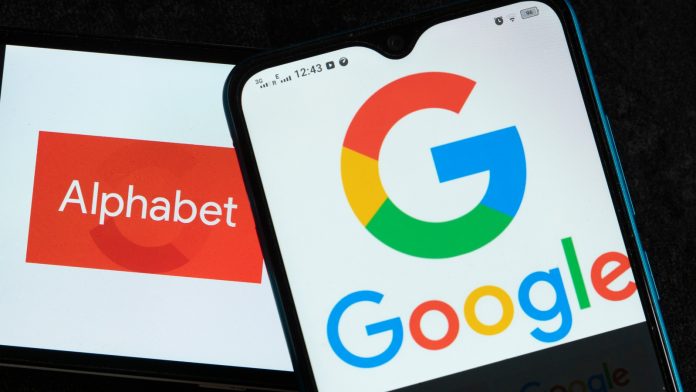
Alphabet has joined the ranks of the world’s most valuable companies, crossing the $3 trillion market value threshold on Monday after its shares jumped more than 4%. The milestone puts the search giant alongside Nvidia, Microsoft, and Apple in a club reserved for the most dominant players in global markets.

The surge comes in the wake of a favorable antitrust ruling earlier this month. U.S. District Judge Amit Mehta declined to impose the most severe penalties sought by the Justice Department, which had argued that Google should be forced to divest its Chrome browser.

The DOJ had previously secured a ruling that Google maintained an illegal monopoly in search and advertising, but Mehta’s softer remedies reassured investors. The decision sent Alphabet’s shares soaring to record highs. President Donald Trump even weighed in, congratulating the company and calling it “a very good day.”

Alphabet’s achievement comes nearly 20 years after Google’s IPO in 2004, and just over a decade since co-founders Larry Page and Sergey Brin created Alphabet as the umbrella for Google and its subsidiaries.

Current CEO Sundar Pichai, who succeeded Page in 2019, has had to manage the company through a challenging period: regulators in both the U.S. and Europe are tightening their grip, while a wave of competition in artificial intelligence redefines the future of search.

AI Competition Shapes the Landscape

Ironically, the rise of challengers such as OpenAI and Perplexity worked in Google’s favor during its antitrust trial, with regulators acknowledging that the tech giant’s dominance is no longer unchallenged. Alphabet now leans heavily on Gemini, its suite of AI models, to safeguard its future relevance against the likes of ChatGPT and other emerging tools.

Alphabet’s regulatory battles follow a familiar pattern seen with other tech leaders. Microsoft’s monopoly case in the late 1990s slowed but didn’t break its dominance; instead, the company reinvented itself around cloud computing and eventually joined the multi-trillion-dollar valuation club. Apple, too, has faced repeated antitrust disputes over its App Store practices but continues to thrive.

For Google, the court victory suggests that, like its peers, regulatory pressure may cause turbulence but is unlikely to derail long-term growth if the company successfully adapts to technological shifts.

“Following today’s court announcement, we are increasingly constructive in the longer-term durability of Google’s Search business and are raising our estimates accordingly. Raising price target on Alphabet to $245. We now expect Apple and Google to do AI Gemini deal,” Dan Ives, Wedbush Securities analyst, said earlier this month.

Analysts see Alphabet’s $3 trillion milestone not as an endpoint but as a pivot point for its next phase of growth, with several scenarios being painted. Some believe that if Gemini gains traction and successfully challenges OpenAI’s ChatGPT while maintaining Google’s dominance in search, Alphabet could sustain double-digit revenue growth.

The company’s diversified portfolio—spanning YouTube, Google Cloud, and advertising—provides multiple growth engines. In this scenario, Alphabet could potentially extend its valuation toward $4 trillion within the next three to five years, especially if AI integration drives more monetizable search and cloud opportunities.

Alphabet maintains steady growth in its core advertising business but only achieves modest adoption of Gemini compared to rivals. AI integration improves search quality but does not significantly transform revenue streams. In this outcome, some analysts believe that Alphabet’s valuation could stabilize in the $3 trillion–$3.5 trillion range, with slower upside as investors wait for a breakout product.

However, there are potential hurdles to this optimism. Should Gemini underperform against OpenAI and Perplexity, some believe that Alphabet risks losing ground in its most lucrative business—search-driven advertising. Regulatory headwinds could intensify if competitors argue that Google uses its search dominance to unfairly push its AI tools. In this case, Alphabet could see market share erosion, revenue compression, and a potential pullback below $3 trillion.

Crossing $3 trillion underscores investor faith in Alphabet’s resilience, but analysts stress that the real test lies ahead.

Alphabet’s future will depend on whether Gemini becomes a commercial success or simply a defensive play against rivals. As with Microsoft two decades ago, reinvention may decide whether today’s $3 trillion milestone becomes a launching pad—or a peak.

U.S. and China Reach Framework Deal on TikTok as Deadline Looms

0

The United States and China have reached a “framework” deal concerning social media platform TikTok, Treasury Secretary Scott Bessent confirmed Monday, according to CNBC, marking the latest twist in the long-running battle over the app’s future.

“It’s between two private parties, but the commercial terms have been agreed upon,” Bessent said during U.S.-China talks in Madrid.

Both President Donald Trump and Chinese President Xi Jinping are scheduled to meet on Friday to discuss the terms of the framework. In a post on Truth Social, Trump also hinted at the breakthrough, saying a deal was reached “on a ‘certain’ company that young people in our Country very much wanted to save.”

Bessent suggested that the framework could eventually pivot TikTok toward U.S.-controlled ownership, though specific details have not yet been released. TikTok itself has not commented on the deal.

From the Chinese side, Li Chenggang, Beijing’s lead trade negotiator, confirmed the existence of the framework but cautioned Washington against “continuing to suppress Chinese companies,” according to Reuters. His remarks came amid heightened U.S.-China trade tensions, worsened by Trump’s new tariffs and broader restrictions on Chinese firms.

At the same time, TikTok’s parent company, ByteDance, faces a looming September 17 deadline to divest TikTok’s U.S. operations or risk a nationwide shutdown. U.S. Trade Representative Jamieson Greer said Monday that while the deadline could be extended slightly to finalize the deal, “there won’t be ongoing extensions.”

The standoff has already seen Google and Apple blocked from distributing TikTok in the U.S. under its designation as a “foreign adversary-controlled application.” Trump postponed the full shutdown in January, issuing an executive order that gave ByteDance an additional 75 days to secure a deal. He later signed two more extensions in April and June, keeping TikTok alive as talks continued.

Commerce Secretary Howard Lutnick in July warned that TikTok would “shutter for Americans” if Beijing does not grant Washington greater autonomy over the platform. Trump himself told Fox News in June that he had assembled a group of “very wealthy people” prepared to buy the app, though their identities were never revealed.

Potential suitors have ranged from Oracle chairman Larry Ellison to Tesla CEO Elon Musk, while others like artificial intelligence startup Perplexity and businessman Frank McCourt’s Project Liberty internet advocacy group have formally submitted bids, according to CNBC.

Even as Trump maintains that TikTok poses a national security threat, the White House itself opened an official TikTok account in August, underscoring the app’s grip on young voters ahead of the 2026 elections.

This is not the first time Washington has pushed TikTok to the brink of a ban. The saga mirrors the Trump administration’s earlier attempts to force a U.S. buyout in 2020, when Microsoft, Walmart, and Oracle all vied for control of TikTok’s American business. At that time, Trump cited national security concerns over user data potentially flowing to Beijing, echoing the same arguments heard today. Although Oracle was briefly announced as TikTok’s “trusted technology partner,” the deal never gained full approval, and legal challenges stalled enforcement of a ban.

Outside the U.S., India was another country that moved to ban the use of Chinese apps under national security grounds. In June 2020, New Delhi banned TikTok outright alongside dozens of other Chinese apps over security and data concerns. But unlike the U.S., which has opted for drawn-out negotiations and potential ownership transfers, India took a unilateral approach that reshaped its digital ecosystem overnight.

The difference now is that the Trump administration has been willing to repeatedly extend deadlines and keep negotiations alive, highlighting both the app’s massive popularity in the U.S. and its bargaining power in U.S.-China trade talks. The upcoming Trump-Xi meeting will determine whether this framework leads to a permanent resolution or becomes another chapter in a long series of extensions.

BullZilla Presale Dominates the Best 1000x Crypto Presales in 2025 as Ripple and Cronos Prices Shift

0

Which projects truly deserve the title of the best 1000x crypto presales in 2025? As investors hunt for the next moonshot, three names are capturing market attention: the explosive BullZilla Presale, Ripple’s continued price climb, and Cronos’s steady blockchain ecosystem.

From meme-driven hype to enterprise-grade technology, these coins represent three distinct investment stories. BullZilla is on everyone’s radar as a BullZilla next 1000x contender and possibly the best crypto to buy today. Ripple continues to show strength, reinforcing its role as a market heavyweight. Meanwhile, Cronos offers an attractive network for DeFi and NFT growth, even as its token experiences a slight pullback.

Let’s break down the latest numbers and updates that make these projects stand out as the best 1000x crypto presales in 2025.

BullZilla Presale Rockets Toward 8,822% ROI

BullZilla is the headline act in the race for the best 1000x crypto presales in 2025. Now in Stage 3 (Whale Signal Detected), Phase 1, BullZilla trades at $0.00005908, with over $420k raised, 25.8 billion tokens sold, and more than 1,500 holders already on board.

Early entrants have seen a 927.47% ROI through Stage 3A, while projections point to an incredible 8,822.49% ROI by the time it hits the listing price of $0.00527. A $1,000 investment equals 16.926 million $BZIL tokens, and the next 11.27% price surge will lift the token to $0.00006574 in Stage 3B.

Community buzz places Bull Zilla next 1000x alongside top meme-coin legends. With momentum like this, many analysts call the BullZilla Presale the best crypto to buy today, positioning it firmly among the best 1000x crypto presales in 2025.

BullZilla Presale Information

Metric Details
Current Stage 3rd – Whale Signal Detected
Phase 1
Current Price $0.00005908
Presale Tally Over $420,000 Raised
Token Holders Over 1500
Tokens Sold 25.8 Billion
   

How to Buy BullZilla

Investors eager to join the BullZilla ($BZIL) Presale can participate directly through the official website. The process typically involves:

  1. Connecting a Wallet (such as MetaMask or Trust Wallet).
  1. Selecting the Payment Option (ETH)
  1. Purchasing BullZilla Tokens at the current presale price.
  1. Claiming Tokens once the presale stage concludes

Ripple (XRP) Price Climbs to $3.11 with $10.40B Volume

Ripple continues to prove it belongs in any conversation about the best 1000x crypto presales in 2025, even though it’s a mature asset rather than a presale. Today, XRP trades at $3.11, backed by a staggering $10.40 billion 24-hour trading volume, a $185.66 billion market cap, and a 4.56% market dominance.

This steady increase underscores Ripple’s growing adoption for cross-border payments. Financial institutions worldwide are leveraging RippleNet to deliver instant, low-cost international transfers, adding to its appeal as one of the best cryptocurrencies to buy today for both stability and growth.

While it may not have BullZilla’s presale fireworks, Ripple’s enterprise use case and regulatory clarity make it a strong complement for investors balancing high-risk plays like the BullZilla next 1000x gamble.

Cronos (CRO) Holds Strong at $0.2382 Despite -2.96% Dip

Cronos rounds out the trio of the best 1000x crypto presales in 2025 candidates with its expanding DeFi and NFT ecosystem. At present, CRO is priced at $0.2382, with a 24-hour trading volume of $93,947,869, representing a -2.96% daily decline.

Despite the short-term pullback, Cronos remains a vital player in the Cosmos-based DeFi landscape. Its scalable, low-fee blockchain continues to attract developers, dApp creators, and NFT projects.

For long-term investors, Cronos offers steady growth potential and ecosystem development that pairs well with the speculative excitement of the BullZilla Presale, helping diversify exposure among the best 1000x crypto presales in 2025.

Conclusion

From BullZilla’s explosive presale metrics to Ripple’s billion-dollar trading volume and Cronos’s resilient ecosystem, these three projects define the best 1000x crypto presales in 2025. BullZilla ($BZIL) stands out as the best crypto to buy today for those chasing outsized returns, Ripple offers dependable utility with impressive market stats, and Cronos provides steady ecosystem expansion for long-term growth.

For More Information:

BZIL Official Website

Join BZIL Telegram Channel

Follow BZIL on X  (Formerly Twitter)

FAQs

Why is BullZilla considered the BullZilla next 1000x?

Its 8,822% projected ROI, fast-selling presale, and meme-driven buzz make BullZilla a prime candidate for a 1000x breakout.

Is Ripple still worth investing in after hitting $3.11?

Yes. Ripple’s institutional adoption, $185.66B market cap, and $10.40B daily volume support continued long-term growth.

What makes Cronos a contender for the best 1000x crypto presales in 2025?

Its expanding DeFi and NFT ecosystem, along with its low-fee network architecture, positions Cronos as a solid growth play despite short-term dips.

Summary

BullZilla Presale surges toward an 8,822% ROI at $0.00005908, making it the best crypto to buy today and a clear BullZilla next 1000x candidate. Ripple trades at $3.11 with a $185.66B market cap, while Cronos holds $0.2382 despite a slight dip—three standouts leading the best 1000x crypto presales in 2025 narrative.

Disclaimer

This article is for informational purposes only and does not constitute financial advice. Cryptocurrency investments are highly volatile and carry significant risk. Always conduct independent research and consult a licensed financial advisor before investing.

Musk Tightens Grip on Tesla With $1bn Share Purchase, but 25% Control Still Elusive

0

Elon Musk has opened his wallet again, this time pouring $1 billion into Tesla shares, though the move barely shifts the needle toward his long-stated goal of tightening control over the electric vehicle maker.

A regulatory filing released Monday revealed Musk bought about 2.6 million shares on Friday, lifting his total holding to roughly 413 million shares. That raised his ownership stake only slightly, from 12.7% to 12.8%. The incremental increase, which underscores the scale of Tesla’s $1.2 trillion market value, marked Musk’s first open-market buy since 2020 and signals renewed confidence in Tesla’s trajectory. The new purchase Yet in percentage terms, the gain was small. The $1 billion outlay increased his stake by just 0.08%.

To reach the 25% threshold he has publicly demanded — a level he said would give him enough sway to be “influential” while still leaving room for him to be “overturned” — Musk would need to more than double his current holding. That means acquiring an additional 12.2% of Tesla, a stake worth upward of $150 billion at current prices.

Even Musk, with a net worth of $419 billion according to the Bloomberg Billionaires Index, would face steep hurdles. His wealth is largely tied up in Tesla stock itself and illiquid stakes in his private ventures, including SpaceX and artificial intelligence startup xAI. Freeing up cash on that scale would be extraordinarily difficult. And that’s before considering the market effect: any large-scale, open-market buying spree would likely push Tesla’s share price even higher, inflating the bill.

Legal Clouds Over His Compensation Shares

Musk’s calculations are further complicated by unresolved disputes over his 2018 compensation plan. That package awarded him 304 million stock options — shares that would substantially boost his influence if unlocked. But earlier this year, a Delaware court voided the deal, ruling that Tesla’s board failed to exercise independence in approving it.

The 304 million disputed shares were not included in the latest filing. Nor were the 96 million restricted shares Musk was granted in August, which remain tied up in conditions. Business Insider, which first broke down the filing, excluded both tranches in calculating his effective stake.

The legal fight over those shares hangs over Tesla’s governance as its board now pushes a fresh $1 trillion compensation proposal for Musk. That deal, tied to ambitious operational milestones like boosting Tesla’s valuation eightfold to $8.5 trillion and deploying a million robotaxis, could catapult him toward the ownership levels he craves without the need for open-market purchases.

Confidence or Power Play?

For now, Musk’s $1 billion purchase could be read two ways. On one hand, it fits with his January 2024 declaration that he wants 25% voting control or else would prefer to “build products outside of Tesla.” The buy-in could be part of a long-term strategy to claw toward that threshold.

On the other hand, it may be less about power and more about signaling. With Tesla navigating slowing EV demand and intensifying competition, Musk may be using his own capital to reassure investors of his conviction in the company’s future.

Either way, this was his first open-market buy in four years, making it a significant gesture. Whether more follow could provide critical clues about whether Musk intends to chip away gradually at Tesla’s ownership structure — or whether he is simply flexing confidence in a company he insists is only getting started.

What Comes Next?

Looking ahead, analysts say Musk’s path to 25% control could play out in several ways.

Gradual accumulation: If Musk continues buying shares on the open market, each additional billion-dollar purchase would barely move the needle. To realistically double his stake through this method would take years and vast amounts of liquid cash — something even Musk may struggle to free up without offloading parts of SpaceX or other ventures.

Board-driven compensation: The more plausible route lies in Tesla’s proposed $1 trillion compensation package. If shareholders approve it and Musk meets the ambitious milestones, he could secure enough new stock to elevate his voting power toward the 25% mark without draining his personal fortune. But the deal faces legal and governance scrutiny, especially given the court’s rejection of his earlier package.

Status quo: Musk may choose to hold steady, using symbolic stock buys like this one to demonstrate confidence while focusing his real energy on steering Tesla toward growth targets that justify his influence. In this case, the 25% goal could remain aspirational rather than operational.

However, Musk’s latest move has given him little in terms of numbers — but it has reignited speculation about how far he will go to cement his hold over Tesla and whether the next chapter will be written in the courtroom, the boardroom, or the stock market.