DD
MM
YYYY

PAGES

DD
MM
YYYY

spot_img

PAGES

Home Blog Page 50

AMC CEO Adam Aron Attacks Robinhood Over Tokenized Shares, Raises Regulatory Concerns

0

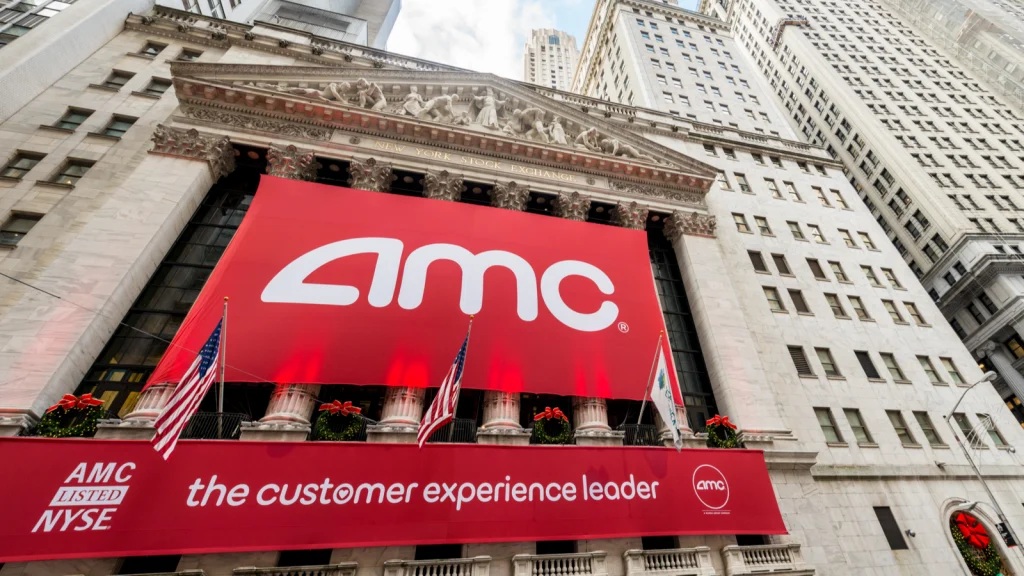
AMC Entertainment CEO Adam Aron has launched a sharp attack on Robinhood over its decision to offer tokenized versions of AMC shares, noting that the products could undermine U.S. securities regulations and create a synthetic market that operates outside the conventional framework governing publicly traded stocks.

“The list of concerns is almost existential,” Aron said in a lengthy post on Friday, escalating a dispute with Robinhood CEO Vlad Tenev over the brokerage’s rapidly expanding tokenized-stock business.

Aron’s tirade came after Tenev responded to an earlier post from the AMC chief that highlighted Robinhood’s offshore entity responsible for issuing the stock tokens.

“What’s the concern?” Tenev asked.

Aron replied by questioning why a U.S. financial company would establish an operation in Jersey, a British Crown Dependency, to issue and market digital instruments representing U.S.-listed securities without being subject to the same U.S. securities framework.

“In good conscience, how can Robinhood as a U.S. company set up an operation in far offshore Jersey, an island 3000 miles away, and market a security sort of posing as AMC in some shape or fashion, and not comply with U.S. securities laws. That is shocking and shameful,” Aron said.

Robinhood launched tokenized versions of popular U.S.-listed stocks and exchange-traded funds as part of a broader push to bring traditional financial assets onto blockchain-based infrastructure and make them available around the clock.

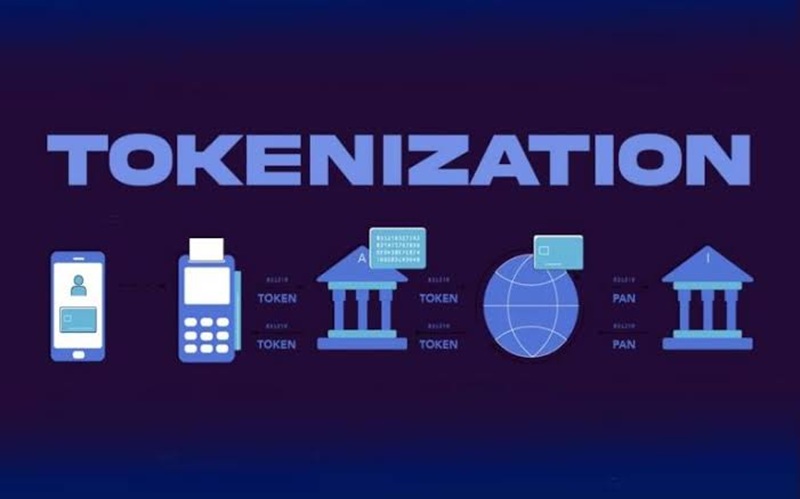
Stock tokens are digital assets designed to track the value of an underlying security, generally on a one-to-one basis. Unlike conventional shares, which trade through regulated exchanges during established market hours, tokenized versions can be transferred and traded on blockchain networks, potentially allowing investors to gain exposure to equities outside traditional market infrastructure.

In Robinhood’s case, the situation is different because the stock tokens are not offered to U.S. customers and are not registered under U.S. securities law. Robinhood’s token issuer is registered in Jersey, according to documents published by the company. The offshore structure allows Robinhood to offer the products internationally while keeping them outside the U.S. market.

That structure is at the heart of Aron’s objection.

The AMC chief argued that tokenized versions of company shares could create what he described as a “fictitious synthetic equity market,” raising questions about how such instruments interact with the actual shares issued by a company.

His concern goes beyond the trading of AMC tokens itself. If digital instruments can provide economic exposure to a publicly traded company’s stock without necessarily passing through the same market infrastructure as the underlying shares, companies and regulators may have to determine how those instruments affect price discovery, liquidity, shareholder rights, and the relationship between a company’s capital structure and the markets in which its securities trade.

Tokenized stockholders may also not have the same rights as holders of the underlying shares. Depending on the structure of a token, investors could receive economic exposure to price movements without directly owning voting rights or having the same legal status as registered shareholders.

For companies such as AMC, the distinction matters because the ability to raise capital depends heavily on the integrity and functioning of the market for its securities.

Aron said he had several concerns about Robinhood’s activities and called on the brokerage to voluntarily stop trading AMC stock tokens.

“These are but a few of my concerns about your actions. I hereby call on you and Robinhood to voluntarily CEASE AND DECIST the trading of AMC stock tokens. If you don’t, our high priced securities counsel has been asked to see whether we can force you to stop,” Aron said.

The confrontation highlights a larger debate emerging as financial institutions increasingly experiment with tokenization.

Supporters of tokenized securities believe that blockchain technology could reduce settlement times, extend trading hours, broaden international access and make financial markets more efficient. Robinhood has framed its stock tokens as a way to provide international investors with exposure to U.S. equities while modernizing the financial system.

But critics are concerned that moving securities-related products onto blockchain networks could create fragmented markets with different regulatory protections, disclosure requirements, and investor rights.

The issue becomes even more complicated when the token represents shares in a company that has not authorized the product.

Robinhood faced a similar backlash last year after announcing plans to allow users to trade tokens linked to shares of OpenAI, the privately held creator of ChatGPT. OpenAI quickly distanced itself from the offering, saying: “We did not partner with Robinhood, were not involved in this, and do not endorse it.”

The episode demonstrated the potential disconnect between a tokenized asset’s marketing and the company whose name or equity it references. An investor could potentially assume that a token has been issued or endorsed by the underlying company even when the company has no involvement in the product.

Robinhood has defended the broader concept.

“We stand firmly behind our Stock Tokens and their ability to provide international exposure to US equities, modernize the financial system and expand opportunities for ownership globally,” a Robinhood spokesperson said.

The disagreement with AMC therefore reflects a much larger question for financial regulators: when a digital asset tracks a conventional security, how closely should it be regulated like the security itself?

Traditional securities markets rely on established rules governing disclosure, custody, settlement, market manipulation, investor protection and corporate rights. Tokenization does not necessarily eliminate those functions; instead, it can move them into new legal and technological structures that may operate across jurisdictions. That creates particular challenges for regulators when an American company offers a token representing a U.S. security through an entity incorporated outside the United States and makes the product available to investors elsewhere.

The dispute also comes at a critical point for the broader tokenization industry. Major financial institutions have increasingly explored blockchain-based versions of stocks, bonds, funds and other assets, betting that tokenization could eventually become part of mainstream financial-market infrastructure.

Industry leaders believe that the success of that transition will depend in part on whether regulators can establish clear rules around ownership, redemption, custody, disclosure and market oversight.

However, Aron’s challenge to Robinhood is expected to accelerate that debate. His demand to stop trading AMC tokens forces a question that the industry will increasingly have to confront: if a digital asset closely tracks a company’s publicly traded shares, where should the boundary lie between a new financial product and the security it represents?


MSTR Surges 17.5%, CLARITY Act Faces a Race Against the Clock, as Coinbase Pushes Stock Perpetuals Toward the U.S.

0

Strategy, formerly known as MicroStrategy and traded under the ticker MSTR, delivered one of the strongest performances among large-cap stocks as its shares climbed roughly 17.5% in a single session.

The move highlights how closely the company remains tied to Bitcoin’s momentum and the growing appetite for publicly traded vehicles that provide investors with leveraged exposure to the cryptocurrency.

Strategy’s stock has increasingly behaved like a high-beta Bitcoin asset. When Bitcoin rallies sharply, the company’s equity can amplify that move because investors are not simply valuing its operating business.

They are also pricing its enormous Bitcoin holdings, financing structure and strategy of using capital markets to accumulate additional BTC. Strategy’s own market data showed MSTR rising about 17.56% in the session, reinforcing the scale of the move.

The rally also arrives as the broader crypto market remains energized. Bitcoin’s recent strength has helped lift crypto-linked equities, with Coinbase and other digital-asset companies also benefiting from renewed investor enthusiasm.

The relationship illustrates an increasingly important feature of the modern market: traditional equities can function as indirect crypto exposure, allowing investors to participate in digital-asset rallies through regulated stock markets.

A potentially significant development is unfolding at Coinbase. The cryptocurrency exchange has filed registration notices with the U.S. Securities and Exchange Commission as it seeks to bring single-stock perpetual futures to American customers.

Reuters reported that Coinbase submitted the documents as part of its effort to expand its derivatives offering in the United States. Perpetual futures are derivatives that do not have a fixed expiration date.

They became one of the defining products of crypto trading because they allow traders to maintain long or short positions continuously, generally using leverage.

Coinbase already introduced stock perpetual futures for eligible customers outside the United States in March, offering 24/7 synthetic exposure to major U.S. equities.

Bringing the product to the U.S. would represent a major convergence between crypto-market infrastructure and traditional finance. Instead of trading stocks only during conventional exchange hours.

Eligible users could potentially gain continuous exposure through perpetual contracts. The proposal would also allow traders to speculate on individual companies without directly purchasing their shares.

However, the filings do not mean that U.S. customers can immediately trade these products. Coinbase still needs to navigate the regulatory process, including coordination with the SEC and Commodity Futures Trading Commission.

Reports indicate that the company views the filings as an important step toward bringing its international stock-perpetual product onshore. The significance extends beyond Coinbase. If regulators permit single-stock perpetuals.

Competition between traditional exchanges, crypto platforms and decentralized derivatives venues could intensify. It could also accelerate the development of an increasingly continuous financial market.

The environment provides another reason for Strategy’s Investors may continue treating MSTR as a major proxy for Bitcoin. For Coinbase, the push into U.S. stock perpetuals represents another step toward its broader ambition of becoming an integrated financial marketplace.

The two developments point toward the same market transformation: crypto infrastructure is moving deeper into traditional finance, while traditional assets are increasingly adopting mechanisms pioneered by crypto.

CLARITY Act Faces a Race Against the Clock as Sheriffs Drop Opposition

Meanwhile, The U.S. crypto industry has received an important political development just as the Digital Asset Market CLARITY Act enters one of its most consequential stages.

The National Sheriffs’ Association (NSA) has reversed its earlier opposition to the legislation, moving to a neutral position after raising concerns about provisions affecting law enforcement and decentralized finance.

At the same time, the House of Representatives has canceled its final two scheduled weeks of September sessions, dramatically narrowing the window for Congress to complete the legislation before the 2026 midterm elections.

The NSA’s decision matters because law-enforcement concerns have been one of the arguments used against portions of the CLARITY Act. Critics had warned that certain provisions could make it harder for authorities to investigate illicit finance involving decentralized networks and digital assets.

Moving from opposition to neutrality does not constitute an endorsement, but it removes one significant institutional obstacle and potentially gives lawmakers more political room to negotiate the bill. That development arrives at a particularly sensitive moment.

The Senate is expected to hold a key procedural vote on September 15, giving supporters a narrow opportunity to advance the market-structure legislation.

The bill has already passed the House previously, but Senate amendments could require the House to consider the legislation again before it can reach the president’s desk.

The House schedule now complicates that pathway. Republican leadership has canceled the final two weeks of September sessions and is expected to leave Washington around September 17.

That would leave lawmakers with an exceptionally compressed period to respond to whatever emerges from the Senate. If the Senate passes an amended version after September 15, the House could have little practical time to debate and approve it before lawmakers return their attention to campaigning.

The timing is important because the 2026 midterm elections are scheduled for November 3. Once Congress enters the election period, legislative priorities can shift rapidly. A bill that has spent months moving through committees, negotiations and procedural hurdles could suddenly become a post-election issue.

Potentially forcing the industry to wait for a lame-duck session or a new Congress. That uncertainty has significant implications. The CLARITY Act is designed to establish clearer rules around the regulatory treatment of digital assets and the responsibilities of agencies such as the Securities and Exchange Commission and Commodity Futures Trading Commission.

Supporters argue that clearer jurisdictional boundaries could reduce regulatory uncertainty, encourage institutional participation and provide businesses with a more predictable framework for operating in the United States. Passage before the elections is far from guaranteed.

Even with the NSA withdrawing its opposition, disagreements over issues such as decentralized finance, stablecoin-related provisions, enforcement authority and amendments could continue to complicate negotiations. The Senate’s September vote is therefore better viewed as a critical gateway rather than a final victory.

The paradox is striking: the CLARITY Act may have gained political breathing room from the sheriffs’ association while simultaneously losing legislative time because of the House calendar. For crypto investors and businesses, September has therefore become a decisive month.

The industry may be closer than ever to a comprehensive U.S. market-structure framework, yet Congress has given itself less time to deliver it. Whether lawmakers can turn the NSA’s neutrality and Senate momentum into actual legislation before the midterms could determine whether 2026 becomes the year the United States finally establishes clearer crypto rules.

What Are You Building? Can We Fund You?

0

What are you building? If you are creating something bold and original, with the potential to establish a new basis of competition, transform an industry and capture meaningful market value, Tekedia Capital would like to hear from you.

We invest in and support approximately 35 companies each year, providing resources to help ambitious founders advance their missions. Learn more and contact us here.

Please send only the link to your publicly accessible website. Do not send a pitch deck, confidential information or proprietary materials at this stage. If the opportunity aligns with our investment interests, we will contact you and request additional information.

Similarly, if you are developing blockchain-based technologies with practical applications in traditional industries, including mining, real estate, security and related sectors, Contisx Mint Ventures may provide both technology infrastructure and investment capital. Learn more and contact us here.

For Contisx Mint Ventures, please also submit only your public website. Do not send a pitch deck or proprietary information unless we request it.

Build boldly. The future belongs to those who create new possibilities and execute them.

AI, political competition, electoral technology raise concerns ahead of 2027 polls

0

Artificial intelligence-driven political communication, rising political competition, weaknesses in electoral technology and inconsistent enforcement of electoral laws are emerging as major concerns ahead of Nigeria’s 2027 general elections, an ongoing monitoring initiative has found.

The findings are contained in preliminary observations from the #TrackingNaija2027Elections initiative, a collaborative project involving the Centre for Research on Development of African Media, Governance and Society (CEREDEMS-Africa), the Centre for Peace and Strategic Studies (CPSS), University of Ilorin, and the Institute of Geopolitical Communications, RUDN University, Moscow.

The initiative deployed a 300-member volunteer monitoring network to collect and analyse information on Nigeria’s evolving electoral environment.

According to the organisations, the 2027 electoral environment is already being shaped by developments occurring well ahead of the formal campaign and election period.

AI enters political communication

One of the key concerns identified by the monitors is the growing use of artificial intelligence in political communication.

The initiative said its monitoring has identified AI-generated content being used both to promote political actors and to attack their opponents.

It described promotional AI-generated content as “glowfake”, while content designed to attack opponents or political issues was described as “foefake.”

The organisations warned that the growing use of synthetic content could influence political perceptions and deepen divisions along political and ideological lines.

The monitoring initiative said AI should no longer be treated simply as a technological development but as an emerging component of campaign strategy.

It said content promoting candidates could influence favourable perceptions and mobilisation, while AI-generated attacks could amplify negative narratives and political polarisation.

The implication, according to the monitors, is that electoral stakeholders will increasingly need to understand not only whether political content is authentic, but also how synthetic content is produced, distributed, targeted and used to influence voters.

The initiative also said its approach goes beyond traditional monitoring of misinformation by examining the political purpose of information.

It said monitors are examining who is targeted, which political actor or issue is being promoted or attacked, the narrative being advanced, and the political divisions such narratives could reinforce.

Rising political competition

The monitoring has also identified what it described as an increasing number of presidential aspirants and political parties ahead of the 2027 elections.

While this could indicate increased political participation, the initiative said the development could also influence campaign strategies, political narratives, voter mobilisation and the behaviour of political actors as the electoral cycle progresses.

Electoral technology and public confidence

The monitors also raised concerns about the role of technology across Nigeria’s electoral chain.

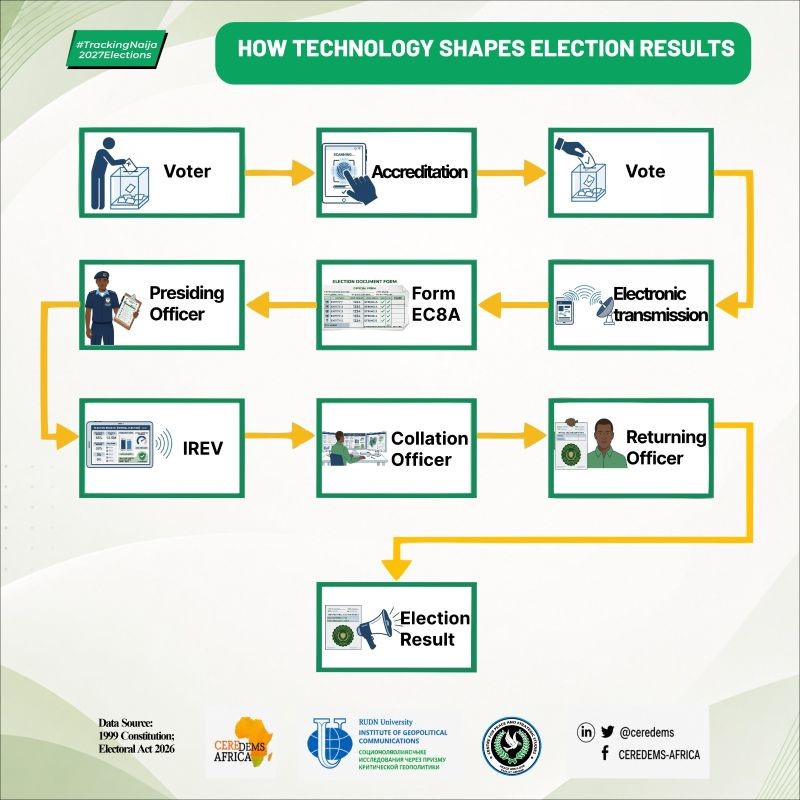
According to the findings, technology now connects several stages of the electoral process, including voter accreditation, voting, recording, electronic transmission, collation and declaration of results.

While technology can make elections faster, more transparent and traceable, weaknesses at any stage could undermine public confidence in the entire electoral system, the initiative said. The organisations said the challenge goes beyond having digital systems in place.

They stressed the need for adequate capacity among election officials, clear procedures and better public understanding of how votes move from polling units through transmission and collation to the final declaration.

“If citizens, political parties or other stakeholders cannot clearly understand how votes are recorded, transmitted, collated and declared, technological systems may become a source of suspicion rather than confidence,” the initiative said.

Enforcement of electoral laws

The monitoring exercise also examined electoral violence and enforcement of the Electoral Act 2026.  It found that the law contains provisions addressing prohibited conduct by political actors, including threats, use of force and abusive language.

However, the initiative said the existence of legal provisions alone would not be sufficient to prevent electoral violence. It identified awareness of the law, detection of violations and consistent enforcement as critical factors in preventing inflammatory political conduct from escalating into wider electoral crises.

The monitors said consistent enforcement could strengthen deterrence and demonstrate that electoral rules apply equally to political actors. Conversely, allowing threats, intimidation and abusive political communication to persist without consequences could encourage actors and their supporters to cross established boundaries, they warned.

Risks are interconnected

The initiative said its preliminary findings point to an interconnected set of risks ahead of the 2027 elections.

It said intensifying political competition could increase campaign communication, while sophisticated digital tools and AI-generated content could amplify both positive and negative political narratives.

At the same time, limited understanding of electoral technology could generate distrust, while weak enforcement could allow inflammatory political behaviour to escalate.

The monitors said these developments should therefore be assessed as parts of a connected electoral environment rather than as isolated problems.

The initiative will continue monitoring electoral governance, political finance and vote commodification, electoral security, information integrity, AI and elections, electoral justice and peace, and inclusive participation.

It said the objective is to identify emerging risks early, provide accessible evidence to the public and support informed discussions among institutions and other stakeholders responsible for protecting Nigeria’s democratic process.

300 volunteers deployed

The 300-member monitoring network is providing the operational foundation for the project.

According to the organisers, volunteers have been collecting and analysing election-related information across Nigeria, with subsequent capacity-building aimed at improving their understanding of the frameworks and indices used to assess electoral developments.

The initiative said its objective is not merely to accumulate election-related information but to transform raw information into evidence capable of helping stakeholders identify emerging patterns, risks and opportunities for intervention.

The organisations emphasised that the initiative is non-partisan and is not intended to promote any political party, candidate or political interest.

Its stated focus is on generating independent evidence about Nigeria’s electoral environment and supporting peaceful, credible and inclusive elections.

Stephen Obiri, Director of Communications at CEREDEMS-Africa, said the initiative would continue monitoring the electoral environment and publishing evidence-based findings as the political cycle develops.

“The partnership’s broader objective is to contribute to a democratic process in which emerging risks are identified early, relevant actors are informed, institutions are better prepared, and citizens have access to credible information about the forces shaping their elections,” Mr Obiri said.

The partners said the monitoring will continue before, during and after the 2027 elections.

Robinhood Blockchain Volume Nears $2 Billion Amid Stock Rally and AMC Dispute

0

The battle over tokenized equities is entering a more confrontational phase, with AMC Entertainment CEO Adam Aron taking direct aim at Robinhood’s blockchain strategy.

Aron has described Robinhood’s tokenized AMC stock as “contemptible” and “vile,” while signaling that AMC has instructed outside securities lawyers to examine the offering.

The dispute highlights a fundamental question for the emerging market for tokenized securities: who has the right to determine how a company’s equity is represented and traded onchain?

Robinhood’s stock-token program allows investors outside the United States to gain economic exposure to more than 190 stocks and exchange-traded funds through blockchain-based instruments.

However, these tokens are not the same as directly owning the underlying shares. Robinhood’s disclosures describe them as tokenized debt securities issued through Robinhood Assets (Jersey) Limited, meaning holders do not receive conventional shareholder rights.

That distinction is at the center of Aron’s objection. The AMC chief argues that creating a synthetic market around AMC shares without the company’s participation could interfere with the relationship between an issuer and its shareholders.

He has also raised concerns about capital raising, investor rights and whether such products are appropriately structured under securities law. Aron has called on Robinhood to stop trading AMC tokens and suggested that legal action could follow if the platform refuses.

Robinhood appears determined to defend the model. The company argues that its stock tokens expand international access to U.S. equities and modernize financial markets. Robinhood’s chief legal officer has also pushed back against Aron’s challenge, indicating that the company is confident in its interpretation of U.S. securities law.

The confrontation is particularly significant because tokenization is no longer a fringe crypto experiment. Traditional financial institutions, exchanges and blockchain companies are increasingly exploring ways to put equities and other real-world assets onto distributed networks.

The London Stock Exchange Group, for example, has announced plans for tokenized UK shares through a partnership with Payward, the parent company of Kraken. At the same time, Robinhood’s stock delivered a powerful vote of confidence from investors.

Shares jumped 16.6% in Thursday’s session, closing at $124.72, as analysts highlighted the company’s expanding product ecosystem, including crypto, prediction markets, wealth management and subscriptions.

The surge coincides with growing activity around Robinhood’s blockchain infrastructure.

Chain trading volumes approaching $2 billion demonstrate how quickly the platform is becoming a meeting point between traditional finance and crypto-native speculation. The emergence of meme tokens linked to the broader tokenized-stock narrative adds another layer of market excitement.

With MEME reportedly reaching a $100 million market capitalization while traders such as Frankdegods and Rasmr posted outsized gains. Yet the enthusiasm carries a warning. Tokenization promises faster settlement, 24-hour markets and global accessibility.

But those benefits do not automatically resolve questions about ownership, voting rights, corporate consent or regulatory jurisdiction. The AMC-Robinhood confrontation therefore represents more than a dispute between two companies.

It is an early test of how Wall Street’s transition onto blockchain rails will work in practice. If tokenized securities become a major financial market, regulators and issuers will ultimately have to determine whether representing a stock onchain requires the company’s approval—or whether economic exposure alone is sufficient.