DD
MM
YYYY

PAGES

DD
MM
YYYY

spot_img

PAGES

Home Blog Page 5767

Intel Records Major Loss Amidst Quest to Regain Market Shares

0
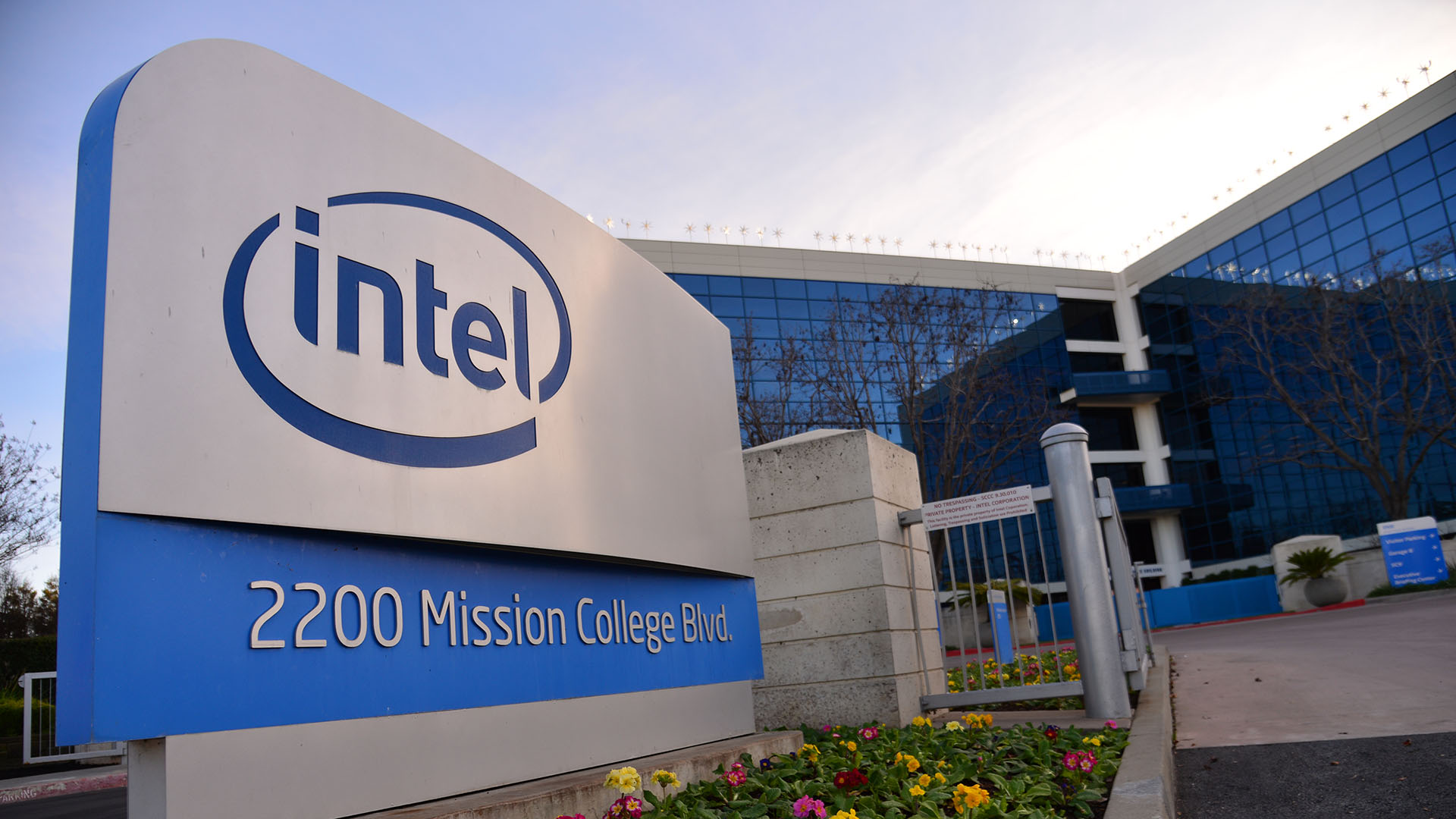
The Robert Noyce Building in Santa Clara, California, is the world headquarters for Intel Corporation. This photo is from Jan. 23, 2019. (Credit: Walden Kirsch/Intel Corporation)

Intel Corp.’s troubles are deepening, the biggest chipmaker, who has been battling to quell steady decline in its market growth, reported significant loss in three months following a drop in data center revenue and a steep decline in gross profit margin.

The latest quarter report drops signal that moves by Intel rivals are cutting its market share, compounding the woes created by its customers who have shifted to designing their own chip components.

Bloomberg reported that the PC business performed better on continued demand for laptops that run Intel processors. But the company’s Data Center Group generated first-quarter sales that fell 20% from a year earlier and missed Wall Street estimates. The unit is Intel’s most profitable businesses, so the lower revenue dented overall margins.

The shares fell as much as 7.5% to $57.90 as trading opened Friday in New York. It was the biggest drop since Jan. 22.

Investors had been optimistic about the new CEO’s recovery plan, pushing the stock up 26% this year through Thursday, after it declined 17% in 2020 and lagged far behind its rivals.

Last month, Intel’s CEO Pat Gelsinger announced plans to greatly expand its advanced chip manufacturing capacity. The new chief executive said the plans involve spending as much as $20 billion to build two factories in Arizona and to open up its factories to outside customers. The move aims to restore Intel’s reputation after manufacturing delays sent shares plunging last year. But the strategy, which was designed to directly challenge the two other companies in the world that can make the most advanced chips, Taiwan’s Semiconductor Manufacturing Co Ltd (TSMC) and Korea’s Samsung Electronics Co Ltd, it’s a longshot..

Gelsinger inherited a mammoth task of revamping Intel’s declining dominance in the semiconductor industry, and has been making bold moves to reclaim the company’s dwindling market shares.

It is taking long and many trials for Intel to figure a way out of its ordeal. Major part of the challenge is building what the market really wants, and the company is struggling to catch up on that. Delays have allowed other chip companies to catch up and pushed customers to design their own components. Intel argued the server business is going through a temporary slump caused by too much inventory. The first quarter was the bottom and growth has returned, executives said.

The question remains whether Intel is losing market share and when profitability will start to expand. Gelsinger said Intel is now in “investment mode” during a critical period for its return to leadership, and promised he’ll deliver products that are again the best in the industry.

“The days of Intel having a stranglehold on this business have gone,” said Logan Purk, an analyst at Edward D Jones & Co. “The competitive landscape has shifted and it’s shifted quickly. That is going to weigh on this business.”

Pat, new Intel boss

Intel said its gross margin, the percentage of revenue remaining after deducting the cost of production, was 55.2%, down more than five percentage points from the same period in 2020.

“This is a key indicator of the strength of its manufacturing and product pricing. Intel has historically delivered margins above 60%,” Bloomberg said.

The Santa Clara, California-based company raised its full-year sales forecast slightly to $72.5 billion. While that’s down from last year’s record $77.87 billion, the company still gets multiple billions of dollars more in sales than faster-growing Taiwan Semiconductor Manufacturing Co. and Samsung Electronics Co., Bloomberg said in the report.

But Purk of Edward D Jones said the Intel will have to fight close the growing gap that other players in the chip industry are working hard to keep.

“Those companies though, have passed Intel in manufacturing technology and are spending heavily to maintain the gap with budgets the U.S. company will struggle to match,” he said.

In April, TSMC announced plans to invest $100 billion in the next three years to expand its manufacturing capacity and support research and development.

The world’s biggest contract producer of semiconductors, said it anticipates faster growth thanks to long-term trends like the introduction of next-generation telecommunications and high-performance computing.

Intel’s major customers like Apple are building their own chips. Amazon.com Inc. and other big cloud providers are designing more chips in-house for their data centers. Intel has been the major supplier to these businesses for years, so the trend is a concern for the company and investors. Advanced Micro Devices Inc. has also rolled out more competitive data center processors recently.

Intel said sales of chips to cloud service providers fell 29% from the same period a year earlier. That huge drop, according to Intel, was caused by “digestion” — customers pausing orders while they work through unused stockpiles of chips.

“While this has happened before and rebounds have followed, investors are increasingly concerned that delays in new Intel products have led this crucial group of customers to shop elsewhere and they won’t come back,” Bloomberg said.

Gelsinger’s revival plan is getting a boost from the PC market, though. The Covid-19 pandemic forced millions of people to work and study from home, revving up demand for electronic devices as the world relies increasingly on digitalization. There has been a surge in purchases of laptops and other computer gear which is expected to drive growth in Intel if it doesn’t dip.

Gelsinger said there’s no sign of a slowdown in PC demand. The company’s 2021 forecast is constrained by supply shortages, while profitability is being squeezed as costs increase and the company competes aggressively to win market share, he added.

“We are here to win and we’re going to be very competitive in our approach to gain market share,” he said.

Intel’s PC chip division had first-quarter revenue of $10.6 billion, up 8% from a year earlier. Analysts projected $10 billion.
Ghanaian Government Acquires Airtel for $1!

2

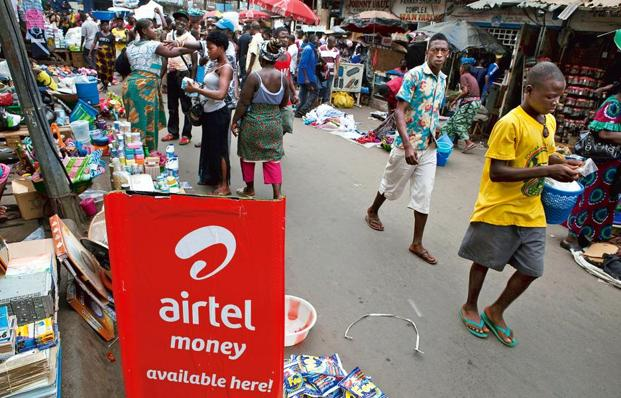
The Ghanaian government has acquired a 100% shares of the Telecommunications Company, AirtelTigo, for US$1.

The Minister of Communication and Digitalization, Ursula Owusu-Ekuful, disclosed this in a news report by CNBC Africa on Wednesday, April 22nd 2021.

Bharti Airtel is a global telecommunications company with operations in 18 countries across South Asia and Africa.

Minister Ursula explained that the current state of AirtelTigo and the circumstances under which its shareholders decided to leave the market was what led to the acquisition of the company at $1.

According to her, this would offer the Ghanaian government financial liberty to reinvest into the company and bring it out of the challenges the Telecoms industry is facing.

Late last year, Airteltigo began the negotiation to sell 100% of its shares to Ghanaian government as its market troubles mounted.

Ursula said the government had renegotiated many of the loan facilities AirtelTigo had acquired and reached a high level of debt forgiveness.

As a means of salvaging this situation, the Ghanaian government and the company’s initial shareholders have agreed to equally share a US$100 million facility acquired from Standard Bank. This loan facility is one of the most significant debts on the company’s books, the minister said.

Ursula further disclosed that the government worked closely with the Ministry of Finance in all the negotiations. She added that the shareholders of AirtelTigo are not transferring the shareholder credits which they’ve advanced to the company.

In the proposed agreement, the Government of Ghana will acquire 100% shares of AirtelTigo along with all customers, assets and liabilities. Basis of the agreement is that all operations of the telco will be taken over by the Government of Ghana, making AirtelTigo a state-entity.

Ursula said the unsustainable non-controlled joint venture will be handed to over to the government, who will make efforts to revive the company by making suitable investments while protecting the interests of the customers, employees and all other stakeholders.

According to her, “That’s one of the main items hurting the balance sheet of the company, one hundred per cent of all the loans have been forgiven more or less. They are not seeking repayment of those loans.

“There were also some commercial facilities that the company took, key among them is a $100 million facility from Standard Bank and with that also, AirtelTigo has taken 50 percent of that facility, so the company is now just saddled with 50 percent of that liability. These measures also helped free the company from the burden that it was under,” she said.

The minister indicated that these kinds of developments are part of the dangers that a country is opened to with multinational establishments in critical sectors.

“Government isn’t going anywhere. That is the danger when you have multinationals, what impact the decisions they make may not be exactly the same as what your own national companies will take into consideration. For them, they have the option of leaving to go back to their home region, but we are not going anywhere, and so it is in our interest to also grow local entrepreneurs in the space and the government is committed to doing that, maybe this will provide us a vehicle to also do that even more,” she added.

She is optimistic that the negotiation will give the company a fresh start. She explained that any interim management that would take over would have a good balance sheet that can attract investments to the company.

AirtelTigo is a dynamic and innovative brand providing a wide range of telecommunications services including mobile voice, data, mobile financial services and business connectivity solutions.

The transaction is expected to close on the mutually agreed conditions. Airtel and Millicom, along with Ghanaian government will expeditiously complete the closing. AirtelTigo had already written off its investment in the prior accounts. No further provisions of any material nature are envisaged, the press release stated.

On a consolidated basis, Bharti Airtel reported a net profit of Rs 853.60 crore in Q3 FY21 as against net loss of Rs 1,035.30 crore in Q3 FY20. Net sales during the quarter jumped 24.2% year-on-year (Y-o-Y) to Rs 26,517.80 crore.

Congratulations Faculty for Elevantion to VigiTrust Global Advisory Board

0

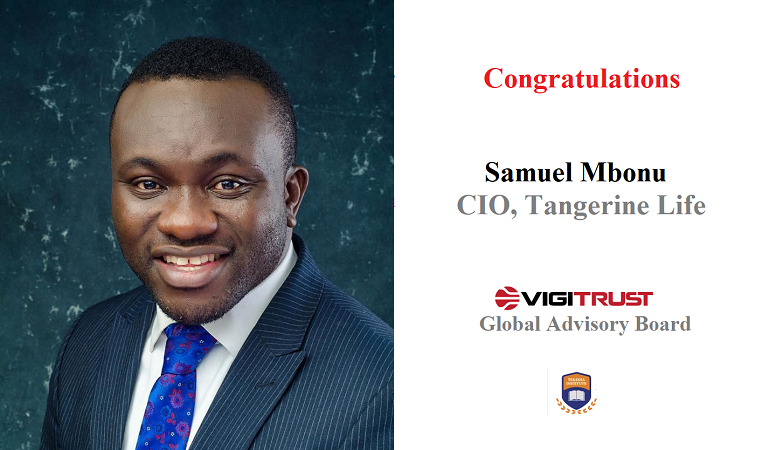
Join me to congratulate a member of Tekedia Institute Cybersecurity Faculty, Samuel Mbonu MBA, CISSP, CISM, TOGAF 9 CERTIFIED, the Chief Information Officer of  Tangerine Life for his appointment as a member of VigiTrust Global Advisory Board. VigiTrust has helped companies to comply with regulation standards since 2003 and has clients in more than 100 countries.

This appointment is a demonstration of excellence at the highest level of  digital security and compliance for our Faculty. The best business executives teach at Tekedia Institute and we are proud as they continue to shape the world of commerce.

Congratulations Faculty – more wins ahead.

Tekedia Live Tomorrow is on Tax Law & Policy

0

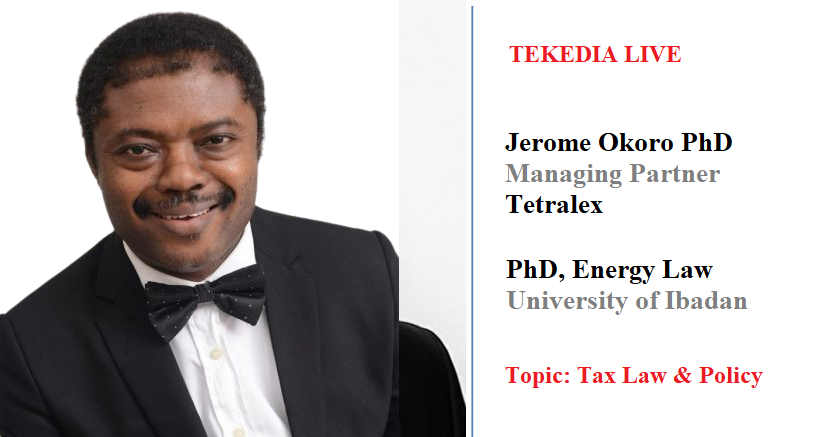
Good People, Tekedia Live tomorrow will focus on Tax Law and Policy. A member of Tekedia Institute Law Faculty, Jerome Okoro PhD, will lead and anchor the session. Dr. Okoro, a law graduate of University of Nigeria Nsukka, LLM from University of Lagos and PhD Law from University of Ibadan, is the Managing Partner of Tetralex, a law firm tetralex.com.

Dr. Okoro possesses a wealth of experience in diverse areas of law practice, with remarkable expertise in Tax, Energy Law and Litigation. He is a member of the Chartered Institute of Arbitrators (UK), International Fiscal Association, International Bar Association, and the Nigerian Bar Association.

Tue, April 27 | 7pm – 8pm WAT | Tax Law & Policy – Jerome Okoro PhD, Managing Partner, Tetralex

Zoom link in the Board.

Tekedia Institute Mini-MBA >> Learn from the best

Tekedia Institute wins Velocity Mhagic Grand Prize of $60,000

3
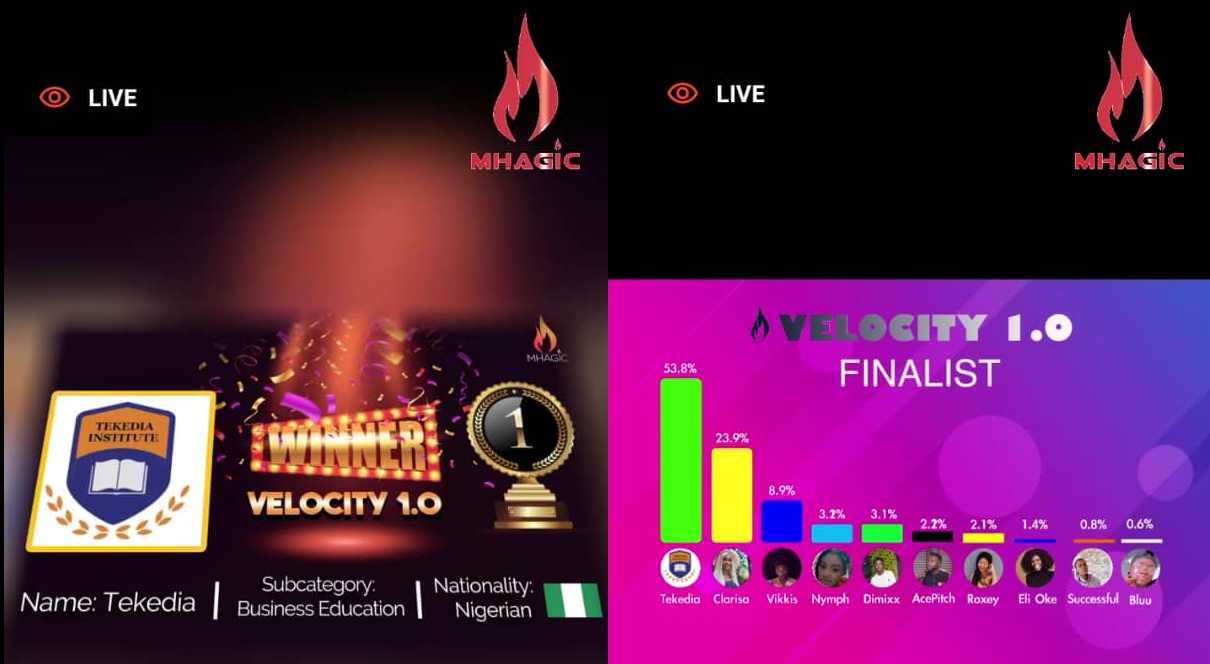
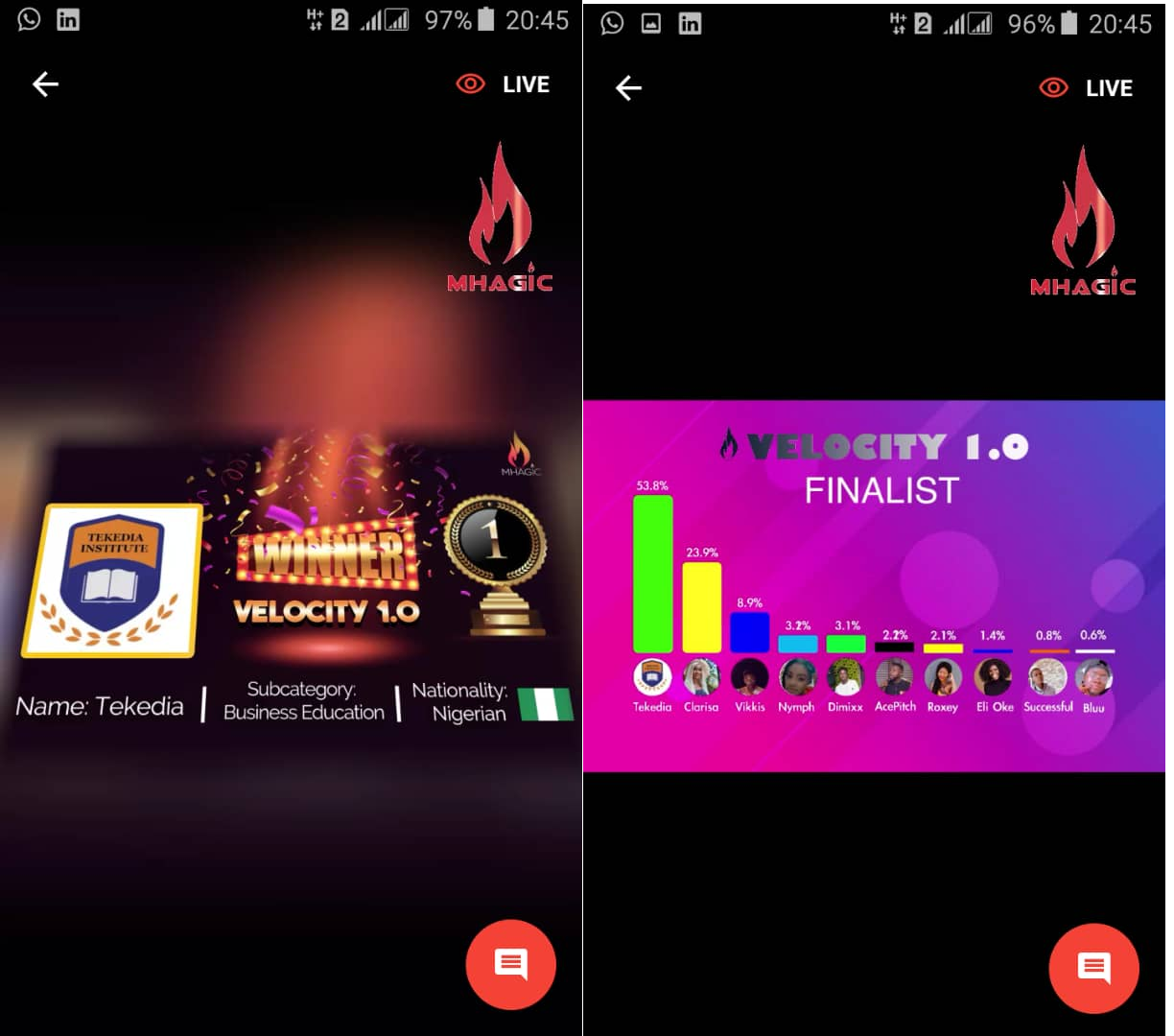
Tekedia is the winner of Velocity Mhagic $60,000 Prize

 Tekedia Institute has won the Velocity Mhagic Grand Prize of $60,000. Mhagic Velocity, a talent competition, began with hundreds of people and groups. As we celebrate, Tekedia wants to congratulate other contestants who battled over 13 weeks for the remarkable program. And to our members and fans, thank you for taking us to the mountaintop. 

All proceeds from this recognition will go to offer full Tekedia Mini-MBA scholarships to 430 in-need students.

Meanwhile, registration for the June edition of Tekedia Mini-MBA continues. To register and join us, click here.