DD
MM
YYYY

PAGES

DD
MM
YYYY

spot_img

PAGES

Home Blog Page 5879

The Flutterwave’s March To IPO – NYSE New York, NSE Lagos, and OPay Battle

4

A unicorn is born and it has to find a home to rest. Yes, Flutterwave is an Africa-born unicorn, valued at excess of $1 billion, after raising $170 million. It is not necessarily surprising when you see how the company has integrated the disparate African countries. When others were working on needs and expectations, Flutterwave moved to perception. In his class note at Tekedia Mini-MBA, the company’s CEO, Olugbenga GB Agboola, explained his view of Africa and the world, and used his company to explain how they are tackling the opportunities. There is no way you will read that document and will not admire his firm.

“The company’s valuation is now in excess of $1 billion. The fundraise brings the total investment in Flutterwave to $225 million,” the company said in a statement.

“We may consider the possibility of listing in New York or a possible dual listing in New York and Nigeria,” Flutterwave CEO and co-founder Olugbenga Agboola told Reuters on Tuesday.

And the company will open its war chest now for acquisitions because the Flutterwave Treasury with new $170 million can do great things: “We believe in payments in partnerships as you have to partner to scale. So, if in the course of making partnerships and scaling and we identify promising companies with a similar ethos and have our vision in mind, that is in making Africa a country, an acquisition isn’t off the table,” he said.
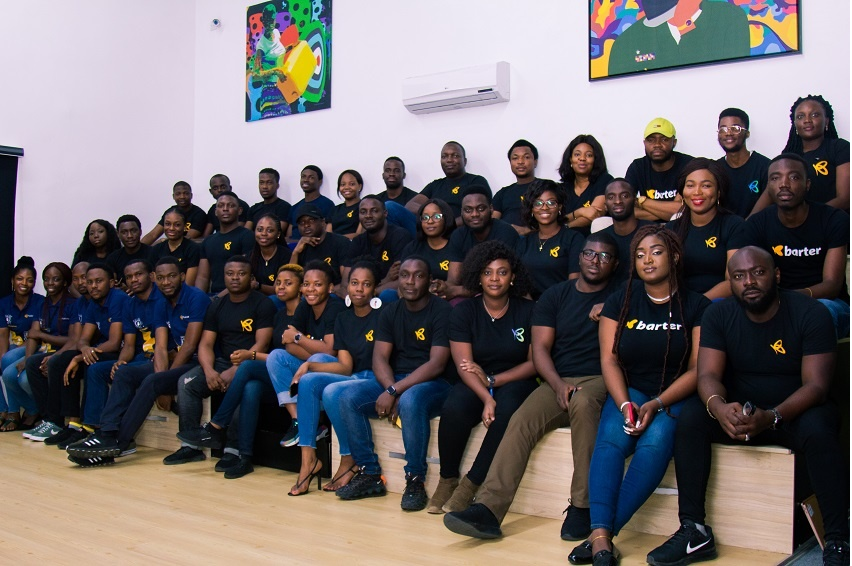
Flutterwave team

Yes, I am expecting Flutterwave to make its major acquisition before the end of Q4 2021. Any fintech with core value provision will become a natural suitor because the company has the capacity to unlock more resources for deals. I also expect the firm to move vertically, using its resources to fund more feeders into its ecosystems. That means, it could dedicate 5% of its revenue to support ecosystem players that would feed transactions into its platforms. 

Flutterwave’s biggest competitor is not the banks, Interswitch or Stripe (Paystack), but OPay. OPay which processed $2 billion worth of transactions in December 2020 has eclipsed every fintech in Nigeria. In comparison, “Flutterwave has carried out more than 140 million transactions worth more than $9 billion since it was founded in 2016”. So, OPay and Flutterwave are the dominant forces to battle this out as OPay begins its expansion out of Nigeria. 

Opera controls OPay, and from Opera’s earnings call, “In December OPay processed a gross transaction value of $2 billion on its platform compared to $1.4 billion in October, or a 43% increase in just over two months. Further, OPay’s revenue is increasing quite rapidly while the company is able to achieve profits right around breakeven despite the growth. We expect this growth to continue as OPay continues to scale in Nigeria and expands to an additional country in Africa.” Yes, OPay, the fintech company, which has Nigeria as its main base grossed $2 billion on transaction value in December 2020, hitting 43% growth from October numbers.

What can we say? We hope transaction fees drop to near-zero as that is what competition brings. In a class yesterday, Tekedia Beijing-based faculty, Dr Henry Chan, said it clearly: “Dr. Chan explained deeper why Alipay does more transactions than Visa and Mastercard combined. Alipay does $18 trillion while Visa and Mastercard combine for $16 trillion. He explained that a merchant will lose about 2-5% with Visa or Mastercard while Alipay will pick about 0.6%. With that construct, China went ahead of the West on the adoption of digital payment even though Visa has been around for decades before Alipay”.

Flutterwave Raises $170m in Series C Round, Becomes a Unicorn
Flutterwave Raises $170m in Series C Round, Becomes a Unicorn

0
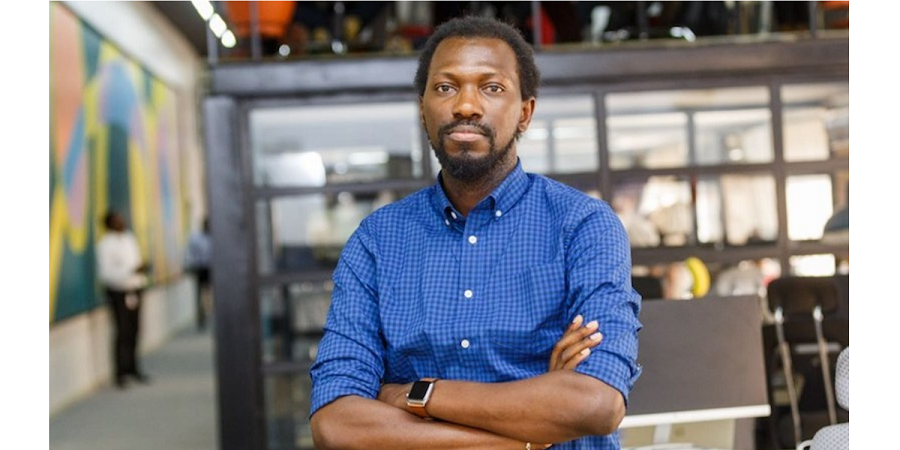
Flutterwave team

Flutterwave, the African-focused Nigerian fintech startup taking the world by storm has raised $170 million in series C funding, shooting its value up to unicorn status.

The series C, which was led by New York-based private investment firm Avenir Capital and US hedge fund and investment firm Tiger Global, catapulted Flutterwave’s valuation to over $1 billion.

The latest round thus places the startup in the unicorn status alongside Interswitch and Jumia, the other African startups who have attained the status.

“The company’s valuation is now in excess of $1 billion. The fundraise brings the total investment in Flutterwave to $225 million,” the company said in a statement.

New and existing investors who participated in the round include DST Global, Early Capital Berrywood, Green Visor Capital, Greycroft Capital, Insight Ventures, Paypal, Salesforce Ventures, Tiger Management, WorldpayFIS 9yards Capital.

“We may consider the possibility of listing in New York or a possible dual listing in New York and Nigeria,” Flutterwave CEO and co-founder Olugbenga Agboola told Reuters on Tuesday.

The African-focused fintech said Tuesday the round will be used to further its customer base in existing and international markets and to develop new products. It also intends to improve existing products like Barter, which has over 500,000 users.

CEO of Flutterwave

It explained that the growth has been spurred by COVID-19 pandemic which accelerated the shift to digital payments in Africa. Streaming, gaming, remittance and e-commerce are among the pandemic-induced activities which spurred Flutterwave’s growth within the last one year.

Flutterwave has carried out more than 140 million transactions worth more than $9 billion since it was founded in 2016, and has raised $225 million to distinguish itself with the few African startups that crossed the $200 million threshold. In 2020; it closed a $35 million Series B round having had a $20 million Series A round in 2018.

The company said more than 290,000 businesses use its platform to carry out payments, adding that they can carry out transactions “in 150 currencies and multiple payment modes including local and international cards, mobile wallets, bank transfers and Barter by Flutterwave.”

Agboola told TechCrunch that the company is live in 20 African countries with an infrastructure reach in over 33 countries in the continent. He said the startup grew more than 100% in revenue within the past year due to the pandemic without being specific on numbers. It also contributed to its compound annual growth rate (CAGR) of 226% from 2018.

The $170 million round underscores the high-flying state of the African fintech market which has attracted between 25% to 31% of the total VC funding last year from many sources.

In 2019, Interswitch recorded tremendous growth with its local-only verve debit card that it moved to internationalize it. The move attracted $63.3 million in debit-financing via bond placement with Securities and Exchange Commission of Nigeria (SEC). Visa bought a 20% stake in Interswitch for $200 million, pushing its value to $1 billion.

Paystack founders

Paystack , another fintech startup in Nigeria also made headlines in October last year with $200 million acquisition by Stripe.

But despite its rapid growth, attaining the Unicorn status in less than 10 years after it was founded; Agboola said Flutterwave will not follow the acquisition trajectory but will likely go for listing.

“Like every other startup, we’re thinking about ways to create exit tools for our investors. So, a listing is very much in our plans, but for now, we’re focused on giving the best value to our customers,” he told Techcrunch.

But having been known for its partnership model, which was in play when it partnered with Visa to launch Barter, and Alipay to facilitate payment between Africa and China, and in 2020, Worldpay FIS for payments in Africa, Agboola does not rule out acquisition completely.

“We believe in payments in partnerships as you have to partner to scale. So, if in the course of making partnerships and scaling and we identify promising companies with a similar ethos and have our vision in mind, that is in making Africa a country, an acquisition isn’t off the table,” he said.

Agboola said the company’s next move will be to go live in North Africa, where it hopes to capture more market share even though it will face fierce competition from a local market leader, Fawry.

Flutterwave Raises $170M, Valued Over $1Billion, Now Bigger than UBA, First Bank, Access Bank

0
CEO of Flutterwave

I woke up this morning and the announcement was made to the world: Flutterwave is a true Africa-born unicorn with a valuation of at least $1 billion. The fintech company has just raised $170 million series C funding which will be crucial in improving the technology, product, customer support, and expansion drive. I went to WhatsApp and sent a short note to the CEO, Olugbenga “GB” Agboola. I wrote at 6.41 am New York time “Congrats the Category-King. You have lifted many to the mountain-top.” In seconds, he responded.

Flutterwave is one of the most important financial service providers in Africa today from the perception of global markets. It is now valued more than UBA, First Bank Holdings, Access Bank, Stanbic IBTC, and most banks except GTBank and Zenith Bank in Nigeria.

UBA – N239 billion

Access –  N275.475B

Stanbic – N444.240B

First Bank FBH – N260.241B

As it stands today, at N480/$, Flutterwave is more than all those. Except Zenith and GTBank, FLW is ahead. (Source: Nigerian Stock Exchange)

Flutterwave is the most connected and integrated fintech solution in Africa with the capacity to connect Africa today. Its Barter and Momo integrations are industry-leading. It continues to play at the edges of the smiling curve and will continue to capture huge value.

From Tekedia Mini-MBA, we congratulate our Faculty (GB teaches Fintech in our school) and the Flutterwave team. I expect an invitation to the bell ringing in New York or London by 2023.

You can read more about this deal here.

Agboola told TechCrunch that the company is live in 20 African countries with an infrastructure reach in over 33 countries in the continent. He said the startup grew more than 100% in revenue within the past year due to the pandemic without being specific on numbers. It also contributed to its compound annual growth rate (CAGR) of 226% from 2018.

The $170 million round underscores the high-flying state of the African fintech market which has attracted between 25% to 31% of the total VC funding last year from many sources.

In 2019, Interswitch recorded tremendous growth with its local-only verve debit card that it moved to internationalize it. The move attracted $63.3 million in debit-financing via bond placement with Securities and Exchange Commission of Nigeria (SEC). Visa bought a 20% stake in Interswitch for $200 million, pushing its value to $1 billion.


CBN Opens Covid-19 New Round of N25 million stimulus package [Apply]

5

The Central Bank of Nigeria has reopened the Targeted Credit Facility portal for fresh applications. It was announced via a tweet. You can apply here. Interest rate under the intervention is 5% p.a. (all inclusive) up to 28th February 2021 and thereafter, the interest on the facility will revert to 9% p.a. (all inclusive) as from 1st March 2021. Working capital will be for a maximum period of one year, with no option for rollover. Term loans have a maximum tenor of not more than 3 years with, at least, one-year moratorium.

Households: Can access a maximum of N3 million

Loan amount to SMEs shall be determined based on the activity, cashflow and industry/segment size of beneficiary, subject to a maximum of N25 million.

Working capital shall be a maximum of 25% of the average of the previous 3 years’ annual turnover. (where the enterprise is not up to 3 years in operation, 25% of the previous year’s turnover will suffice).


EU Unveils Plan to Have 20% Semiconductor Production by 2030

0

The European Union is planning to have a large share of the global semiconductor market by the end of the decade. The bloc wants to end dependence on non-European technologies by producing a fifth of the global output of cutting-edge chips.

The plan, named Digital Compass, is designed to set the 27 country bloc on the path of making its first quantum computer in five years.

COVID-19 pandemic-induced strains threw the world of technology into chip shortage, which has seen the auto, smartphone and internet-based technologies shutting down.

Europe has depended on Chinese and American companies for semiconductor supply, and in face of scarcity, the countries have been prioritizing.

“It is our proposed level of ambition that by 2030 the production of cutting-edge and sustainable semiconductors in Europe including processors is at least 20% of world production in value,” a document from the bloc seen by Reuters said.

The plan will be unveiled Tuesday by EU’s Vice President Margrethe Vestager and EU industry chief Thierry Breton.

The plan is geared toward establishing quantum technologies that will help the bloc in developing new medicines and speed up genome sequencing.

“It is our proposed level of ambition that by 2025, Europe will have the first computer with quantum acceleration paving the way for Europe to be at the cutting edge of quantum capabilities by 2030,” the document added.

The document revealed according to Reuters, that the plan is also to help Europe build 10,000 climate-neutral facilities by 2030, helping the bloc to develop cloud infrastructure and the doubling of unicorns, or companies with a $1 billion valuation, in the same period.

It will also aim to cover all European households by a Gigabit network by 2030, with all populated areas covered by 5G.

However, EU member states and the European parliament will need to approve the plan for it to be implemented.

Brussels has been tightening its grip on climate laws, limiting industrial activities. On Monday, some of Europe’s largest industry groups have asked EU lawmakers to change their position on the bloc’s planned carbon border policy, according to emails seen by Reuters.

The move came as European Parliament is set to vote on a report covering EU’s plan to impose carbon costs on imports of polluting goods. The aim is to protect European industry from competitors in countries with lax climate policies, and avoid firms leaving Europe to avoid CO2 (carbon leakage) cost.

Currently, the EU gives industry free CO2 permits to comply with the carbon market, allowing companies to emit a certain amount for free, to protect them from carbon leakage.

The move underlines the seriousness of climate laws within the bloc, emphasizing the need for climate-friendly facilities and automobiles.

But the new EU plan for semiconductors goes beyond climate concerns to economy interest for the European Union.

The European Semiconductor Industry Association (ESIA) announced last week that semiconductor sales reached $3.453 billion in January, an increase of 6.4% versus the same month a year ago. This represents a two percent increase compared to the December 2020 total of $3.370 billion.

But that is just a fraction of the global semiconductor market that is expected to reach $469 billion in 2021, compared to its 2020’s $439.0 billion market value.

Compared to other regions, Europe is the least market in the semiconductor industry. The United States, although it has recorded a drop to 12% since 1992, still leads the industry, followed by China who recorded over $13 billion in market value last year.

With the current drop in global semiconductor production, every region is seeing a reason to up the ante. The EU, driven mainly by climate concerns, AI and other tech developments, is pushing the Digital Compass plan to move from the spectators’ status to competitors in the semiconductor global market by the end of the decade.