DD
MM
YYYY

PAGES

DD
MM
YYYY

spot_img

PAGES

Home Blog Page 6051

The Great Battle of the 21st Century

1

“Controlling advanced chip manufacturing in the 21st century may well prove to be like controlling the oil supply in the 20th. The country that controls this manufacturing can throttle the military and economic power of others.” The War on the Rocks.

This is going to become the most important battle of the 21st century. The U.S. has an asymmetric advantage over China via manufacturing tools and advanced CAD tools like Cadence. But China understands that the future of its ascension goes through silicon and bytes and would fight.

The United States recently did this to China by limiting Huawei’s ability to outsource its in-house chip designs for manufacture by Taiwan Semiconductor Manufacturing Company (TSMC), a Taiwanese chip foundry. China may respond and escalate via one of its many agile strategic options short of war, perhaps succeeding in coercing the foundry to stop making chips for American companies. If negotiations fail, China might take drastic measures, turning the tables on the United States. On the more modest end of the spectrum, China might start some type of trade war with Taiwan to ensure access, following the playbook Beijing used to coerce Korea over Terminal High Altitude Area Defense (THAAD) or Australia over its recent decision to lead a call for investigating the origins of the novel coronavirus. On the more extreme end, these Taiwanese chip foundries might be subject to an aggressive campaign of sabotage. And even though observers of the region might downplay the risk, it is not impossible that this could be used as a part of a casus belli for China’s long-held desire to reunify by force. Such is the importance of chips in this era.

As a chip designer, this is the only way the U.S. can win whatever battle it sets to win. Why? The oxygen of the 21st century market is microprocessor and if you do not make great ones, you have no chance to dominate global trade and commerce.  Today, the U.S. controls more than 80% of the best manufacturing tools even though China holds some of the most important rare earth metals. It is like Nigeria’s Niger Delta with crude oil (here China) and Mobil coming to extract it from the land (US with the equipment). The stakes are high for Joe Biden after Trump did not really change the trajectory despite his efforts: China ramped up more trade surpluses in the last four years than in the last four years of Obama. The war of chips and how they are used will shape this decade, and possibly this century.

In this piece, I explained how the U.S. could fight to remain the dominant global leader. And interestingly, the US had pushed its fight against Huawei by restricting the access of manufacturing tools used in advanced semiconductor production from Huawei and other selected companies. Unlike all the playbooks it has run in the past, the equipment ban is having severe impacts on Huawei as the company has reported lower operating numbers since the ban began.

But there are two things Huawei cannot do and cannot find solutions at the moment: semiconductors machinery, and advanced CAD tools for analog chip design. Cadence and Synopsys control the global market for the latter at more than 99%, especially for high end chip designs. While Mentor, Magma and others register on the chart, Cadence is the leader. Interestingly, the top five players are Americans.

Then on chip manufacturing, while we hail TSMC, Globalfoundries and Samsung Electronics, all of them depend on semiconductor tools supplied by American companies. Without those companies, these companies cannot operate.

So, to cripple Huawei, the U.S. recently said that no American semiconductor machinery  can be used by any semiconductor foundry that does business with Huawei. Magically, nearly all foundries in the world became affected; TSMC is rumored to have dropped Huawei. If Huawei cannot get a foundry to help on its chip fabrication, it has a big challenge. At the moment, it does  not have the capacity to build these factories without relying on American machinery and equipment. This is Huawei’s biggest test! With this ban, it is now an asymmetric warfare and I expect a surrender even as the UK plans to wean itself off of Huawei by 2023, on 5G.

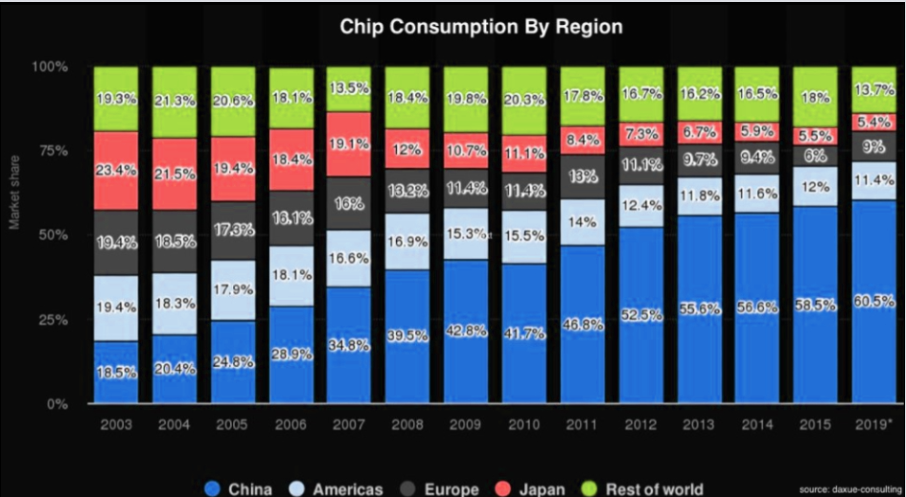
But this table shows something:  China is really the new world. Do you see that 60.5% for China and every other person to share the balance? Good luck isolating what seems like the future.
Trump Signs Huawei’s Biggest Challenge

Tekedia Mini-MBA – “One of the most innovative, interactive, and entrepreneurial programs”

0

We have produced a product which messengers of techs and non-techs admire. Yes, when you read this type from Cellulant, a real amazing company out of Africa, you would be encouraged. Good People, at Tekedia Institute, we co-learn for the future, and we have an expanding classroom. Experience Tekedia Mini-MBA and share your testimonial like Norris Nyugab. Register for the next edition of Tekedia Mini-MBA.

“This program to be honest is one of the most innovative, interactive, and entrepreneurial Programs I have come across.” [Source].


Innoson Motors’ Ride-Hailing Business Requires Drivers With Min of OND

1

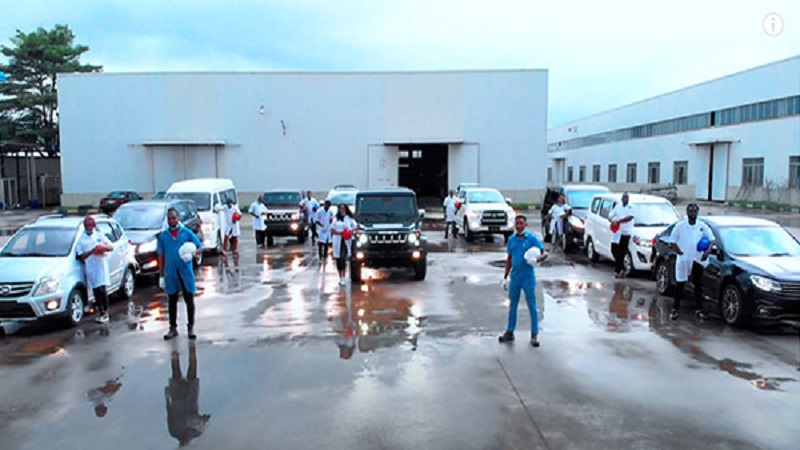
Innoson Motors requires a minimum of OND for any person to join its ride-hailing business as a driver. And the person must be tech-savvy with a good operational usage of smartphones. Essentially, they do not see the IVM Cruise as just moving people from one location to another; they seem to consider these drivers as representing the Innoson brands.

If not, if the government has given a secondary school graduate a driving license, that should expectedly do. But here, Innoson wants that extra level of development of at least an OND to connect future buyers to its brand, via a more professional engagement which possibly someone with OND is expected to offer, over someone whose highest education is secondary school certificate.

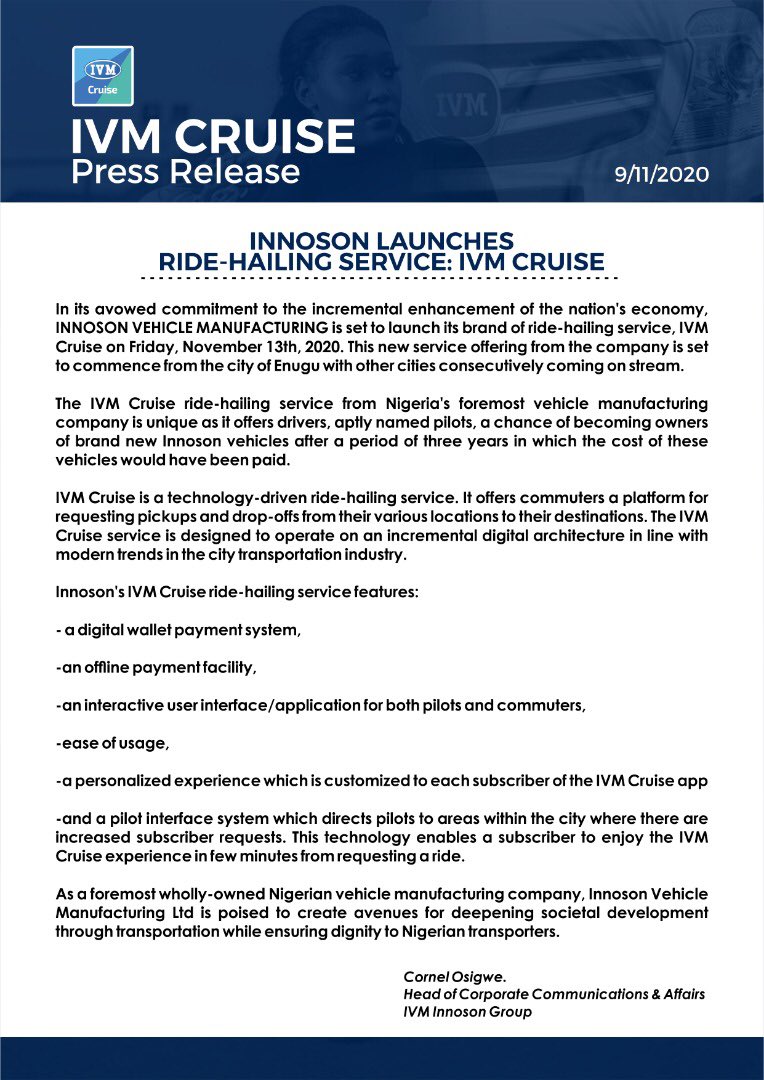
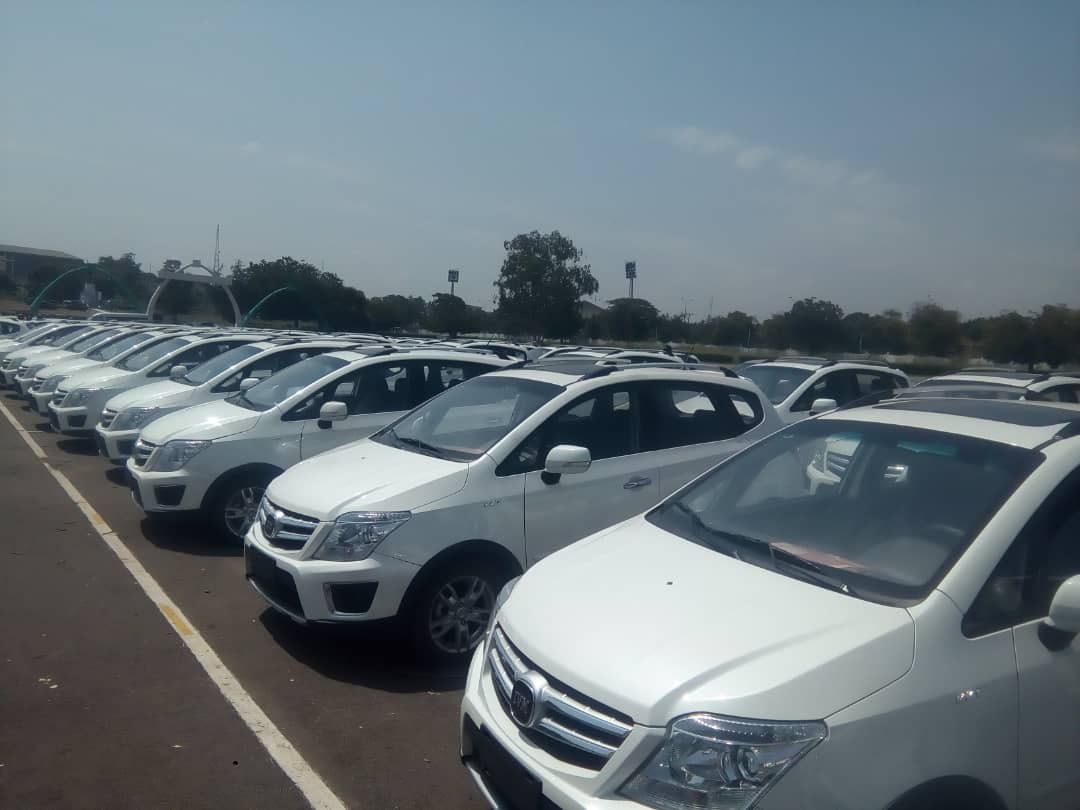
Innoson Vehicle Motors launches its brand of ride-hailing service, IVM Cruise, today. It begins at Enugu with other cities coming. The IVM Cruise ride-hailing service from Nigeria’s foremost vehicle manufacturing company is unique as it offers drivers, aptly named pilots, a chance of becoming owners of brand new Innoson vehicles after a period of three years in which the cost of these vehicles would have been paid.

As I have noted, this is a double play strategy to get more people to choose Innoson as they shop for vehicles. The IVM Cruise project has a good chance of driving the penetration of the brand.

Innoson Motors Launches A Ride-hailing Service, IVM Cruise

“Fintech firms must behave like banks, China regulator says”

1

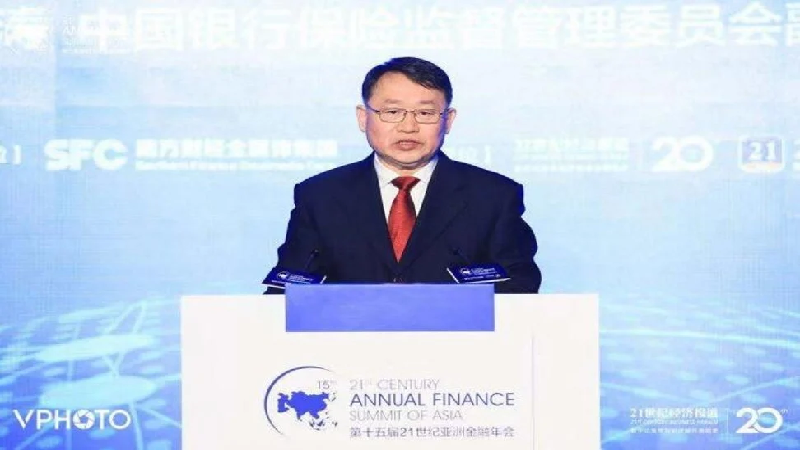
A China’s popular website, SCMP, has summarized a speech by Liang Tao, vice-chairman of the China Banking and Insurance Regulatory Commission (CBIRC), during a financial forum in the Chinese capital, thus: “Fintech firms must behave like banks, China regulator says as it ring-fences runaway industry to rein in potential risks”. This has triggered a new avalanche in the Chinese fintech community.

Indeed, over the last few days since Ant Group’s history-making IPO was aborted, Chinese leading tech companies like Alibaba and Tencent have seen their values affected as looming regulatory high voltage searchlights seem possible. This speech by Liang takes everything to another level. WSJ had reported that Chinese regulators released a new draft bill going after platform companies: “China’s State Administration for Market Regulation said Tuesday it would seek feedback on rules covering a host of potential anti-monopolistic practices on the country’s digital platforms, including offering different prices to different consumers for the same product.”

Fintech companies, which use technology to enhance financial services, should be regulated like banks and must observe the same risk and compliance requirement as financial institutions on main street, said Liang Tao, vice-chairman of the China Banking and Insurance Regulatory Commission (CBIRC), during a financial forum in the Chinese capital.

“Fintech has improved the efficiency of financial services, but it has not fundamentally changed the core nature of finance,” said Liang, adding “[we have to] include financial activities under the same comprehensive regulatory [ambit].”

Of course, so far, nothing has happened in the real business of the Chinese big techs. Tencent reported huge numbers this week but next quarter may not be as rosy if the government goes ahead with its plans to rein on these monstrous behemoths of digital empires.

From the Q3 earnings report (YOY)

  • Total revenues +29%
  • Operating profit +34%
  • Mobile games revenue +61%
  • Online advertising revenue +16%
  • FinTech revenue +24%

Tekedia CaseWorks – Transsion Holdings (Tecno, Infinix and itel)

0

Our business case study on Transsion Holdings is ready. We have looked at how a foreign mobile phone brand came into Africa and found a massive opportunity. Transsion which controls Tecno, Infinix and itel brands is the dominant smartphone company in Africa. It overtook Samsung, after crushing Nokia. This company has demonstrated the power of going beyond customer needs to their expectations and perceptions. 

Yes, most people in Nigeria and Africa carry two phones because network services are sub-optimal, varying across locations. Transsion saw an opportunity and made it possible for phones to have double sim cards. That solved a huge problem: if you are in big cities where most networks work well, no issues. But if you are traveling out of cities, there is that chance only one network will serve you in that location. Magically, the option of a double sim gives you an edge to buy that network sim card and continue with your business.

Tekedia CaseWorks is exclusive for our Tekedia Mini-MBA program. Registration for a new edition has started.