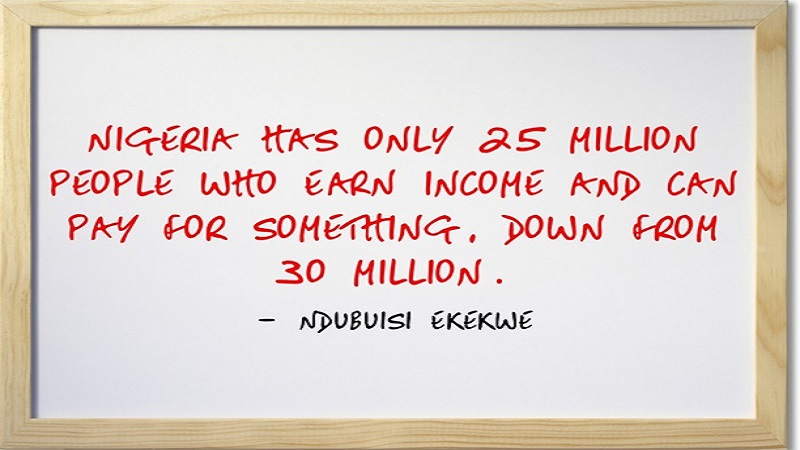
Today, I updated our consumer facing startups that Nigeria now has 25 million people who EARN income and can pay for something. My old model was 30 million. But with Covid-19 and the current paralysis, 5 million have gone from the informal sector and some sectors in corporate Nigeria. Jobs lost in hospitality, private education, etc are huge.
These 25 million people would have to support the 175 million others. Our model does show that indeed, Nigeria has a population in excess of 200 million people. We used INEC data, etc to build our model, using historical election participation rate, to indeed model that Nigeria is above 200 million in population. The INEC register is valid because local politicians who could have challenged it, if it were fraudulent, trust it, and that means at the national level, it is a reliable document. That does not mean the votes count, using it, are reliable. But the register itself is a valid document.
So, as we see the exodus and death of companies, I remind everyone that Nigeria has about 30 million people who earn income and can pay for anything. Any model built outside that 30 million will disappoint. I have explained how I arrived at this 30 million number here. With the pandemic affecting that 30 million number, which carries the other 170 million citizens, you will then understand the challenge we have in the near future.
We are rounding up an edition of Tekedia Institute Mini-MBA. I will be making videos under our Call to Execution closure series, challenging our members to go out, compete and WIN. I want to share one of the videos. My voice is low because the market is not well in our home country. Of course, if we answer the CALL, Nigeria and Africa will become well!
For Edition 2 members, your Tekedia Mini-MBA certificates would be ready after the Tekedia Live grand finale session on Thursday (7-8.30pm WAT). The Zoom link would be posted in the Board. Send Admin your official name as they batch the process. Check Board for the Call to Execution video.
From all of us at the Institute, we want to thank all of our members for this knowledge excursion. From our data, 58 of our members received promotions (as they updated us) during the edition. Many also got new jobs. Some started companies. And others raised money. Our Week 1-3 assignment remains special for our members. It introduced many to “think business management” on their missions.
MTN Group has announced the appointment of Karl Toriola as the CEO of MTN Nigeria, effective from 1 March 2021. Toriola, current vice president for MTN Group’s West and Central Africa (WECA) region, will take over as MTN Nigeria CEO from Ferdi Moolman, who has served in this role for the past five years. Moolman will return to South Africa, where he will assume the new role of group chief risk officer.
Toriola has a BSc Hons in Electronic and Electrical Engineering and a MSc in Communication Systems. In his five years as VP of MTN’s WECA region, Toriola has overseen the steady progress of the operating companies in the region, notably the turnaround of MTN Ivory Coast and MTN Cameroon over the past two years, the operator said.
Since joining the group in 2006, Toriola has also held a number of senior operational roles at MTN, including chief technical officer of MTN Nigeria and CEO of MTN Cameroon.
MTN Group owns 78.8% of MTN Nigeria. We wish him a good tenure.
The usual statement is that media are the fourth after judiciary in a society. As the fourth estate of the realm, media establishments through their employees such as reporters, editors among others are expected to set agendas for the public and the leaders. They are also expected to frame and prime issues for the public towards inclusive sustainable decision making.
In spite of the goodness expected from the media organisations and their employees, across the world, countries are bleeding due to misinformation, disinformation and propaganda from the fourth estate of the realm. On several occasions, scholars and public affairs analysts have argued that the media through fake information are contributing to socioeconomic and political tensions. This has led to lack of trust in the media contents in the last few years.
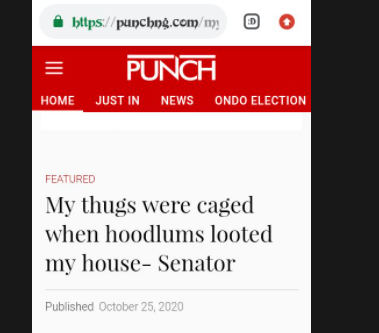
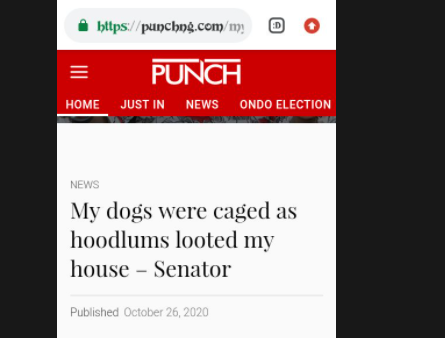
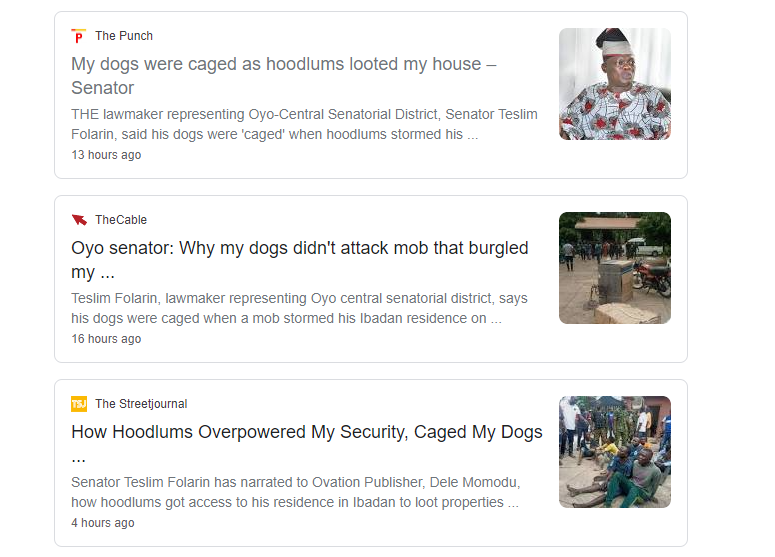
As people and government at state and federal levels continue counting losses of the post-Lekki tollgate shooting, The Punch newspaper through its two conflicting reports about the invasion of Senator Teslim Folarin’s home by the hoodlums and looters in Ibadan has made public to realise once again that not every news should be considered as true. Framing of the same event with different headline [inclusion of thugs and dogs] resonates with the recent thesis advanced by Paul H. Weaver, a former political scientist (at Harvard University), journalist (at Fortune magazine), and corporate communications executive (at Ford Motor Company), in his provocative analysis entitled News and the Culture of Lying: How Journalism Really Works.
As captured by the Harvard Business Review, “Journalists need crises to dramatize news, and government officials need to appear to be responding to crises. Too often, the crises are not really crises, but joint fabrications. The two institutions have become so ensnared in a symbiotic web of lies that the news media are unable to tell the public what is true and the government is unable to govern effectively.”
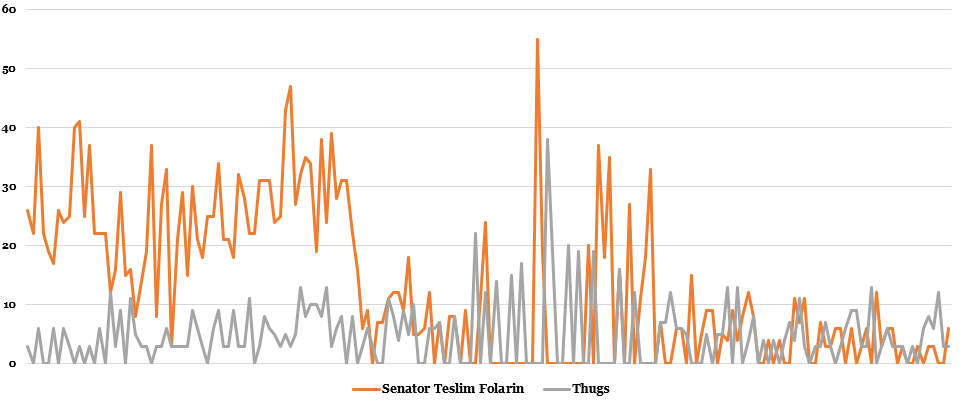
Exhibit 2: Public Interest in Folarin versus Thuggery Frame
Source: Google Trends, 2020
The action of The Punch newspaper is not only a weak journalism practice that increases tension during crises. It is also capable of creating crisis among readers. For instance, it took me minutes to convince my neighbour that I had earlier read a version of the event from The Punch newspapers with ‘thugs’ as part of the headline.
Though, there is a strong difference between the use of thugs in the headline and public interest in Senator Teslim Folarin (from 25 and 26, October, 2020), analysis indicates The Punch succeeded in increasing public interest in dogs and thugs than him. Despite this, the first headline with ‘thugs’ is dangerous for the peaceful coexistence in Ibadan and Nigeria in general considering the current tension in the country.
The countdown to the United States’ Department of Justice’s decision to file a lawsuit against Google, over anti-competition practices was followed by a series of antitrust investigations involving US big tech companies.
Google, Facebook, Apple, Microsoft and Amazon are all in the list. As the investigations uncover evidence of antitrust and anti-competition practices, the US regulatory agencies wield a sledgehammer toward the bottom-line of the inquiries – a possible breakup of the big techs.
While there seems to have been a break from the hook for others now, Google finds itself at the grip of the US government’s determination to make a statement.
Early last week, the Justice Department announced it has filed a civil antitrust lawsuit in the US District of Columbia to stop Google from unlawfully maintaining monopolies through anticompetitive harms.
“Today, millions of Americans rely on the Internet and online platforms for their daily lives. Competition in this industry is vitally important, which is why today’s challenge against Google – the gatekeeper of the Internet – for violating antitrust laws is a monumental case both for the Department of Justice and for the American people,” Attorney General William Bar said in a statement after DOJ filed the suit against Google.
In the so many fronts where the Silicon tech giant was found wanting for monopolistic practices, the DOJ pointed out Google’s move to muzzle competitors by entering into a series of exclusionary agreements that collectively lock up the primary avenues which users access search engines.
The US is after Google also
Google entered into long-term agreements with Apple to be the default – and de facto exclusive – general search engine on Apple’s popular Safari browser and other Apple’s search tools. It was a deal that started between the two companies as far back as 2005, and has over the years defied the companies’ differences to grow bigger into a multibillion dollar deal.
Google became the default search engine in virtually all Apple devices that Google’s former chief executive, Eric Schmidt joked that the two companies could be merged and called “AppleGoo”.
However, the Apple-Google relationship went sour when Google quietly started developing the Android operating system for non-Apple devices, a rivalry that Apple didn’t see coming. It irked Steve Job so much that he vowed to destroy Android. “I’m going to destroy Android. I will spend my last dying breath if I need to,” he was said to have told his biographer Walter Isaacson.
But then the partnership between the companies on iphones remained intact and untouched by the outburst. It was such a lucrative deal for the Silicon giants to blow up. Though there were some changes, Apple introduced Siri a year later and used Microsoft’s Bing to underpin the virtual assistant instead of Google, it didn’t hurt their relationship. In 2017, Apple announced that Google is helping Siri to answer questions.
Today, the deal puts estimated $8 billion to $12 billion to Apple’s coffers yearly, accounting for 14 to 21 percent of the company’s annual profit. And it is probably the biggest single payment that Google makes to anyone. But on the other hand, it gives the search giant 92 percent dominance over web searches and places the highest sum of ad revenue into its hand.
So it is a marriage the tech giants don’t want to end, even though it is flourishing at the expense of competitors like DuckDuckGo and Bing, who are left reeling on leftovers of the Google and Apple partnership.
The Justice Department said nearly half of Google’s search traffic comes from Apple devices, and by restricting competition in search, Google’s conduct has harmed consumers by reducing the quality of search, lessening choice in search, and impeding innovation.
These firms on the radar
“By suppressing competition in advertising, Google has the power to charge advertisers more than it could in a competitive market and to reduce the quality of the services it provides them,” the DOJ said in a statement.
Google has argued that the Justice Department is painting an incomplete picture; that its partnership with Apple is more like Coca-Cola paying a supermarket for prominent shelf space. The company said it dominates web search because consumers prefer it, not because it is buying it from Apple.
The anti-competition suit, although considered long overdue, sends a warning message to the other companies that have been under the radar. Facebook may likely be the next on line as the social media company has been recently engulfed in allegations of monopolistic engagements, including buying up potential competitors, cloning and copying innovations to stifle smaller companies.
After the July’s antitrust hearing that saw the CEOs from Amazon, Apple, Microsoft and Facebook testified alongside Google’s CEO Sundar Pichai, the companies have upped their lobbying game. They have spent a combined total of $14.7 million lobbying, with each of them, apart from Microsoft, increasing his spending power.
The subcommittee found that they each hold monopoly power and made recommendations to reform antitrust laws, and did not rule out the idea of breaking them up.
It is not clear what the consequence will be for Google if it loses, what is clear is that a lot will change for the internet search giant.