DD
MM
YYYY

PAGES

DD
MM
YYYY

spot_img

PAGES

Home Blog Page 6392

Tekedia Mini-MBA Early Registration Extended to June 2. Register & Get free 2 Books and Facyber Course

2

As a result of Covid-19 pandemic, ordinances in market systems have been redesigned. In the State of the Tech Nation, I noted four things that would change the post-Covid-19 world: digitization, semi-automation, hybridization of supply chain (local and global with flexibility and adaptation) and remote everything were noted. Our team put all efforts to bring industry leaders in this space to teach us in the Tekedia Mini-MBA. From MIT to AIICO, Infoprive to Schlumberger, Queen’s University to Flutterwave, Microsoft to Deloitte, TrustBanc to Afrinvest, etc, we have business leaders that would prepare, and get you ready for the future.

We have extended early bird registration to June 2. If you beat the deadline, you will get my books – “Africa’s Sankofa Innovation” (immediately) and “The Dangote System: Techniques for Building Conglomerates”’ (due June 22) – and a free cybersecurity course on Facyber.com.

Join us on this online, four-month management training excursion – $140 or N50k per participant. Installment payment available.

How To Register: 

  1. PayPal: follow this link and pay $140 US dollars. It supports most global currencies.
  2. Bank transfer (Nigerian naira): Pay N50,000 into any of GTBank 0114016493, UBA 1019195493. Account owner: First Atlantic Semiconductors & Microelectronics.
  3. Flutterwave: follow this link (naira) or this one (USD) to use your Verve, Visa, Mastercard, Amex, etc cards across Africa and beyond.
  4. Automatic Access: Pay via this Tekedia link for self-automatic enrollment with username.

After payment, email tekedia@fasmicro.com with participant’s name and email to complete the registration.

Add extra (optional) $30 or N10,000 if you want us to review and provide feedback on your labs.

[Register] Facyber Cybersecurity Training (Policy, Management, Tech, Forensics)

4
Free Facyber certificate course at facyber.com

Our team has updated the contents and added recent cases. We welcome you to begin a journey with First Atlantic Cybersecurity Institute (Facyber). When you complete any of our Certificate and Diploma programs, Infoprive, West Africa’s leading cybersecurity firm, which secures many companies like Air Arabia, Flutterwave, telcos, banks and other firms will welcome you to Infoprive Academy in Lagos. If you make the cut, our extremely selective Academy will train you, prepare you, and help with international jobs in one of the hottest career fields today. Infoprive Academy is your Andela for cybersecurity! 

Facyber training offers the following programs as contained in this brochure:

Certificate Programs

Each module takes 12 weeks and is self-paced. The course syllabus and Table of Contents are provided in Facyber.com. Each costs $90 (N33,000 naira) before discount.

  • Certificate in Cybersecurity Policy (CCYP)
  • Certificate in Cybersecurity Technology (CCYT)
  • Certificate in Cybersecurity Management (CCYM)
  • Certificate in Cybersecurity Intelligence & Digital Forensics (CCDF

Diploma Programs

Have a corresponding Certificate program as a prerequisite, takes 12 weeks. It requires a project or capstone where the participant will take up a project and complete. Each costs $100 (N36,000 naira) before discount. (Certificate + Diploma goes for $190 or N69,000 naira).

  • Diploma in Cybersecurity Policy (DCYP)
  • Diploma in Cybersecurity Technology (DCYT)
  • Diploma in Cybersecurity Management (DCYM)
  • Diploma in Cybersecurity Intelligence & Digital Forensics (DCDF)

To learn more about Facyber programs and enroll, click here – facyber.com. 

NB: If you have registered or plan to register for Tekedia Mini-MBA ,  our team will give you access to any Facyber Certificate program for free.

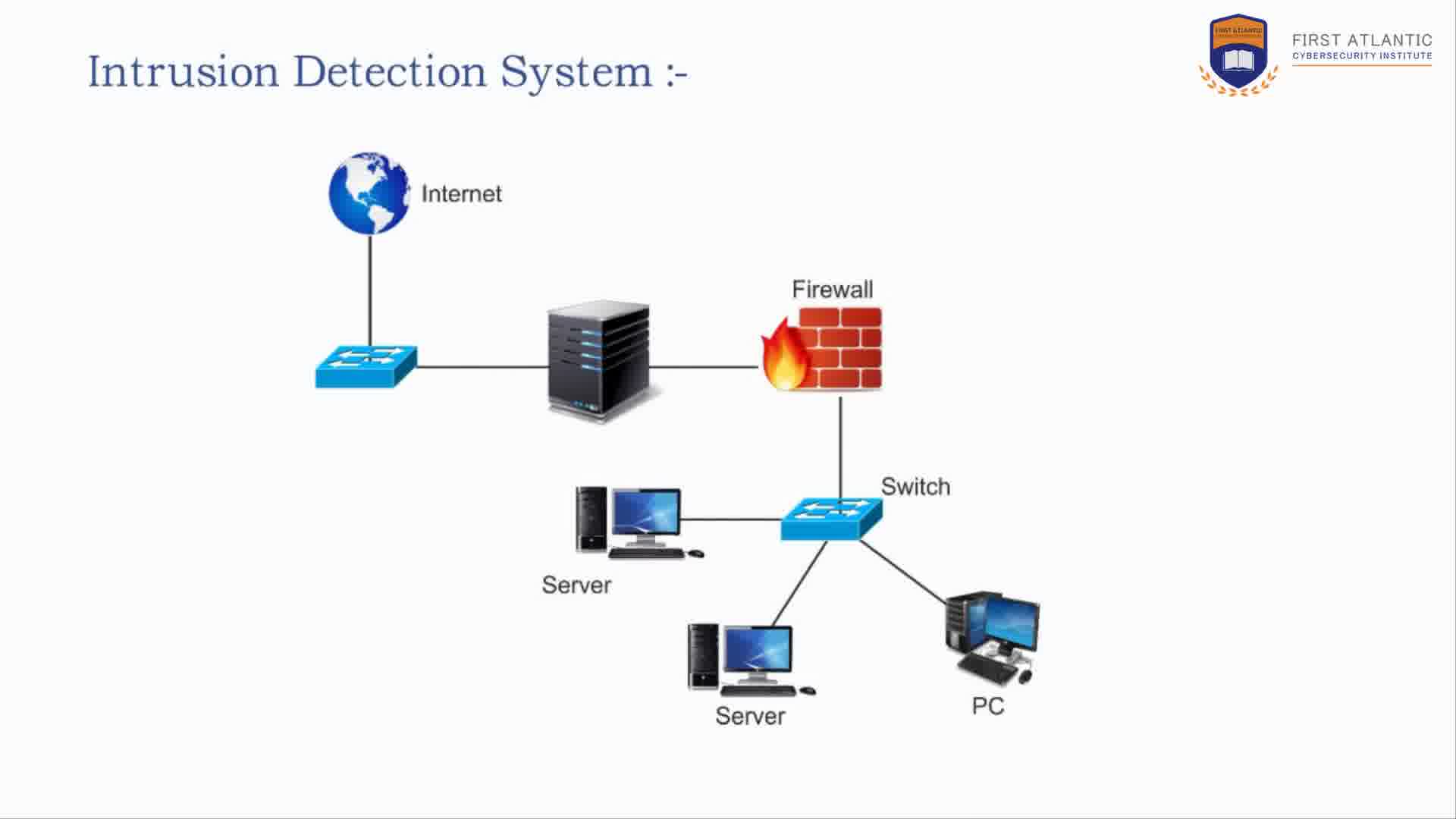
From lecture materials


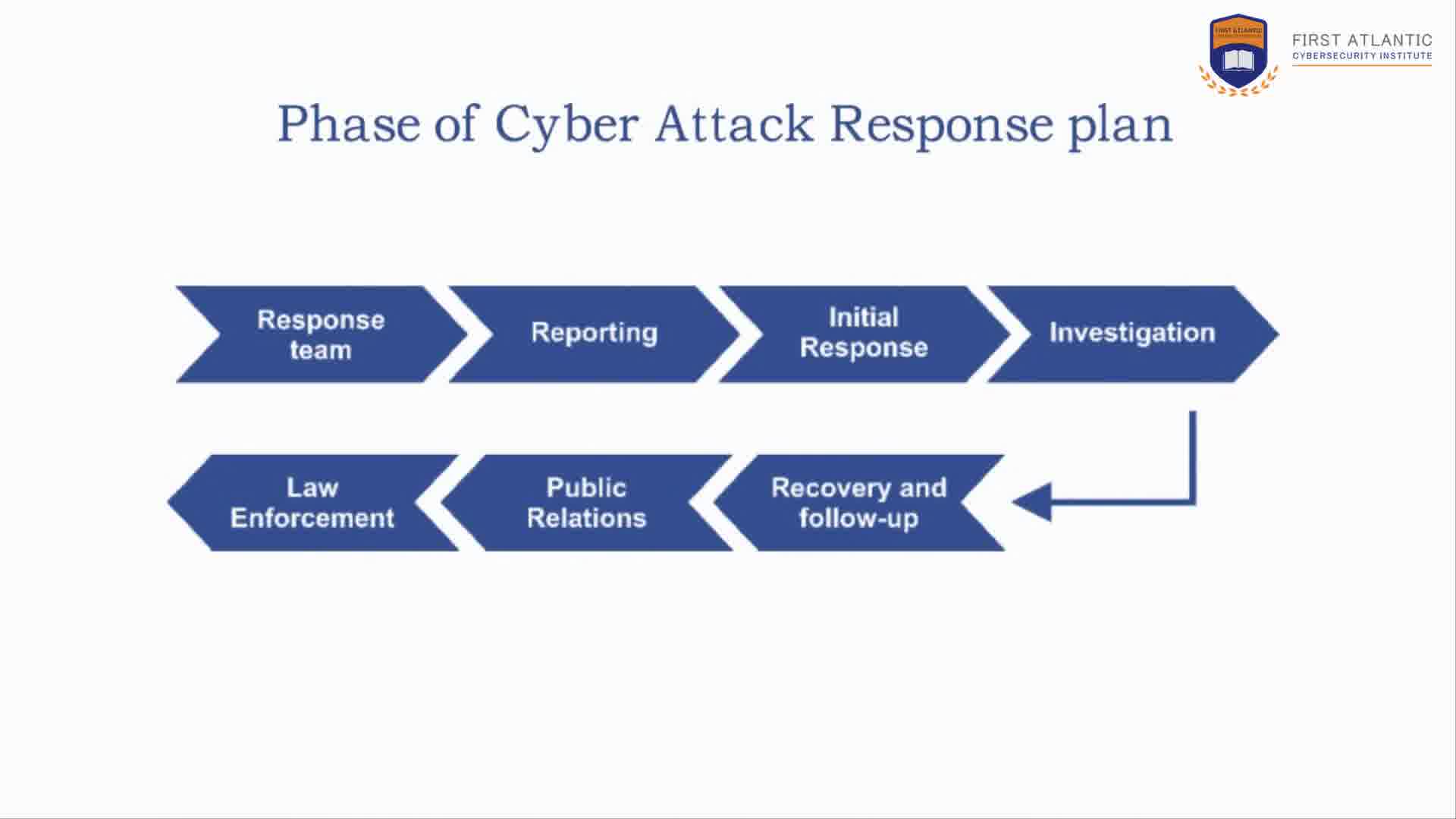
From lecture materials

Infoprive is a pre-eminent digital security company. I am a Board member in this company and we are a leader in the following areas:

  • User Identity Management : This system would facilitate the identification , authentication and authorization of users/ individual on the infrastructure / network . It would ensure the integrity of all users and actions by capturing who logged on to what system and filter who has access to what resource.
  • Endpoint Protection System : enables the detection and protection of end -user systems /workstations and servers from threats such as ransomware , malware in real-time.  As cyberthreats continue to increase , the user and endpoints have progressively been targeted .
  • Network security system : Ensures the protection of systems interacting within the network . This helps to limit the zone of coverage /accessibility within different segments of the network as well as provide visibility traffic patterns in order to decipher when there are anomalies .
  • Perimeter/ Gateway security system: Enables protection from the internet and other connected and “untrusted” third parties . Keeps out the malicious actors and content while also filtering what internal users are permitted to send out.
  • Database Protection system : Data is key to most business and the repository / database where such data is housed need adequately tracking of who has access to what data  and what actions are carried out on such data . This system provides all these functionality.
  • Web Application Protection: Provides real-time protection for web sites , internet portals against constant threats and attacks that are common place on the internet . Also provides analytics of where web services are accessed from and what kind services are accessed the most.
  • Security monitoring and response service : provides a situational awareness of what is happening on the IT infrastructure and the ability to respond effectively to any detected threats or attacks in real-time.

To reach Infoprive team, click here.

For Facyber, the email is facyber@fasmicro.com

Source: CV.

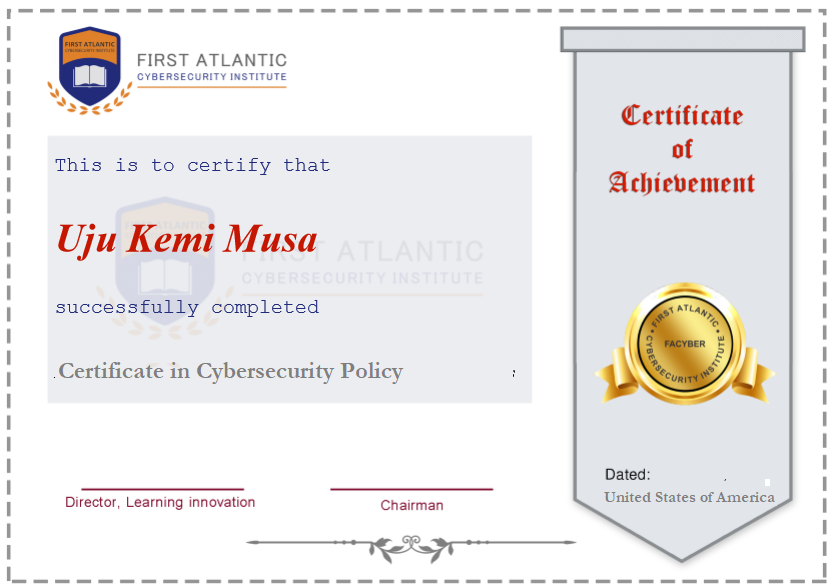
Sample certificate

How to Battle the Dilemma of Accepting or Rejecting Job Offers

1

Sometimes job seekers, especially the freelancers, are caught between deciding to accept a job and deciding to turn it down. They usually find themselves in this crossroad because they wonder if the offer dangling before them will prevent them from accepting better ones, if they come. This dilemma can happen to both professionals and rookies. In other words, being in a job for a long time does not guarantee that you will know how to handle this dilemma when it comes. However, there are certain factors that professionals consider that rookies are yet to learn.

When I was still in secondary school, my mom’s friend and colleague complained that she finds it difficult to pick a commercial motorcycle, aka okada, to her home. She said it was most difficult in the afternoon when she is going home from work because okada men at that period do not want to negotiate prices.

One day, I went to her house around 5pm for an errand. Honestly, it was difficult finding a bike that will take me to her compound at the amount I could afford. Somehow the commercial cyclists doubled or even tripled their fares. When I finally got one that “pitied me” and conveyed me to my mother’s friend’s house, I asked the man why okada riders prefer going empty to accepting the amount I offered.

The man replied, “At this time of the day, it is better to go empty with the hope of finding someone that will pay you higher, than accepting someone with lower pay and missing out the big offers.”

I think his answer explains it all.

Like mentioned earlier, freelancers are sometimes torn between accepting offers they saw and waiting for better ones they are not sure when it will come. They may pick up jobs only for better ones to show up immediately. This is most painful when they couldn’t do the two jobs simultaneously. But then, they may also decide to leave the offer they came only to end up without a job for a long time. This is truly a difficult situation if you ask me.

Some people may say someone’s luck will decide for him, while others may advise that the person takes whatever that comes his way first because that is the one destined for him. But if you ask me, I’ll say that knowing what to do in a situation like this requires that the person focuses on some simple but important factors.

Study How the System Works

Every system has a way it works. The okada rider already knows when there will be more passengers and when the rush will ease up. The thing here is that, if you study the system, you will be able to tell when you can get better offers if you reject the ones you don’t feel comfortable with. Not understanding the system can lead you to turn down the offer that may be the only one that will come your way in a long time.

Ease of Work

There are some jobs that are stress-laden. The thought of doing the job alone makes your heart skip and beat faster. Some people may decide to pick this type of job because it came with a good pay or because they want to gather experiences. That is ok but they should remember that freelancers are seen as experts and that making mistakes may cost them a lot. What I’m trying to state here is that sometimes it is good to accept jobs that you can do easily. For instance, if the job is not going to pay so well, but you won’t encounter difficulties doing it, you can pick it because if another one comes, you can also easily do the two jobs simultaneously.

Cost of Production

Some freelancers accept jobs that eat deep into the negotiated pay. Most of them that do this will tell you it’s better than nothing. But the truth is that the person worked for nothing and he did deny himself the opportunities to pick up another one. But it will make you fulfilled to pick up this kind of job, no problem.

Time Factor

Sometimes freelancers are tempted to accept good paying jobs that came at an unsuitable time. For instance, we have heard stories of men transacting businesses during their weddings. This may sound hilarious and fake but it happens because I know a man that transacted a business at his wife and children’s burial. He was seen by some relatives when he hid to receive calls and give directions on how the merchandise in his shop should be sold. That was an example of someone accepting job offers at an unsuitable time. Jobs like this can be rejected so that you can have peace of mind.

Have other Arrangements

It is necessary to have back-up plans when you freelance. For instance, the okada rider may have other things he’s doing that will sustain him if he doesn’t meet his daily target. This means that freelancers should have other things they’re into so that if one doesn’t pay, the other one does.

Being a freelancer is hard enough, there’s no need to be caught up in jobs that won’t pay you well and still steal away your resources. But all the same, as you contemplate accepting or rejecting that offer, consider the mentioned factors as well.

Bitcoin Surges, Giving Hope and Fears to Investors

0

On Thursday, Bitcoin price leaped 18.57% to stay at $9,388.30, signaling hope in the wake of COVID-19 pandemic that has plunged the gains of the cryptocurrency giant. The entire market capitalization rose to $35.3 billion in the last 24 hours, the highest since March 7.

Cryptocurrency has followed other markets to succumb to the oppression of the global health crisis, disappointing investors who counted on it to save them from the economic trouble.

In March, over $26 billion was wiped off the cryptocurrency market in 24 hours, and Bitcoin lost 10% at the same time following the 30% plunge of international oil benchmark Brent crude futures to $31.02 per barrel.

The crash in cryptocurrency prices in March dashed the hope of rebound that many investors had entertained. But market players believed that although the market indicators were pointing downwards, it offered the opportunity to purchase more coins.

Jehan Chu, co-founder of Kenetic Capital, an investor in blockchain startups told CNBC that the digital currency has become known for its volatility but it presents an opportunity to long term investors.

“For those who have long term investment horizons, bitcoin is absolutely a buy during these dips. We can expect more of this volatility sparked by macro health and financial shocks, but ultimately long term investments in the digital future and its key asset bitcoin will be a winning strategy,” he said.

Thursday’s price rise in the digital currency market sprang a surprise that has been attributed to central bank monetary policy and bitcoin halving. Almost every central bank in the world has introduced a stimulus package in an effort to boost economic stability against the shocks emanating from the outbreak of coronavirus.

There is also an intervention fund for businesses as countries push to avoid massive layoffs. These are believed to be the stimulation of the sudden turn around. Vijay Ayyar, head of business development at crypto exchange Luno said it’s as a result of the US central bank pledge to keep interest rate at zero until the economy bounces back.

“My sense is that overall markets are not reflecting reality on the ground though, but this is also the result of Fed in the U.S. being extremely clear that they will do anything to make sure there is economic stability. We could be seeing a lot of money flowing into equities and crypto as well, as a result of the new money printing,” he said.

On the other hand, bitcoin halving, where the rewards for bitcoin miners are cut in half has been instrumental to the Thursday growth according to experts. Currently, the reward of bitcoin miners stands at 12.5, but as a procedure, the rewards are halved every few years to help cut inflation and keep the market performance stable. The reward is expected to be halved once again to 6.25 by May, which will reduce the current inflation from 3.76% to 1.8%.

Mathew Dibb, cofounder of Stack, a bitcoin index fund provider said the upcoming halving event has contributed to the rebound of cryptocurrency.

“While part of this rebound may be explained by a renewed ‘risk-on’ attitude of global investors, it is also clear that bulls have been triggered by the upcoming halving event and the anticipated appreciation in value in the wake of it. For those buying into bitcoin now, many see this as an opportunity to buy BTC at bargain basement rates before a price pop post halving,” he said.

One clear message from the fluctuating performance of bitcoin is that digital currency is functioning dependently on the world basic economy, and cannot operate independently.

Crypto analyst Josh Rager warns that bitcoin is tightly correlated to the stock market and could retreat if equities suffer another pull back.

“Bitcoin will continue to follow along the stock market S&P 500 mini-futures. BTC will continue to go strong as long as stocks continue to push to 3,000 and above. The $8.600 level broke with ease but do want to see how the daily closes, if this area holds with $9,000 in sight,” he said.

The concern for investors who are throwing money into bitcoin is whether it is going to fall below the current price following the market trends. With many governments running out of bailout funds for businesses, and the oil market still on its knees as a result of closed businesses, if the COVID-19 pandemic is not contained soon, it will mean that businesses will have nothing to fall back on – and cryptocurrency will lose the gains it has made as a result of government intervention funds.

The Herbert Wigwe’s Video: Access Bank Breaks Hearts [Video]

3

It is a new redesign: coronavirus has enabled companies to pilot and test business models towards optimization of costs. The learning was live in all absolute forms during this pandemic, exposing inefficiencies, non-leverageable assets and redundant resources.  As offices begin to reopen, new playbooks are emerging.

Case in point: Access Bank Nigeria Plc is cutting a huge percentage of its workforce. That has been my fear since early March when I warmed our community to prepare because an experiment was going on in Nigeria,  and by the time the results are out, CEOs will adopt new models at scale. Why do you need a branch when Nigerians have demonstrated they can do banking without a physical location? Why do you need physical guards when the bulk of the money is electronic? Why do you need drivers when Zoom can take you anywhere? For the fact that people did not break without many departments, banks and companies have data points to redesign their businesses.

Access Bank Plc CEO, Herbert Wigwe, my Businessperson of the Year 2018, would now struggle to win a major election in Nigeria. Of course that may not be his priorities. He has fired at scale, drawing the first blood in a labour ring battle we expect to be brutal. By the time, the process is over, the Nigerian banking workforce will shrink by at least 40%. Access Bank is looking at cutting  WITHIN 75% of its workforce! Those remaining will see reduced salaries.(Update – the video does not mean all the noted 75% could be cut. Access could cut 1% or 74.99% but no one knows. So, I have updated that Access will cut within 75% of its workforce after watching the video again)

“We probably don’t need as many security men as usual, even as we are not going to have all our branches open between now and December. We certainly don’t need all the security men; we don’t need the tea girls; we don’t need all the cleaners; we don’t need all the tellers etc, etc.

“That number of staff which represents 75 per cent of our staff strength is the one we need to speak to their employers, to rationalize, to basically sustain a lean but actually customer-service oriented institution.”

Yet, nothing is new here if you have been following what has been happening in South Africa for quarters. In short, every quarter, there has been mass sacks in the banking sector as the industry automates and digitizes. Covid-19 simply accelerated what I have expected to take four years to happen in 6 months. As many have written, Nigeria must plan for the future of work because we can be in a nation of depression-level unemployment.


LinkedIn Comment on Feed

Question: Prof, thanks for sharing, indeed capitalism is about make or break. Some are made, others broken. But I have to then ask, if institutions like banks share Wigwe’s mindset ‘we need to protect our institution, even if people get hurt’ (paraphrasing), what about the other side of the coin? Should banks be shielded from technology themselves, even as they use tech to protect themselves and hurt others? What about unleashing the East African mobile money revolution in Nigeria? What about micro-insurance, micro-mortgages, which allow people that earn daily, to save daily and break free of unaffordable interest rates, set by the Central Bank?
Prof, is there no other side to the coin? What then is the hope of the ordinary Nigerian, in this winner takes all economy?
Will the Wigwe philosophy not lead to greater inequality, greater instability and ultimately, chaos?
Please, lend us your wisdom…

My Response: Today is Labour Day. The world does not have a Capital Day because everyday is a Capital Day. In 1979, GM employed close to one million to serve less than 500k customers. In 2020, Facebook uses about 50k to serve more than 2.5 billion customers. A big branch in Nigeria in 1990 might have required dozens of workers. Today, 7 staff can do with machines around. What is happening is not Wigwe’s fault – the problem is the leadership in Nigeria.

Starbucks could not find people to hire in U.S. because everyone had a job, it then offered free university scholarship to attract workers. No one noticed that American banks were closing or shrinking in workforce because other sectors were expanding as tech was opening new domains. If the Nigerian real estate, agriculture, transportation etc are growing, all the people in banking would not be enough for them.

Nigeria has 200 million for an economy of $500b; America has 320 million for one close to $20 trillion! Despite all, the bank CEO is a victim because Nigeria kills banks also! So, those men (usually) are aware of the strike rate.

Access Bank’s Herbert Wigwe, Chris Ngige and Nigerian Labour Congress