DD
MM
YYYY

PAGES

DD
MM
YYYY

spot_img

PAGES

Home Blog Page 6490

Instagram marketing strategies in 2020

1

Social media is an essential part of marketing any business in this digital age. But sometimes getting to grips with the correct strategies can be a little confusing at times. However, we have created this short guide with some great tips for getting the most out of Instagram when it comes to marketing your business.

Tips for marketing your business on Instagram in 2020

Employing as many of the following strategies as possible is guaranteed to have nothing but a positive effect on your business marketing through Instagram. Also consider ecosystems where you can acquire followers if that will help your growth; for example, look for the best site to buy Black Instagram followers, if that is your focused segment.

Account: First and foremost, you should upgrade your account (for free) to a business account. The reason for this is that you will unlock a bunch of marketing features that are not accessible in a standard account. You will get detailed analytics relating to your posts, giving you the knowledge to know what your clients will interact with as well as the knowledge to create more tailored content.

Profile: It’s paramount that you spend some time crafting the perfect profile for your business account. You want a profile that instantly grabs the attention of anyone viewing it. Consider using an Instagram font in your profile bio that matches your brand. Using a fancy font will make your bio unique and make you stand out from everyone else. Also, be sure to select a clear profile photo with your brands logo or something users can identify. The last thing you want is potential customers leaving your Instagram page because they don’t recognize anything.

Post frequency: When marketing your business, it is essential to make sure that your followers don’t forget about you. By scheduling posts to appear on your Instagram stories at regular intervals (we would suggest once or twice a day), you can be sure that potential customers are getting exposed to your business. Setting up a posting schedule will also free up time for you to do other tasks.

Comments: It’s a good idea to spend a set amount of time each day engaging with your following to keep them interested and to show that you care about them. Responding to comments is a great way to spur the conversation and get people talking. Users will be more likely to engage with you if they know they will get a response, and it’s a great way to get feedback about your products and services.

Hashtags: Using appropriate hashtags in your posts is an excellent way to spur new followers and engagement on Instagram. Hashtags are used as a means to attract users from your target audience, so choosing the right hashtags is paramount. You can use up to 30 hashtags per post; however, we recommended that you keep this number much lower between 3 and 5. Using too many hashtags will make you look unprofessional and may turn people away.

Contest: If you’re promoting your new line of fashionable headwear or some type of service, then trying to run a limited time Instagram contest might be a worthwhile venture. Make sure you clearly specify the contest rules and remember to make it fun. For instance, maybe you will get users to download your Instagram photos and repost them under a specific hashtag using a funny caption. Then you can randomly select one of the winners and award them a prize. Try selecting a user with a large following so your brand can benefit the most.

Let’s sum it up

By staying on top of your marketing strategy on Instagram, you will notice that your stats raise, your following grows, and your business becomes much more successful. Social media is a great way to market your business, and with these simple tips, you can be sure that you are making the most out of this fantastic tool.

Understand the moments that matter and win them

8

We all have moments of doubts – those are human and natural. They have asked you to lead a session in the company workshop, suddenly doubts set in. “I am not sure I am ready; maybe next year”. Unfortunately, no one was born a CEO, and every CEO or ED had a yesterday where he/she was none. 

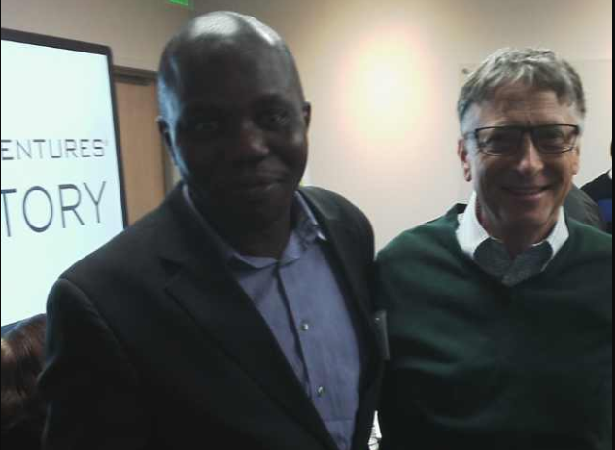
I give talks to bank CEOs, hedge funds, VCs, UN, etc. But I can never forget my first presentation before a legend. I had been flown to a really nice place in Washington state, United States. I was going to speak before the then richest man in the world, and a peerless philanthropist. Bill Gates is a legend.

To be asked to be in his presence was an honour. And to be asked to speak before some of the smartest human beings on earth was even amazing. But there was a burden: if a man makes an average of $1.5 million per hour, you cannot waste his time.

I developed a strategy; if they stop me before 5%, the Ovim Abia village boy has not grown. If before 25%, the Lagos guy needs help. But if I finish, it’s globally advancing.

I finished. Then, Bill came, “great presentation.” In days, his team followed – and I became convinced it was indeed “great”.

How do you prepare for big moments in your career? Do not waste precious opportunities where leaders can see you audition live. Understand the moments that matter and win them, in 2020.

Community Update On Account Setup for Tekedia Mini MBA

0

Good People,

Good morning. This is an update on our community service, Tekedia Mini-MBA. If you registered before 1 am Lagos time today, you must have received an email titled “Your Tekedia Mini-MBA Account Setup”. Please follow through and complete the setup. For new registrations, our team will batch account setup daily even though they will acknowledge payments immediately.

Meanwhile, we have community members who paid in the bank but are yet to send their emails. Your account setup cannot happen without an email.

Registration continues into Feb 10 when the program begins (click here to register). The digital board is already live. And if you have any questions, my team is always available to respond.

Regards,

Ndubuisi

https://www.tekedia.com/dboard/


Expert Weighs in as Nigerian Media Continue Portraying RCCG’s Prayer Walk Against Insecurity as Protest

0

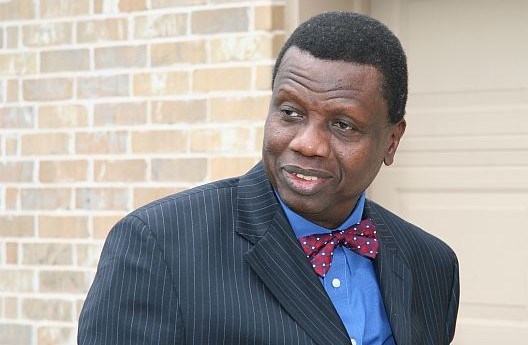
As the mixed reactions continue trailing the security challenges in the country and the recent prayer walk against the insecurity by the General Overseer of Redeemed Christian Church of God, Pastor Enoch Adejare Adeboye, our analysis has shown that Nigerian newspapers are portraying the walk as a protest.

On Sunday, Pastor Adeboye said “After the service, we are all going for a prayer walk. We will march according to our age. There are some who would march round the church because of their age and there are some who would march with me to Atan Cemetery and back.”

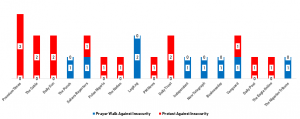
Exhibit 1: Nigerian Newspapers’ Framing of the Event

Nigerian Newspapers
Source: Nigerian Newspapers, 2020; Infoprations Analysis, 2020

With the use of “Protest” mostly by the journalists and editors in their reportage of the event, they have succeeded in increasing Nigerians’ interest about  protest than about prayer walk, the real phrase used by the prominent Pastor, between February 2 and February 3, 2020. Our analysis reveals that the newspapers have also intermittently used “prayer walk” and “Protest” to frame reactions that trailed the event from February 2 to February 3, 2020.

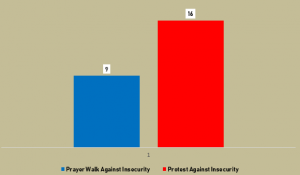
Out of 25 news stories we select and analysed, 16 reports established the event as a protest against the insecurity, while 9 reports wanted the public to see it as prayer walk against the challenge that has been ravaging the country since 2009, when the insurgency became part of the security problems facing the country.

Exhibit 2: Number of News Report by Framing Category

Prayer Walk
Source: Nigerian Newspapers, 2020; Infoprations Analysis, 2020

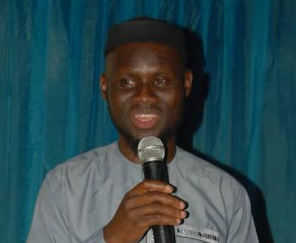
In our efforts of clarifying issues from experts’ views, we sought the view of  Kamorudeen Salaudeen, a lecturer and head of Mass Communication Department at the Fountain University Osogbo in Osun State. As a specialist in communication and media studies, he links the newspapers’ approach thus far to lack of professionalism and commercialisation of every news by the media entrepreneurs. Excerpts:

In the last few years, it has appeared that Nigeria is facing a lot of challenges in its political and economic life. One factor that has significantly contributed to the discourse on the challenges is information or misinformation. As an expert in communication and media studies, how would you describe this?

Let me start with a cliché but useful statement: information is the lifeblood of the society. To strengthen this further, communication is sociologically defined as the mechanism through which human relations exist. This lays credence to the significance of information and communication for human beings as gregarious creatures. Again, we take decisions based on the quality of information we have and the quality of our interpretation thereof. We can then imagine cases of misinformation, disinformation, information overload and information underload. Many of the times, politicians deliberately use information dishonesty to sway people or get their buy-in for election of policy agenda. Seating political powers also economise with the truth many a time for self-aggrandisement. This has seriously affected our national progress in the reverse order.

Kamorudeen Salaudeen

Journalists and media establishments have been found culpable in most cases for the misinformation, which has been linked to hate speech and fake news. What is stance on this?

Seriously, this is a global phenomenon resulting from deregulation, privatisation and commercialisation of media and news items. This also led to commoditisation of news, which is supposed to be neutral, balance and fair. The scramble for listenership, readership and viewership as the case may be among our media genres has caused unprofessional treatment of news items. Media outfits have been found compromising ethics and professionalism in the process of attracting advert driven traffics to their media. Besides, the rush to be the first to break the news necessarily precludes thorough jobs being done on a story before reeling it out. Social media and the internet, as free as it is has also encouraged the proliferation of quacks in this noble profession. With online media genres, everybody is now a journalist and sometimes the unsuspecting public may not unfortunately be able to distinguish truth from false. The media is an oracle. You remember the “War of the World” in the 1920s.

The widely open door into the industry facilitated by the www gives room for massive entry of quacks when haven’t learnt the ropes of the job in the industry. Many of them masquerade themselves behind the professional concept of citizen journalism or i-journalism. But the problem man ranges from poor use of language to unprofessional writing structures. For instance, when RCCG had a walk and a medium reported it as a protest. Journalism training, especially in schools where language is a component of the training will equip you with appropriate choice of diction. The same way a walk in not a protest, protest is also different from revolution. In actual sense, where you plan a protest but announce a revolution, you’ve presented yourself for the charge of serious treasonable felony offence. It’s our collective responsibility to ensure responsible journalism. Communication schools, practitioners, media houses and regulatory bodies, we all have roles to play.

Headline writing is the first signpost that attracts people to the stories. How would you describe the patterns and styles of writing it within the Nigerian social and political challenges?

Headline is a signal to the message of the story. Some scream while others blow horn. Many are just normal. The most important thing is the professional handling. Hence, headline crafting is a vocation of craft. It’s even a sort of “chieftaincy” role. That’s why the greenhorns aren’t give such a sensitive role even when they have the byline. Headline is very powerful; research has indicated that five times readers of a story must have read the headline. Essentially, majority will read a headline without reading the story. For instance, there is a difference between “WHO says Nigeria is 2019-nCov free” and “WHO says Nigeria is 2019-nCov free?” Headlines are that technically serious. They may inform as well as mislead or misinform.

What are the implications of being unprofessional in this regard on national unity?

Tellingly, the implication damaging and destructive. An unprofessional journalist is more dangerous than a quack surgeon. While a quack surgeon would only commit murder, the unprofessional journalist would have committed genocide. Engaging a quack journalist is like leaving a child with a life riffle of timed explosive within the homestead.

This is why many positive events in the country don’t get reported it at best get improperly reported while negative events take banner and screaming headlines in a prime page of the newspaper on a daily basis. So, we then report our affairs as if we are a bunch of satanic nation. The media is a double-edged sword. When media use divisive words, stereotypical and profiling slants and frames, our national unity is already compromised and being negotiated.

Digital Board for Tekedia Mini-MBA (Registered Members Area)

13

Dear Colleagues,

Greetings. On behalf of our faculty from around the world, I am honoured to welcome you to this page, for Tekedia Mini-MBA (next edition announced here), a community service all of us have created together. Beginning Feb 10, we will start a  journey to co-learn and co-share on the mechanics of markets, innovation, business operations, and growth. We will examine emerging business frameworks, models and technologies, across different domains and sectors, and how they are redesigning the ordinances of economic architectures, industrial systems and competitiveness. This knowledge excursion will last for four months. I expect it to deepen our capabilities and advance the companies we work for. Simply, we will innovate, not just invent, to fix market frictions in our sectors.

This table below will have active links, in successive weeks, for you to navigate to the specific contents. You will see weekly overview, written materials, flash cases, videos and challenge assignments. There is a section to ask questions and discuss the topics; you can always email. More so, on Saturdays, we will host webinars. 

Please note that March 23, May 4 and June 1 weeks are structured for you to apply acquired knowledge on specific activities in your company. 

Once again, welcome and thank you for joining us. If you have any questions, please email us at tekedia@fasmcro.com.

Prof. Ndubuisi Ekekwe

Tekedia Institute

NB: Anytime you are logged out, or told that you are not subscribed, and you are looking for where to login, go to this LOGIN PAGEhttps://www.tekedia.com/wp-login.php ; login, and then return back to this very page to access the weekly session.


Theme: Innovation, Growth & Digital Execution – Techniques for Building Category-King Companies
Week Focus/Faculty
Feb 10 Business Mission, Growth through Innovation – Ndubuisi Ekekwe
Feb 17 The Grand Playbook of Business – Ndubuisi Ekekwe
Feb 24 Evolving Business Models, Digital Frameworks & Strategies, Positioning Strategies – Ndubuisi Ekekwe 
Mar 2 New Technologies, Growth, Disruptive Innovation I

–          Blockchain (Uchi Uchibeke, Secure Key Canada)

–          AI (Toyin Arowolo, African Reinsurance Corp, Nigeria)

Mar 9 New Technologies, Growth, Disruptive Innovation II

–          Cloud (Gbolaro Oshun, Oracle Cloud Consultant)

–          Data Management, Big Data & Analytics, Data Systems (Adewole C Ogunyadeka, PhD, esure Group, UK)

Mar 16 Capital Markets, Investing & Fundraising

–          Azeez Lawal (TrustBanc Group, Nigeria)

Mar  23 The Coronavirus Pandemic Economy – Ndubuisi Ekekwe

– Pandemic business continuity policy (Lab)

Mar 30 Innovation, Entrepreneurship, Sustaining Competitive Advantage & Transformation

– Gloria Gowal, HEC Paris France

Apr  6 A Playbook for Founders and CEOs During Pandemic, Recession or Market Upheaval

–  Tekedia Institute

Apr 13 Process and Leadership in Business

–          Dr. Ayodeji Oyebola (Emmright Consulting, USA)

Apr 20 Innovation Lessons: 5in5 (5 Firms in 5 Sectors) – Africa, Global, The State of the Tech Nation, Emerging Opportunities (Africa, Global)

– Ndubuisi Ekekwe, Douglas O. Chukwuekwe (LargePlaceTech).


Apr 27 Market Synthesis, Digital Perception Marketing (stimulating new markets) – Ndubuisi Ekekwe
May 4 Winning in Business Special Series – Ndubuisi Ekekwe

•              Session 1 – Readiness for The Frictions of Nations

•              Session 2 – The Six to Unlock Values in Markets

•              Session 3 – The Two Critical Playbooks

•              Session 4 –  Mechanics of growth & Investment Options

•              Session 5 – Finding the Edges and Market Opportunities

•              Deep Conversations – Answers to Big Questions

May 11 Sales Management, Marketing and Growth

–          Moby Onuoha (Queen’s University, Canada)

May 18 Review of Previous Sessions (Feb 10 to May 17) – Ndubuisi Ekekwe
May 25  

Supply Chain Management, Global Partnership & Contracting – Adebayo Adeleke, ex-Chief of Contracting and Deputy Chief, Business Operations Division, US Army

Jun 1 Career and Jobs During Pandemic – Captain Ola Olubawale, CEO, Seamate Australia


Develop a Project Roadmap for company you work (Lab) – Tekedia Institute

Jun 8  

Driving Profitable Growth, Marginal Cost, Scaling – Ndubuisi Ekekwe


June 10 The Call to Execution (Summary) – Ndubuisi Ekekwe

Report , Closure – Ndubuisi Ekekwe

Career Week : Nov 2-7 2020. Connect via this link

Post-Program Update: we are using email newsletter to do that. It is more efficient doing that over posting things here.


*All Saturdays will host webinars 11am- 12noon Lagos time (link on weekly page)