Nigeria is a very fascinating country. We make rules that take us backwards in order to please our emotions that we are helping our people. But check deeper, those rules are meaningless. The latest is that Nigeria does not want exclusivity on new sports broadcast rights. Simply, if you have the rights to broadcast European football games, you are required by law to re-license to local TV companies.
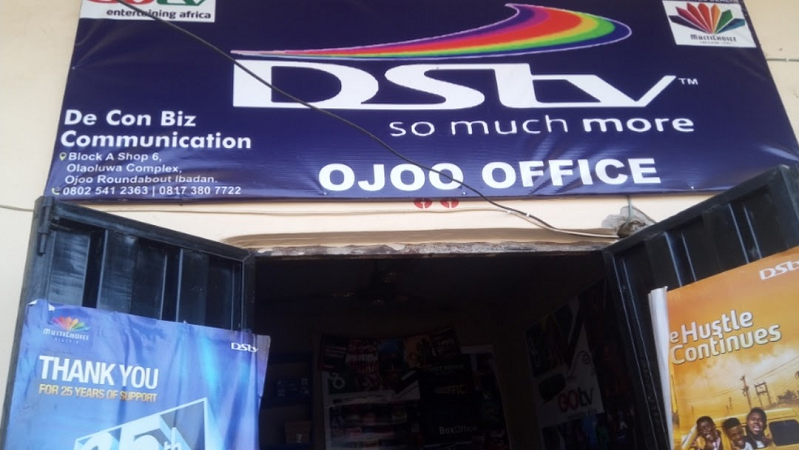
It makes perfect sense since everyone has been looking for how to deal with MultiChoice’s DStv with its “high fees”. Why not force the company to allow NTA (Nigerian Television Authority) to broadcast the games, on free airwaves, for largely nothing: “This regulation removes exclusivity and mandates the sharing of all content upon the payment of commercially viable fees.” The “viable fees” is laughable because the budget of NTA will not get closer to help DStv cover its fees to the European football leagues.
Here is the fact: for decades, Nigerians were not watching European games live. The reason was not that those games were not played. What happened was no one was ready to pay for the rights to broadcast them. Then, amalgam of firms emerged, and we began to watch the games. HiTv did well, but the European leagues jacked up the fees, and then it could not renew [as clarified below, it was the bidding process that inflated price, not necessarily EFL, English Premier League]. DStv stepped forward, with tons of money from its then alpha-parent company, Naspers – Africa’s largest on market cap – and paid the new amount. To compensate for the high fees, DStv raised fees on customers; a common sense business move.
Prof…a few points I would like to make. Firstly, the EPL never ‘jacked up the price of the right’ which forced HiTV to lose them. EPL rights are acquired through a bidding process and are sold to the highest bidder – there is no set asking fee. The fact is that it was HiTV themselves who ‘jacked up the price by making outrageous bids to prise the EPL rights away from SuperSport. It was a badly thought out strategy – overspending on rights before you’d built up a substantial paying customer base to support those costs. Before HiTV came along, SuperSport were paying just over $20 million a season for the EPL rights. HiTV won the rights with a bid of around $70 million. With the business already failing badly, HiTV tried to go for broke when the renewal of the rights came up 2 and half years later with an outrageous bid of $140 million!! Of course, they won again, but the whole thing collapsed a few days later when their funders declined to give them the bank guarantees required by the EPL to confirm the agreement. So the rights were then offered back to SuperSport.
Our government thinking is that DStv will pay the fees, and then re-license to local firms. That is possible provided the local firms can pay for it to cover its costs. I personally doubt that would happen. It is easier to cover the costs via subscribers than via local TV stations. To make that happen, exclusivity becomes critical. If NTA pays only 30% of DStv European costs, as re-licensing rights, and broadcasts all the games free, no one will sign up to DStv to help it cover the remaining 70%.
The Wrong Thinking
We keep thinking that DStv is the problem. Yes, partly, for its relative high margin, as reported in its financials. But the biggest challenge is that sports broadcast rights have been going up for years: “The cost of English Premier League broadcast rights has risen almost 8% to 9.2 billion pounds ($12 billion) for the next three seasons”. If you make it a direct correlation, it simply means that DStv should be increasing costs by 8% over the next few years. (That is not necessary since some of the rights are old).
The Main Issue
If MultiChoice does not increase rates, it has no business in Africa. It is irrelevant if the price in Nigeria is higher than what it prices in Ghana. It has made it clear that running a business in Nigeria is higher because it runs generators and hires private guards unlike in other economies where those are readily provided by governments.
The key reason why MultiChoice is increasing the price is thus: it is losing its best subscribers and to cover and service the loans it took to pay for the TV rights which have made it the best Pay-TV product in Africa, it needs to ask existing customers to pay more, and because TV rights are always going higher it has to budget more for the next cycle of licensing.
The statistic depicts the revenue from the Premier League television broadcasting rights from 1992 to 2019. From 2013 to 2016 the Premier League generated over 3 billion pounds in revenue from its marketing of TV broadcasting rights per year. (source: statista)
All Together
Largely, my point is that Nigeria is addressing a demand-supply relationship with rules that create distortions in the equilibrium point in ways that would destroy supply. As Samuel Nwite noted in this piece, there is a possibility that broadcasters would simply wait in Nigeria for the first company that would get the rights, and then ride on the rules to seek for re-license rights. Because no one would do that, the expectation is that Nigeria will return back to enjoying our local league games, with new kids growing to know players from Enyimba FC, Kano Pillars, etc. Provided Messi and Ronaldo would continue to be paid the annual budget of Abia state as salary, do not expect TV rights to go low. If that stays that way, never expect watching those games to be cheaper. Of course, if no one shows the games in Nigeria, the cost drops to zero for everyone!!
The Federal Ministry of Information & Culture has announced a new directive prohibiting exclusivity of sporting rights in Nigeria. The new directive mandates media houses, broadcasters and all those who have exclusive licenses to sports contents to share such rights with others.
The Ministry of Information said the decision is in order to boost reach and also maximize utilization by all broadcasters of premium content. The statement signed by the Hon. Minister of Information, Alhaji, Lai Mohammed, said the new rule will compel broadcasters to utilize the content and services of Nigerian independent producers.
Lai Mohammed said the new rule is in line with already existing regulatory requirement that is designed to accommodate 70% local content, but is being exploited due to the loopholes in the exclusive rights of broadcasters.
“This regulation removes exclusivity and mandates the sharing of all content upon the payment of commercially viable fees,” the Minister said.
As part of the new regulations, the Ministry also directed media houses to ensure that producers of contents are paid promptly for ads and sponsored contents placed on all TV, radio, and broadcast platforms. They are also mandated to use their capacity to ensure that contents being broadcasted are localized to meet the 70% requirement.
The regulation also prevents broadcasters from using musical contents illegally, or not paying the right dues to the owners as stipulated by music rights or applicable licenses. The Nigeria Broadcasting Corporation (NBC) has been directed to enforce the rules which are to come into effect in January 2020. The Information Ministry believes that the new rules will result in growth and deliver value in the broadcast industry, and most of all, protect the interest of players in the field.
While the other rules in this announcement have been praised by Nigerians, many find a fault with the one stipulating sharing of exclusive rights, and that’s because sports broadcasts thrive on the purchase of such licenses and exclusivity.
For instance, in 2007, High Television (HiTV) launched its satellite broadcast services in Nigeria, which was sports dominated. Its contents were served at the cost of N3,500 ($27.73) monthly. It was a made-in Nigeria and the first television platform in Africa to deploy Hypercable, a terrestrial pay-per view TV decoder system.
HiTV services was widely embraced as long as it was serving the English Premier League, its future was promising until 2011 when the issue of TV right purchase came in the way, and it succumbed to a competitor with more financial power – the DSTV.
In mid-2010, HiTV lost its bid to secure the highly contested $115 million English premiership broadcasting right to DSTV. The multi-channel TV had previously secured the premiership deal, but the review of the viewership right upped the continuity price to $115 million. The Nigerian indigenous TV provided $40 million but could not provide guarantee that the balance would be ready in due time due to banks’ lack of commitment in funding the deal. The result was that the DSTV saw an opportunity to get back to English Premiership broadcast in Nigeria, and has never let up since then: A year after, HiTV went out of business.
Sports business literally thrives on competition; in and out of the field of play, the price always goes to the highest bidder, and TV rights are not exempt.
The new rule introduced by the Ministry of Information means that whoever secures a broadcast license for a tournament, league or any other sports event should be willing to share such rights with others at his own loss. It will not matter how much effort and money went into it, other media houses will only have to wait on the top gun, (in this case DSTV) to acquire licenses, then feast on it by the power of the Federal Ministry of Information and Culture.
The resultant consequence of this rule maybe the DSTV leaving Nigeria out of its countries of sports broadcast. And at a time when there is no competitor, it will be a bad business to the broadcast industry as no broadcast station would want to share its rights with others based on government’s directive. And that would amount to a bad business in a football country.
A Twitter user, Festus Green said the rule will likely force foreign owned broadcast stations operating in Nigeria to leave.
He tweeted: “Finally there would be zero sporting contents; no serious firm would secure exclusive broadcasting rights only to be forced to do give away to NTA and others in Nigeria. Once their license expires, they’d simply run away and leave us with deadbeat NTA.”
Former Lagos State Governorship aspirant, Babatunde Gbadamosi, added his voice to matter saying: “This is a communist policy, designed to reward the lazy.”
One thing certain to be achieved by this new rule of the Federal Government is the elimination of competition in its quest to quell monopoly. And since many media houses operating in the country are not functioning on public funds, they will look for countries where market forces determine prices, and where there is less government interference.
Experts say the rule is anti-business, especially at a time when the government is inviting investors to the country. Because investors will not pitch their tent in a market where the fundamental rules of competitiveness are not respected. Many opined that the government, if it wants to promote broadcast stations of Nigerian origin should provide funding for them to secure exclusive rights of contents.
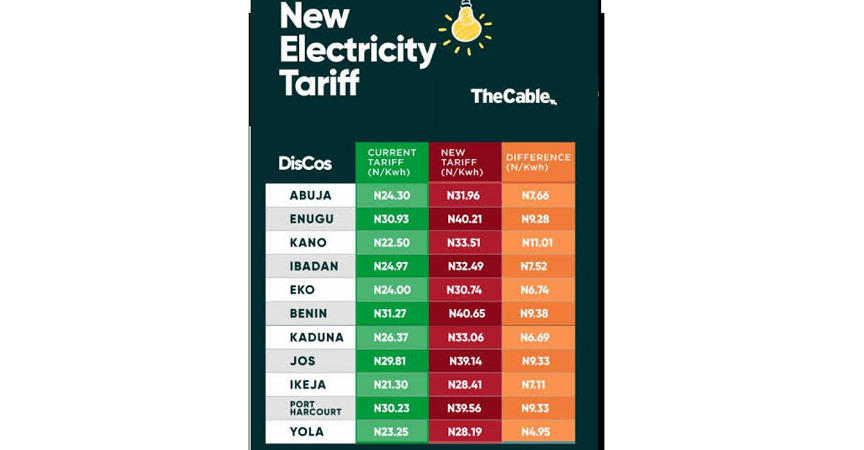
The news of the increase in electricity tariff approved by Nigerian Electricity Regulatory Commission (NERC) filtered in early this week. This news stated that from April 1, 2020, the 11 Electricity Distribution Companies (DisCos) in the country will review their electricity tariff upward.
According to NERC, this upward review, which was last done in 2015, was necessary as a result of four factors – inflation, exchange rate, US rate of inflation and gas prices. These were stated in the agency’s December 2019 Minor Review of Multi Year Tariff Order (“MYTO”) 2015 and Minimum Remittance Order for the Year 2020, which can be accessed from here.
This new increase shows that most tariff plans will increase by the addition of an extra N10 – N25 per unit, depending on the tariff plan and DisCo. However, going through the tables of new rates for different DisCos, I realised that electricity consumers under Enugu Electricity Distribution Company (EEDC) have been paying the new rate for some years now. It is obvious that what we are waiting for is the year 2021 tariff rates and not that of year 2020.
Anyway, the major reason for dropping this article is to lend a voice to many Nigerians, who have one or two things to say to NERC and the Nigerian DisCos.
It is pertinent to note that Nigerians don’t trust NERC and any of the DisCos to provide them with uninterrupted power supply. No Nigerian received the news of the tariff increase with relish. They all expressed their scepticism and suspicion towards the intention of the government agency. A lot of people pointed out the coincidence of the tariff increase and minimum wage implementation, wondering if the federal government is indirectly collecting its money back from the citizens. Then there are those that speculated that the government wants to overtax the citizens so that it will cover up its incompetency.
From the opinions and complaints of Nigerians towards the tariff increase, I noted that three distinct groups exist, all of which require the attention and consideration of NERC and Nigerian DisCos.
GROUP A
Those that belong to this group are the people that are willing to welcome the price hike so long as there is an improvement in power supply. Among these people are business owners that are tired of the high cost of running their businesses with generators. People in this group also complained of the noise and air pollution that comes from power generators. However, they are of the opinion that the only condition in which they will welcome the new electricity tariff is if they will enjoy 24-hour power supply. Failure of this means they will resort to generating their own power through solar, micro-hydro and wind power plants. In fact, a lot of people are considering these business options as I write now.
GROUP B
This group comprises of the people that insist that the tariff shouldn’t be increased for any reason. They hold that the current rate is even too high because a lot of people pay for what they didn’t get. Most of the people under this group are those that are still stuck with the Estimated Bill method and those who do not use electricity for any form of business. According to a person here, he’s billed #12,000 every month even though he couldn’t boast of 5 hours of power supply daily. He couldn’t then imagine what the new bill will cost if NERC is allowed to have its way.
There is something that NERC needs to note about this group. The members are bitter and they feel cheated. They believe that the DisCos in their areas are extorting them. A lot of them claimed to have applied for prepaid meter but have not gotten it because their DisCo benefits more from Estimated Bill method. To this group, increase in electricity tariff rate is a form of corruption.
GROUP C
I met this group in my village, Awkuzu, Oyi Local Government Area, Anambra State; and I believe they exist in every part of the country. When I told some people in my village that “NEPA” was about to increase their tariff rate, I got funny answers that ranged from, “For which light? The one we see or the one we don’t see?” to “They should carry their light; we are used to the darkness.”
This group no longer cares about power supply. They have settled to using generators in running their businesses and they know how to conserve fuel. When their phones’ batteries run down, they take them to business centres where they are fully charged at #50. At home, they use kerosene lamps and rechargeable torches to manage the darkness. Occasionally, when the need arises, they power up their generators do a little “oyinbo”. They heat up their food to keep it “fresh” and they keep their water in cool dark corners to keep it cool. In fact, these people have settled to a lifestyle that ensured that lack of electricity does not disrupt their activities. So when you tell them electricity tariff is about to be increased, they don’t care a bit.
If NERC has considered all factors and deem it fit for the tariff to be increased, no one can stop them. But there is a need to consider consumers’ satisfaction too. The first thing the agency should do is to compel all electricity distribution companies to issue out prepaid meters before April 1. That way, consumers can monitor and manage how they consume power. As for uninterrupted power supply, that is still something in our wish list; we will know when it is about to happen.
NERC and DisCos should also remember that Nigerians are considering alternative sources of power. If they fail to improve, one day they will wake up and find most of their customers are gone.
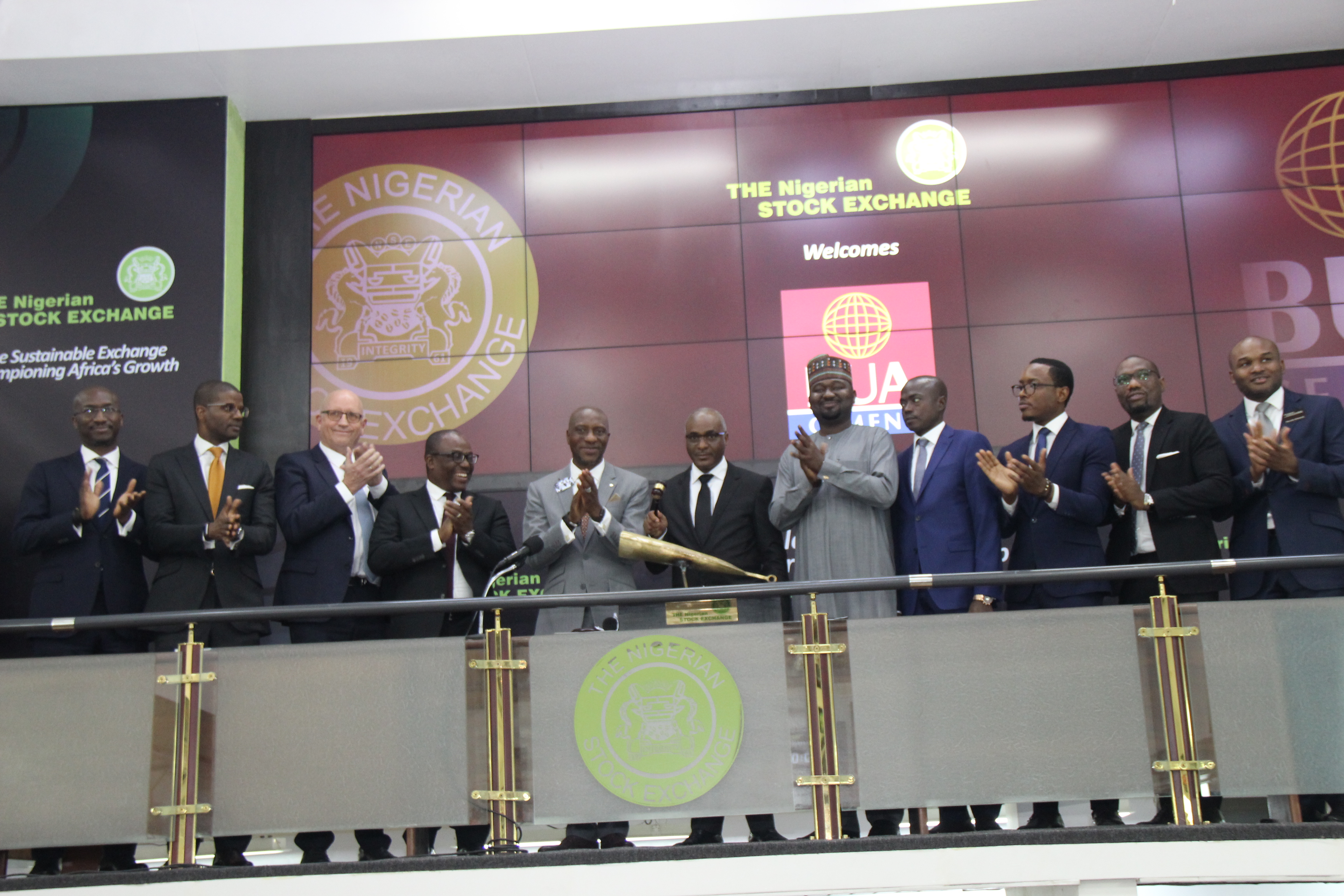
BUA Cement, on Thursday, listed on the Nigerian Stock Exchange (NSE) with a market capitalization of N1.2 trillion ($3.3 billion) as a result of the merger between BUA Cement, Cement Company of Northern Nigeria (CCNN) and Obu Cement company.
Engr. Yusuf Binji, the managing director of the merged companies, said the merger provided avenues for the companies to solidify their market presence and create a strong bond that will yield value and profit for shareholders. He added that it further strengthens their competitive position in the market and provides opportunity for them to plan and create advance strategies to enhance operations and administrative efficiencies that will spur further growth for the companies.
And the companies are poised to explore new ways to augment its value and market presence.
“BUA Cement is poised to add even more value to the Nigerian economy as a whole through this listing. Over the past few years, we have significantly ramped up capacity and currently boast of the most efficient and integrated operations in the Nigerian Cement Industry. This new publicly listed company will continue to deliver exceptional value to all stakeholders in the foreseeable future,” he said.
He added that the company will incorporate shares from the defunct CCNN and Obu Cement to solidify their market shares.
“We are bringing in about 13 billion shares from the defunct CCNN and 20 billion from Obu Cement and this gives us a total share capacity of about 33 billion shares with a total market capitalization of N1.8 trillion.
“We are coming into the market at the beginning of the year, and since trading has commenced, we expect to see a lot of value added for the shareholders during the course of the year,” he added.
Talking about the production capacity of the company, Mr. Banji said the total installed capacity is eight million metric tonnes per annum. And the companies’ decision to merge is to create a single entity that will leverage on the synergies to generate more profit for shareholders.
“The essence of the merger is to be able to tap into the potentials and unlock the opportunities that are within the two companies in terms of market size, dealership base, profitability and staff skills. There will be a lot of positives as we go along the way,” he said.
This listing has made BUA the third most capitalized stock on the Nigerian Stock Exchange, with 33.86 billion ordinary shares at N35 per share.
The News Agency of Nigeria (NAN) reported that BUA’s listing on Thursday added N1.18 trillion to the NSE market capitalization.
The CEO of NSE, Oscar Onyema, applauded the founder and Chairman of BUA, Abdul Samad Rabiu, for listing the company in the Nigerian Stock Exchange. He said the move demonstrates confidence in the value that NSE offers.
In June 2018, CCNN announced that it has approached the Nigerian Stock Exchange about its intention to merge with BUA. The company was the owner of Kalambaina Cement plant in Sokoto, producing 1.5 million tonnes of cement per annum. On the 6th of January, the company announced that it has received the approval for the merger from the Nigerian Securities and Exchange Commission, as well as the requisite sanction of the Federal High Court of Nigeria.
The deal made Mr. Rabiu $650 million richer and created the second largest cement company on the Nigerian bourse after Dangote Cement.
The process involved transferring all CCNN’s assets, liabilities and undertakings, which includes employees, real properties and intellectual property rights to Obu Cement. In turn, CCNN shareholders will receive shares in Obu Cement and the company will be dissolved without being wound up.
Mr. Rabiu said the merger will enable a wider geographical reach of BUA’s products and increase in production as a result.
“It is anticipated that in addition to meeting the demand of our customers in our core regions in the country, the enlarged company would be positioned to distribute its products in new geographical markets, creating the potential for additional shareholder value creation,” he said.