DD
MM
YYYY

PAGES

DD
MM
YYYY

spot_img

PAGES

Home Blog Page 6517

Why Most of Our Leaders Are Unqualified

0

You might have been wondering why African leaders are synonymous with critique and conundrum?

Well keep on reading to discover where the problem stems from

I feel the reason why our leaders always pose divisive figures is because most of them didn’t strive to get to wherever they are now. They got to top offices and positions by connection i.e because they know someone, who knows someone who will  assist them to attain that position and all that.

Ecclesiastes 10:15-16 KJV, says;

Woe to thee, O land, when thy king is a child, and thy princes eat in the morning!

And mind you, this scripture wasn’t talking about the leader being a child or youth in every sense of the word. Solomon was a young ruler and yet his kingdom was happy in him, rather it was referring to fickleness and weakness of the ruler.

Brian Tracy said; “Leaders are made, not born”. A lot of people occupying leadership positions in various countries were not properly prepared. They were not made.

They didn’t pass through the fire, so they could be molded into genuineness. Most of them had things handed to them in a platter of gold. They never faced difficult situations and conquered such situations by sheer will power and determination.

It is sad, seeing a lot of countries especially in Africa in this predicament. We are kind of find ourselves between a rock and a hard place, because it’s starting to be a cycle, a culture, incompetence being passed down from generation to generation with no sign of it stopping anytime soon.

My friends and fellow African citizens how do we defeat this Goliath?

And to my upcoming leaders, i urge you, show commitment, take responsibility for things around you, it will go a long way eventually when you get to the top, don’t chicken out of difficult situations, don’t buy your way out of challenges that are designed to develop and nurture your strengths.

We may not have solutions to the recklessness of our present leaders but we must do all we can to ensure that the sequence is broken.

Do We Really Need The Government To Thrive in Nigeria?

2

The Nigerian government has a huge role to play in the betterment of the lives of her citizens. Yes, that is absolutely correct, but come to think of it, does that mean if the government fails in her duty, then we have a justifiable excuse for being stagnant and not progress as individuals.

I believe that there are two types of systems; The Government system and The Personal system. Let me explain: in the Government system; individuals or citizens only prosper when the government is doing well, whereas, in the Personal system, the success of the citizens does not depend on the government. 

Nigeria’s are always complaining, we complain about a lot of things from lack of quality education to inadequate power supply (justifiably so) but are there not people, visionaries in this country that are achievers? People that legitimately made wealth in this country. We know of Tony Elumelu, Aliko Dangote, Mike Adenuga and lots more. Why don’t we focus our strength and energy in thinking and brainstorming of ideas that would lead to us amassing wealth?

Fellow Nigerian citizens, the day we stop complaining is the day, we will find vision.

Develop an entrepreneurship mindset, a business mindset, stop waiting for the government to “create jobs” for you, to build factories all over the country and open the gates for thousands of unemployed to flood in. You may ask; is it not their responsibility? YES! it is, but there’s a snowball’s chance in hell that that’s going to happen.

John. F. Kennedy said: “ask not what your country can do for you but what you can do for your country”. Some people may disagree and say that’s inappropriate but if we look at the statement closely and analyze it carefully, you will find out that we have nothing to lose everything to gain if we adopt that mentality.

John D. Rockefeller, the American Business Magnate, the first-ever billionaire in the United States of America didn’t require the U.S. government to achieve that feat. He and his friend went into the oil business with the money he borrowed from his father, by his 40’s, he was in control of 90% of oil in the country. His personal wealth constituted 1% of the national economy. Nigerians, we don’t like to utilize our brain. We like being spoon-fed.

Success is a personal decision, poverty or failure is a personal decision. No one owes you anything. There are a lot of Nigerians that even if they were to be given #5 million Naira, they will still remain poor, due to their bad habits and poor lifestyle choices. Have people not won lottery worth millions in the past? but presently, they are the ones leading the protests of ” Nigerians are poor”. You begin to ask yourself, where did all the lottery money go?

Important advice, stop waiting for office or white-collar jobs, start thinking about launching your own business. Let me let you in on a little secret, the billionaires in the world today, the majority were self-starters, they were businessmen.

You don’t need money again as a tool for breakthrough but a mind that works. Technology has made it easy so much that there is almost nothing between you and your success, not even government. We are living in a golden age, unlimited knowledge can be accessed, a lot of free resources everywhere, you have Google, YouTube, etc. Use these platforms within the confines of your room, learn money-making skills, sell your skills, create value, solve problems and money will come to you. 

Money is a reward for value created or problem solved.

There’s information everywhere, we just have to start implementing them. Implementation is what we lack.

“Your economic security does not lie in your job; it lies in your own power to produce—to think, to learn, to create, to adapt. That’s true financial independence. It’s not having wealth; it’s having the power to produce wealth.” –Stephen Covey

DON’T JUST PLAN. ACT!

I’ve come to discover that a lot of people have plans and good ones at that. But having a great plan is the easy part, actualizing that plan is where many find difficult.

I saw a movie about a young man who left his village to the city to find greener pastures, so he could take care of his poor mother and siblings back in the village. The boy ventured into all sorts of businesses from selling of electronics to hawking of sachet water, after four and the half years of hard work with measly earnings, he met a wealthy man who introduced him to his Korean and Japanese business partners. This was how the young man’s life turned around from grass to grace.

What am i trying to point out?

You don’t have to see the whole staircase before taking the first step. Start now! Start small.

Don’t worry about the lack of resources, people are watching. Benefactors only locate and support those who start, resources and capital will become available when you start.

Stop learning, planning and hoping. Start learning, planning and doing.

Proverbs 22:29  says; 

“Seest thou a man diligent in his business? he shall stand before kings; he shall not stand before mean men.”

Start that business no matter how small, implement that idea no matter how ordinary it seems, be diligent and you will entice success.

“An idea not coupled with action will never get any bigger that the brain cell it occupied” – Arnold Glasow

Google’s AI Makes Progress in Early Cancer Detection

0
AI Center

In a landmark breakthrough, Google has announced the development of artificial intelligence system that can be used to detect breast cancer more effectively than doctors would.

The system was developed through collaboration between Google and researchers, and has been proved successful according to Scientific Journal Nature where it was published on Wednesday.

Using the AI technology resulted in more accurate detection of cancer cells in the body, reducing cases of false results significantly. Health workers have had to deal with cases where test results say positive when it is negative or negative when it is positive. The program was trained to detect tens of thousands of mammograms from 25,856 women in the UK and 3,097 women in the US. The system was then used to identify the presence of breast cancer in mammograms of women who were known to have either biopsy-proven breast cancer or normal follow up imaging results at least 365 days later.

Early results show improvement in cancer detection compared to human experts. McKinney and colleagues, the authors of the programme report that the AI system outperformed both the historical decisions made by the radiologists who initially assessed mammograms, and the decisions of 6 expert radiologists who interpreted 500 randomly selected cases in a controlled study.

The program is part of series of studies investigating the use of artificial intelligence in a range of medical-imaging contexts.

The system was more accurate even though it has no patient’s previous health information to work with it. Compared to human experts, the program reduced false positives by 5.7% for US women and 12% for UK women. It reduced false negatives by 9.4% for US women and 2.7% for UK women.

Breast cancer screening programmes routinely measure their diagnostic performance – whether cancer is correctly detected (true positive) or missed (false positive). Some areas marked on mammograms might be identified as abnormal but turn out not to be cancerous (false Positive) upon further testing.

While the development beckons hope of future where AI would be relied on for early detection of cancer, there is a need to develop the system to accommodate medical diversity among other issues. The authors note that clinical trials will be needed to further assess the utility of this tool in medical practice. The research has been centered on a controlled environment which covers a little percent of varying world cancer cases.

For instance, the study did not include all the different mammography technologies currently in use, and most images were obtained using a mammography system from a single manufacturer. The study included examples of two types of mammogram: Tomosynthesis (3D mammography) and conventional digital (2D) mammography. There is a need to know how each of the systems performed individually for each technology.

Another reason not to celebrate yet is demographics. The demographics studied is only defined by age, and the performance of AI algorithms can be highly dependent on the population used in the training sets. So a representative sample of the general population is needed to be used in the development of the system to ensure that whatever results it yields will be widely applicable.

Another area of challenge comes from lessons learnt from Computer Aided Detection (CAD) of breast cancer. CAD is a computer system developed to interpret mammography in clinics. In the beginning of its experimental testing, it was promising but fell short in real-world settings. According to Nature, CAD marks mammograms to draw the interpreter’s attention to areas that might be abnormal. But analysis of a large sample of clinical mammography interpretations from the US Breast Cancer Surveillance Consortium registry showed that CAD lacks diagnostic accuracy. The study went further to reveal that the programme worsened (sensitivity), the ability of radiologists to determine if cancer is present. So CAD instead of improving cancer detection improved likelihood of false positive result.

So in large scale, CAD failed to deliver the same result it offered during the experimental tests.

But unlike CAD, AI has the ability to learn from the data it acquired in the course of testing, which heightens the hope that science is getting close to beating the hurdles in early cancer detection.

Professor Ara Darzi, one of the authors of the paper and the director of the Cancer Research UK Imperial Center, told CNN that the AI system has been unexpectedly impressive.

“This is one of those transformational discoveries you have in your hand, which could disrupt the way we deliver screening in terms of improving accuracy and productivity,” he said.

While the new AI study beams with hope, harmonized and anonymized data stand in the way of its success if it’s not incorporated into issues needed to be addressed. The Nature concluded the report this way:

“To achieve the promise of AI in health care that is implied by McKinney and colleagues’ study, anonymized data in health records might thus have to be treated as precious resources of potential benefit to human health, in much time the same way as public utilities such as drinking water are currently treated. Clearly, however, if such AI systems are to be developed and used widely, attention must be paid to patient privacy, and to how data are stored and used, by whom, and with what type of oversight.”

Iran vs U.S: Oil Prices Spike in Wait of Tehran’s Retaliation

0

The early hours of Friday came with the most interesting news of the year, the killing of the commander of Iran’s Revolutionary Guards Corps, Maj. Gen. Qassim Soleimani, on the orders of the U.S. President, Donald Trump.

Gen. Soleimani was killed by a drone strike in Baghdad amid heated tension between the U.S. and Iran. Earlier in the week, members of the Revolutionary Guard occupied the premises of the U.S Embassy in Iraq, until Trump sent reinforcement troops to disperse the protesters.

The two countries have been at loggerhead over nuclear weapon’s development by Tehran, and the tension escalated as the Trump administration annulled the nuclear deal secured by the Obama administration that restrained Iran from further enriching its nuclear plant with more uranium.

The strike has added to the grudge that was regurgitated by the death of American contractor, killed in Iraq in late December.

Gen. Soleiman was the genius behind many activities of Iran’s revolutionary movement and his death has become unacceptable to Tehran that they have announced plans for retaliation.

Tehran convened an emergency security meeting where after, the country’s supreme leader called for three days mourning and retaliation.

“His departure to God does not end his path or his mission. But a forceful revenge awaits the criminals who have his blood and the blood of the other martyrs last night on their hand,” the statement from Iranian leader, Ali Khamenei said.

The United States and its allies are bracing up for retaliation: A possible Iranian strike, cyber-attack or probably Tehran-backed terrorist attack.

Meanwhile, one notable outcome of the Soleimani’s death has been a spike in crude oil prices. The price went up 4 percent as soon as the news broke, and Iran’s announcement for retaliation has made sure the global benchmark jumped 4.3 percent to $69.08 per barrel. U.S oil futures gained 4.1 percent to reach $63.69 per barrel.

This is the highest surge in oil gains in months, spurred by political tension that nobody knows how long it will last. However, response from Iran is expected to keep the suspense on and the price of oil hanging right on top of the political tension.

Jeffrey Halley, senior market analyst for Asia Pacific at Onda, pointed out in a research: “An indirect response is the most apparent course of action, and oil installations and tankers were my first thoughts,” he said.

In September last year, a devastating attack on Saudi Aramco’s oil facility left a debilitating effects that instigated a sudden spike in oil prices. The U.S oil futures jumped 14.7% to settle at $62.90 per barrel. The futures of Brent crude, the global benchmark, settled up 14.6% at $69.02 per barrel. Gasoline futures were also up more than 13%. It was the highest rise in the oil industry since January 2009.

But the prices went back down upon Saudi Government’s assurance that its oil reserves will be enough to meet supply demand until the damaged facilities are rehabilitated. Donald Trump also authorized the use of oil from the U.S emergency supply (Strategic Petroleum Reserve) to keep the markets’ supply flowing.

A spate of attacks in June last year demonstrated the kind of impact Thursday night’s incident in Iraq could have on global oil. Two ships carrying oil were struck near the Strait of Hormuz, in the Gulf of Oman, a strategic Choke point for roughly 30% of the world’s sea-borne crude oil tankers. It caused a temporary rise in the price of oil globally. The incident only highlighted how important the Middle East region is to the oil industry.

The Strait of Hormuz commands the passage of nearly 30% of oil moving over the world oceans. There are only two shipping channels in the passage that can handle supertankers, and they are only two miles wide heading in and out of the Gulf, giving ships no other options than to pass through Iranian and Omani territorial waters.

With its territorial capacity, the region is commanding roughly 80% of crude oil destined for Asia, and it has been noted as the reason for the enhanced output in the U.S oil. So the world economy would be in jeopardy without it.

Analysts at the Eurasia Group pointed that possible Iranian retaliation may be centered on disrupting oil activities in the Gulf region.

“Iran will also likely resume harassment of commercial shipping in the Gulf and may launch military exercises to temporarily disrupt shipping,” they noted.

In the event the analysis comes true, oil price is likely going to spike further globally. But one thing uncertain is how long the faceoff between the U.S and Iran will last, and if the spike will be sustained.

Investors are turning to bonds in gold that has shown consistent growth for the past four months as the realities from Bagdad hit stock markets. The index is seeing a notable drop in Europe, and foreshadowing a bleak future if the escalation is not contained.

Investment director at AJ Bell, Russ Mould noted: “It’s never likely to be good news for the markets when ‘World War III’ is trending on Twitter.”

The stability of the world economy is solely waiting on what Iran does in retaliation to the killing of its General.

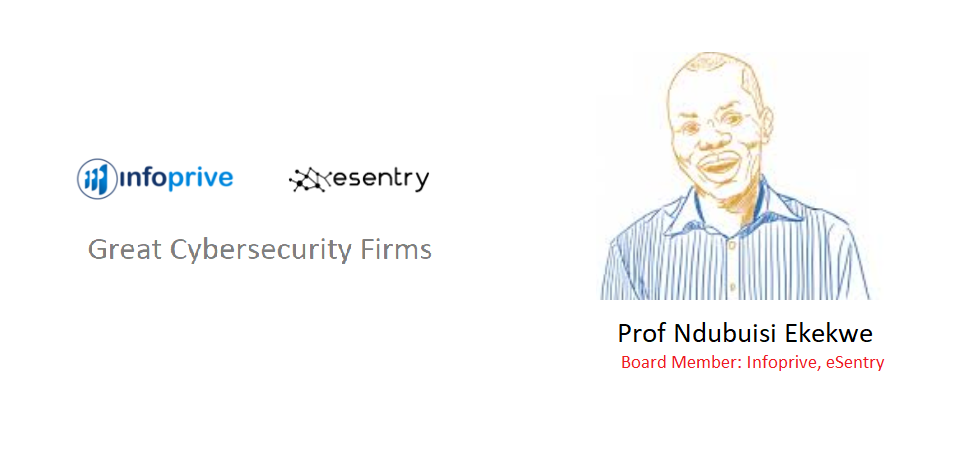
Ndubuisi Ekekwe Joins The Boards of Infoprive and eSentry

0

I have joined the Boards of Infoprive and eSentry. Both are category-king cybersecurity companies. It is super-amazing what we plan to do in Africa’s cybersecurity and digital forensics domains. I connected with Infoprive, a leading PCIDSS compliance service firm in sub Saharan Africa with critical IPs in cybersecurity, in 2018, when the firm retained my practice to serve it. Today, Infoprive serves some of the most critical companies in West Africa including some of the largest banks in the nation. eSentry is a managed security service provider with a focus on continuous security monitoring, threat hunting and analysis, incidence response and cybersecurity compliance. These firms have strategic partnerships.

I welcome the community to reach out and explore how we can support your cybersecurity and digital forensics needs. There is something awesome: any company that is an active client to either of Infoprive and eSentry could have their staff enrolled free to take First Atlantic Cybersecurity Institute (Facyber) certificate courses on Cybersecurity Management, Cybersecurity Technology, Cybersecurity Policy, and Digital Forensics. Yes, as we deepen your digital infrastructures, we also want to ensure that all your manpower have the necessary knowledge base.

Contact my team and our Infoprive and eSentry team would be out to serve you. Here are the complete solutions of what Infoprive and eSentry offer.

  • User Identity Management : This system would facilitate the identification , authentication and authorization of users/ individual on the infrastructure / network . It would ensure the integrity of all users and actions by capturing who logged on to what system and filter who has access to what resource.
  • Endpoint Protection System : enables the detection and protection of end -user systems /workstations and servers from threats such as ransomware , malware in real-time.  As cyberthreats continue to increase , the user and endpoints have progressively been targeted .
  • Network security system : Ensures the protection of systems interacting within the network . This helps to limit the zone of coverage /accessibility within different segments of the network as well as provide visibility traffic patterns in order to decipher when there are anomalies .
  • Perimeter/ Gateway security system: Enables protection from the internet and other connected and “untrusted” third parties . Keeps out the malicious actors and content while also filtering what internal users are permitted to send out.
  • Database Protection system : Data is key to most business and the repository / database where such data is housed need adequately tracking of who has access to what data  and what actions are carried out on such data . This system provides all these functionality.
  • Web Application Protection: Provides real-time protection for web sites , internet portals against constant threats and attacks that are common place on the internet . Also provides analytics of where web services are accessed from and what kind services are accessed the most.
  • Security monitoring and response service : provides a situational awareness of what is happening on the IT infrastructure and the ability to respond effectively to any detected threats or attacks in real-time.

Infoprive – A Leading Digital Security, PCIDSS Compliance Firm in Nigeria