DD
MM
YYYY

PAGES

DD
MM
YYYY

spot_img

PAGES

Home Blog Page 6595

Trademark Law in Nigeria – The Sir Victor Uwaifo’s Suit Against Simi on ‘Joromi’

10

  • “Turning and turning in the widening gyre
  • The falcon cannot hear the falconer;
  • Things fall apart; the centre cannot hold;
  • Mere anarchy is loosed upon the world …”
  • (Culled from -The Second Coming. A poem by William Butler Yeats. )
It was from here that the author Chinua Achebe extracted the now famous phrase that later became the title of his book ‘Things Fall Apart’ which was written in 1958.

 In 2011, American rapper and Actor 50 Cent(real name is Curtis Jackson)  wrote and starred in a movie which was eventually titled ‘All Things Fall Apart ’ even though the original plan was for the movie to be called  ‘Things Fall Apart ’. 

The movie was produced under the same title as the 1958 novel by Chinua Achebe  Things Fall Apart. After contacting Achebe’s legal team ,50 Cent offered $1 million just to keep the title Things Fall Apart for his movie, but Achebe would not sell out at any price as he felt it was an insult to buy him over with money. The Foundation that manages Achebe’s copyrights said: “The novel with the said title was initially produced in 1958. It is listed as the most-read book in modern African literature, and won’t be sold for even £1 billion.” Eventually Mr Curtis Jackson had to settle with what was closest to what he had in mind – All Things Fall Apart. 

This was in 2011. Articles and opinions sprung up in the national dailies and on the Internet giving perspectives to it. One even went as far as saying that Achebe had no right to stop anybody from using the words since he also took it freely from another source. Superficially it does make a little sense to think in that direction, but a little dig beneath the surface shows how fundamentally different the two scenarios are. The words used by Mr Yeats are English words, and a book could contain as much as eighty thousand words and sometimes more. So are we prohibited from using any arrangement of words just because it happened to have appeared elsewhere?  No! The difference is that the title of a book or the name of a product is someone’s intellectual property and is often covered by patent and copyright  laws. 

So the contexts are different. Infact they have absolutely nothing in common. I could use phrases from Shakespeare’s literature for any purpose I deem fit so long as it is not the registerd product name of any individual or group, correct me if I’m wrong; but I can not name another book or product the same name Shakespeare had given any of his books. It’s understandable,and here is why: If someone walks into a store to buy a product that goes by a particular name, he expects to get just what he has in mind and not another item that goes by the same name, as having many items with the same product name would lead to confusion and a lot of uncertainties. Imagine if it was a drug for instance. 

The entire conversation above developed as a result of a recent fifty million naira law suit filed by Sir Victor Uwaifo on the award winning female musician Simi. Simi is being sued for N50 million as damages for using the word ‘Joromi’ in her song and as the title of one of her tracks. Remember ‘Joromi’ was also the title  Uwaifo gave to his 1979 global hit.

I think the problem here is the fact that her song bears the same title as Uwaifo’s. So if a foreigner walks into a store and asks for Joromi, he or she could be given Simi’s even though it may not be what the person had in mind. These are fundamental issues every musician should know, but is frequently violated by a good number of artistes we have today probably because there have been no consequences for neglecting  such rules.

Not long ago, American Musicians Pharrell Williams and Robin Thicke were asked to pay a total of nearly $5 million (€4.4 million) to the family of Marvin Gaye, in a final judgment in the plagiarism case that found similarity between their song Blurred Lines and the song Got to Give It Up . In 2013, the song reached the top of the charts in the UK and US.

Yes! Just because the song sounds just like another song, those two musicians had to pay the the price.

In the case of Simi and Uwaifo, many Nigerians were of the opinion that Sir Victor did not invent the word Joromi and hence had no right to sue her for damages, highlighting how ignorant most people are when it comes to intellectual property laws. Other were of the opinion that he should just forgive as Simi is just like a daughter to her. 

In all these,this suit could be the beginning of many more to come, perhaps heralding the beginning of an industry where creativity and originality  will flourish as old resting vintage songs will not be disturbed in their resting place by crafty, desperate musicians who at will tamper and modify, and who believe that many living today  have absolutely no recollection of the past.

What It Takes To Be Outstanding

0
elon musk
elon musk

Over the period in the history of humankind and its development, the desire to be outstanding in terms of achievement, success and discovery has haunted men like a hunter hunts its prey. Yet, standing out remains a puzzle to a lot, a puzzle that is difficult to solve. This puzzle and the desire to provide an answer to it has been responsible for masterpieces like the book Outliers, the Innovator’s Dilemma, and Think and Grow Rich, to name a few. But what seats at the centre of outstanding?

The principle of a personal moat

Moat is generally a concept used in describing a company’s competitive advantage. A company with a moat is one with an advantage over competitors for an extended period, e.g. having a patent, having a cost advantage, customer loyalty etc.

Applying this principle on a personal level is an idea popularized by Eric Torenberg in a now well-referenced Twitter thread. Eric defines personal moat as a unique, accumulating competitive advantage that compounds over time. To be outstanding, therefore, you need a personal moat. You need to do those unique things that accumulate over the period with a tendency to compound.

Standing out – doing unique things that accumulate

It is not enough to have activities going on in your life, those activities must be such that accumulate. Accumulation means add up. Things you do must always add up with things you’ve done and things you will do. You must pursue your goals holistically. Your goals and desire to stand out must be at the centre of your activities, and all must add up. Attending a meetup in a community of people whom you might need a few years from now is a good add up, sleeping 8 hours a day is compelling add up, adding a new skill in a new but related domain to your current domain is a great add up. These things accumulate and come to pay in a matter of years.

Standing out – doing things that compound

It is not enough for things that you do to accumulate, they must compound. How do things like personal moat compound? Let me use the examples from above.

  1. Attending meetup

You meet one more person that may go on being a great influence in helping you get a competitive advantage and hence standing out. Do this for an extended period and you have a powerful network of friends. Friends whom themselves go on to become great in their respective endeavours. The result is compounding and you will see that when you need to call on them.

  1. Sleeping 8 hours a day.

Counterintuitive right? Well, you need health to get wealth, if you are not healthy, a great ceiling is placed on what you can do. Mathew Walker said in his TED Talk….

“Sleep, unfortunately, is not an optional lifestyle luxury. Sleep is a non-negotiable biological necessity. It is your life-support system, and it is mother nature’s best effort yet at immortality”.

It looks like the most unproductive thing to do especially if you’ve heard about how some people work 16 – 18 hours before they became outstanding. But for health sake and immortality sake, taking enough rest compounds.

  1. Adding new skills.

If you add more and more new skills enough, you will find intersections of these skills and you might end up innovating the erstwhile unimagined. Adding new skills also enables you to be able to think from first principle.

What it takes to stand out is a lot, and there is no one-way road to follow. The path is rough, but those who have gone through it left traces. One of the traces left has been conceptualized on the principle of a personal moat which I have tried to distill. Personal moats are those unique things that accumulate and compound overtime for you. They set you out and place you on a pedestal of outstanding if you carefully cultivate them.

Embracing Change Through Effective Communication

0

Among all things difficult for human beings, change will be part of the top 1%. We are so anti-change such that we would rather that we remained in our caves, hunting and gathering for survival than what we have now if change wasn’t forced on us. Yet, the pages of history are full of retrospective appreciation of change. Now we cannot imagine a world without a mobile phone, immersive connectivity and electricity. If it is such that change always ushers us good fortune, why do we still fight and repulse change?

The narrative of change makes us fear it. Change, especially the systemic ones, almost always promise to change the very way we live our lives (culture). And this is not something we are by nature wired to embrace. We are wired to embrace comfort and status quo, it takes extra willpower from us to embrace change. This extra willpower is more often than not difficult to get on a populace level. It is easier to get one person to embrace a new way of life than for a group of ten to embrace the same. The dynamics though is that if these individuals are approached individually, they may embrace the same more than being in a group. 

To drive change and see people embrace change both on an individual level, and populace level, I have found that communication is the number one most important thing. 

Communicating change to drive acceptance

The history of humankind is laden in different believe in stories. Stories matter to humans and we have developed and got better at telling these stories over the centuries. How you communicate change matters, and the best way to do so is to tell stories of the change.

In 2015, for example, we agreed with President Buhari (PMB) to change the fuel price from N97 to N145, this was a different attitude from what we had with President Goodluck (GEJ). What changed between GEJ and PMB? Simply story! Not to say that President Buhari is better at telling stories, but to point out that we chose to believe a different story from what we earlier believed.

We believed that unlike President Goodluck, President Buhari will remove subsidy and make good use of the money. Hence, no clampdown at the price hike. Whether we like it or not, how the stories of that period were shaped made us believe that. And when you think about it, the story started by parading PMB as the messiah, before we saw him clearly.

Well, that was just an example of how proper communication (storytelling of change) can help drive change acceptance where it was erstwhile rejected.

 The next time you aim to implement a change in your personal life or within a group of people (company, organization, country, community etc), learn to effectively communicate the story behind the change. Story matters to humans by their nature and they tend to always buy-in to stories that even though promises a change, also promises a good end.

Five Things To Avoid When Building Great Teams

0

Common mistakes most employers make – they put the company over the employees. A great leader knows that the employees make the company.

Employees are like the engine in a vehicle. Investing in them makes everything works. If you value your workers, they will definitely value your company.

Besides, employees are brand ambassadors. They represent your company. They interact with the customers every day and have total power control over the future of your company. The best way to drive your company forward is by ensuring there is an employee engagement policy being laid down.

Employee engagement is perceived to be one of the essential points for improving business results. The notion of effectively shaping the worker’s expertise is targeted on improving the engagement of employees to cut back turnover, improve productivity, increase accountability and achieve results. Also, it gives the employee a sense of belonging, therefore, enabling them to treat the company like their own.

However, in spite of all the analysis that abounds on improving engagement, it is noteworthy that several organizations still do very little to enhance the leadership’s engagement within the workforce. No wonder many of these companies have folded. They are no longer in operation.

The first problem most companies encounter is from the employees. The moment a company loses the trust of the employees, it becomes difficult to grow because every other department of the company can never function.

Listed below are five ways to destroy worker engagement:

  • Don’t attempt to offer a vision: You know the task your department must accomplish. There’s no need to offer any reasonable vision or purpose; employees got to do what’s expected of them. Everyone ought to grasp the tasks they have to complete; don’t worry about helping employees understand how what they are doing ties into a bigger image of what you’re attempting to accomplish and why. Too much information just muddies the waters and it is distracting. It doesn’t make sense to hire a smart person and tell him what to do. Rather, let him tell you what to do. It makes him feel trusted, and that will enhance his self-confidence.
  • Don’t be afraid to let your true feelings show: When things begin to go awry or once employees don’t meet your expectations, you must be at liberty to express your negative emotions with all of the intensity that you simply can muster. Keeping your emotions at bay within yourself sometimes doesn’t work very well. They’re going to come out sooner or later, therefore you may as well let them loose. Feel free to yell, scream, and use profanity. All of those behaviours can serve to get people’s attention and allow them to understand their lack of performance is completely unacceptable.
  • Don’t express appreciation: People don’t need to be recognized or appreciated. All of this verbal praise becomes pointless if you are doing it all of the time. Individuals are paid for what they are doing, therefore don’t worry concerning expressing any kind of verbal appreciation or recognizing them in any other means. The monetary rewards associated with their work is satisfying enough.
  • Don’t encourage people to work together: It is better if people simply specialize in doing their work without distraction. All this getting together to collaborate could be a waste of your time. Decisions in groups often take too long and are often not made at all. Keep people targeted on their specific goals while not involving others.
  • Don’t offer feedback: The whole notion that people need or want feedback is overrated. The most effective feedback is the results that individuals receive from the work that they are doing. Tell individuals to take stock of what they are doing and alter what they have to get higher results. They shouldn’t have to be checking in with you to understand how they’re doing.

Conclusion

If this is the method you lead your team, I can guarantee that turnover is going to be high, productivity is going to be lower, morale is going to be in the tank, and you may not get the results that you simply need.

Simply take every point above and take away the word “don’t,” turning the suggestions into a positive statement of what you must be doing to increase worker engagement.

Digital Presence: Nigerian Facilities Management Brands Report Card 2019

0

The growth of the digital marketing has been hinged on the increase in the number of people who use the Internet across the world. In the last few years, the rise has been witnessed more in developing countries because of the yearly surge in the number of people having access to the Internet, especially those in the remote locations.

According to the existing statistics the world is having over 4 billion Internet users as at July, 2019 with an increase of 366 million from the number had in January, 2018.  Information has it that this figure represents 56% of the global population, indicating the availability of a significant number of people, businesses, individuals and governments could push various contents to towards brand image enhancement and sales generation.

Using the platform successfully would mainly depend on the companies’ capabilities and abilities to overcome varied challenges associated with it in Nigeria. This piece is not about highlighting and exemplifying the challenges, but to give an account of how the Nigerian facilities management companies are performing on the platform relatively to their counterparts in the world.

From the website presence to the social media including, professional media, the piece offers insights the companies could leverage to increase their online presence to boost sales and improve public and private recognition of the values of the facilities management industry. The insights were generated having analysed the wrongs within the companies’ digital marketing strategies.

In its recent report on the industry, the British Institute of Workplace and Facilities Management documented players in the industry. Thirty companies were grouped into active participant category. These are the companies that were active on various digital platforms (Website, LinkedIn and Facebook) between August and October, 2019.

Further examination of the presence of the presence indicates that some companies’ websites were under construction or not existing at all during the analysis period. It is also important to inform that the Internet-enabled data collection tools used could not turn out enough data for analysis during the period. The brands that had this issue were mainly not pushing sufficient information to the public, most especially their target markets.

The Website

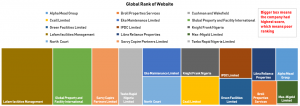
Alexa is our first data source for the examination of the companies’ websites. It ranks websites using a combination of average daily visitors and pageviews over the past month. The site with the highest combination of visitors and pageviews is ranked #1. In this regard, Nigerian FM brands were analysed along with the other brands in the world.

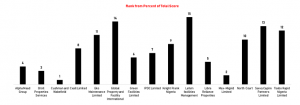
Analysis shows that Cushman and Wakefield, a foreign owned brand, had 87,980 score, representing the lowest score and highly ranked brand in terms of website presence [Exhibit 1. On this exhibit the company does not appear because of the low score. Other companies are displayed because of the highest score garnered which translated to the low ranking of their websites]. Max-Migold, a local brand, closely followed Cushman and Wakefield with 1,849,073 score while Broll Properties Services (2,282,147), Alpha Mead Facilities (2,755,054) and Libra Reliance Properties were in third, fourth and fifth positions respectively.

Exhibit 1: Global Ranks of the 15 Companies with Website Presence

Source: Alexa, 2019; Infoprations Analysis, 2019

Exhibit 2: Rank Deduced from Percent of Total Score


Source: Alexa, 2019; Infoprations Analysis, 2019

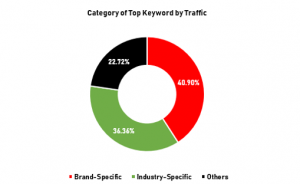
Examining the websites from the keyword perspective, analysis reveals that people searched the companies using brand and industry specific words. Alpha Mead, Avant properties, Cushman and Wakefield, Eko maintenance limited, PFI global, James Cubitt, Lafam, ProFM credential and Willco were brand-specific words used mostly by the public. The industry-specific words include facility management company, real estate development company in Lagos, luxury real estate Lagos, facility management, real estate development prospectus and facility maintenance services. Apart from these keywords, Shoprite Jakande, departed asos, personal loans, walls of Benin, brain dumps notes were also found.

Exhibit 3: Category of Top Keyword by Traffic

Source: Alexa, 2019; Infoprations Analysis, 2019

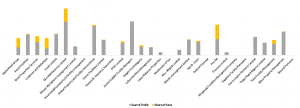
Two things were examined along with these keywords. The Search traffic, which is defined as the percentage of organic search referrals to each website from the keyword. The share of voice is the percentage of all searches of the keyword that sent traffic to each website. For instance, out of the expected 100% search traffic for Alpha Mead, the brand had 23.57%. For the 100% of the share of voice, the company had 26.64%. Avant Facilities attained 61.27% search traffic. Despite this figure, the company recorded 1.53% share of voice.

The performance of Lafam facilities management resonates with Alpha Mead’s performance. The public use of Lafam facilities management as keyword generated 23.57% search traffic, while the share of voice was 0.39%. Eko Maintenance Limited, Global Property and Facility International, Wilco Property Management and Pro FM performed well during the period. The use of Eko Maintenance Limited as the keyword garnered 98.89% search traffic for the brand, while the share of voice was 39.05%. Global Property and Facility International followed it with 86.60% and 3.12% as a percent of search traffic and share of voice respectively. Wilco Property Management had 69.42% as search traffic percent, while Pro FM had 47.48%. In spite of the low search traffic recorded by Pro FM, it edged out Wilco Property Management in share of voice (0.19%) with 43.02% it attained.

Exhibit 4: Comparison of Search Traffic and Share of Voice

Source: Alexa, 2019; Infoprations Analysis, 2019

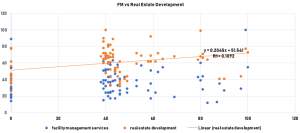
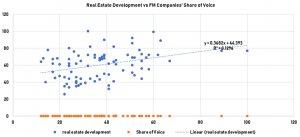
Real estate development and facility management services were part of the dominant keywords used by the potential clients during the period. Our expectation is that the clients wanted to understand the link between the two. This informed the need to do an analysis of the volume of interest in facility management services along with real estate development and real estate development with the share of voice percent recorded by all the brands.

The results indicate that the clients only understood facility management services within the real estate development by 10.9%. This is below 50% expected average of facilitation. However, the brands’ share of voice ensured 12.9% facilitation in the real estate development. This implies that the brand, industry and other related keywords helped the clients to understand the real estate development.

Exhibit 5: The Place of FM Services in Real Estate Development

Source: Alexa, 2019; Google Trends, 2019; Infoprations Analysis, 2019


Exhibit 6: FM Companies’ Voice in Real Estate Development

Source: Alexa, 2019; Google Trends, 2019; Infoprations Analysis, 2019

For example, the emergence of real estate development company in Lagos, luxury real estate Lagos, facility management, real estate development prospectus and facility maintenance services as keywords that appeared along with the brand-specific keywords signifies that the studied FM companies have embedded these keywords on their websites fully or partially.

To successfully capture value from the real estate segment of the built environment, the brands must extrapolate their capabilities and competencies being used for the promotion of FM solutions to the marketing of total real estate solutions. The emphasis should be on the benefits that would accrue to a building when solutions are provided to the faulty parts of the building simultaneously not single-handedly.

Social and Professional Media

In the earlier analysis, Savvy Capire, Alpha Mead Facilities, Eliezer Workplace, Total Facilities Management, and Global Properties and Facilities International are the most socialised brands within the Facebook social networking site. Within the LinkedIn, a professional networking platform, Alpha Mead Facilities, Global Properties and Facilities International, Eliezer Workplace, Green Facilities and Broll are the most socialised brands.

In the current analysis, Max-Migold (10.677), Alpha Mead (8,909), North Court (742), Eliezer Workplace Management (627) and Green Facilities (533) are the brands with the highest number of connections on LinkedIn. Meanwhile, having the highest number of followers seems not to excite the brands because analysis suggests low social proof.

The response of the managers of the brands’ accounts to the followers, when they commented or liked the information posted was low. This aligns with the previous analysis which indicates that employees of the brands did not always share industry-related topics and commented on FM issues raised by professionals on the platform. The failure to improve on social proof would continue to enhance followers’ confirmation bias because they have been denied evidence-based information which could reduce the hypotheses about the companies, particularly the solutions being offered.