DD
MM
YYYY

PAGES

DD
MM
YYYY

spot_img

PAGES

Home Blog Page 6650

The Andela Experiment

2

This is thought-provoking: the construct in Nigeria has been consistent – universities should educate, prepare and unleash to the economy competent graduates. But Andela has shown that doing just that ALONE is not enough. Yes, you can have all competent graduates (by global standards) but if there is no opportunity, they will not flourish. That explains why in a world where software developers are scarce, a company in Nigeria is firing hundreds! Simply, there needs to be opportunities before the agents of productivity can work! This Olumide Durotoluwa’s observation deserves deeper thoughts form policymakers! 

One of the arguments against the Nigerian education sector, is that they do not churn out the right talent. While this is very correct, but here, we see an educational firm, with a global market, producing the right talent, yet limited by the diminishing returns of marginal productivity. For a quick reminder, the law of diminishing marginal returns, states that when an advantage is gained in a factor of production, the marginal productivity will typically diminish, as production increases. On a macro level, this implies that, even if the Nigeria education system, churns out the right talents, without creating an economic opportunity for them, we will continue to experience the same problem.

Obviously, Nigeria has crossed the productivity threshold a long time ago, where an increase in labour force, can no longer bring the desired increase in economic productivity.  When productivity fails to grow significantly, it confines potential gains in wages, corporate profits and living standards. The resulting effects are underemployment, talent exodus, increase in the cost of education, etc.

Except the government, corporate organization, create an eco-structure, which can continue to absorb the increasing number of graduates, while at the same time, funding education, it will be difficult to make giant economic strides.

I must confess that his observation is deep.Have 20 Andelas in Nigeria but without opportunities, the brilliant geeks will stall, and possibly leave the nation. Simply, there is a limit a nation can get to without a strategic plan that harmonizes all elements at the same time. We cannot waltz into prosperity as a nation – broad strategic plan is imperative. 

You may think it is graduating brilliant graduates only to be thrown off that you have them, and will not know what to do with them. This is a huge (unexpected) discovery that Andela has provided for the nation. Let me call it the Andela Experiment: the availability of extremely brilliant and competent graduates without opportunities will not advance Nigeria, other factors are critical and required to make use of the graduates, and ensure they are not jobless!

The Andela Experiment needs more examination because it has shown that even the universities ALONE cannot save Nigeria, at least in the short-run.

The Andela Evolution – Fires 420 Engineers

Consequences of Blame Game

0

It’s easier to blame others for our mistakes. Largely, we find it a lot easier to explain what happened when we want to point accusing fingers at someone else than it would have been if we were to point those fingers at ourselves.

In Nigeria, we blame the government for everything. If we lose our job, it’s the government’s fault. If our car breaks down in the middle, it is the government. If we spend our salary within a week, it is still the government’s fault. We are always the innocent victims.

This is the same way we blame our neighbours, spouses, parents, teachers, associates and so on for our mistakes and failures. We even blame others for our ill health and low income. If we don’t see who to blame, we turn it over to inanimate things or supernatural forces and powers. That’s where we have gotten to.

A lot of people may not really know why they easily engage in the blame game. If you, like most of us, do it, I’ll suggest that you go through the list below to see if you can identify with any of the reasons given.

Reasons People Blame Others

  1. To Protect their Ego: A lot of people blame others because they want to maintain their self-worth. They don’t want to face the embarrassment that comes from owning up to their mistake. So the only way to escape the shame is by telling people that it wasn’t their fault.
  2. To Destroy the Reputation of Another Person: This usually comes from hate or unhealthy competition. In this case, the person that is pointing this finger may be saying the truth, but the intention isn’t to correct, but to destroy.
  3. To Control Others: Sometimes, blame game is used as a form of blackmail. The person blamed may be made to feel bad and responsible for the blamer’s predicament. In return, he may decide to give him (the blamer) what he asks for.
  4. To Hide Incompetence: You remember this saying about bad workman quarrelling his tools? Well, that bad workman was actually blaming his tools for the bad work he did. So, most times, people blame others because they don’t want their incompetency to be discovered.
  5. To Avoid Punishment: Most mistakes and failures comes with punishments, such as replacement of what is spoilt, demotion, loss of incentives, dismissal and so on. In order to avoid such punishments, people tend to push over the blame to someone or something else.
  6. To Justify Mistakes or Failures: A good example of this is when a student blames his teachers for his failure in exam. You may hear something like, “I didn’t pass because our teachers don’t teach us well.”

In as much as other people may contribute to our mistakes and failures, we don’t have to dwell on that as a reason for failing. Any time you have this compulsion to blame someone else for your condition, remember the following as the consequences of blaming game.

  • Loss of Reputation and Respect: You know the funny thing about blaming people, the person blamed and some other people will know the game you are playing. And when you play the game with someone else, it will be common knowledge that you don’t accept responsibility for your mistakes and failures. It will then be only a matter of time before someone tells you that to your face.
  • Loss of Relationships: Anyway, I know I won’t want to relate with someone who will blame me or someone else for his mistakes. No one who is wrongly blamed is happy. He will also make sure that he stayed away from the person that caused him pain. If this person happens to be someone who will help you in the future, believe me when I say that you have just lost a good one.
  • Lack of Improvement and Growth: We learn from mistakes. If we willingly take blame for mistakes, we will truly seek out ways not to make them again. But when we blame others for that mistake, we won’t look for how to improve. Even if we want to improve, we will be uncomfortable asking people for help because they will wonder why we want to learn what we already know.

Way Out

We have seen the consequences of blaming others. We have seen that involving in such a game doesn’t pay in the long run; in fact it is self-damaging. So, we need to find out ways to stop playing this game. Below are some suggestions:

  • Remember that mistake is the fastest way to learn. There is no need to be ashamed of making one. Besides, everybody makes mistakes and fails at one point or another of their lives.
  • Don’t be afraid to apologize for your mistakes if need be. It may seem difficult but it has its advantages.
  • Focus more on yourself and concentrate on things that will help you to grow. Don’t let the growth and progress of someone else get to you so that jealousy doesn’t take the best of you.
  • Silence: Sometimes you just need to be silent so as not to get involved in the blame game. You may have to let it go before pointing that accusing finger.

Remember, even if someone directly or indirectly caused your mistakes or failures, you played a role by allowing it. So, don’t play the blame game, it doesn’t pay.

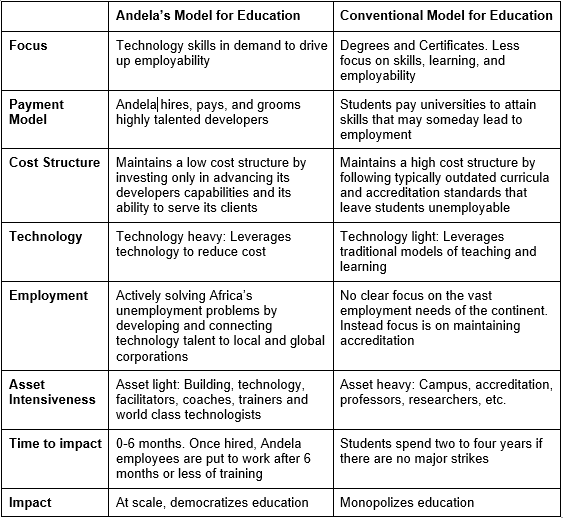
Comparing Andela and Conventional Education Models

15
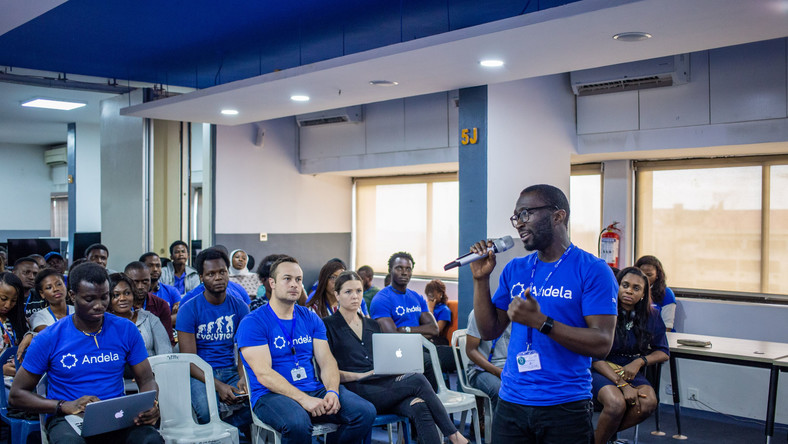
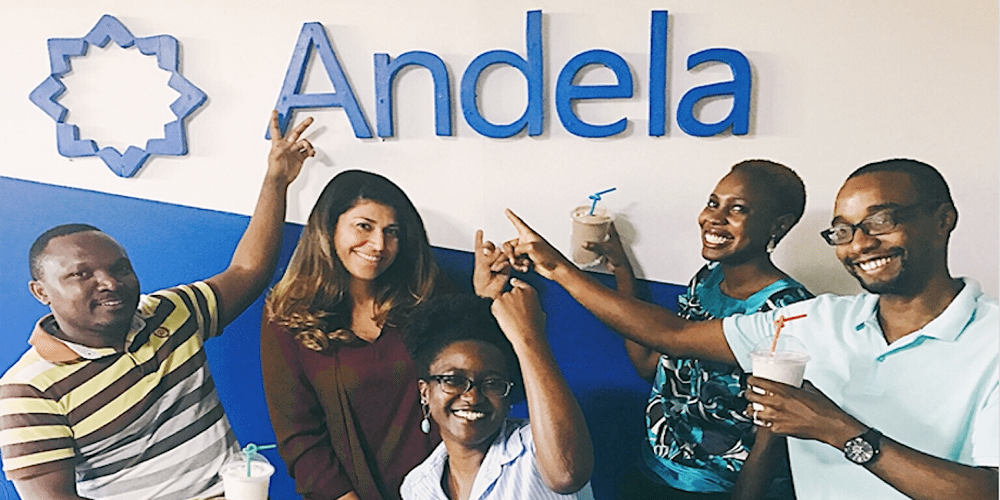
Andela

“Andela is solving the global technical talent shortage by building distributed engineering teams with Africa’s top software developers. In four years, Andela has hired over 1,000 software engineers out of more than 140,000 applicants and became known as the “Best Place to Work in Africa,” with tech campuses in Lagos, Nairobi, Kampala and Kigali.”

Last week, Andela announced the departure of 420 junior engineers, with plans to hire additional 700 experienced engineers.  In the press release, Jeremy Johnson, Andela co-founder and CEO says:

 “As the talent world has evolved, we have as well, and over the past few years it’s become increasingly clear that the world needs what Andela provides: high-quality engineering-as-a-service. It has also become clear, however, that the majority of the demand is for more experienced talent, and to keep up with it, we need to grow our senior talent base even faster.

“This shift in demand also means that we now have more junior talent than we are able to place. This is a challenge for the business, and for these junior engineers who want, and deserve, authentic work experiences that we are not able to provide.”

Andela, having reached an inflection point and the need to grow faster, made a cut of 420 engineers, citing unequal opportunities, and the need to meet market demands, as the major reasons. 

Now, let’s take Andela, as a microcosm of the national education system. Of course, there’s a whole lot of differences, but we can still do some juxtapositions here.

Government funds education, so graduates can improve the macro economy, by increasing productivity. Productivity is a vital source of economic growth and global competitiveness. A country’s ability to improve its standard of living, depends almost completely on its ability to raise its output per worker. 

One of the arguments against the Nigerian education sector, is that they do not churn out the right talent. While this is very correct, but here, we see an educational firm, with a global market, producing the right talent, yet limited by the diminishing returns of marginal productivity. For a quick reminder, the law of diminishing marginal returns, states that when an advantage is gained in a factor of production, the marginal productivity will typically diminish, as production increases. On a macro level, this implies that, even if the Nigeria education system, churns out the right talents, without creating an economic opportunity for them, we will continue to experience the same problem. 

Obviously, Nigeria has crossed the productivity threshold a long time ago, where an increase in labour force, can no longer bring the desired increase in economic productivity.  When productivity fails to grow significantly, it confines potential gains in wages, corporate profits and living standards. The resulting effects are underemployment, talent exodus, increase in the cost of education, etc.

Except the government, corporate organization, create an eco-structure, which can continue to absorb the increasing number of graduates, while at the same time, funding education, it will be difficult to make giant economic strides. 

I Thought Malaria Was Normal

0

It will be a futile effort trying to count the number of times I’ve heard malaria or been treated of malaria in my lifetime not when there is no automated medical record. Well because this is the case, I almost thought malaria is a norm, like you have malaria, so? That’s like saying you are tired, it’s not strange.

Sometimes ago while I was at the university, I was at the hospital to complain about malaria and in my mind and body language, I was taking it seriously. I was shaking of cold and high temperature. When I found myself before the Doctor, he just responded: “what’s the big deal with you, is it not just malaria you are having and you are this way”. Did you notice the qualifier “just” malaria. Well since then, I treated malaria as “just”, no big deal, have malaria, take medication and be fine.

Until recently as I was reading the book “The Bright Continent” by Dayo Olopade. In one of her stories, she recounted the story of how she got her first malaria in the year 2011. 2011, are you kidding me? Since birth, no record of malaria? Is malaria not normal again? Or is it only normal in some clusters and abnormal in others? Well, she got malaria while she visited Nigeria from the US and upon returning to the US, she had to expend up to $16,000 for treatment. Did I just say $16,000? Yes, I did. Is the malaria she had different from the one we have here or I don’t get? Well, it’s the same.

This brought me to pondering on the state of well being in our bright continent, Africa. My pondering produced some questions enumerated below

  1. What exactly is causing malaria?
  2. Is the body resistant to some conditions with enough exposure?
  3. If so, why do we fair pain, if the body can so get used to pain and it becomes normal?
  4. Can malaria be completely eradicated?
  5. Are we being treated with the right kind of medication or why will I be treated for less than $50 and be fine, and others need to spend a whopping $16,000 to be fine?
  6. What is the future of health in Africa if we are still battling with malaria now?

While these questions are pending answer, I chatted up a doctor to answer the question “is malaria normal?”

Her answer was as follows:

Malaria isn’t normal. Malaria is caused by protozoa parasites called plasmodia, and four Plasmodium species have been well known to cause human malaria, namely, P. falciparum, P. vivax, P. ovale, and P. malariae.

In humans, the parasites grow and multiply first in the liver cells and then in the red cells of the blood. In the blood, successive broods of parasites grow inside the red cells and destroy them, releasing daughter parasites (“merozoites”) that continue the cycle by invading other red cells. The blood-stage parasites are those that cause the symptoms of malaria. P. falciparum is the type of malaria that is most likely to result in severe infections and if not promptly treated, may lead to death.

Now, let me explain to you how it kills… If drugs are not available or if the parasites are resistant to them, malaria infection can develop to anaemia, hypoglycemia or cerebral malaria, in which capillaries carrying blood to the brain are blocked. Cerebral malaria can cause coma, life-long-learning disabilities, and death.

So malaria isn’t normal and if you have malaria don’t joke with your health, make sure you seek medical attention immediately.

And that’s it. If you are like me that thinks malaria is normal, change your mindset, it’s not normal.

The Cost of Delay in The Rehabilitation of Enugu Airport

0

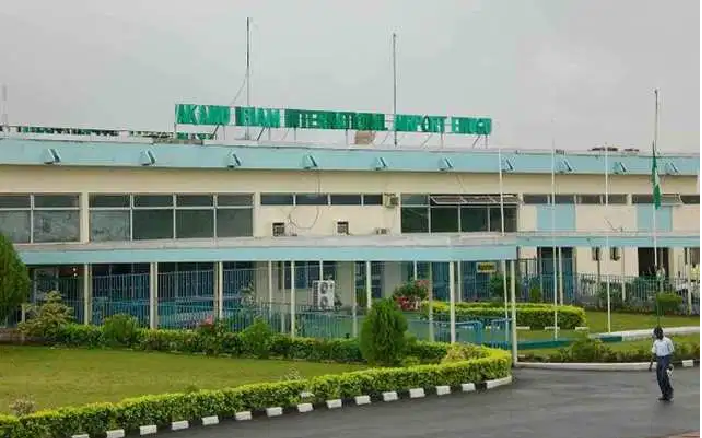
On August 24, the Federal Aviation Authority of Nigeria (FAAN) announced that it is closing Akanu Ibiam International Airport Enugu for the rehabilitation of its runways.

International flights run be Ethiopian Airlines have been redirected to Port Harcourt airport while domestic flights have been diverted to Owerri and Asaba airports.

The closure of the airport was as a result of the inspection report of underutilization by the Nigerian Civil Aviation Authority (NCAA), in September 2018. The report said there is lack of airfield lighting and approach light at the airport, and that has forced it to close by 6 pm daily.

And as such, the revenue generation for the Federal Government is being immobilized. If it continues that way, the airport will be operating at a loss, and will never be able to compete with other international airports in the country in generating revenue for the Federal Government.

The Minister of Aviation, Hadi Sirika, promised that the rehabilitation will be completed by December. It has been a month now, and work is yet to start at the airport.

The Akanu Ibiam airport is the only international airport in the Southeast, and its domestic wing’s advantage cuts across the five states.

The delay has been blamed on processes. The General Manager, Corporate Affairs of FAAN, Mrs. Henrietta Yakubu, said “as soon as the processes are concluded work will commence.” What she did not say is when the processes will be concluded. But it certainly appears that it will take longer than expected, which will cause a journey vacuum for Southeast travelers.

December is almost here, notable of its bubbling in trade and businesses. And most of them, businesses of Chinese and Dubai origin, transported through Ethiopian Airlines. The Akanu Ibiam International Airport makes it easier for people to connect to their different markets in the Southeast and at a cheaper cost.

The suspension of domestic flights also means that those whose destinations are Enugu or Ebonyi will have to touch down at Owerri, Port Harcourt or Asaba.

The road trip distance and time will kill the essence of the flight. A lot of travelers are choosing road trips because they feel it’s almost the same. That reduces the number of flyers in the face of dwindling patronage. It was a struggle, and still is, to get airlines, especially international, to ply the Enugu airport. And people are concerned that the delay in the rehabilitation project will harm the prospect of increased airline activity in the Southeast.