DD
MM
YYYY

PAGES

DD
MM
YYYY

spot_img

PAGES

Home Blog Page 6652

Roadmap for Creating National Intelligent Economy Anchored on AI and Blockchain

0

As digital transformation engulfs nations, its potentials for unlocking prosperity with real time data driven intelligence remains unmatched. Artificial intelligence (AI) and blockchain hold great promises for governments to drive inclusive led economic growth and development for the benefits of their citizenry, security against internal and external threats, having a healthy workforce, building an educated populace, anchoring food security, and broad sustainable environment.

Different countries are investing in various capacities and deepening their capabilities in AI and block to fix different paralyses they are confronted with. The two major powers United States and China currently lead in these efforts while other countries in the Western hemisphere, East Asia and SouthEast Asia are not left out in the race for new intelligence.

I propose a roadmap for nations across the world to build intelligent economies leveraging these exponential technologies.

Human Capital Development for the Intelligent Economy: Every nation should invest a significant amount of her national budget on training her citizens in artificial intelligence, blockchain, critical thinking, product development, and emotional intelligence. With a large talent pool in these skills, they will develop AI and blockchain enabled solutions for different frictions. Their citizens could also become outsourced to create intelligent products for other nations earning massive revenue from that.

Acquisition and Development of Infrastructure For the Intelligent Economy: Hardware to power the intelligent economy such as deployment of drones, robotics, and sensors for real time analytics across different verticals such as agricultural farmlands, natural resources extraction fields, roads and public parking spaces, land borders, airports and seaports, facial recognition and identification cameras. Also, data centers for local hosting of their data and software like satellite imaging data; intelligent cloud platforms should be developed which will integrate artificial intelligence and blockchain for governments to offer smart services as important enablers.

Integration of Chief Data Scientist and Chief Decentralized Officer into Economic Management Teams: The Chief Data Scientist of the nation, at regional or state level, is responsible for aggregating various data through artificial intelligence to offer unbiased insight analytics which will support progressive economic decisions to be taken by the government, while the Chief Decentralized Officer will be responsible for creation of blockchain solutions to support the intelligent economy, and as such, their roles are very important.

Industry Adoption by Governments

Mapping For Social Investment Programmes: Artificial Intelligence can aid in citizen mapping with the aid of geospatial technologies for governments to have real time data on the economically disadvantaged citizens so that their social investment programmes will be more meaningful while the integration of the blockchain will monitor the process to ensure it is transparent and secured, limiting corruption with automation.

Healthcare: Intelligent Electronic Medical Record powered by artificial intelligence and secured on the blockchain which will contain the data of all patients in the country, and can be updated real time by only doctors permitted by their medical association, to carry out their services such as records sharing, prescription sharing to their colleagues and personalized treatment to patients on the network.

Food Security: Artificial Intelligence will help nations in predicting farming outcomes based on real time geolocation data, and the prices of basic agricultural commodities which are consumed and marketed by marketing boards, while blockchain can be integrated to track from the smart farming process to the final consumer in the agribusiness value chain.

Education: With millions of people without access to quality education across the world, governments can invest in AI tutors to educate their citizens using familiar languages in skills and courses which will make them globally competitive while those who are beneficiaries of this initiative can be embedded into a blockchain network to monitor their learning outcomes.

Licensing and Identification: With artificial intelligence enabled real time identification of citizens and their property, the blockchain can aggregate this data and create a distributed digital secure record.

Infrastructure Development: Artificial Intelligence through image and object recognition can engage in predictive maintenance of infrastructure while blockchain can be used in tracking the reconstruction process.

Security: Artificial Intelligence can be utilized by internal security operatives to predict possible crime scenes and those with propensity to commit crimes and give real time feeds autonomously while the blockchain can be used to register and track illegal migrants into any country and renewal of passports and visas to citizens and foreigners. The defense forces can use AI in identifying terrorist threats and autonomously nullifying them while utilizing blockchain for monitoring their armament supply chain.
Some Common Problems Most Jobseekers Face

0

I had been a JOBSEEKER long back and I struggled with my JOB search.

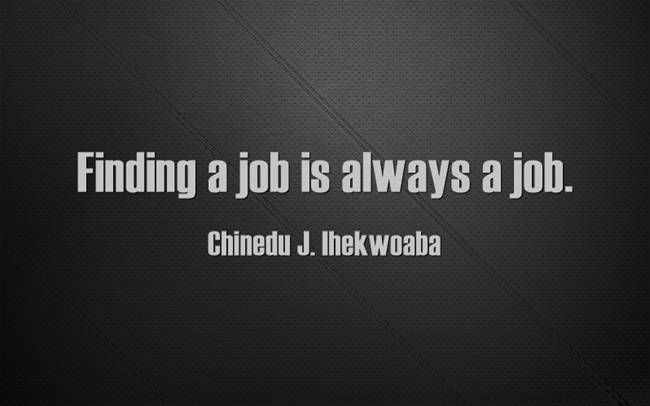
Finding a job is always a job. During my job search, I face the lows. No one was willing to help, people promised to help but stopped recognizing  when I approached them in need.

It’s easier for people to feel bugged by the pressing need of jobseekers. I felt I must have bugged them during my job search. You’d not blame them. It’s not always an easy ride for any jobseeker out there.

But one thing kept me going during the turbulent period, my faith in God, self-belief in my abilities and parents blessings.

 After getting countless of ”nos” and hurtful words, the breakthrough came. I didn’t just get a job to survive, I got a well-paying job that transformed my life from a wretched man to a successful man.

 Yes, I am successful because I have the time to go about other businesses and also get paid for doing what I love. To me, it was the greatest success any jobseeker can have.

 During my job search, I discovered that jobseekers get stuck in their JOB search and find no way out, they face lots of problems in their JOB search. The good news is – JainderSingh Negi has got a way out for you by sharing some of the problems every jobseeker faces. Since a problem known is half solved, these could help them in understanding what and how to tackle the problems of job search.

Here are the common problems you are facing in a JOB search: 

  • You are unable to put up an ATS compliant and eye catching RESUME
  • You are not able to land a JOB INTERVIEW
  • You are able to land JOB INTERVIEWS but unable to clear telephonic INTERVIEWS
  •  You get stuck in face to face INTERVIEWS with RECRUITERS or HIRING MANAGERS and unable to cross this step
  • You always get stuck in Final round of a JOB INTERVIEW even though you are a much better candidate but unable to express it
  • You are getting JOB offers but not the ones you would like to have
  • You are not able to get access to the best companies or RECRUITERS
  • Difficulty in landing the first JOB due to zero experience
     

Where do you belong?

Now that you know, tackle it.

Our Nigerian Tribes Are Ever Deepening

0

Somebody tell me; Oh why do we fight it

One love can set us free; if we just let it be

Take heart in a brand new day

Cause love is all we need; To chase the past away

You never need worry; if you just let it be…You never need worry, no no

Let one love set you free!

Onyeka Onwenu (Lyrics ‘One love’)

It would be needless to say the legend, Onyeka Onwenu, was unaware of the overbearing tribe crisis when she sang this song with her delightful voice. So, I would subject to the prevailing thoughts in the hearts of every creative artiste – Music gives a soul to the universe, wings to the mind, flight to the imagination and life to everything (Plato).

She possibly wrote her simple lyrics with 1966 Biafra and Nigeria’s bloodshed in mind. She probably knelt by her bed with the candles of the night to scribble a song that she desired will soar in the hearts of coming years in Nigeria for positive change.

The plight of our nation’s state of viewing our differences has grown largely into many unforeseen circumstances unimaginable by many Nigerians. We have deeply instilled the culture of “My Culture and Me.” Our hearts have gradually soiled the grounds of inhumane blood and insensitivity to a fellow Nigerian. Everything, including success and goodwill have become a question of “Where is she from? Yoruba? Hausa? Igbo?” And like Ibukun Awosika angrily professed at The Platform 2018, October 1st that such questions are inconsequential to the existence of their being as Nigerians – “Where is he from? He is a Nigerian!”.

Last month, the Federal Bureau of Investigation (FBI) made a show of our thirst for survival and success. Out of 200 million people in the Federal Republic of Nigeria, 77, if I am not mistaken, were indicted for cyber fraud. Aside from this, a notable Nigerian youth made more prominent by Forbes magazine, Obiwanne Okeke, was arrested for over One Million Dollars fraud. The events recurring too timely with the comments the sleek singing artiste, Simi, made outrightly to cyber fraudsters, popularly called Yahoo Boys. In a bid to make the saddening effect of cyber fraud on Nigerian’s reputation known, she said;

“They are laughing at us. They are laughing at us. I am repeating it because I have seen it. Do you know how many Nigerians going to business meetings or just to get the smallest opportunity for themselves to make it and they leave with nothing because they are Nigerian, that’s the only excuse they get. Sorry, we can not work with Nigerians.”

Nigerians had several views about her opinions, mostly finding it offensive to their ‘hustle’.

Our linens were washed in public with the aforementioned. By all means, as most Nigerians felt, I felt largely displeased but beyond my displeasure came the public neglect of these Nigerians away from home. Then the adage our ancestors professed in Igbo to our youthful hearing recalls, “O bu a nwe ozu na ebu ya nisi” – it is he who owns the corpse who carries it at the head.

I wouldn’t dispute their negligence in character and self-hood, but I would also say like our ancestors, “Ti a ba fi owo otun ba omo wi, afi ti owo osi famora” – When you rebuke a child for his act, you don’t cast him away. Besides, “Ile eni lati n je ekute oni dodo” – We don’t reveal our family secrets.

During this pressing period for Nigeria, displeased Nigerians went beyond castigating these indicted fellows to tribalistic claims. Certain social media influencers made insignificant cognizance to the names of the indicted Nigerians, claiming they are Igbos. Without any contradictions, in fact most certainly, they are indeed of the Igbo ancestry and lineage but that does not reduce them from being any less of a Nigerian than you are.

Today, a tabloid noted Allen Onyeama’s profound statement pertaining to the issue of diversity and Nigeria;

“Nigeria is a country of 378 ethnic nationalities; that means we have a huge diversity. This diversity is supposed to be our strength but it has become an albatross of a kind to us. Why can’t we manage our diversity for the good and development of our nation.”

Few days back, a friend once noted the shallow state of our diversity. He said: “You see Tobi, it is not that Nigeria cannot exist as one. It is just the state of our minds to think one tribe owns this and the other that. Igbos will say oil, Hausas will say food and Yoruba will say commerce.” So, it dawned pathetically on me, it’s a situation of entitlements and ownership. If we could only live to believe that we all own it all.

A lady, Miss Tinuke said something to me that made me shake my head horridly. To paraphrase her words, she said that only Lagos and Abuja can get to this point of commercialization in Nigeria. She made it clear when I told her I am from Lagos. She said that Lagos is tolerant to have indigenous occupants unlike other states. Then I asked a cogent question; “Can’t any other state be like these two states?” She replied that other states are busy guiding their land with selfish motives and entitlements. They can never allow a Hausa man graze neither can a Hausa man allow them trade peacefully. In causal terms, she noted that other states can’t meet Lagos. They seem to be backward with their ideologies and belief systems.

Hence my thoughts, can we allow our Yoruba daughter say she would love to marry our Hausa son? Can we allow our Igbo son say he would be marrying our Fulani daughter? Can we let go of our vague inter-tribal differences and embrace oneness in our Nation to attain a greater good. The horror that continually grows within us stems from our diversities and the inability to curb the negative extensions within the gates of our hearts.

Allen Onyeama, Chairman of Air Peace Airlines became my hero with his gracious action to bring home every NIGERIAN affected in South Africa without considering the tribe or lineage. The news is He is a Nigerian and he saved Nigerians.

So, when we intend to wash our dirty linen in public and battle within us, let’s remember what our fathers said: Yawa shi kan sa zarre ya ja duchi (quantity makes the cotton draw a stone) – UNITY IS STRENGTH.

God bless Nigeria.

God bless You.


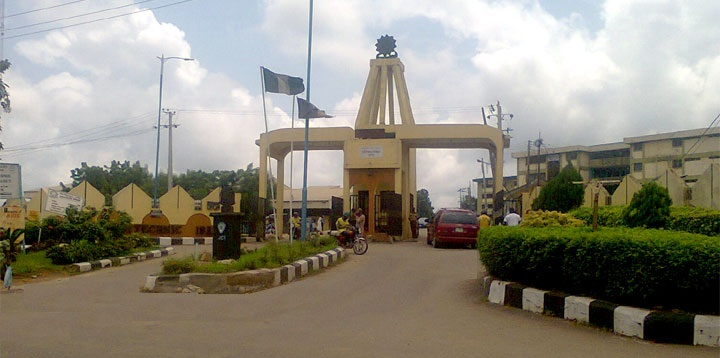
Governor Seyi Makinde Should Help Reduce Outrageous Tuition fees in Polytechnic Ibadan

0

If you think knowledge is too expensive, then try ignorance. This is an adage I’ve known right from my childhood days.

The fact remains – education is the common basis for everyone to acquire knowledge. Some of our parents who never had basic education often regret it. Some of them feel they were affected because of it, which has prompted many parents to do everything possible to see their child(ren) get basic education at least.

However, the cost of basic education is on the rise. It no longer looks affordable for many parents who are still struggling to eat at least one square meal per day.

Adeleke Lekan, a graduate of the Polytechnic Ibadan shared his concern about the increment in tuition fee.

”I finished from the Polytechnic Ibadan two years ago. Acquiring basic education is no longer easy for any parents out there. When I was in school, things were a little bit hard for me. As the first son who had little or no support, I promised myself a basic education at least.”

He continued, ”I do tell myself that, there is nothing with a beginning that doesn’t have an end.”

Adeleke further talked about the outrageous fee he paid to keep his dream alive.

”I remembered then, the school management threatened to deny any student still owing from writing quiz or exams. What will I do? I took my laptop and sold it in order to pay before the deadline.”

Adeleke felt it was unfair treatment from the management. This made him questioned if the management were deploying a system being used in primary and secondary schools.

The last straw that broke the camel’s back, Adeleke talked about the management of the Polytechnic Ibadan called for a PTA meeting, that is, the Parents and Teachers Association. This makes the whole thing looks like a secondary school in disguise.

Adeleke Lekan pleaded on behalf of the students who might be walking in his shoes at the institution by appealing to the management of the institution to be considerate.

”People are suffering out there. Many students do labor works before they could afford to pay for their tuition fee. Not everyone has a parent/guardian that is always there for them. I’m begging the management of the Polytechnic Ibadan to be considerate.”

The big question – Is it proper for the management of any higher institution to stop students from writing quiz/test or exam because they owe tuition fee?

I’m using this medium to beg the Oyo State Governor, Engineer Seyi Makinde, to help reduce the tuition fees at the Polytechnic Ibadan.

We all deserve a basic education at least.

Nigeria’s Mobility Sector Shows How to Adapt Silicon Valley’s Playbook

2

When Uber invented the modern ride-hailing, it was built on the construct that the operator of the asset is largely the owner of the asset. By doing that, the Uber business model stays asset-light since the vehicular assets are not in its balance sheet. In north America and western Europe, that model works just fine: there are people with cars, and they can put them on the streets to earn extra income.

But in the emerging economies like India and Nigeria where people (yes, potential drivers) do not have access to assets and do not own any, the Uber model struggles. That is why Ola, an India-based ride-hailing company, plans to acquire one million electric cars to pursue its mission. In short, companies like Ola will be the main car buyers, in most parts of Southeast Asia, in coming years, as ride-hailing continues to advance.

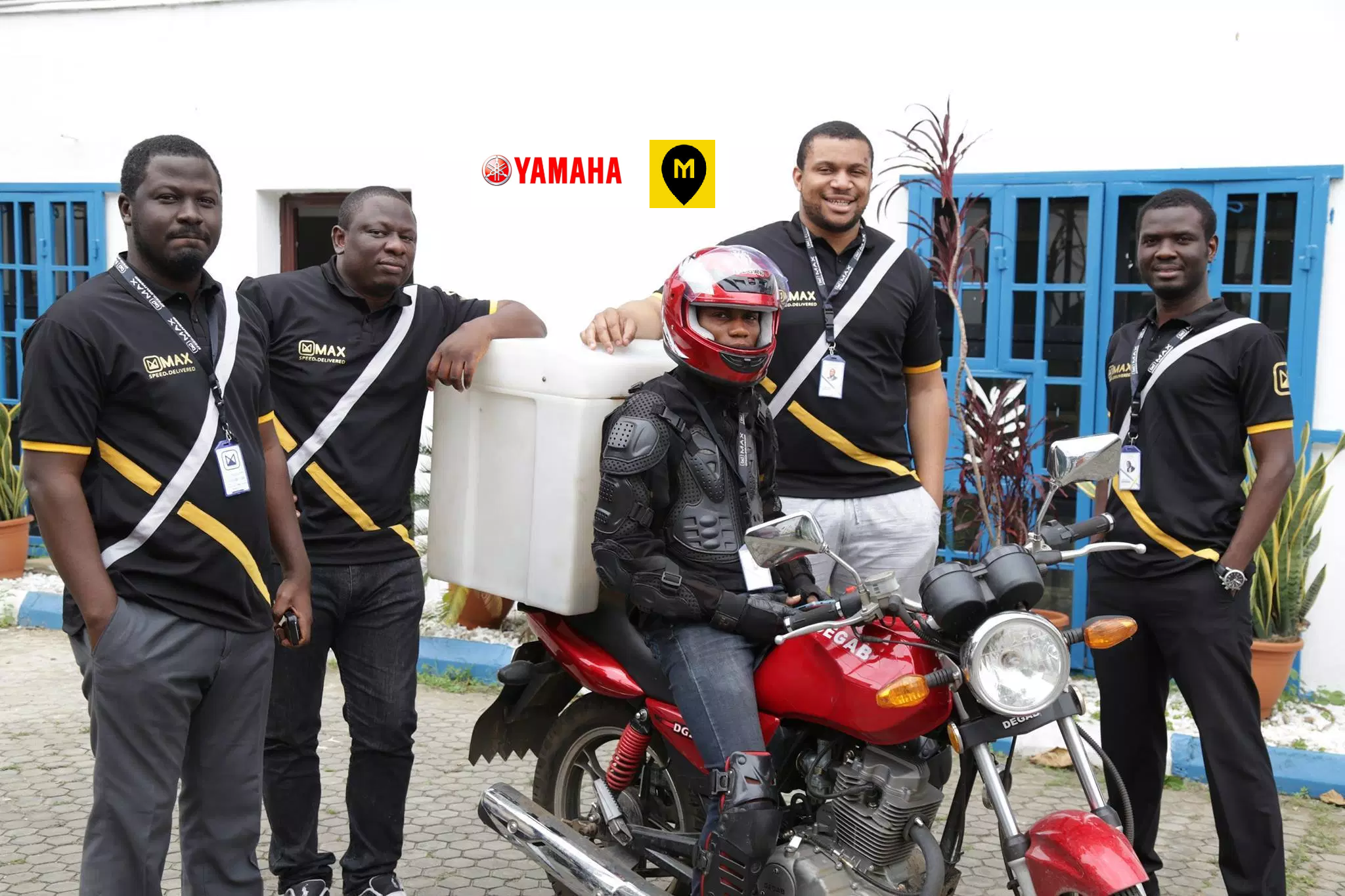
Then, when you come to Nigeria, you will notice that entities like Gokada and Max technically own (partially or otherwise) most motorbikes in their platform-fleet. The business model is to do“hire purchase” with the drivers who then pay over time for the assets. The drivers do not own the assets until they finish making the full amounts. Once that is done, the drivers can become owners of the assets. 

The hire purchase is a local adaptation to deal with supply paucity in an ecosystem where the drivers may not have the means to acquire assets. Sure, the companies carry the assets in their balance sheets, but without that in the playbook, there is no other option. Of course, they do claim assets-light because most will have a special purpose vehicle (SPV) for the financing of the assets. Yet, the African proverb notes that a bird that is perching on the anthill is still on the ground!

All Together

Open your mind as you examine any Silicon Valley playbook. The adaptation in the local ride-hailing domain has been critical to the promise in the mobility sector in the nation. Do same as you work in your sector.

It is important to understand that what Silicon Valley tech titans do in U.S. is different from their playbooks in Africa and other emerging regions. Google is a quasi-payment company in India even though it has none of such in U.S. Facebook is investing in connectivity systems in Africa  when in U.S., it was not an issue. Yes, for every new sign-up Facebook gets, Wall Street watches: IP address is IP address. .My point is that these U.S. firms are not doing them for charity, they have to become parallel ecosystems to pursue their missions.  Yes, they have to do things beyond that core mission which they have pursued in America because they do not have other entities helping them to fix the enabling frictions in emerging markets.

Remember – never start a company, rather, go out and solve a problem. If you understand that line, your mission will blossom.

Dump Your Silicon Valley Playbook!