DD
MM
YYYY

PAGES

DD
MM
YYYY

spot_img

PAGES

Home Blog Page 6664

House of Reps. Asks CBN To Suspend Charges Component of Cashless Policy

0

The House representatives has asked the Central Bank of Nigeria to halt the implementation of the charges component of the cashless policy.

This is coming barely 24 hours after the Apex Bank issued a circular directing Money Deposit Banks to charge 3% for withdrawal and 2% for lodgment in transactions at the excess of N500, 000, for individual accounts.

And for corporate accounts: It’s 5% for withdrawal and 3% for deposit for transactions that are in excess of N5 million. Upon the announcement, the policy has been met with heavy criticism with experts calling it “exploitation to enrich the banks.”

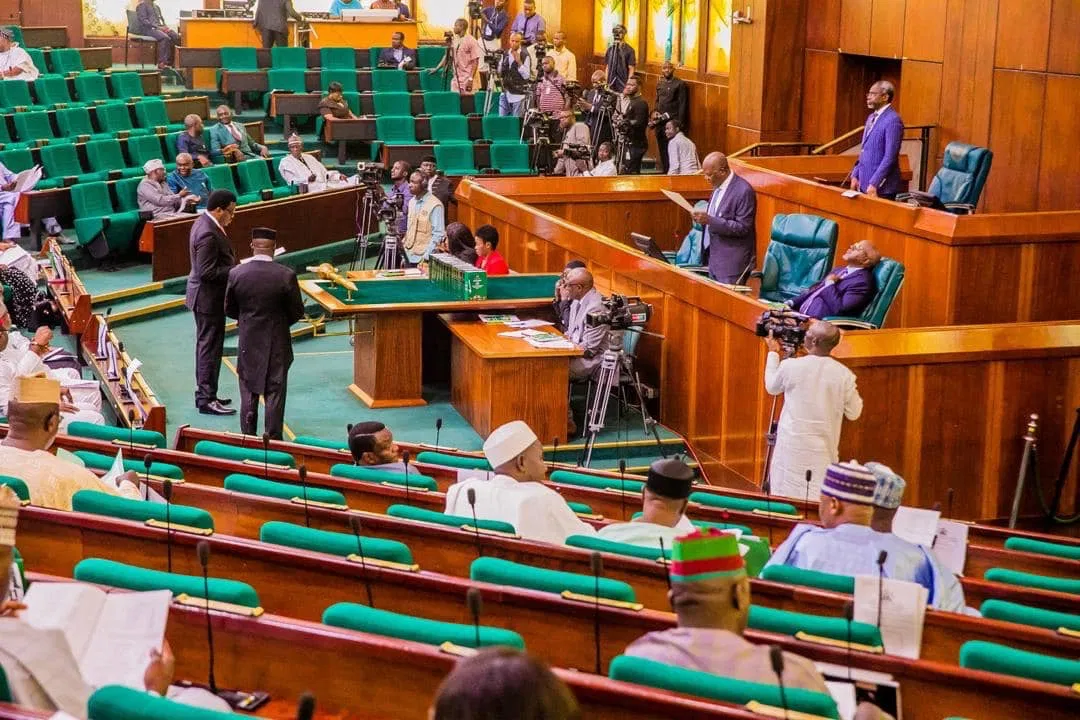
In view of the backlash that followed, the House of Representatives, has in its plenary session on Thursday considered the policy ill in the current economic dispensation.

The lower House said it has a negative impact on small and medium enterprises, which are the backbone of Nigerian economy.

Nigerians have been wailing over multiple charges by banks over the years, and believe that cutting the charges would encourage depositors to accept the cashless policy without being forced to do so through the imposition of additional charges.

The attempt to implement the cashless policy has been hitting one hurdle after the other since 2012, due to existing bank structure that thrives in customers’ exploitation. And the Apex Bank has done nothing or little to quell it.

It is in view of all these that the Thursday’s plenary session birthed the decision ordering the CBN to call it off.


The New CBN’s Cashless Policy: Exploitation In Disguise.

0

“Our Central Bank still thinks we are in the military era. If, for whatever reason, you are going to introduce charges for deposits, will you just issue a circular? No explanation? No justification? No sensitization? You just issue a circular and call it cashless policy?”

This is how the former DG of Bureau of Public Reforms (BPSR), Dr. Joe Abba, responded to CBN’s circular to all Deposit Money Banks entitled: RE: IMPLEMENTATION OF THE CASHLESS POLICY. Where all the deposit banks were directed to charge 3% for withdrawal and 2% for lodgment in transactions at the excess of N500, 000, for individual accounts.

And for corporate accounts: it’s 5% for withdrawal and 3% for deposit in transactions that are more than N5 million. The directive takes effect on the 18th of September, in Lagos, Ogun, Kano, Abia, Anambra, Rivers States and the FCT. The nationwide implementation will take effect from March 31, 2020.

Read: The CBN’s Gift

Dr. Joe Abba isn’t the only prominent Nigerian who expressed the sentiment of concerned Nigerians, Senator Shehu Sani did so also. He tweeted:

“The new directive to Banks amounts to selective corporate extortion.”

This is not the first time that Nigerians will have to complain about CBN’s enabled extortions in the guise of implementation of Cashless Policy. The pilot of this policy was first implemented in January 2012, following the same pattern of a few selected states first, then it took effect nationwide on the 1st of July, 2013. It was relaxed in no time only to be resurrected in 2015, with adjusted figures and charges. It has been intermittent since then. The only thing that has consistently improved over the years has been the frivolous transaction charges sanctioned by the CBN.

  • ATM charges
  • POS charges
  • Online Transaction Charges
  • Account Maintenance charges
  • Card Maintenance Charges
  • SMS Charges.

Read also: Nigerian Banks Hitting Record Numbers on Arbitrary Charges and Fees

In 2018, spurred by the outcry of Bank customers, the Nigerian Senate waded in and summoned the CBN Governor, Emefiele. In a motion sponsored by Olugbenga Ashafa, on the illicit and excessive bank charges on customers’ accounts. An issue the Senate acknowledged that it affects the flotsam and jetsam as long as you operate a bank account in Nigeria.

Senator Emmanuel Bwacha, while responding to the motion noted.

“Banks declare profits and you wonder where these profits are coming from – it’s from the sweat of the common man. Let’s come up with a law that puts banks on their toes.”

The truth in this statement doesn’t need a telescope, you only need to visit the page of the Nigerian Consumers Protection Agency to see things for yourself.

The then Senate President, Dr. Bukola Saraki, didn’t hide his disappointment either.

“For me this is a major step that we are taking.” He said. “This is because I introduced the first ATM that came into Nigeria over 25 years ago. Now, after 25 years, we should have grown out of these excessive charges and move on. So I believe that this is something that we must address to create an environment that protects all Nigerians, because these kind of charges in this economy affects everyone.” He lamented

Unfortunately, the efforts of the Senate did little to change the extortions. In the CBN’s circular directing banks to implement the 3% and 5% charges, the Apex Bank boldly noted that the newly introduced charges do not affect the existing ones. So we are talking about encouraging cashless policy through charges skewed in favor of the banking institutions as against their customers.

Compared to banking practices in the rest of the world, the CBN policy has been rigged against the Nigerian people. It has been nothing but a calculated decision to rip bank customers off in the name of encouraging digital transactions.

You pay the banks for keeping your money, you pay the banks for trying to keep more money with them, you pay them for helping them do their job (DIY, online transactions) etc. A Nigerian bank customer doesn’t hope for interests, not even in a savings’ account.

Though there is an argument that the policy will help digital startups, especially fintechs. That’s true, every bad policy has those it favors. But in this case, there are people who have suffered more losses from the existing chagrin, and need no more losses.

“Why do I need to pay an extra 2% when I deposit over N500, 000 or pay 3% when I withdraw same? Asked Dr. Dipo Awojide, the Founder of BTDT Hub, a career advisory organization. “After paying account maintenance charges monthly, ATM maintenance charge, stamp duty charges and transaction charges when I transfer to other banks? This cashless policy is confusing.”

The most confusing aspect of it comes from the Federal Inland Revenue (FIRS)’s announcement that stipulated banks to collect taxes (VAT) on online transactions on behalf of FIRS. That means, if you do cashless, you will pay taxes, if you do cash, you will pay charges. A good way to encourage people to keep their money away from the bank.

Read also: Online VAT Where The Nigerian Govt. Got It Wrong

The Director General of the Nigeria Employers Consultative Association (NECA), Mr. Timothy Olawale told PUNCH:

“Though the overall aim of reducing cash transactions is good, the policy will, however, increase the cost of doing business and force organizations and individuals to start multiple deposits and withdrawals in order to beat the charges.”

A sentiment that many Nigerians have expressed in various social media platforms.

A professor of Economics at the Department of Economics, Olabisi Onabanjo University, Ago Iwoye, Sheriffdeen Tella, also told PUNCH:

“The Charges are becoming too many that people may decide to not to take their money to the banks anymore. They may begin to look at other options.

“The new charges will not in any way encourage the cashless policy the CBN is trying to promote. I see it as being more contradictory. Government should look at other ways of making money for the banks.”

Another bone of contention in implementation of cashless policy over the years has been failed transactions. From the ATM to online transfers, leaving bank customers at a loss now and then. The CBN, in its quest to encourage a cashless society, has failed to address these issues head on. Even though it is apparent that the distrust emanating from transaction failures is more deterrent to the cashless policy implementation than the exploitative charges being imposed by the CBN.

National Assembly Withdraws the CBN Gift, Halts New Charges on Bank Transactions

4

I wrote a few hours ago that the Central Bank of Nigeria had given a gift to our fintechs through the cashless policy. This is an update – the Nigerian Parliament, specifically the House of Representatives, has asked the apex bank to suspend the initiative. Personally, I think the initiative is a good one, and I support it, because it will seed a new growth sector – the digital economy. Those clamoring that it would hurt the poor need to look at the data.  According to government data, 2% of the Nigerian bank depositors control 90% of the total value. Also, Nigerians who have more than N500,000 ($1,400) in their bank accounts are just 2%. Technically, this policy as announced will affect only 2% of affluent Nigerians who have more than $1,400 in their bank accounts.

The House of Representatives has asked the Central Bank of Nigeria (CBN) to immediately suspend the implementation of the new aspect of the cashless policy on deposits which has taken effect today.

The lawmakers took the resolution after adopting a motion brought under matters of urgent national importance by its spokesperson, Benjamin Kalu.

The CBN had announced that from Wednesday, September 18, certain cash deposits and withdrawals from individual bank accounts are to attract additional charges.

In a circular to all deposit money bank (DMBs), the Director, Payments System Management Department at the CBN, Sam Okojere, it said henceforth 3 per cent processing fees would be paid for withdrawals and 2 per cent for deposits of amounts above N500,000 for individual accounts.

The apex bank also said corporate accounts will attract 5 per cent processing fees for withdrawals and 3 per cent processing fee for lodgments of amounts above N3 million

Those who say the poor would be affected are not fair on this debate. If you can withdraw or deposit N500k in Nigeria, you are not poor, relatively! Yes, the “poor” (using that with decency) can still run their lives with cash unaffected.

Yet, this policy is also bad because it is wrong to decide for people how they would want to run their lives in this age of cyber-frauds and -attacks. The National Assembly may be smarter here.

PT Tweet

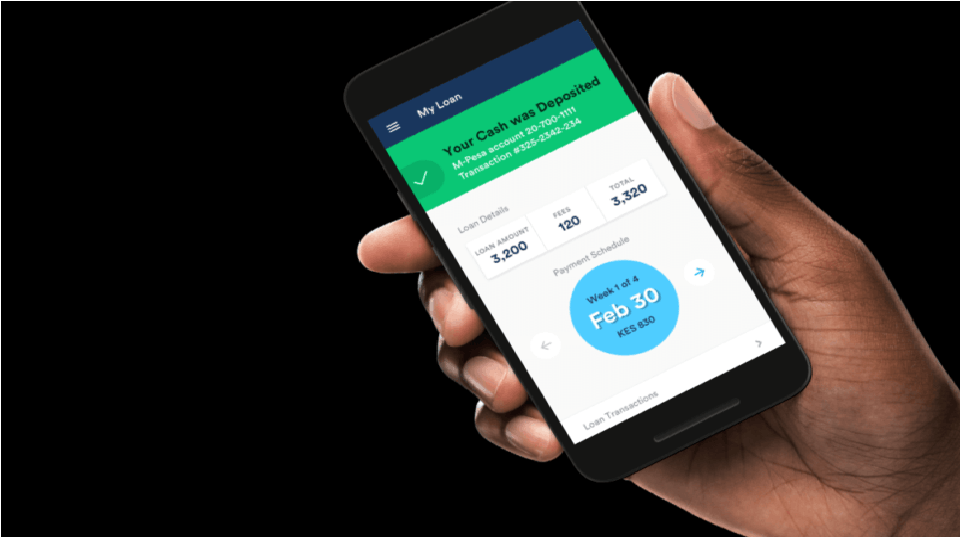
Google Goes After Predatory Personal Lending Apps

1

In a piece in Harvard Business Review, I noted that companies like Google, Amazon and Facebook are ICT utilities. In other words, they are the electricity and water boards that run the digital economies. The fear of these utilities is wisdom because without them, it is going to be hard to run an effective digital business at scale.

Now, Google is using that power to do good: stop predatory lending via apps in its Play store. Of course most African governments have seen 35% monthly interest rate as “innovation” – the very reason nothing has been done in that space. Technically, if you run the math in some lending apps in Africa, people are borrowing at effective annual interest rate of 250%!

Google now wants all mobile loan apps using its Play Store platform to ensure the repayment period for loans is not below 60 days. 

[…]

It said developers working on personal loan apps need to have data about the loan product in the metadata that allows it to verify the app is not charging astronomical interest, which is common with “payday loans’.

As typical, Kenyan parliament has called for review because Google has taken action. If you check, some of these apps are caging people despite the sound of liberation they beat; governments paid no attention for years. I hope Google follows through and fix this modern day shylocking!

Banks are forbidden to lend at more than 40% annual interest rate in some African countries; yet, people celebrate startups lending at 15% monthly as “innovators”. Some have received millions of dollars in funding to scale this pain to people. Let’s hope Google helps in a continent where consumer advocates are only there for collecting salaries and nothing more!


The Google Statement

Personal loans

We define personal loans as lending money from one individual, organization, or entity to an individual consumer on a nonrecurring basis, not for the purpose of financing purchase of a fixed asset or education. Personal loan consumers require information about the quality, features, fees, risks, and benefits of loan products in order to make informed decisions about whether to undertake the loan.

  • Examples: Personal loans, payday loans, peer-to-peer loans, title loans
  • Not included: Mortgages, car loans, student loans, revolving lines of credit (such as credit cards, personal lines of credit)
Apps for personal loans must disclose the following information in the app metadata:
  • Minimum and maximum period for repayment
  • Maximum Annual Percentage Rate (APR), which generally includes interest rate plus fees and other costs for a year, or similar other rate calculated consistently with local law
  • A representative example of the total cost of the loan, including all applicable fees

We do not allow apps that promote personal loans which require repayment in full in 60 days or less from the date the loan is issued (we refer to these as “short-term personal loans”). This policy applies to apps which offer loans directly, lead generators, and those who connect consumers with third-party lenders.

High APR personal loans

In the United States, we do not allow apps for personal loans where the Annual Percentage Rate (APR) is 36% or higher. Apps for personal loans in the United States must display their maximum APR, calculated consistently with the Truth in Lending Act (TILA).

This policy applies to apps which offer loans directly, lead generators, and those who connect consumers with third-party lenders.

MTN Rob Shuter’s Statement – “3G is much more relevant in most of our markets”

2

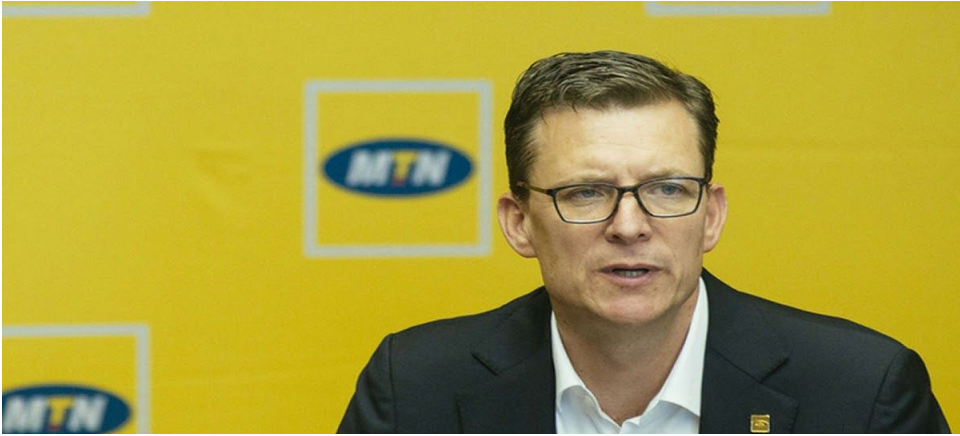
This is from MTN CEO, Rob Shuter: “3G is much more relevant in most of our markets” than 5G. He is a businessman in the real economy. He knows what moves the digits. All the hypes of 5G in Africa can wait!

“This is the technology that would be used for very specific cases. It would not be a technology for everybody because most people don’t need it, your phone works fine on just 3G,” Rob Shuter told Reuters at a telecoms conference in Durban. ..

“What we are doing now is to learn from the technology and get our network ready for it but I think 3G is much more relevant in most of our markets,” he said.

As you ponder that, I refer to this comment on on a recent piece on Tekedia. Learn from the legends, in Africa, and do not invest based on hypes from Beijing, London and California!

1. Africa has a demand problem and not a supply problem. 46% of pop is covered by 4G but only 9% 4G adoption.
2. Hence 5G will also be supply driven, and networks will be built even before users start using it.
3. While 5G is inevitable, it is not imminent. 2025 is a more realistic date for its mass market availability.
4. Globally, 5G rollout is not based on verifiable business case. Rather, it is dependent on market readiness. GSMA looked at 43 indicators of readiness for 160 countries and it is clear that African countries are not ready for 5G in 2019.
5. Leapfrogging is tantalising but unrealistic.

Now, that your AV, VR and esoteric Silicon Valley products must be calibrated with reality. Even if they build 5G networks, Nigerians do not have the urgency to update. Simply, if 3G  is stable and reliable, few will even care for 4G. 

My model is 2022 for immersive connectivity; 2025 seems fair for  5G at scale. We will be hoping for solutions similar to South Africa’s Rain network, as captured by TC Daily. Unfortunately, it will take time to have real demand to necessitate that in Nigeria.

South Africa’s youngest telecom, Rain, has launched a commercial 5G service, making them the first telecom to do so on the African continent. The newly launched service offers speed as much 700 megabytes per second and is only available in some parts of the country. Rain, a data-only network, has been working on the broadband infrastructure for quite some time. In February, it revealed that it had partnered Huawei, the Chinese telecom giant and leading 5G company, to help develop the capability. With no existing 2G and 3G infrastructure to maintain, Rain’s 5G service is supported by 4G infrastructure, and this allows it to leapfrog other telcos who need new spectrums to upgrade to the latest broadband