DD
MM
YYYY

PAGES

DD
MM
YYYY

spot_img

PAGES

Home Blog Page 6745

How to Develop and Maintain Good Self-Esteem

0

Having healthy self-esteem is very necessary. Everyday we hear a lot of messages that encourage us to develop our self-worth but we rarely hear feasible ways we can achieve that, and maintain it.

Lack of a good self-image can be damaging. To start with the person may have challenges relating with people. Some may be so timid that they allow other people to trample on their rights, while others are so arrogant that they trample on the rights of others. Besides, timid and arrogant people are not always good employees because they cannot work without supervision. Truth is, the timid person doesn’t have confidence in himself while the arrogant one feels so over-confident that he will not ask necessary questions nor seek for direction even if he is making a serious mistake (and I don’t think anybody will want him as a team member).

If you ask me what self-esteem is, I’ll say that it is when someone has the ability to find his own space in the world and then keep it. This person neither encroaches into another person’s space, nor allow somebody else to trespass on his own. A person with low self-esteem (the timid) will leave his space for others to take over, while the one with over-bearing self-image (the arrogant) will keep his own space and still encroach into that of another. But a person with a healthy self-esteem is neither timid nor arrogant; he is comfortably in-between the two. But, he is humble. Hope you know that humility is not timidity.

We know that people that have healthy self-esteem have a lot to gain. To start with, they believe in themselves and in others. They develop and maintain healthy relationships with people. They succeed in their careers. They have less pressure and good stress management techniques. The list can go on and on.

But then, for some reasons, people have low self-worth. I don’t believe that this is genetic because no one is born with a low self-image. It all has to do with the society’s influence on the individual. Some of the causes of unhealthy self-image are:

1. Criticisms and Unkind Words: Our society is filled with people who listen to others just because they want to criticise them, and those who use hurtful words on their fellow human beings, with or without knowing the effects of their words on them. These people are everywhere, even in the internet. They talk down on everyone – adult, children, male and female. This case is made worse if the victim made some bad choices or mistakes. Those around him may keep rubbing it on his face at every given opportunity. Why they do this could only be speculated.

Criticism and hurtful words can greatly affect children with negligent parents. Most times children need assurance from their parents because of the unkind words their peers or other adults used on them. When these children find no one to talk to, they feel neglected and rejected, and the hurting words used on them will start affecting their psyche.

2. Financial Status: Nigeria is a society that has high regards for the wealthy and the opposite attitude for the needy. People that found themselves among the financially challenged have to struggle to keep their heads high within the community. In fact, they may not be called upon for any decision making – their voices don’t matter. In my village, I constantly hear statements like, “Who are my? I don’t have money so who will listen to me?” When this type of attitude is allowed to seep deep down the person, bringing him out of it will be very difficult.

Another problem that could arise from low financial status is asking for financial assistance. This could bring different kinds of insult to the person.

3. Social Class: Everyone in the society wants to belong to the upper class. When people strive and make every effort to be among the prestigious but couldn’t succeed, they start wondering what their problems are. Some will tell you that they are not meant to be among the privileged. This is more problematic in societies where someone’s birth decides his class. However, note that social class is not a strong determinant of people’s self-esteem. This is because some people in the upper class may have low self-esteem, while some in the middle and lower classes may have healthy one.

4. Level of Education: In as much as financial status matters a lot in Nigerian societies, the level education is also a very important factor. The truth is that the well educated are also respected in our society. This accounts for the reason the uneducated wealthy Nigerian men strive to acquire higher education, even if it is just to attach the title to their names. What I am trying to say here is that the higher the level of education someone attains, the better his self-esteem, irrespective of his financial status. You will understand this when a rich uneducated person is quick to tell you that he will ‘buy you and your certificates a thousand times’ any time he feels belittled by your academic prowess.

5. Physical Appearance and Attributes: Our physical attributes can affect our self-esteem. Some people feel inadequate because they believe they needed one physical endowment or another. I know of someone who doesn’t feel comfortable coming out to perform in the public because she considers herself fat. I have a relative who is afraid to talk in the public because he was made to believe that he has the ‘wrong type of voice’ (and he truly would love the opportunity to engage in public speech). I know someone who complains that people laugh at him because he limps. I know someone who doesn’t want to come out during the day because he had a domestic accident that disfigured his face. What about those that bleach their skins because they want to have a different complexion? There are so many of them out there. Our society has made them feel so inadequate because of their physical attributes. But they need to come out of their shells and concentrate on their beautiful sides.

In order to build our self-esteem, we have to develop both our inside and our outside. This is because self-esteem is a thing of the mind, but it exudes from the inside and showcases itself on the outside. Anyway, let’s look at some ways we can achieve this.

  • Read a Lot and Feed Your Intelligence: The importance of reading can never be over-emphasised. Reading exposes us to a lot. The knowledge we acquire from the things we read can do so much for us – it helps us to hold intelligent conversations and it teaches us how to manage problems in our lives. Sounding intelligent boosts our morale and increases our respects in the society. The easiest way to gather knowledge is through books. So, read up anything you can lay your hands on.
  • Evaluate Yourself Objectively: In as much as we don’t have to let negative things people said about us affect us, we still need to be honest with ourselves and tell ourselves the areas that need to be changed. We are human, so we are not 100% perfect. This means that we have some characters that may be affecting others negatively. We need to find out these attitudes of ours and find how to change, modify or re-channel them. Honestly, when you have an honest and objective evaluation of yourself, you will turn out better. It will even help you in your career development because you will know your strengths and your weaknesses. This means that you will know where you will excel in.
  • Try not to Compare Yourself with Others: This has been a common saying these days, but it is actually easier said than done. Truth is that you will continue to compare yourself with your contemporaries, but you need to keep reminding yourself of your strength which is what makes you unique.
  • Replace Envy with Admiration: Envy is an emotion that can creep up on you and consume you if you allow it in. The only thing I can say here is that you should find a way to learn from the person you envy. Look at it as a business strategy and it will help you a lot. You can read the article I sent in earlier on learning from your competitor here.
  • Find Your Strengths and Weaknesses: Everybody has something unique about him or her. Your strength and weakness both make you unique. Sharpen your strength and work on your weakness. I always tell people that their strength is their active part while their weakness is their passive side that drives the active one. For example someone that is considered stubborn but innovative can re-channel that ‘stubbornness’ to resilience while working on his new inventions. So, he doesn’t need to be ‘over-submissive’ all he needs is to use that part of him that people complain about to bring up something positive. So, have you found your strength and weakness? Have you planned how to re-channel it? If you are a busy-body and talkative like me you may enjoy teaching, lecturing or research jobs (*smiles*).
  • Dress-Up: People always think it’s hilarious whenever I say that there is a difference between ‘putting on clothes’, ‘wearing clothes’ and ‘dressing up’. Some people wear clothes just to cover up their nakedness, some do because the community demands them to wear that particular clothes, and then there are the ones that wear clothes because they want to look good. Please, be among the third group. I’m not saying you should be a ‘fashionista’, or that you should break a bank, what I’m only saying is that you should always look your best. It has a way of making you feel good about yourself. Don’t overdress, but don’t under-dress either. Package yourself very well.
  • Work on Your Carriage: Our posture gives out certain impression about us. The way we carry ourselves can determine how people treat us. Like one beautician said, anytime we are walking, sitting, standing, eating and the rest, we should pretend that we have a thousand cameras fixed on every part of our body. In other words, we should be conscious of how we walk, stand, sit and all. Let us develop good postures, it says a lot about us. I will come back later with an article on this.
  • Work on Your Language: There is already an article on how to improve our speaking skills. You can access it here. When we work on our language, we should also consider our choice of words, manner of speech and pronunciations. They say so much about us and encourage or discourage positive attitudes of people towards us. Truth is, the way we talk displays our level of education, family background, financial status, social class and so many others.
  • Financial Independence: Knowing that we don’t have to beg people for money for our basic needs does a lot of wonders to our self-image. So, don’t wait to be told to find something doing no matter how little. You can find a side hustle to augment your income. A list of side hustles that can easily be engaged in Nigeria can be found here.
  • The People around You: I know a lot of people advocate that negative people should be cut off from our lives. That is necessary, to some extent. But we still need those people that keep us on our toes. So I’ll suggest that you look for people that will be honest with you so that they can tell you where should improve on. The difference between these people and those that try to put you down is that the latter will always complain without making any constructive suggestions except the ones that will benefit them. So be careful with people that you bring into your circle. Look out more for those that will encourage you one way or the other to come up.

Remember, nobody is born with low self-esteem. If you find out that you don’t have much confidence on yourself, it is not your fault, so to say. But if you have the opportunity to make some changes and you failed to grab it, then it becomes your fault.


Five Ways to Save Your Startup with Insurance

0

“I particularly remember the moment I realized my company was going to fail. My co-founder and I were at our wits’ end… If you’ve never experienced a failure like this, it is hard to describe the feeling… you realize you’ve been duped. The stories in the magazines are lies: hard work and perseverance don’t lead to success.” — Eric Ries(2011)

Entrepreneurship is hard. Very hard. To survive in its cut-throat environment, with every odd imaginable stacked against you is not for the fainthearted. But I guess you’ve heard this before.

I guess that you’ve also probably read somewhere that 90% of all startups are likely to fail. And yours, of course, is not exempt.

But here you are, building a new business and hoping to hit the million dollar mark soon.

Why?

Why would you keep investing time, dollar and faith in something that has a 90% chance to fail?

I’ll tell you why.

You love to build. You love to solve problems. You want to change the world. Which is great. Which is why you set out on this mission, hoping that with killer ideas, passion or even a great business model, you could change the world.

But ideas alone, no matter how great, are insufficient. This is what Neil Patel, entrepreneur and author, understood when he wrote, of the failed startup, Dijiwan, “They overlooked key aspects of business process and the ‘boring stuff’… small things can turn into large things. Some of the most important components of a startup are those perky issues of business process, business model and scalability.”

And Insurance completes this mix.

Every business is exposed to a variety of risks and liabilities. Although all risks are not created equal, many can cause delay or halt operations, distract managerial focus, weaken your financial capacity and kill the business. From structural, property and employee risks, to product liability and lawsuits, the damage can be severe.

A safety net to fall back on when emergencies threaten to ruin your efforts is, therefore, the only remedy. And that safety net is a balanced insurance program.

Who says you are insured?

Buying insurance is not the same as getting adequate coverage. Many entrepreneurs are under insured or paying for the wrong policies. Not only can this mar your ability to survive financially when uninsured accidents happen, you can lose your business for something that has nothing to do with a bad business model or a failing idea.

What can be worse than that?

Is insurance expensive for entrepreneurs?

All risks are not created equal. If the risks are minimal, you can choose to bear the financial costs for certain damages by retaining risks or avoid it by being really attentive.

However, any risk that can put an end to your entrepreneurial dreams should be insured against.

5 ways that you can benefit from buying the right Insurance coverage.

  1. Reduced health concerns.

Being an entrepreneur exposes you to a myriad of health and emotional challenges.

Striving to make a profit out of a difficult market, in extreme conditions, dealing with temporary failure and taking on huge risks is likely to have a toll on you more than you even know.

In this article, Tolu Ajiboye, writer and contributor at The Entrepreneur, refers to a research conducted by Michael Freeman, clinical professor at the University of California, San Francisco where 49 percent of entrepreneurs were discovered to have one or more mental health conditions.

Entrepreneurs, by the nature of the work they engage in, are very susceptible to health problem. But you can stay insured against health risks by adopting healthy living habits and buying the right health insurance coverage.

  1. Protection against business liability.

Whether your business operates from your home or not, you need insurance to protect liabilities that may accrue to the business during its operations.

This is because your standard homeowner’s insurance policy is not designed to cover for any liability related to home business activities so it is dangerous to assume or overlook this when operating from your residence.

You should also consider that personal liability policies have limitations that exclude your business liability from coverage. Even, umbrella policies do not cover business-related risks.

You must, therefore, buy a good business insurance policy to insure your business against structural risks, business property risks, employee injuries and risks, products liabilities, lawsuits, vehicle and human risks.

  1. To keep your loved ones safe.

Addressing the reality that you may die affords you the opportunity to support your family and loved ones when the unexpected happens and you, along with the money train, disappear.

You don’t need to have a family of your own to buy life insurance. What you should be concerned about is whether there are people dependent on you for their financial upkeep.

If there are, you should buy life insurance.

  1. You can keep working.

Being disabled and unable to work, whether for a short-term or long period, can have very negative effects on your business. Even worse, it can kill your resolve to succeed when your income stream suddenly dries up.

There is only one way to avoid this: getting insured against disability.

  1. You can be insured against under insurance.

Every Entrepreneur should take advantage of the Personal Umbrella Policy. With this, you get additional defense coverage, higher coverage limits for liabilities and security against gaps in your primary insurance policy.

Ironically, it is not advisable to buy any umbrella policy that the insurance company offers you. Not all umbrella policies cover the same risks.

It would be safer to consult a good insurance agent before making a choice.

Exclusions and Limitations: Figure out what it is that you are buying.

You should never buy an insurance policy out of assumption or only through word of mouth. Your policy must be tailored to cover your risks, which may be quite different from what your friend’s risks are.

Buying the right insurance coverage means hiring the best insurance agent to help you make the right decisions. It also means making only informed decisions when choosing whether to buy an insurance coverage or take it higher.

Here are four tips to keep in mind before buying any policy:


  • Only hire the best insurance agents. It is their job to identify coverage gaps and advise you on how to insure the most dangerous risks.
  • Have a financial plan and goal, assess the risks that you are exposed to while trying to achieve your goal.
  • If you have life insurance, ensure that your spouse or any one financially dependent on you is aware.
  • Buy an umbrella policy to cover for your personal coverage gaps.
  • Do not insure properties that you can afford to lose. If your business properties are easily replaceable, especially if your startup is still young and you are not confident that it may survive, you may close the lid on insurance. Adopting a careful, risk-evasive attitude may be more beneficial instead.


A good insurance program might just be the difference between your startup surviving or failing.

Sources

Ries, Eric(2011).The Lean Startup. New York: Crown Publishing Group.


Life’s Little Lessons- Experience is Still the Best Teacher!

0

I used to wonder why people made certain choices at different stages in their lives.

As I grow older and experience certain things, I appreciate the fact that you never know what decision you would take or what you would do if faced with certain choices.

Somethings come with age and experience!

You can never learn certain things by reading a book, listening to a talk, attending seminars or workshops,

Passing through the fire to learn, means you actually have to pass through it.

People say learning from other people’s experience is better than learning from your own experience. This is not always possible to fully grasp your own ‘made to measure’ learning need.

No two journeys are the same, you can learn from other people’s experience in some instances, but I tell you, you have to experience certain things yourself to learn and this kind of learning would make more impact

It does not have to be a negative experience; it could be a positive experience.

An experience would make some scales fall off your eyes and you begin to realise who you truly are and not what other people have made you believe.

Another experience could turn you into a formidable force, a giant that cannot be pushed from side to side, while others would humble you.

You begin to smile and laugh at things/events that would normally make you feel bitter or sad and you ask yourself, “why did I not know this up till now”. Don’t blame yourself – you wouldn’t have known if you didn’t go through the fire; you’re not a magician!

With every experience comes a learning point and sometimes disappointments could be blessings in disguise.

Talk is cheap, they say, and yes it’s very cheap. You need to experience it to grasp it!

I have learnt to – never say never!

I have learnt to stop judging people and the choices they make.

I have rediscovered myself through certain experience and interacting with different people.

Gokada Winning Strategy – My Letter to Gokada CEO, Mr. Fahim

0

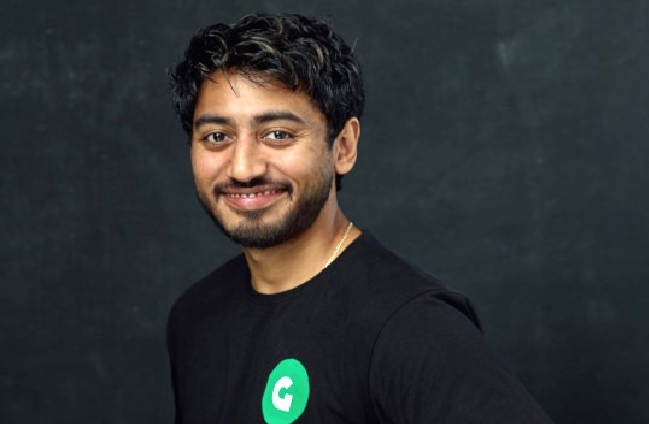
Dear Fahim Saleh (CEO Gokada),

I’m writing this piece to you so you’d know I care about your brand and I have decided to openly share strategies I feel will help Gokada scale.

I must first say that I am impressed that you had to quickly shut down Gokada because of different reasons, and it was a very wise move. Some of the reasons I think which were not all stated are;

  1. Competitors
  2. The regulatory policy
  3. Technical issues.

I wrote a post a few weeks ago about how it is safer for start-ups to swim in blue oceans and not red oceans because red oceans are bloody. Yes, in the red ocean, it is a battle of money, and who can endure pains for long and who has the better strategy. 

Quick analysis – Bigi Cola penetrated the beverage industry through price and is planning to match even with Coca-Cola and Pepsi. That’s a risky move like I analyzed. The reason is simple: in trying to defeat a bigger competitor, you don’t play a price war. You’d go bankrupt. Coca-Cola can declare a price war against them by reducing its price. Coca-Cola owns Fanta, Coke Zero and other brands; it will not die for doing price war.

Let me quickly take everyone back to how Microsoft dominated the computer industry owning 99 percent thereabout back in the 90’s. Bill Gates played a game of price and won even though he was charged to court by other companies for taking almost all the customers and giving them crumbs. He played monopoly. I love monopoly.

Now back to the problem on ground, I was quite happy when I heard about the money you raised and I felt, well, Nigeria is having a good turn only to see news about another ride hailing service O’Ride. For some months now, I have been seeing O’Pay all over Facebook, and I didn’t know it even had anything to do with O’Ride. I am not against any startup, but this is my letter to you and what I think.

O’Ride has the money, ten times more than you raised so it’s very impossible to go heads on with them, and I believe they even have more bikes out there. Can we talk about analysing many things, and see if you need to build a blue ocean strategy and come back fortified. Let’s consider some things: I call it the GOKADA STRATEGY.

This strategy was developed by me in less than twenty minutes, although it took a lot of time to finally put it down on paper. So we have a major bully in the market O’Ride and we have Max.ng as well. What are the key things to write down on board as we strategize? Remember, I’m offering this service openly and can go deeper from here.

  1. Price: I saw on facebook a few minutes before I began writing that you can get a ride for fifty naira with O’Ride. Now, I am not so aware of how much a Gokada ride will cost but I’m sure it will be more expensive. Let’s analyse the psychology of consumers in ride hailing.

The average Nigerian has seen okada as a cheap form of riding and as a “not well to do” person mode of transport. Let me explain further.

We have Uber, Taxify and the normal Lagos Danfo. A person in the middle class will prefer to take Uber for Danfo seeing it gives this sense of class to him. The same with the top class people.

Danfo bus is not an option for some middle class and low class people. 

However, when it comes to bike riding, there’s no class attached to it. Both the top class and the low class see bike riding as bike riding, provided the bike is a neat bike.

Why am I taking my time to let you know this Fahim? It’s because the price war cannot work if we try this approach. O’Ride charges fifty Naira or thereabout and Gokada charges more, everyone will go for O’Ride because there’s no way it distinguishes the poor from the rich. The rich man will not say he will go for Gokada because they charge five hundred Naira and O’Ride charges fifty naira. It’s a bike.

The rich will always want to show off that is why besides comfort being a consideration, they will still use Uber because of class. However, riding a bike has no class, so why still spend so much money when I can always get cheaper ones.. If it’s price, we’d lose customers.

  1. Convenience: Well, here’s something we can focus deeply on. Both ride hailing services offer convenience with their bikes to customers so I am not referring to the customers angle. I am talking about the part of the riders themselves.

Of late, I have seen O’Ride in the streets of Akure where I reside and I also have seen Max.ng. One way or the other, I am yet to understand what Max.ng is doing in Akure, and the business model, seeing that Akure is a city with people who do not see time as a commodity. The road network is always free. Here’s what I mean: Akure is a city with many government workers, less holdup and simple road networks as well as middle class earners. So what business model could Max.ng be operating on seeing an average person in Akure choose a normal bike even if there’s just a ten naira difference between that of Max.ng and a normal bike? They are not in a hurry like Lagos, places are easy to locate, so having a ride hailing service here is off point except the bikes run at the same price as normal bikes. So, what is the business model?

Same way Uber cannot work in some cities like Akure. One way or the other, I feel they ran because of O’Ride. Funny enough, O’Ride is also here and I was surprised to see them everywhere, and people using it.

Now back to convenience, I have not used this ride services before, and I don’t know how it works, but I noticed there is a mobile app. How easy has it been for the riders to use the mobile app. Matter of fact, how convenient is it for them using phones and riding a bike at the same time.

Here’s my point, “if” a mobile app is what is being used, then there is definitely a need for a better strategy for convenience. I saw a bike man this morning with his android phone trying to swipe even as he was riding. What came to my mind was that he was trying to use the mobile app. He was from Max.ng.

  1. Safety: The riders are well trained, fine. But how safe is using a mobile device while riding. I do not think it is safe. Matter of fact, it is very risky.

I saw a Max.ng rider trying to navigate his phone with his left hand and at the same time ride. Every ride hailing service is defaulting in this so here’s a chance for Gokada to take the lead. There’s a unique selling point here and I will love everyone to read my piece on unique selling point. Firstly, Fahim, you’d need to make sure all your riders are locals and if you want to make technicalities easier, you get bike men that have been in the business in such areas for some time.

Why did I say that?

One of the burdens locals who have spent some years in such a location will ease off is the fact that they will not need to use navigational to get to locations. While that’s just a light issue anyways, Gokada needs to find a way that will help the riders use their mobile devices to navigate without having to be distracted. They could hire a good product development team that will help connect the Google AI navigator with the helmet or whichever way they can come up with.

While they do that and fix it, it becomes a strength and a unique selling point. Once that is fixed, send creatives advertising agencies to create ads on how unsafe riding are without such a feature and why Gokada should be the choice. Dwell on this as a selling point. Safety should be a selling point.

  1. Brand Addiction: Why do we use Facebook everyday or Instagram and not some other apps? The apps have some things that make them addicted.

So far so good, I haven’t seen any distinction between these bike services except for the fact that they have different colours so it’s difficult to bring up a brand identity, talk less of a brand addiction. Gokada needs a unique selling point and it is very hard to come up with one but very possible.

What unique selling point will do is that it will help in the game of heart vs hype. I wrote a piece on that and I emphasized that heart always wins in the long run. What does a bike do other than ride?

This is where we need to do a detailed study on the customers and this will be very deep. At this point, I will love to be pessimistic that I don’t see the Red ocean a good place for Gokada.

Gokada should create a blue ocean. Creating a blue ocean will help Gokada create a niche for themselves. Should Gokada just be a ride hailing service or ride hailing service for working class or for the street or for those who want safety? It must carve out a niche.

Fahim, I wouldn’t want your strategies to be to combat O’Ride. Work on how you can fix the technicalities. Besides, I don’t want to talk so much on how you can partner with fintech start-ups as Prof Ndubuisi Ekekwe suggested. That will be on another day. I really believe Gokada can come back better.

Cheers to them.

Ajayi Joel

Beyond HR Departments

69

Human Resource department is always considered to be a puppet of management. HR seems to be losing its relevance day by day in the corporate world. Everyone assumes HR departments should know everything about underperforming employees. I completely agree. 

However, we must always remember that HR doesn’t own the company. They only implement company policies which they also act on. HR are humans that can make mistakes. They have families too. They go through emotional and struggles just like everyone else. Yet, they show up at work and manage employees wellbeing. 

I read Michelle Jesus’s story. She talked about her experience in the corporate world laying more emphasis on HR departments. According to her, she was underperforming at work because she had a mother who had just turned widow. So she had to be juggling work and seeing her mother who had just lost her husband, leaving her mentally and physically drained. 

Michelle said, ”I had a widowed mother who was still shocked about the death of her husband (my father). I told our HR to excuse me for some hours during a meeting I wasn’t even needed. She refused. Instead, she sat me down and told me to tell my mom to “move on and be independent” and I need to set my priorities right. I was speechless for a moment gauging her sincerity. In the end, I told her if my mom tells me to resign, within a heartbeat, I’ll leave.”

Looking at Michelle story, everyone will blame HR for being heartless, but the truth is – the company’s policy is responsible for everything. ”Missing Empathy” in the corporate world is not HR’s fault. Stop blaming HR departments. Blame top management. They implement those policies HR act on. 

HR are the reflections of the company’s policies. Top management most of the times will never admit their mistake. Statistics show that up to 60% of people leave managers, not the job. This example is a stark reminder that there are people in positions of responsibility for the success of others who have forgotten about helping those in their area of responsibility to be successful. 

Once a manager sees a person only as a disposable, replaceable resource, that can’t help but affect the view of everyone working under that person. And the effect is what we see in a large percent of people not engaged at work. Care about employees as people. Invest in your people like you never want to lose them and watch for a reciprocal effort to perform, to be loyal, and to be productive. 

Employee recognition, engagement and reward programs have a real purpose and when used wisely can codify and support stronger manager/employee relationships. However, it is hard to come by in the corporate world. HR can’t show employees empathy because top management won’t show HR departments empathy as well. Everyone is under pressure. Bringing results is all that matters. 

Instead of blaming HR, the values of the organisation should be questioned. If a person can not understand the pulse of his/her direct reportees and need HR to tell how his team is feeling or need HR to inform him about them. Then the organisation culture is in question and the responsibility lies with all leaders on the Top not HR.

The challenge is that in most of the organisations, people think and interpret that Culture is some creation of HR which is a misconception about culture. Blaming HR departments, in this case, is a reflection of the shortsightedness of the leaders of the organization.

Organizations need to revisit their values and need to develop a culture which is displayed in the behaviour of the people of the organization.