DD
MM
YYYY

PAGES

DD
MM
YYYY

spot_img

PAGES

Home Blog Page 6757

The Game Plan for Waterways Transportation in Lagos

0

Lagos has over 5 million cars and 200,000 commercial vehicles on the roads. Where the national average is 11 vehicles per kilometer, Lagos daily records an average of 227 vehicles per every kilometer of road being used by its 25 million people residents. About twelve million commute daily, meaning 65% make daily use of road transport making its resources over stressed. 

Game Plan: If Lagos can focus on the remaining 35% utilizing water transportation, setting a standard fee of 200 Naira per trip as the lowest fare to commute between two places via the waterways, and making a profit of 50 Naira on each trip per passenger;  if we put a target of 1 million trips daily for 12 months, it’s simply equates to 50,000,000 Naira daily in revenue multiplied by 365 days which equals to 8.3 billion Naira. Considering staff salary, maintenance and other running cost at 10 billion yearly, we still have a whooping 8.3 billion Naira as profit being generated by fully utilizing the water transportation system. (This does not consider the cost of equipment yet which is treated as fixed cost.)

Type of boats: we could get really good ferries at very good affordable prices that make use of solar energy or we could still incorporate the local wooden boats thereby giving more jobs to the local manufacturers of such wooden boats attached to a speed engine.

Additional Features: Aside from the main feature of transportation via an Uber like application, we would be incorporating the following features:

  1. We put together a well planned logistics menu platform for utilizing the waterways In Lagos where we have an Uber like application for boats where you can book to transport yourself, goods etc from one place to another. 
  2. We get people who have boats for lease to list them on the platform, we would also list our own boats available with their corresponding daily routes and fares for different destinations and services being offered. 
  3. There would also be a tourism menu on the application where they can book a local boat cruise and book international shipping trips, cruise and voyage.
  4. Users can also make use of the application to list their yacht and other luxurious boats for hire by musicians for various purposes like video shoots and picnics.

The game plan above has two components which I think are critical for modern startups: technology and renewable energy usage. Yes, for any startup to succeed in this modern 21st century business ecosystem, I feel two factors must be in play here which are:

  • Technology: Starting up a business without incorporating technology in it is like building a dinosaur business; it’s already extinct. Ease of process, sophistication and ease of access should be the major keys and decider here.
  • Renewable Energy: you must seek to go clean in terms of energy generation as soon as possible, this is to be climate compliant and to reduce recurrent expenditures geared towards maximum capital efficiency. If you don’t incorporate renewable energy in your business, then you are building Rhino Business, it’s soon to go extinct.

A Simple Model of Economic Prosperity for All

1

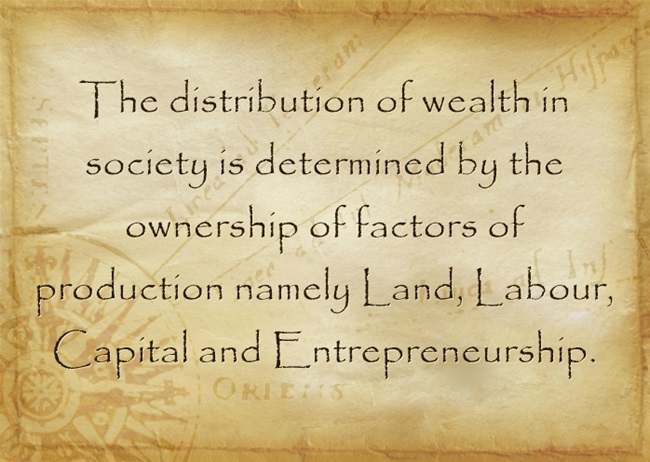
According to economists, the distribution of wealth in society is determined by the ownership of factors of production namely Land, Labour, Capital and Entrepreneurship. So, people who own one or more of the factors use them as sources of income as they engage in economic activities. You pay me rent for using my land, wages for labour, interest for capital and profit goes to the entrepreneur. 

Based on the above, we can capture all individuals in the society and model a possibility of economic prosperity for all. We will be making some assumptions along the way. 

Before we go further let us agree that all human beings have at least one factor of production, hence, this implies that we all  are capable of earning income upon putting our factor input to a payable service. In this model, only those who fall in the category of children are excluded from factor owners, in that they are not of working age; child labour is illegal. Persons of disabilities to join this category as it is nearly impossible or extremely difficult to have them engage in many forms of economic activity. 

Starting with the most popular factor of production labour, we can agree that all who are not children or disabled have possession of labour to offer services and earn income in the process. We also know that with skilled labour comes higher compensations. So, an individual of working age is free to find a paying employer. There exist some options from menial jobs to skilled jobs. If an individual is lucky enough to have taken advantage of free education offered by the Nigerian government from Primary to Junior Secondary School they will have more options of where to offer their labour no matter how little the compensation. Upon getting employment, the owner of labour can decide to acquire more skills and attract better payments. The individual is now able to fend for himself and others. In the current times, I have met young people who sponsored themselves through higher institutions of learning in Nigeria. We cannot deny that tuition in Nigerian higher institutions are affordable.

As for those fortunate to own lands, they have the choice to engage their land in real estate and receive rent. However, since the majority of the Nigerian population are employed in the agriculture sector and the country has vast arable land, we say the owners of land are the farmers. So, the farmers own one factor land from which rent comes. Also, they produce food for the country which qualifies them as entrepreneurs (those who combine the other factors of production to make a service or product). 

Entrepreneurs as we know them come into the economy to solve difficult problems and earn a profit. We have several of such problems which could mean several opportunities for the entrepreneur. In our model, one opportunity for the entrance of the entrepreneur is the gridlock in the agricultural sector. Low output from the farmers, low pricing of farm produce, lack of access to markets, weather variations among many things leave the farmers perpetually poor. The entrepreneur will prosper in these settings.

Finally, we have capital, which includes machinery fixed or mobile used to produce goods or services. Owners of capital charge interest. These machines are needed in agriculture and other sectors, to boost productivity and increase profits. 

So, if you have at least one of the four factors of production, you should be living above 3 dollars a day. Remember this is a simple model, meant to stimulate development thinking.

Dodoma Wines Tanzania: I heard it from the Grapevine – Missionaries, Grapes and the Wedding at Cana

0

When I first published a paper based on an evaluation of the impact of the country?of?origin effects on the consumption patterns of “made in” Nigeria Guinness as opposed to Guinness “owned by” Ireland in 2011, I had not imagined that the alcoholic beverage market was being disrupted.
 
Since that paper was published, there have been numerous manifestations of the changing landscape of the booze industry. With the rise of craft beers and transformation of Prosecco to Jay Z’s decamping from Crystal to Armand Da Brignac (aka Ace of Spades) coupled with the scramble for Africa orchestrated by big brands such as Heineken.
 

Fastforward to a recent report on Tanzania, which is now Africa’s second-biggest wine producer after South Africa  producing arguably tsome of the best and sweetest wines in Africa. Who would have thought about this only a few years before?

 
According to a recent report by How Africa News entitled “Here are 9 Most Popular Tanzanian Wines that Kenyan President Uhuru Kenyatta Can’t Get Enough Of”:
“Grapeines were first introduced to Tanzania’s central zone in 1938 by missionaries from the Hombolo Catholic Mission, who,  after independence assisted in seting up the first commercial production in Dodoma.”
 
The same article goes on to provide some insight into that place called Dodoma:
 
“Dodoma is Tanzania’s major  grape growing region and the four acre grape farm at Dodoma’s Isanga Prison was the first government institution to invest in wine, in 1969 it built a winery plant and achieved international recognition by becoming Tanzania’s sole  buyer of grapes for wine processing.”
 
The rest as the saying goes, is history!
 
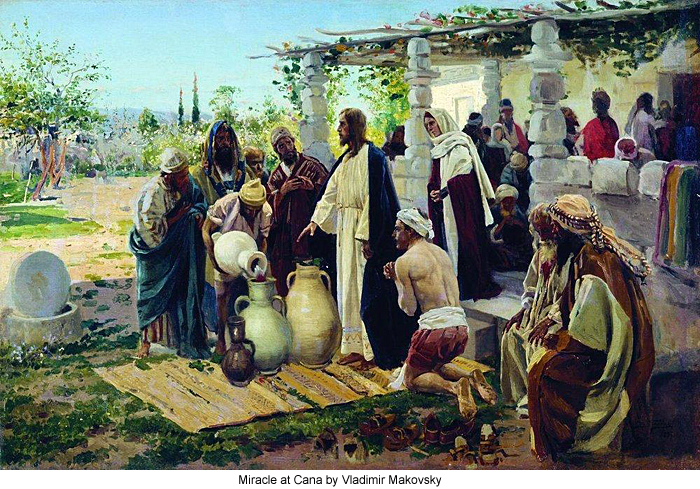
Talking about history the story of religion and booze linked to the origins of Tanzania Wine can be linked to the biblical narratives of the Wedding at Cana where Jesus turned Water into Wine. See John 2:1-12.
 
Likewise, the rise of South Africa in this sector disrupting the old guard such as Bordeaux and California, i staking on a new turn from the East Coast of Africa.
 
Finally, let’s remain mindful of the fact that this is agriculture, and that is a key focus for the development of Africa – Artificial Intelligence, Agri-Tech or whatever other nomenclature exists out there, we need a tangible, critical mass of this nature to secure the future of Africa and its Agricultural sector.
 
Key highlights:
The Grapevine 
Missionaries and Grapes
The Miracle at Cana
The Wine Trail
Craft beer   
Tanzania 
South Africa
Dodoma Wines
Presidential Wines
Nigerian Guinness 


Nnamdi O. Madichie, PhD, is Director of the Centre for Research and Enterprise at the Bloomsbury Institute in London. He is a Fellow of the Chartered Institute of Marketing (FCIM). He has published extensively in the areas of Marketing and Entrepreneurship in Emerging Market contexts. He is author of “Made?in” Nigeria or “owned?by” Ireland? published in Management Decision in 2011
Madichie, N. 2011. “Made?in” Nigeria or “owned?by” Ireland?”, Management Decision, 49(10), pp. 1612-1622. https://doi.org/10.1108/00251741111183780

Why Nigerian Population Control Strategies Have Not Been Effective

0

As if Nigeria doesn’t have enough challenges, the fear of fast growing population has joined the queue. This problem is already being felt by some individuals, especially those that have about four or more children, who grumble about the increase in the family expenditure. As the economic condition of the country gets tighter, the bites of population increase deepen.

A lot of researches have been done and recommendations given towards bringing the population growth under control. For instance, my mother told me that there was a time teachers were trained on population control strategies so that they can train those at the grass root level. They did their best but it didn’t stop the growth. The health sector has carried out several campaigns on birth control but it still didn’t stop what was happening. Economists have done their own, where they recommended something about decentralising industries. But all these efforts have not really yielded the desired results so I think none of thems has been able to reach deep down to locate the underlying cause of the population increase – culture.

Culture is commonly defined as people’s way of life. The culture of a people determines how they live, act and think. There is need to study the culture of the different people in the country so that it will be easier to devise ways of battling uncontrolled population growth. When the strategy devised didn’t favour the culture of the people, it will fail.

Well, I am going to point out some cultural beliefs and practices among the Igbo’s that can encourage population growth. Being an Igbo, I can only discuss that which I am conversant with. So I’ll advise that those from other ethnic groups should also find out what can encourage incessant child birth within their communities.

So, in Igbo culture, children are treasures. Yes, I know it is the same thing all over the world. But our own is different. When I say ‘treasure’, I mean ‘treasure’ – literally. Children are seen as wealth in Igbo culture. The number of children you have determines the size of your wealth. My dad once told me that someone told him to have more children because five was too small, and that he can’t stand before other men and talk. You can imagine when five children were considered small. Anyway, I thank God that this ideology is gradually fading away because some men are beginning to grumble about expenses while some women are complaining about not having time for their jobs and businesses. But, we still have those that still think this way.


All children are special in Igbo land, but some are more special than the others (Lol). Gender inequality is still a problem in the Igbo tribe. That you have seven children is wonderful, but if they are all girls…well you have to continue bringing them out until at least one boy joins the number. A family without a son is considered unfortunate. Should anything happen to that man, his wife and children may end up thrown out of the house and the man’s properties taken away from them and shared among his male relatives. Daughters in Igbo land are looked at as ‘somebody else properties’ because they will get married and leave their fathers’ houses. So it is seen as improper for them to inherit any of their fathers’ wealth and take to their husbands’ homes. So for a man to be ‘balanced’, he and his wife (or wives) must have a son that will inherit his wealth and ensure that the family’s name didn’t vanish from the face of the earth.

Note that a family that has just a son will be uncomfortable because that son is the proverbial “one eye that owes blindness”. This means that if anything happens to him, … we know the rest. So, this family will continue trying for more male children till they arrive at a comfortable number.

I know you will be debating about a family that already has many male children but the mother is still producing. Honestly, the major reason behind this one passes me. But let us look at something about our culture. In Igbo land, a child is expected to take care of his aged parents. But then, the male children have been said not to do this very well because their wives won’t take good care of their mothers/fathers-in-law. Therefore, every woman wants to have a daughter that will take care of her at old age. Like I said earlier, this is something I believe that could be the possible cause of this. I believe so because women say so themselves. Besides, I have just two sons, and since I came back to work in the East I kept receiving queries like – you don’t want a daughter that will take care of you when you get old? Try more till you a daughter comes. Boys don’t take care of their mothers o. You don’t want to go for omugwo? (for sure, I’ll go for my omugwo now, in my sons’ houses. *smiles*). So you see our problem, boys are important for some reasons, while girls are necessary too.

I want to touch some aspects of our marriage institution. In Igbo culture, a man is free to marry as many wives as he wants so long as he takes care of all of them and the children they bring forth. The coming of Christianity, Western education and Western civilization has discouraged this. But that doesn’t mean it no longer happens. The only thing is that it is hard to see a man living with many wives. But our traditional marriage institution still allows a man to send his wife back to her father’s house and marry another one. Also, a woman that is being maltreated by her husband is free to go back to her father’s house and remarry. All that is needed is for the bride price to be returned to the man and the marriage contract will be severed. “How does this increase the population?”, some people may ask. Ok, let’s look at it this way – when a woman, who bore children for her ex-husband remarries, she will be expected to have more children for this new husband. This second set (or even third set) of children would have been avoided if the first marriage was still ongoing. In the case of the man that divorced his wife and remarried, the new wife will want to give birth to ‘her’ own children no matter how many children the man had from his other wife (or wives) because she believes that the children of another woman cannot take care of her at old age. Besides, she will also want to partake in the inheritance of the man’s properties (which can only be done through her male children).

Still on the marriage institution, a family that has just a son may decide to marry a wife for him when he is still tender. The essence of this is not because they want the son to be sexually active at such a tender age (nope, not at all) but to ensure that his linage continues should anything befall him. So this ‘wife’ will be giving birth to children that bears this tender boy’s name (please don’t ask me who gets her pregnant, we have other pressing issues here). But when this son grows up and is old enough to marry, he will still go out there to marry someone of his choice, who will come in to start producing more children. So you can imagine how many children this young boy/man has now.

A woman that bore only daughters is allowed to marry another woman that will bear more children for her. This tradition is quickly fading away because parents are beginning to query why their daughters should marry a woman, and the daughters themselves are no longer interested in having women as husbands. But it is still in existence, though it has a different format – they will discuss with the girl’s family in private and present a male relative to the public as the girl’s husband.

There are so many other practices encouraged by our marriage institution that increases the rate of population growth but they all centre on one thing – the quest for more children, especially the male ones. Maybe this is why the teachings and campaigns on population growth have not really been effective. Those campaigns have not really touched the major factors that encourage the increase in birth among the Igbos. So here is what I think should be done to control the birth rate in Igbo land.

Every Igbo family wants to have a male child but most of them don’t know how. Unless attention is paid to teaching couples how to pre-select their children’s gender, the ‘give-birth-to-the-number-of-children-you-can-train’ campaign may not work. In fact, I don’t think it is really working because couples only find out they have bitten more than they can chew after they have taken the bite. But if these couples are able to pre-select the gender of their children, they may consider taking a break after having like three of them. At least I know it worked in the small scale, so I believe it will work in the large scale.

This is a call to concerned medical practitioners, marriage counsellors, religious organisations, NGOs, and well meaning individuals and organisations – let our people have the power to choose the sex of their children so that they can have the number of children that they can train.

Tortoise, Fintechs and Central Bank of Nigeria’s Financial Inclusion Goals

0

Once upon an animal clime, the Tortoise was madly in love with the only daughter of the King. The problem is, the King does not want Tortoise, who is famed for his self-contentedness, to succeed him as King. Yet, he also does not want to offend Tortoise who has being the Crown Princess’ childhood heartthrob.

The King’s preferred successor was the Tiger.

The King happened on a plan.

Knowing how dead slow the Tortoise can be, he declared that the Crown Princess shall be bride to whoever wins the race up the mountains of the dwarf goats between the Tortoise and the Tiger.

Tortoise knew he had no chance against Tiger in terms of pace and speed. He, therefore, requested of the King that the race should start from the top of the mountain and end at its heels. The King gave his approval, especially as the Tiger doesn’t see how that can change the race outcome.

Tortoise approached his friend Elephant for one little favour. Incidentally, the Elephant has been chosen as the Referee to blow the trumpet from his trunk. Now, everyone knows the Elephant has a habit of stumping his hoof whenever he bellows.

On the day of the contest, the Tortoise appeared on the scene with the empty shell of his late grandfather tied to his tommy in an embracing fashion. The crowd laughed at him –  a man who cannot run when free now attempting to win a race carrying a dead-man’s shell. To make matters worse, Tortoise went and positioned himself behind the Tiger, at the foot of the Elephant. They concluded the oracle that advised him thus must have been struck by severe fever of the brain.

All set.

Elephant raised his trunk, gave a loud blast of a starting sound while simultaneously kicking Tortoise with his powerful hoof.

That kick lifted Tortoise and landed him just a few inches near the foot of the mountain where he simply rolled across the finish line to win the race even before Tiger has done half of the distance.

Now, you know the rest of the story.

What you may not know is what business the Tortoise may have in common with Fintechs and Central Bank of Nigeria’s goal of reaching Nigeria’s 60.1m unbanked populace with financial products by 2020.

It has become common knowledge that as at 2018, about 36.8% of Nigerian adults do not have access to formal financial banking services with 44.1 % being male and 55.9% female. It was also noted that about 71.3m Nigerian adults have access to mobile phone while a very sizeable number do not have a phone. The bulk of the unreached and under-served persons are found in rural and semi-rural areas with Northern Nigeria accounting for the largest numbers.

You may find that Mama Risi, from whom you buy vegetables at a roadside stall, does not have a phone not to talk of bank account. She may ask you ‘wetin I wan put inside bank account?’ But don’t be surprised to discover she contributes up to N5,000 in esusu each weekend.

Did I tell you Mallam Bello makes a return of up to a million naira at the end of each harvest cycle from Onion alone? No, I did not.

People like Mama Risi and Mallam Bello who farm your Onion in Birni-Kebbi make transactional payments majorly via cash in the informal market. They are inhibited by lack of tailored financial products, limited literacy, affordability and institutional exclusion.

Like the King in our story, CBN has set a goal of reaching the 60m financially excluded Nigerian adults by 2020. Seeing, however, the pace of marketing and distribution efforts of existing grassroots-focused Fintechs providers in the country, I dare say that the finish line is more feasible for the Tortoise than for us. Market players such as Firstmonie, Paga, PayNow among others are making efforts but most of these efforts seem to be concentrated among urban and financially included populace.

Prove me otherwise, please.

As someone who has been involved in successful rural marketing on several products, I can tell you that not much is being done in taking these products to the rural market as at date. The reasons are not far-fetched.

That very few of these products and marketing activities are being developed taking cognizance of the basic socio-economic characteristics and needs of the pre-identified unbanked segment cannot not be denied. Even Neighborhood banking and USSD that don’t require owning a bank account to access basic financial services are not been pushed aggressively. My guess is the players probably feel it may not be worth the investment. If this thinking is true, the mindset may be the first that need to be addressed.

The informal sector contributes about two-thirds of Nigeria GDP annually and the sub-sector we are discussing is worth one-third of these.

So, unlike the Tortoise, the service providers seem to have failed in that they are building their product and marketing tactics for the rural and semi-urban market from urban perspective instead of the reverse. Even where the products seem to fit, no effective kick-me distribution strategy has been executed as at date.

Every successful agricultural input marketer knows the best way to reach smallholder farmers is to position oneself closer to them as well as incorporating their involvement all through the demonstration process. In the same vein, for Nigeria Fintechs focusing on the unbanked to succeed in rural markets, they need to:

  • Stay close to them by meeting them at their gatherings, markets and festivities;
  • Incorporate influential local personalities;
  • Recruit, train and engage educated locals in the execution process;
  • Research clusters peculiarities instead of generalizing;
  • Remove inter-village access and product cost bottlenecks;
  • Engage high personal selling efforts;
  • Enter each cluster of villages in grand-style;
  • Weave your brand into what they respect and value to heighten their sense of pride in their heritage;
  • Avoid and quickly deal with misconceptions;
  • Empower the people;
  • Drive brand loyalty and knowledge by corporate social investment;
  • Adapt marketing mix to their specific characteristics; and
  • Let them know what you have done for them.

The liberalization of the market to other non-banking service providers like telecoms should not only create more products but deepen the reach.

The mantra for rural marketing as always should be the 4As of RM covering affordability, availability, awareness and acceptability.

In my view, it may also help to treat semi-urban and rural consumers as separate segments owing to the later typically frowning at being urbanized while the former feel a sense of pride by same. Beside the two are similar to a limit.

This piece was inspired by conversations I have had with few players in the industry who have reached out for my service in pushing their brand into the market. My observations as well as interaction with these professionals left me with the impression that the goal of CBN, though worthwhile, may remain a mirage if bold investment is not the right part of this informal market.

As CBN review the timelines of that goal, I make bold to say that marketing efforts must be rightly focused by all existing and emerging Fintechs. It is not enough to roll out good products. We must quickly create and execute the right marketing tactics if we are to win the race like the wise Tortoise. Those who are fastest in thinking and responding like the Tortoise are likely to emerge with market leadership as the Bride.