DD
MM
YYYY

PAGES

DD
MM
YYYY

spot_img

PAGES

Home Blog Page 6814

How Do You Get Customer Attention?

0

This is the concluding part of this piece.

By Ajayi Joel

Now the big question is: How do you get their attention?

Well, I feel this is one of the most important parts in the process because it’s not as easy as it seems. I made a simple analogy to some set of students I was teaching on How to Get Attention. I picked up my pen and threw it at a group of people sitting in another part of the room. Immediately, they all looked at me.

It was simple! I got their attention. The pen signified something which I simply explained that it was called CONTENT. Few seconds later, they all focused on what they were doing. Why? It was simply because I only distracted them – I didn’t really get their attention as they could not make meaning of what the content is, and how it related to them.

There’s s huge difference between getting people’s attention and distracting them; the former is the only approach that will benefit you. Now that you are aware all you need to get attention, what should come to your mind is the kind of content and how to go about it.

When creating contents, you need to pay attention to some certain key factors:

Who is this content for? Before I break this down, I must first explain that contents could be in any form. It could be in written form, audio form, video from or even as a substance. Understanding who your target audience is key! I do not want to sound so complex but I will try to make it as simple as possible. There’s something called a consumer persona. It is a pictorial representation of your ideal audience or customer.

It is easy to develop and there are some basic details that you need to include such as a name, location, gender, occupation, values and problems.

Get a note – create a fictional character of that your customer using this consumer persona approach; here’s an example:

  • Ojo Chukwudi Hassan
  • Fisherman
  • 25 years old
  • Kano state
  • Male
  • Fishes for recognition in his community

There are other details to include, however this is enough to start with. The purpose of this persona is to help you understand your audience or customer without even having to meet them yet. In order to get the attention of this young fisherman, you begin to consider a lot of things.

Firstly, to a young fisherman who doesn’t earn up to N30,000, flipping a box of iPhone will be a dumb move and even if you walk up to him to get him to admire the product, he will soon forget as his mind will be focused on how he can fix his net or make more fish sales.

Taking an iPhone to him is a simple distraction as it doesn’t benefit you, neither will it benefit him. However, since you’re aware from research, you must have made your discovery that a fisherman of his age only cares about how his sales will be made, how his boat and net will keep working perfectly. So you can take an iPhone to him displaying a video on how he can catch more fishes or quick ways to mend a net and something related.

You have gotten his attention! However, now that you got his attention, you either need to get to the river or market. This means that you need to consider the channel through which you need to reach them. I have successfully established that getting attention needs to be from something your target audience can relate with. That way, instead of throwing a pen at those guys, I could bring out my laptop and begin to play PES. They will gather together since it’s something they relate to.
Whatever content you must throw needs to have a reason, and you must have envisioned the outcome. Let me break this down a little bit further, and this will definitely help you and your business or startup. As a business and marketing strategist, I take my time to explain the process so that if you follow it keenly, it will take you to a great result. Now, when you want to dish out contents, you need to plan out what the expected result will be. Take for example using the PES game to get the attention of undergraduates. You will definitely get it in a community of young guys. However, what do you hope to gain when they come?

Do you want to get their attention so they’d notice the Gucci shoes you wore, and then ask how much you sell them? If that’s what you want, it’s a very wrong move. They will be so busy they won’t notice your Gucci shoe. Besides if they do, they will quickly forget about it. Whatever content you must dish must be related to what you want to achieve because your customers mind cannot process different pieces of information at the same time. That is it for Attention.

ENGAGEMENT

This stage is the second stage you need to get to in order to get millions of customers or target audience. While it is true that we need to hurry to make profit as a business, it is also true that if you skip these stages, you will definitely achieve nothing relating to generating revenue, talk less of making profits from it.

Back to the case study: 200 students gather around you so as to both watch and play PES on your laptop; a minute later, you pause the game to tell them you sell game pads or phone charger at a cheaper price. Well, that’s totally a dumb move.

I gave a client a business strategy one time ago; here is the simple analogy I used: you want to spend 5 hours to mentor a 5 year old boy. Firstly, 5 hours? That’s ridiculous. The kid will sleep off in 30 minutes. However, there are some steps you need to take if you want to achieve such goal and the first thing to do is to know what such a kid loves – a bowl of ice-cream for instance.

Now, that is a content and it is not a bait. There is a clear difference between dishing out contents and giving out baits. The first thing that would make a 5 year old boy want to listen to you is if you have some value or contents to give. The same applies to business and skills. However, now that you have his attention, what next? Keep talking for the next 5 hours at stretch? What if the ice-cream finishes at the 45th minute? Trust me, the young boy will take his leave five minutes later.

Now, here comes the point of engagement. Engaging simply means you keep dishing out progressive contents. I want to sell a set of drugs to some people that will cure their headache. Firstly, like I mentioned from the beginning, what if they don’t have headache? What if they do but their budget is for fever instead? Since I have known and categorized these sets of people, I will begin to create the contents that will get their attention. I could create a content that headache is the first symptom of fever, how they are having headache but don’t know and the symptoms they are displaying but do not know headache is the cause. Immediately I create such content, I will not immediately suggest they come for my medicine as it might be quite difficult for them to believe me.

I need to keep them engaged with other relevant contents that will keep pushing them to the point that they believe they really need my cure and get it. Now that is what engagement is about and it requires a strategy and consistency, one content or substance or path must be linked with the next. It must be able to move them to the next stage and like that. There are several ways to keep your audience engaged. If social media is what you use, then you can make use of email newsletters just to keep them in sight of your brand, product or service. Nike brand is a very good brand to study if you want to understand engagement. Check them out on Instagram.

CONVERSION

This stage is quite complex if I go by marketing techniques. There are simple ways and approaches to do things. In Africa, we have a certain trait to want free stuff, and can continue like that all through without getting to bother if we need something more valuable that will cost us some money. As an African professional or business person, your contents should always at different moments point to the goal of what you want to achieve; either for them to come and pay for a product or acquire a service. You should not just create contents that will create value but contents that will lead to sales or profit or your goal.

If you follow these approaches keenly, you are on your way to breaking the clutter of sales and profit. Besides, you can reach me if you need business strategy for your business or marketing strategy.


Getting Any Job is Hard Work and Luck

10

By David Alade

This will be about how I landed my first job, things that I did, how I did those and the thought process that was involved. I highlighted the main points of every story as a call for action for you as you search for your own job. I concluded by stressing the fact that getting a job requires hard work, do the hard work and lady luck will favour you with time.

The common theme I noted when I was about rounding up my National Youths Service Corps (NYSC) program was that in the domain where I was searching for employment, a lot of my peers (competitors) have relevant experience to boost their CV and I had none. The second observation came from my inference, if I and XYZ are applying for a job and XYZ has relevant experience (internship), will the employer prefer me to XYZ? I answered NO to this question. From here, I knew the cards that I have shuffled to myself will not favour me if I don’t act smart.

This seems like the story of almost every graduate in Nigeria, no internship experience, nothing unique to set him/her apart from the crowd, hence, no job till now.

Getting a Job is Hard Work

Once I was clear from my strategic analysis that I am at a disadvantage, the next ploy for me was devising strategic moves. I did my SWOT Analysis, and I was strict about it. I asked questions like the following:

  1. What am I good at?
  2. What kind of jobs can I take up?
  3. What certification(s) do I need?
  4. What skill(s) can I develop to set me apart?
  5. Those that I believe are better than me what do they have that I don’t? Etc…

After asking these questions, a lot was clear to me. I needed experience (wherever that will come from), ICAN, strong MS Excel skill, financial modelling skill and writing skill. Those were what I came up with.

For the skills requirement, I paid for an online course on Udemy to learn Excel and Financial Modeling. ICAN, I was preparing for it already and for writing skills, I started writing (arguably the best way to learn writing). All those were the ‘easy’ part, how do I gain experience is a tough question? I did 3 things.

  1. I started investing on NSE (Nigeria Stock Exchange) because investment banking was the domain I targeted. Why I did this was simple, to have a hands-on experience with securities trading. Suffice to say I lost money and made money (lol), but till today the experience remains.
  2. I messaged someone I got to know on twitter that owns a Financial Journalism company that I will be relocating to Lagos and would like to work for him for free if he would allow me. I was glad he gave me a free ticket to show up at his office once I get to Lagos. I should quickly mention that I didn’t have to. But the gut, resilience and determination to get a job were there.
  3. I started putting myself out to the public that I am intelligent (remember Ndubuisi Ekekwe said, “The only valuable skills are those that we know that you have”). I did this by writing ‘every day’ on LinkedIn and people were paying attention and noticing me.

That was my hard work.

Firstly, I understood where I was and where I wanted to be

Secondly, I diagnosed the reason for the gap between those two positions

Thirdly, I worked hard to bridge the gap

If you too will do these three things, you will be setting yourself up for landing your first job and maybe luck.

Getting a job is Luck

I mentioned earlier that in the long run, I didn’t have to work for free, that’s because hard work paid off or let me say lady luck smiled on me. I like to say lady luck favours the one who tries, that’s a fact I have come to believe.

Between all my effort to get a job, I was constantly applying for jobs advertised on mainstream media, until today, I didn’t get a reply from any of them. My strategy and luck met because of my No. 3 action point (putting myself out there by writing). If you are conversant with Tekedia, you should have come across this article, how to get a job in Nigeria. I am a product of the manifestation of what the article preached even though I got to read the article much later.

On a faithful week, two CEOs reached out to me from LinkedIn if I would like to take up a position in their firm. Coincidentally, around the time when I needed a job, they also have a position to fill, one was not in consonant with my skill, the other was and that was my luck (the skills I acquired came in handy when I started the job). I took up the position and relocated to Lagos, remember even if the job didn’t come, I still would have relocated and work for free for another CEO. You need to be much determined and strategic about your pursuit.

That was my Luck

But you see, lady luck only favoured me because I made an effort. If I had not decided to improve my writing skills which led me to writing on LinkedIn for people to see I am intelligent, I wouldn’t have gotten the two job offers.

Firstly, take responsibility for your life

Secondly, take action. Put in all the hard work that is required

Thirdly, hope that time and chance favours you and pray to your God.

I have told you my story of how I got my first job. But there is a thing I noticed among we graduate, our first problem is not knowing what we want and if you don’t know what you want, it is difficult to forge a way forward. That you studied Geography does not compel you to study the geographic space for the rest of your life, that you studied Yoruba does not mean you should teach Yoruba. Expose yourself to career options, LinkedIn will greatly help on this, one of the things I did then was to check on people’s profile and I saw the vast difference between the course of study and career part.

To land your first job or any job I must say, you need to put in the hard work and lady luck of her own accord will smile on you with time.

Author

My Personal Experience Investing in Nigerian Stock Exchange

3
Author

By David Alade

I just finished another level on my CIS (Chartered Institute of Stockbrokers) exam, the learning points were intriguing and I couldn’t wait to participate in such a busy market as financial markets.

Beyond the CIS curriculum, I learned some other needed tools that are considered imperative for success, including Asset Pricing, Company Valuation using different methods, Financial Modeling, Japanese Candlestick among others.

All these were just exhilarating and I couldn’t help but find a way to put my knowledge to test, and I wanted to do this with actual money, not any demo trading. I should mention that around this period I read the book “Intelligent Investor,” so I had the theoretical understanding of value investing. And yes, I had what a typical Nigerian will call a “change” (Nigeria way of saying small money), so up I initiated the process to get my CSCS number and buy my first stock.

A novice mistake on NSE (Nigerian Stock Exchange)

From my reading of Intelligent Investor, I inferred that to be a value investor, you need to have at least a sizeable capital that is worth putting on equity for long enough to benefit from both capital gain and dividend. I did not have that capital and my ‘strategy’ was to benefit from capital gain, through buying and selling of stocks.

The first two stocks I bought were [withheld]) and [withheld]. Why did I choose these stocks?

I chose [withheld] because earlier I had a couple of people discussing the stock in my broker’s office, and they said “[withheld] is at a historical low, and the last time it was that way, [withheld] just ordered that all available stocks on the floor of NSE be bought. That triggered demand to be more than supply and hence the stock price jumped up.” They concluded by saying, such might happen again. The enthusiastic novice in me, just brought my hard-earned money and bought [withheld] with no analysis per se but with the hope of benefiting from market inherent inefficiency that I cannot even confirm. I will leave you to complete the story of how that went. In the stock market, hope is not a strategy.

[withheld], I bought it because of my illusion and fixated mind on the power of Japanese Candlestick. I bought it when the war between the bulls and the bears was strong and none gave in for the other. But historic trend shows the bears have been winning the war all along, so the natural thing according to me was for the bull to win the next face of the war. Chuckles! You will need to complete this story as well.

Purchasing those stocks taught me lessons that remain until today. You don’t invest in a stock because of ‘what they are saying’ nor because of one-sided story you choose to believe, have a holistic approach of analysis, and let it be in consonant with your strategy. The strategy you must have set before any analysis.

A novice choosing a broker

When choosing a stocking broking firm, I just registered with next available around me. I did not try understand them nor did I pay attention to what their performance was nor what previous customer have to say about them. The repercussion of this was a lesson well learned.

This was a hard-learned lesson that cost me money and I do not intend to make a similar mistake going forward on this journey. I gave my broker a Buy order for a particular stock, this time I did a proper analysis, at least so I thought. The order was not executed until the stock had appreciated by about 30%. The 30% should have been my gain but unfortunately, it was to my disadvantage, and after they executed the order the market started correcting itself. I had to pull out of the stock at par but suffered brokerage fee.

A novice’s lessons 

  1. My entire reading had been about US equities market, arguably the most efficient financial market in the world. I thought Nigeria will obey the rule of thumb in equity trading, no it did not. Inefficiencies dwell on NSE (remember my [withheld] expectation, it’s a typical example).
  2. Choosing your broker is key to your success no matter what strategy you choose to adopt in your trading. This is because the ecosystem is a volatile, reactive and sensitive one, swiftness is key, any sluggishness will cost you a fortune.
  3. Never invest in a business you do not understand. Warren Buffett is credited to saying this and I can corroborate the validity notwithstanding the one who coined the statement. If I had understanding, [withheld] wouldn’t have been an option for me, it was that time a stock trading at tandem with value and the point I was referencing that triggered my hope in it was an example of an overpriced stock, benefiting from the gross inefficiency on NSE.

I have learned these lessons the hard way. There is a new wave of rising interest in investment opportunities and equity will always be a consideration, that’s why I thought it worthwhile for me to document my experience so the next novice won’t make similar avoidable mistakes that I made.

OPay Raises $50 Million for Digital Finance Business in Nigeria

6

In November 2017, I wrote that “Opera wants to become the Internet for Africa with its bold vision of doing many things in its browser: media publishing, content aggregation, and financial services. It plans to invest … to deepen those services by turning Opera into an ecosystem of apps where many things can happen, at browser level”. It has since added logistics, food delivery and other elements in the strategy. If your browser can do payment, why waste time looking for an app or login for any other solution? The company wants to abstract most services at the level of its browser!

Opera is evolving as a platform with capabilities to abstract away most internet services at the level of its browser. That is a solid business model, and that is exciting. My thinking is that Opera will increasingly make it easier for the bulk of its customer base to do more on its platform, thereby saving them more money in visiting the main Internet. Technically, your Internet can end in Opera because it will allow you do most things there. Simply, Opera is transmuting as an aggregator.

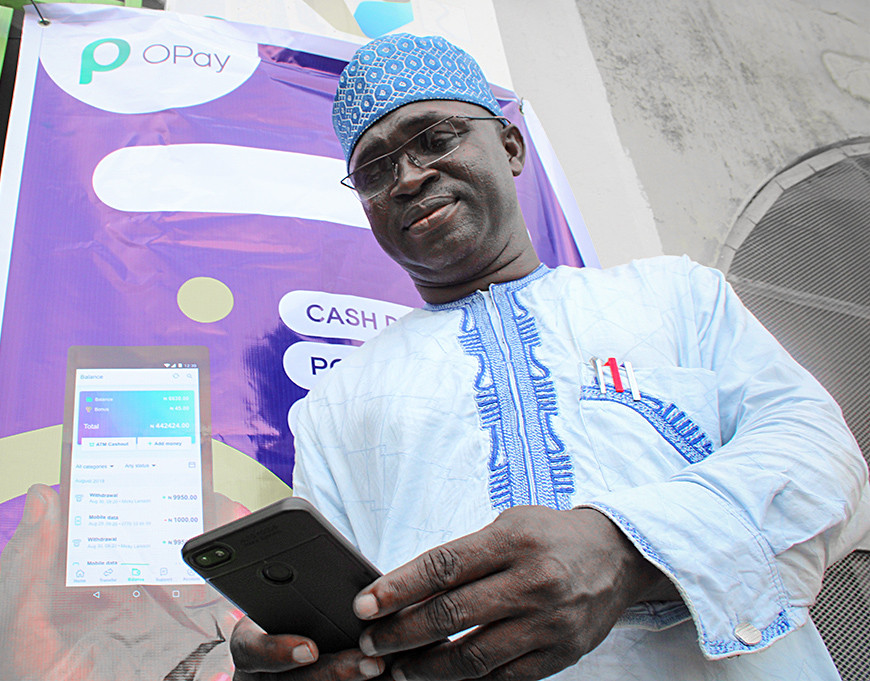
This week, we are reading that OPay, the payment unit of the whole grand plan has raised $50 million from Sequoia China and others with specific focus in Nigeria. The template is digital finance business in Nigeria.

OPay, an Africa-focused mobile payments startup founded by Norwegian browser company Opera, has raised $50 million in funding. Lead investors include Sequoia China, IDG Capital  and Source Code Capital. Opera  also joined the round in the payments venture it created. OPay will use the capital (which wasn’t given a stage designation) primarily to grow its digital finance business in Nigeria — Africa’s most populous nation and largest economy.

OPay will also support Opera’s growing commercial network in Nigeria, which includes motorcycle ride-hail app ORide and OFood delivery service. Opera founded OPay in 2018 on the popularity of its internet search engine. Opera’s web-browser has ranked No. 2 in usage in Africa, after Chrome, the last four years.

But do not worry – this is an insider game: Opera wants to power all services Opera runs in Nigeria with its own payment solution. Those include the bike-sharing business (ORide), and food delivery business (OFood), executing a double play playbook. Everyone has its own payment element because everyone is looking how to reduce fees. Yet, that does not usually mean raising $50 million for just payment. OPay is a competition to Paga, Paystack, and Flutterwave because it has internal customers in ORide, OFood, etc that can help it reduce fees and still compete.

Big Brother Naija: Is National Broadcasting Code Impotent?

0

By Mutiu Iyanda

The Big Brother Naija is a reality TV show, where a winner emerges having competed, avoided actions and attitudes capable of contributing to eviction by the viewers. At the end, the winner goes home with a large cash prize worth $100,000.  The show started in 2006 and produced in South Africa before being shifted to Nigeria after public criticism on the link between having a programme for Nigerian audience and shooting it in another country.

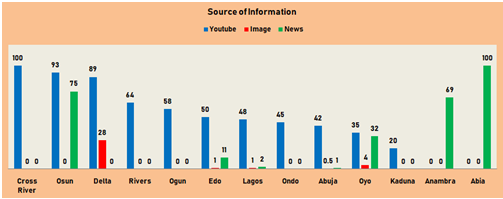
According to the Google, the world most used search engine, the programme has been liked by 90% of its users. This year’s edition has been understood and watched by Nigerians using YouTube, Image and News sections of the engine. Cross River, Osun, Delta, Rivers and Ogun were the leading states where people have developed a huge interest in the show within the last 7 days.

Source: Google, Infoprations Analysis, 2019

The Knocks and Kudos

From the 2006 edition to this year’s edition, mixed reactions have trailed and still trailing the programme. Many are yet to understand the link between the programme and moral development of the youths being targeted. Others believe that the programme is not bad as some sections of the Nigerian society portray it. To those who against the programme, it is characterised by alcoholism, nudity, sex, fun, entertainment and vulgarism, despite the MultiChoice’s announcement that the show would be for adult viewers only.

During one of the years of the criticism, a Catholic priest of the Archdiocese of Abuja asked: “said “what values are we transmitting to youths today, in a society where immorality and stupidity are rewarded with big prizes?

“We cannot continue to nurture a society that places a premium on iniquitous shows such as BBNaija and expect to groom a generation of cultured, disciplined and morally upright leaders. The promoters of this immoral show must ask themselves what they intend to make out of it; they must ask themselves what values and morals they are projecting to the larger Nigerian society. They must honestly answer if they’d be proud to gather their children in their living rooms at home and make them watch such a distasteful show.”

Dr Reuben Abati, the renowned media specialist, also said: “I was relieved because for about 70 days, the show was a big distraction, crass capitalism at its most cynical edge, a source of unmanageable madness in homes and on the street. MultiChoice, through its Big Brother Naija and Big Brother Africa franchises, seems committed to the promotion of base values, chiefly adultery, prostitution, love of money, nudity and sex.”

If Nigeria is a Village of 36 People

The criticism against the show this year has taken another dimension as a Nigerian started a petition campaign two days ago on change.org. As at the time of the analysis, over 8,000 Nigerians have signed the petition, calling on the Presidency to ban the programme. To further understand people’s reactions towards the show, a scenario of Nigeria being a village of 36 people was created using audience reviews and public interest about the show in the last 7 days.

Analysis reveals that their reactions in terms of supporting or against the show increased public interest of not using YouTube, Image and News as dominant sources of understanding the show as it unfolds every day (of the period studied). The people in Cross River, Osun, Delta, Rivers, Ogun, Edo, Lagos, Ondo, Kaduna, Abia, Anambra and Bayelsa states including Abuja used the sources the most. They preferred using YouTube and Image more than the News. The more they used YouTube, the less they appropriated the News as a source. This also applies to Image usage. The more they employed YouTube, the less they used Image as the source.

Eroding Value System

No doubt, the show has the tendency of eroding the national values as being envisaged by the public analysts and social commentators. Stakeholders need to ponder on the reward system in education and other sectors expected to help the country in inculcating national values and moral into the youths. If the show like this continues without cause for the morality, the youths who have been projected to be more than adults by 2050 are likely not to make significant contributions to the economy.

The era of awarding a cash gift of N100 only to best graduating students, while winners of entertainment events such as BBN are going home with N25 million, in addition to a brand new Kia Sorento SUV among other prizes should be stopped. Available information indicates that some state governments and private institutions are correcting anomalies in the education sector’s reward system. This needs to be intensified.  Failure to correct the wrongs would continue to lead to low interest in education among the youths. For instance, analysis has revealed that Nigerians deployed the Internet towards understanding how to kiss than how to make or produce certain things in 24 hours.

It has also been discovered that the higher the Nigerians’ top searches within who is, how to, most and top 10 search terms, the more the current price GDP of arts, entertainment and recreation sector increases. Who is, how to, most and top 10 made 93.3%, 94.5%, 95.6% and 94.5% contribution respectively to the sector at the expense of the education sector.

Broadcasting Immorality or Ideas

The National Broadcasting Commission was established with the mandate of regulating the broadcasting industry, especially players’ programme contents. However, it seems that the agency has found solace in reacting to political contents perceived as threats to the national unity than the contents capable of eroding the national values and facilitating crimes among the youths.

It is high time that the enforcement of the social and cultural objectives of the Commission Code be revisited. What are the factors impeding the effective implementation of the promotion of generally accepted social values and norms, especially civic and social responsibilities? Who is holding the key to the effective realisation of selecting critically the positive aspects of foreign cultures for the purpose of enriching the Nigerian culture and fostering of generally acceptable moral and spiritual values?

We would not get it right in terms of the right processes to creativity and innovation until we find the right answers to these questions. Since the emergence of the programme, the proponents and supporters believe that the TV show is contributing to talent development and tolerance among the youths, yet the country’s rankings in the last 5 years on the Global Creativity Index and other reports remain abysmal. In 2017, Nigeria was not among the six innovation achievers in Africa. During the year, the country moved down by five places to 119 out of 127 economies ranked in the world.