DD
MM
YYYY

PAGES

DD
MM
YYYY

spot_img

PAGES

Home Blog Page 6859

Facebook Libra Will Aggregate Nigeria’s Financial Inclusion Journey

2
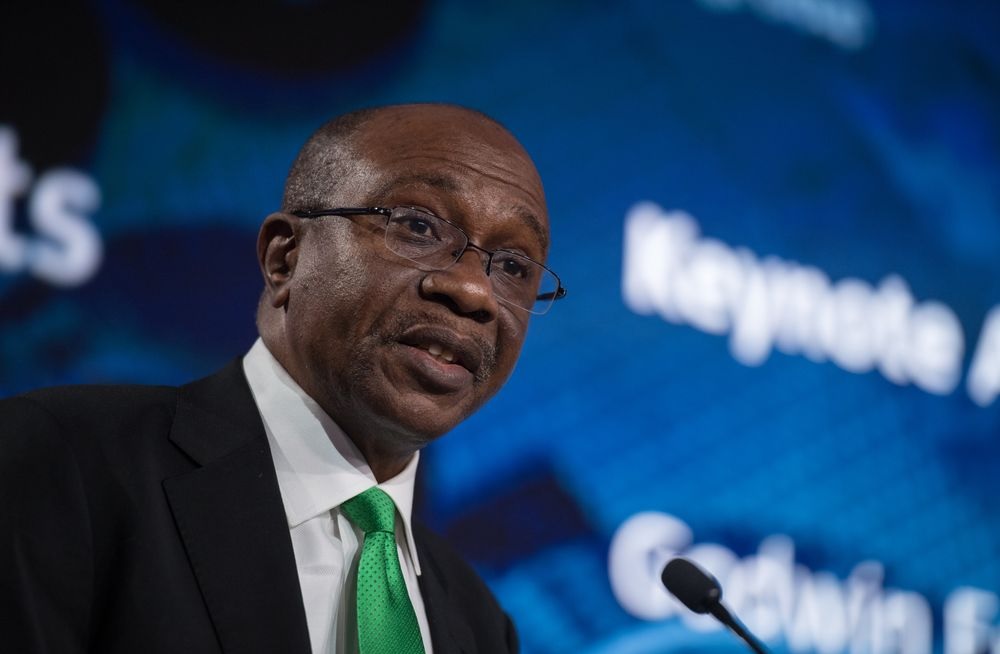
CBN Governor

In the aggregation-integration construct, more values accrue to the entity that controls demand, not supply, since supply is largely unbounded and unconstrained. For example, the number of news sources (i.e. the suppliers) is large while the entities that host users and control their experiences like Twitter, Facebook, and Google (i.e. the aggregators) are limited. These aggregators accumulate most gains and also hold more power over the suppliers of news like newspapers.

The founding members of Facebook Libra which include Stripe, Visa, MasterCard, and Naspers will be suppliers. Facebook will be the only aggregator in the network and will enjoy the largest benefit in the Libra system. Why? Among all of them, Facebook is the only entity that actually has most control of the users through the Calibra, the Libra wallet.

Facebook Libra’s major competitor will be the credit card it will work to replace in the developed world. In developing world like Africa, the Libra competitor will be cash. I am close to saying that the friction on cash is higher, and Facebook could get traction if it works with networks of local agents across territories and domains. Replacing credit cards in places like America? I am not really sure about that. But who knows! WeChat has a different paradigm: attack cash since China was never a credit card nation to start with.

Nonetheless, Facebook Libra has a real chance of winning the peer to peer payment sector, challenging MoneyGram, Western Union and intra-nation platforms like Venmo.

So, the challenges for Libra are to win over credit card users in the developed world and make fans out of cash users in the developing world. Because it has WhatsApp and Messenger, I will vote for the win in the developing world. Fixing the cash challenges will be bringing the underbanked or unbanked into the fold through a global scale of financial inclusion. Possibly, with the help of Libra, the Central Bank of Nigeria will hit its financial inclusion target.

Put succinctly, our priorities at the CBN over the next five years are the following; First, preserve domestic macroeconomic and financial stability; Second, foster the development of a robust payments system infrastructure that will increase access to finance for all Nigerians thereby raising the financial inclusion rate in the country; Third, continue to work with the Deposit Money Banks to improve access to credit for not only small holder farmers and MSMEs but also consumer credit and mortgage facilities for bank customers.

We will be waiting how they will create that Libra initial money. If Facebook decides to give limited people equivalent of $50, I can assure you that many will become believers. Of course, getting Libra could be as simple as connecting your local Naira bank account to the Calibra wallet.

From the aggregation-integration construct, Facebook will control the users in Nigeria while the banks and some fintechs will become suppliers. Yes, Facebook Calibra stays at the edges of the smiling curve while others work at the center on the Libra project. In this world of blockchain, Libra is the genuine digital currency, Bitcoin and cousins will likely focus as store of values because if Libra takes off, the winner-takes-all effect will be normalized that even if Bitcoin wants to become a means of exchange later, it will not be accommodated.

Facebook Libra will use amalgam of suppliers like fintech and banks in Nigeria to architect a redesign, where as the super-aggregator controlling the users (i.e. demand, the Nigerians), will execute a framework that will possibly bring many people into quasi financial inclusion, where bank fees could be avoided, and stamp duty fees disintermediated. The Central Bank of Nigeria will win on its financial inclusion target but Nigeria Postal Service (NIPOST) may see its stamp duty fees disappear.

How Facebook Libra Cryptocurrency Will Affect Nigerian Naira, Inflation, Banking

Why Amazon Ad Business is Better than Google & Facebook’s

2

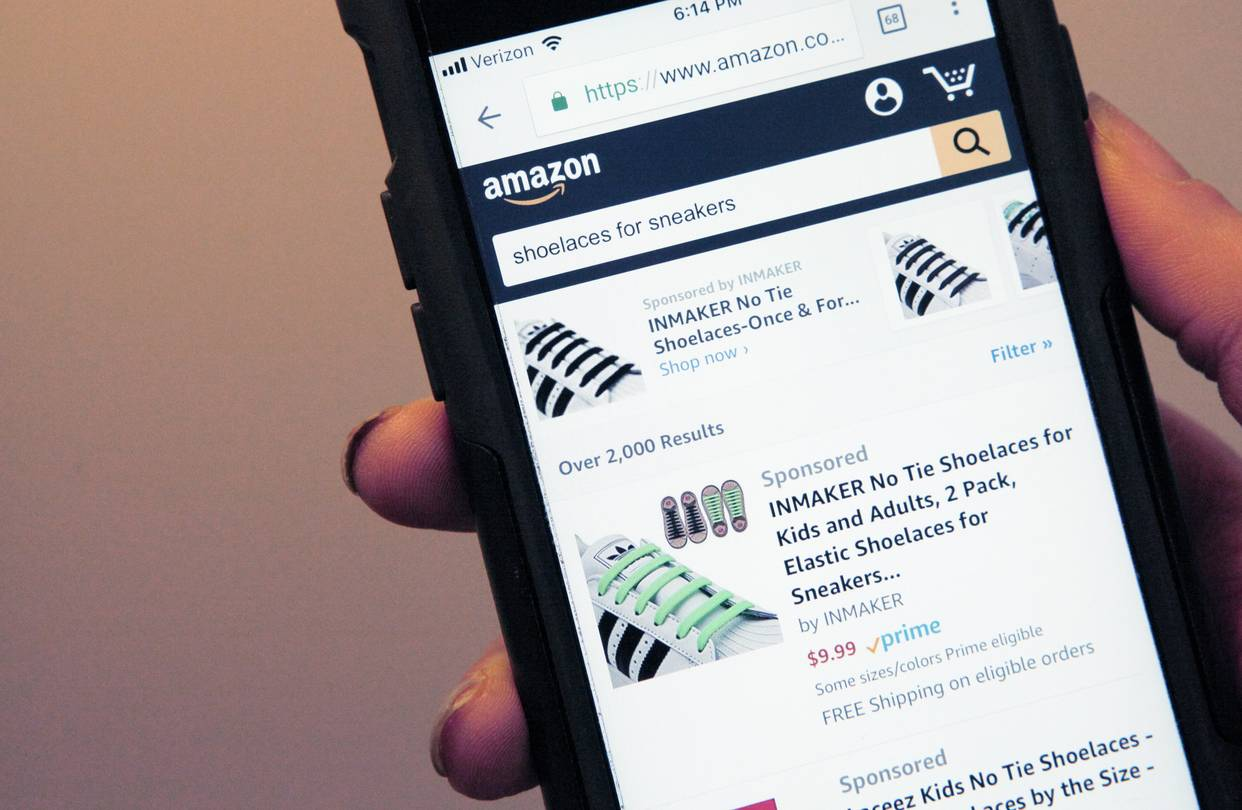
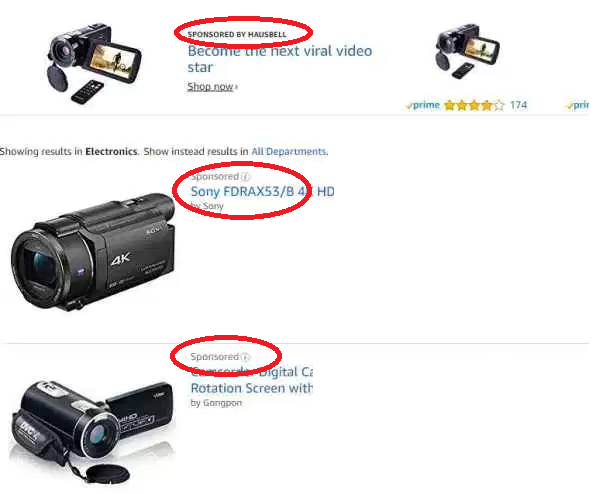
In December 2017, I reported that Amazon had built a solid advertising business with its own category redesigning capabilities. Facebook has its walled garden ad, Google has its search ad which remains largely text-based, but Amazon has built what I will call “active shopping ad” as only those that are actively shopping get to see the ads. Yes, you must have gone to Amazon to shop, before you can see ads.

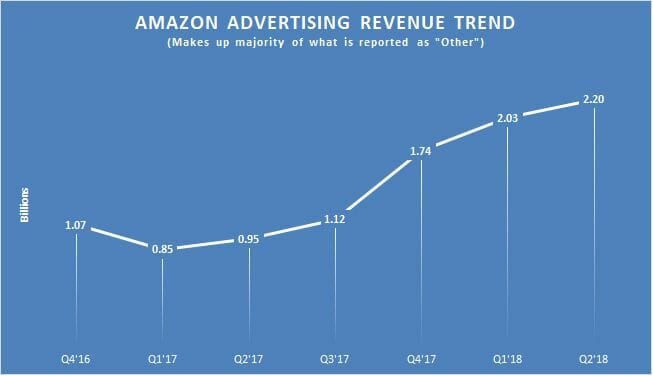
I will like someone that is in the shopping state of mind to see my ad, over someone watching a cat on Facebook, or researching a topic with no intention to buy anything as may be with Google. Amazon ad business is the best in terms of value for money especially for merchants. Markets are validating that construct as ad is the fastest growing unit in the Amazon empire.

I was on Amazon today working on gifting items when I noticed something: Amazon now runs a serious advertising business. And there are many companies putting money in that ecosystem. If companies think that advertising on Amazon is a better deal than promoting their websites on Google, it simply means that Google has a major problem in its hands.

Facebook has walled off the partying and events communities, and if Amazon takes care of the merchandise, I do not know what will remain for Google. Yes, we put adverts for two major things: events and products. If Google becomes a second-platform for both, there is a problem for Larry Page and his lieutenants in Alphabet, the parent to Google.

Amazon ads

The experts are here with data:”the e-commerce giant’s ad business will grow more than 470% over the next five years, outpacing the growth rates of both Google and Facebook in that period, and making it one of Amazon’s fastest-growing and most profitable business segments.” This is a slam dunk – there is no reason to put adverts on Google for anything that can be sold on Amazon.

Facebook will be a waste of efforts if Amazon carries that item especially if you have a merchant store within Amazon. Both Google and Facebook will give you clicks from adverts; Amazon will deliver sales to the bank accounts. That makes Amazon ad business a superior business. If ads are to take users to commercial sites, Amazon wins because it is the grand-dominion of all digital commerce sites.

Amazon is expected to pull in $40 billion in annual ad revenue by 2023, new research shows, up from miniscule levels just a few years ago. According to recent report from Juniper Research,

Amazon has been expanding its offerings to advertisers over the years, selling inventory across its sprawling website to niche products like the Chefman pressure cooker and, more recently, to well-known household brands from Unilever and Procter & Gamble. Display ads, paid search results, and instructive videos are just some of the available inventory.

Source: Marketing Land

The Amazon ad was engineered to serve the Amazon oasis, the ecommerce. Like the One Oasis Strategy, that business has grown after making the ecommerce better through better discovery for premium merchants. Yes, the ad unit has evolved to become a business itself. The Amazon ad business will redesign the industry, affecting Google and Facebook. But do not weep for the latter duo – they will be fine: “By 2023, the global digital advertising market will hit $520 billion, up from $294 billion this year. At that point, the top three digital advertising platforms—Google (at $230 billion), Facebook ($110 billion) and Amazon ($40 billion)—will comprise roughly three-quarters of the market, according to Juniper Research”. Yes, they will continue to run the show for a long time but Amazon ad will take most of the merchant advertising within a decade.

Smart Cities: The Cities of the Future Are Coming

2

By Sani Nahuche

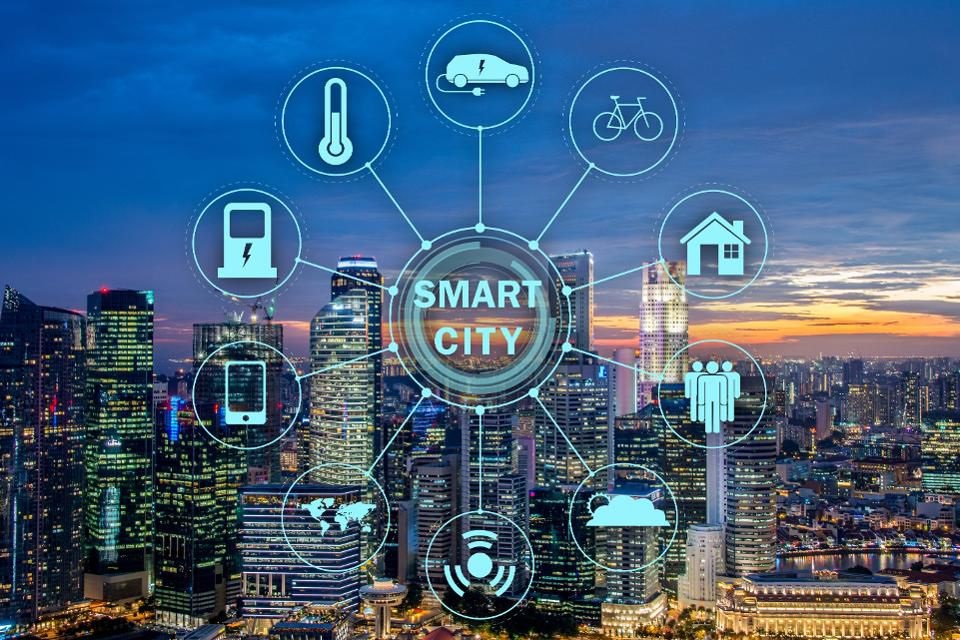
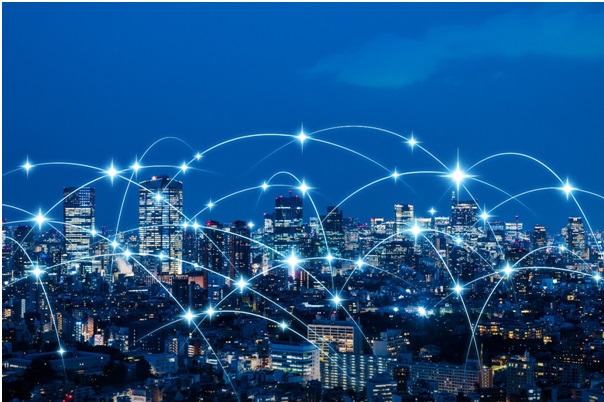
There are a number of urban areas across the globe that make use of many different types of electronic data collection. An area uses this information to efficiently and dynamically manage its assets and resources. These urban areas are smart cities and you will be hearing a lot more about them in the future.

The idea behind the smart city is the integration of communication technology and information. Then, throw into the mix the millions of physical devices that are all connected into this network and you have the Internet of Things (IOT).

The entire network is optimised to make services run with greater efficiency. Data is collected from citizens and devices living and working within the city. The data is collected, collated and analysed to improve many aspects that run the smart city.

It is used to manage traffic and transport systems, energy plants, and water supplies, managing waste and even keeping the peace. It helps run schools, libraries, hospitals, community centres and helps with crowd control.

A smart city saves money, improves quality and makes the general infrastructure more easily manageable. A modern city can evolve over the space of a few minutes – smart technology allows us to react to these sudden changes and improve on them.

Smart Home, Smart City

The future home is the Smart Home, the future city is the Smart City and HCI (Human Computer Interaction) will play a great role in this. Smart homes are intelligent enough to control themselves and the Smart City of the future will inevitably control its own destiny. However, HCI and that human touch will always play a key factor in how information is collected.

The way devices work is becoming incredibly more sensitive. We talk to our Google Assistant, Bixby or Alexa and it responds accordingly. It seems like only months ago we were typing every instruction in through our keyboards.

Devices are becoming smaller, cheaper and the advancing technology is making them more accurate. There is a huge amount of reliability in these devices – but HCI is still required and we are not at that stage where M2M (Machine to Machine) can run it all by itself.

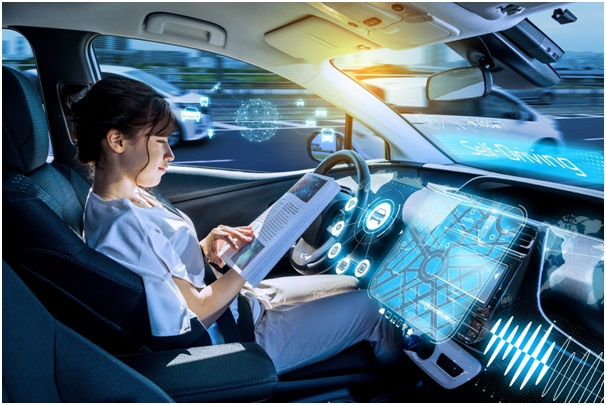
Perhaps, almost certainly M2M will reduce the need for HCI but a smart city will operate and function perfectly well for the time being as everything becomes wireless. M2M will begin a revolutionary move in the cities of the near future when driverless vehicles begin transporting private and public passengers from one end of the city to the other.

The Use of Sensors

Sensors will play a huge role in the cities of the future. They monitor traffic flow, crowds, transport, and driverless vehicles and are intrinsically linked to the IOT (Internet of Things). As its usage increases and more and more are required, the demand will rise.

As demand rises, the cost of production will come down. Devices will become cheaper and consume more of our daily lives.
Smart On Crime in the City

Incredibly, smart technology has been used in one American digital city to combat crime. Boston has developed a system called Shot Spotter that detects the acoustic bang of someone letting off a firearm.

The sensors used are strategically placed in many areas of the city and will hear and subsequently pinpoint the location of where a firearm was heard. The same Massachusetts city also has more than 200 sensors specifically to detect biological warfare chemicals.

Boston is the ultimate smart city where it also gets tough when supporting the environment. Sensors located on many buildings can detect when greenhouse gas emissions are too high and software located in its vast sewer system help with maintenance in the tunnel areas of this vast network.

In Dublin, Ireland, the city is already commissioned by computer firm giant IBM to work with the local council to collate and collect information on traffic data. It can analyse traffic data in order to ease congestion.

Journey information is updated every minute so residents can plan to fastest route to their destination without hitting congested roads. Dublin traffic speeds are among the fastest in any western European capital.

It suggests the city will be quick and ready to jump on board with the smart driving technology that will soon grace all the world’s big cities. In London too, the transport system is the envy of much of the world. This city has introduced a congestion charge to vehicles entering certain central zones during busy periods.

The Oyster card is a smart way of getting about London via the public transport system. It is a credit card-sized pass to get you on the London Underground (the Tube), Rail links, Docklands Light Railway and its hundreds of buses.

The Power of Analytics and Business Intelligence

Analytics and business intelligence can create such an efficient and well managed city that some of these hubs will eventually become more powerful than nation states. Officials in Barcelona have created dynamic bus routes, trash collection with sensors, street lights that are super smart and payment on public transport is achieved by contactless cards.

Analytics and business intelligence is working dynamically in the African city of Johannesburg. It is the envy of all the African big cities with its broadband project and fibre optic wireless system that churns out data speeds of 1.2 Tb (terabytes). That would be impressive in any of the world’s biggest smart cities.
But Johannesburg has no plans to stop there. Smart meters that monitor all residents’ use of water and electricity are being rolled out to every household and to combat the city’s high crime rate, it plans on building an intelligence centre to monitor criminal activity at every level.

Masdar is a city that few will have heard of. It sits deep within the desert of Abu Dhabi in the UAE (United Arab Emirates). It is a thoroughly modern city with a claim to fame of being the world’s most sustainable place on earth.

There is a massive solar power station in its centre and plenty of wind farms to keep the entire city energised and environmentally friendly.

Driverless technology is king here. A series of pod cars take commuters around the city and there are no signs of any gas-powered vehicles in sight. They are not permitted in the city at all. Pedestrians walk the streets in total freedom and impunity.

The advanced technologies that run this city are so vast that the entire area was built on a raised platform. This allows technological and digital plumbing and repair to take place more efficiently and with greater accessibility. Smart driving is the only driving you can undertake in Masdar.

Singapore has always been a modern city that looks like something you might find on a distant planet. Its futuristic look and the innovative apps are keeping its citizens one step ahead of the rest.

Apps in Singapore are used to direct taxi drivers to areas where there might be rain in the next 10 minutes. It can highlight to the business and analytical community that using public transport is extremely busy at certain periods of the day. All of these apps are feeding information to commuters in real time so there will never be a time when one might say, “I hope the platform will not be too busy when I arrive at the train station”. Singaporeans will know in advance.

There are several concepts that make up a Smart city and all rely heavily on the use of modern and advancing technology. The arrival of 5G will undoubtedly propel the power of the Smart city in the realms never seen before.

Digital cities are ones which rely on a connected community that uses high-speed broadband to keep its industry standards at optimum levels. It is designed to meet the needs of its citizens, workers, employees and community members. It also helps businesses run with greater efficiency within the environment that surrounds them.

Information cities are ones that collect information and then deliver that data through a series of public portals. Many employees who work within information cities can access their entire working day from any space where there is a suitable Wi-Fi connection. In Smart cities this can be just about everywhere.

Smart cities can be predominantly Intelligent Cities. Technological innovations – like the ones we see in Abu Dhabi and Barcelona – set these places apart from the rest. It uses HCI, social media information, knowledge, experience and a learning process to collate data and turn our lives into a more efficient and productive state.

Digital Cities Springing Up All Over the World

You would not have to look very far to witness the magical aspect of digital cities. In Toronto there has been a part of the city that has been built up from the internet. The Eastern Water Front is used mainly as a pleasurable strolling district and a lunch spot for the thousands of Toronto’s high flying workforce.

It is a project owned by Google (or at least the parent company Alphabet). The once disused waterfront area is being built into a small metropolis. Although this city section of the future is still under construction, it promises to be a healthier and safer environment for all to live within.

There are going to be more sensors collecting data than you might imagine. Everything from traffic levels, air quality and waste collection services will be monitored by smart technologies. This could be a blueprint for how every city in the future will look. Urban life in the late 21st century will not look as it does now.

Another Proposal To Acquire Tekedia

0

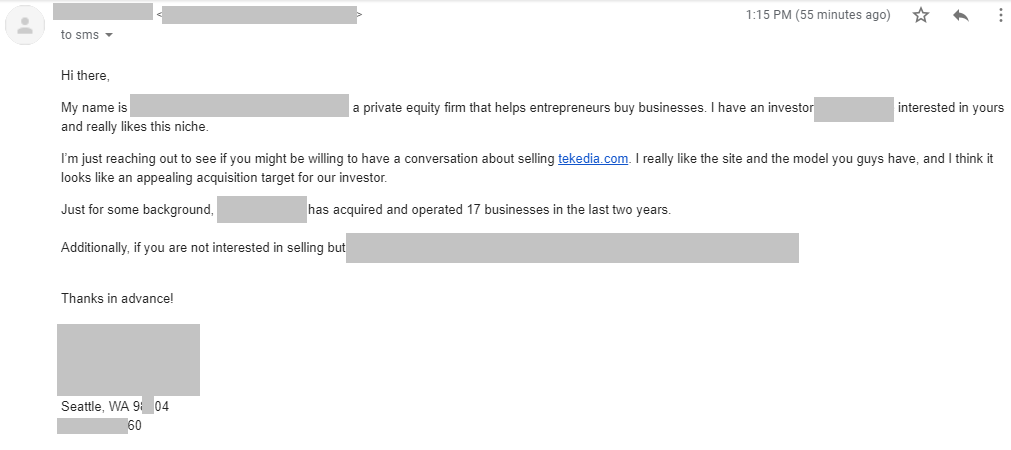
Do we sell Tekedia? They have been proposing really good numbers which can help anyone interested in a chieftaincy title to take one. I have no interest in selling my blog to any investor. But I want to challenge all the young people here: everything in this world is money, if you do it well.

For a blog, you just need to have a process, to respect the readers by showing consistency. Do not be lazy where you post today and then next week you lazily post again. While LinkedIn and Medium are great, the fact is this: you cannot turn them into assets that people can buy into and invest. Branding is strategic and critical.

I started writing about 24 months ago at scale, and over that time, have enabled a decent community that I could exit comfortably. But selling is not an option as they would probably not allow me to write again!

As usual, we have told them “No Interested”. But you may write to say “I am interested to sell”. Pursue anything you do with energy and commitment, and see how all connects into your mission. Do not come here wasting time; make it a useful moment.

We cannot sell Tekedia because it is our oasis in the One Oasis Strategy.


African Diasporas Starting Businesses at Home, Connect for Support

0

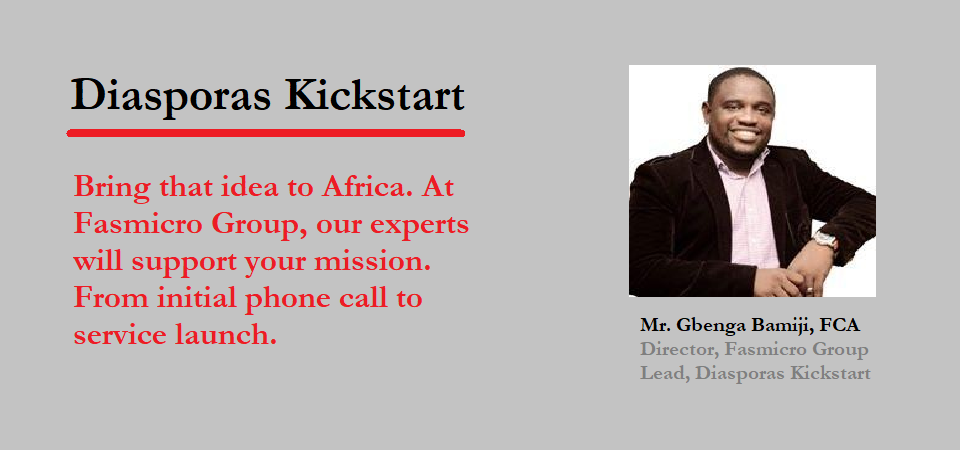
If you are an African Diaspora living or working anywhere on earth, and planning to start a business or even invest at home, and somehow not sure how to begin, we will like to help. My colleague, Mr. Gbenga Bamiji, FCA, a Director in our business, will be happy to speak with you.

Mr. Bamiji is a Fellow of Chartered Accountants of Nigeria and leads our Diasporas Kickstart unit which helps us work with diasporas to establish ventures at home. We begin that process from a phone call, through a roadmap, to product launch. Where a technology needs to be built, our engineers will build the portals, releasing the IPs to you, and making sure you get started. More so, we provide supports on those early contacts. You will get access to a team member that will guide you, on hiring, etc.

As we do that, we stay invisible to help you take your moments.

Diasporas Kickstart does not raise fund for people; we focus on diasporas with some money looking for opportunities back home. Most times, you already have ideas; our job is to make those happen. If interested, Mr. Bamiji will like to speak with you. Of course, I am here and will be happy to understand the friction you want to address in the beautiful continent. We understand this continent at deeper level, and will be your partner, if you choose to work with us. Our capabilities cut across many domains. We are Africa-enabled.

Contact our team if interested. At Fasmicro Group, we are ethically built and your proprietary data are safe with us.