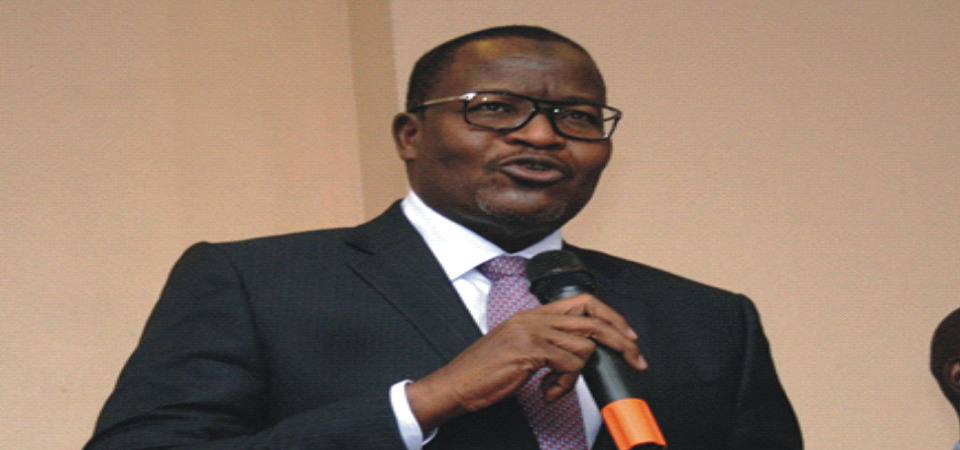
MTN Nigeria Plc has completed the payment of the N330 billion (about $1 billion) negotiated settlement agreed with the Nigerian government: “We are very pleased to have completed the payment of the N330 billon negotiated settlement with the NCC”. With this final payment, Nigerian government will not be getting more credit alerts and MTN should work hard to keep it that way. We do not want revenues via fines – let firms do the right things first.
MTN Nigeria Plc says it has paid the sixth and final instalment of N55 billion negotiated settlement to the Nigerian Communications Commission (NCC).
The Chief Corporate Relations Officer of MTN Nigeria, Tobechukwu Okigbo, made the disclosure in a statement on Friday in Lagos.
According to him, the amount completes MTN’s payment of the N330 billion negotiated settlement agreed between the NCC and the company in 2016.
“The successful resolution of the fine was the outcome of active collaboration between the NCC and MTN.
“We are very pleased to have completed the payment of the N330 billon negotiated settlement with the NCC.
“We are particularly gratified to be in a position to have fully met the terms of the settlement within the agreed time frames.
According to a 2018 survey by the Chartered Insurance Institute of Nigeria, 86.6 million people out of Nigeria’s adult population of about 100 million are excluded from any form of insurance cover.
The penetration ratio of the Nigerian insurance industry is at 0.5 percent in 2018. That is among the least in Africa compared with South Africa’s 17 percent, Kenya’s 2.8 percent and Ghana’s 1.1 percent.
The National Insurance Commission which is the apex regulator for the insurance industry has a target for Nigeria to become one of the world’s top twenty insurance markets by 2020. In 2018, the industry generated a Gross Premium Income of 448.6 billion naira which is expected to record 10 percent growth to about 493.4 billion according to Augusto and Co’s data.
Currently, there are over 12 million registered vehicles for motor insurance, fire insurance for households and manufacturing companies, annuities for retirees and life assurance policies for individuals while opportunities abound in ‘’Takaful’’ i.e. insurance for Muslims and other large scale economic projects across the nation.
Lack of trust, awareness, affordability of insurance products and services, easy access to insurance products, dishonesty amongst insurance practitioners, late payment of claims, refusal to settle genuine claims, ambiguous description of product details, cultural and religious beliefs, low level of innovation in product development, limited take off of takaful, microinsurance and bancassurance. More so, weak distribution channels, financial incapacity, high incidence of insurance fraud, low level of disclosure, prevalent unethical practices and inadequate industry database are some of the reasons why Nigerians don’t purchase insurance products as well as the underperformance of the sector.
The Nigerian Insurance Industry includes the following sub-sectors: Composite, Non-life, Life and Reinsurance operators. Over the last five years, the Nigerian Insurance Industry has grown at a compound annual growth rate (CAGR) of 11%, buoyed by increased capitalization as well as the introduction of policies aimed at promoting the local market.
Nonetheless, the industry remains challenged with low apathy from the Nigerian populace and weak policy enforcement practices, resulting in a low penetration ratio. These challenges however present enormous opportunities when benchmarked with other African countries especially South Africa. The industry has room to grow, if it can innovate
Coverdor which is Nigeria’s first digital insurance platform wants to make tech-savvy Nigerians access insurance anywhere and anytime from their mobile devices, and also manage all aspects of insurance transactions in real time.
Its users can easily insure their electronic gadgets and home appliances individually against mechanical, accidental and liquid damages directly from Coverdor’s platform or through online and offline point of sale or partner’s e-commerce website or retail outlet in Nigeria.
Seun Ayegbuzi, founder of Coverdor
Using proprietary artificial intelligence technology, it completes a policy sales transaction and policy holder onboarding within 3 minutes and also processes customer claims in less than 3 minutes.
Coverdor needs to fix the friction and provide the last mile access to insurance services for millions of Nigerians without insurance cover. That is how the insurance sector will show a sustained promise.
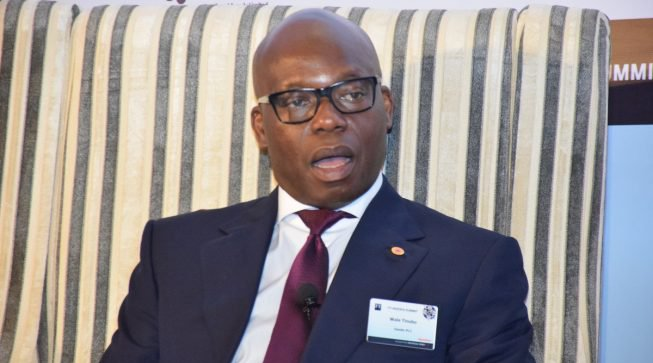
The Securities and Exchange Commission (SEC) has ordered Oando Group CEO Wale Tinubu, and other senior executives, to resign. They are also barred from being directors of public companies for 5 years.
The Securities and Exchange Commission has concluded its investigation of Oando Plc and ordered the Group Chief Executive Officer of the company, Mr. Wale Tinubu, and other affected board members to resign.
SEC, in a statement on Friday, also said it barred Tinubu and the Deputy Group Chief Executive Officer of the company, Mr. Omamofe Boyo, from being directors of public companies for a period of five years.
It also directed the convening of an Extraordinary General Meeting on or before July 1, 2019 to appoint new directors.
According to the Commission, these, among others, are part of measures to address identified violations in the company.
SEC said, “Following the receipt of two petitions by the Commission in 2017, investigations were conducted into the activities of Oando Plc (a company listed on the Nigerian and Johannesburg Stock Exchanges).
Meanwhile, the court reinstated the suspended DG of SEC, Mounir Gwarzo, yesterday. No one knows if he has resumed duties already.
The National Industrial Court, Abuja, on Thursday ordered the immediate reinstatement of Mounir Gwarzo, the suspended Director-General of the Securities and Exchange Commission (SEC), back to his position.
Justice Sanusi Kado, in his judgment, held that the minister of finance, named as the second defendant in the suit, lacked the power to suspend the claimant.
Mr Kado, who dismissed three issues raised by defence counsel through their preliminary objection, ruled that the suit was not status barred.
Mary Uduk- acting DG of SEC
The Investigations
Investors and market players had alleged some corporate governance issues against Oamdo and leaders. You can download reporting on them here. Here is a summary when Oando shares were suspended.
Download Full (PDF) Report – Memo to The Market: The Oando Corporate Journey – At The Regulators Gate
Review of the SEC Technical Committee Recommendations, Opinion and Final Report
The SEC Suspension Letter
Following the receipt of two petitions by the Commission in 2017, investigations were conducted into the activities of Oando Plc (a company listed on the Nigerian and Johannesburg Stock Exchanges). Certain infractions of Securities and other relevant laws were observed. The Commission further engaged Deloitte & Touche to conduct a Forensic Audit of the activities of Oando Plc.
The general public is hereby notified of the conclusion of the investigations of Oando Plc. The findings from the report revealed serious infractions such as false disclosures, market abuses, misstatements in financial statements, internal control failures, and corporate governance lapses stemming from poor board oversight, irregular approval of directors’ remuneration, unjustified disbursements to directors and management of the company, related party transactions not conducted at arm’s length, amongst others.
As part of measures to address these violations, the Commission has directed as follows:
Resignation of the affected Board members of Oando Plc,
The convening of an Extra-Ordinary General Meeting on or before July 1, 2019, to appoint new directors,
Payment of monetary penalties by the company and affected individuals and directors,
Refund of improperly disbursed remuneration by the affected Board members to the company,
Bar of the Group Chief Executive Officer (GCEO) and the Deputy Group Chief Executive Officer (DGCEO) of Oando Plc from being directors of public companies for a period of five (5) years.
As required under Section 304 of the Investments and Securities Act, (ISA) 2007, the Commission would refer all issues with possible criminality to the appropriate criminal prosecuting authorities. In addition, other aspects of the findings would be referred to the Nigerian Stock Exchange (NSE), Federal Inland Revenue Service (FIRS), and the Corporate Affairs Commission (CAC).
The Commission is confident that with the implementation of the above directives and introduction of some remedial measures, such unwholesome practices by public companies would be significantly reduced.
Therefore, in line with the Federal Government’s resolve to build strong institutions, Boards of public companies are enjoined to properly perform their fiduciary duties as required under extant securities laws.
The Commission, as the apex regulator of the Nigerian capital market, maintains its zero tolerance to market infractions, and reiterates its commitment to ensuring the fairness, integrity, efficiency and transparency of the securities market, thereby strengthening investor protection.
My message to startups in our portfolio: “Competition will not destroy you in Nigeria, but failure to execute will. Do not spend too much effort on what competitors are doing or will do, I want to see what you are doing and will do”.
Failing as a Nigerian startup is not because any competitor took you down. The likely major reason is that you could not execute to fix that friction you have established that company to solve. For the solar companies that went under, they did not die because of DISCOs, since the DISCOs are still not distributing enough electricity.
[…]
NB: Startup in this content means going to create something of value with transformational impacts in the market. It is different from small business which could be “barbing salon” [Nigerian slang for barbershop], selling corn along the roads, etc that rarely scales. While a barbing salon [small business] could have competitors on a street, a barbing entrepreneur who runs many salons across Nigeria, will not collapse because of many salons, at the moment. Rather, the entrepreneur will likely go down because of poor execution. Nigeria has not attained parity on the number of barbing salons it needs at the moment; we have more rooms to grow nationwide, but that has to be done optimally and profitably. The competitive elements remain low.
The greatest moment of self-discovery is when you come to terms on how unique you are. That uniqueness makes you amazing – that you have got great talents and special gifts. If you spend more time examining how far you have gone, over just focusing on others (friends, colleagues, etc), and then piece together what took you to those heights, improving on the wins, the future will bring better paths.
Awareness and observation are antennas into the minds of customers, sharper than any MBA. Some entrepreneurs have used both to make out of chewing stick an organic toothbrush.
To be a successful businessperson, you do not need to be as mathematical as Chike Obi or grammatical as Wole Soyinka. All you need is awareness and observation on market frictions, finding solutions to them, and rapping up in a matching story. If you can get those three in sync, you will experience glory.
Like I tell startups in our portfolio – “competition will not destroy you in Nigeria, but failure to execute will. Do not spend too much effort on what competitors are doing or will do, I want to see what you are doing and will do”. As the African proverb would say it takes killing just one tiger to be called the “the killer of tigers”, you have wins already, and I can assure you that you are already a winner.