DD
MM
YYYY

PAGES

DD
MM
YYYY

spot_img

PAGES

Home Blog Page 6886

Review of Access Bank Powered Africa Fintech Foundry Disrupt 2019

0

By Nnamdi Odumody

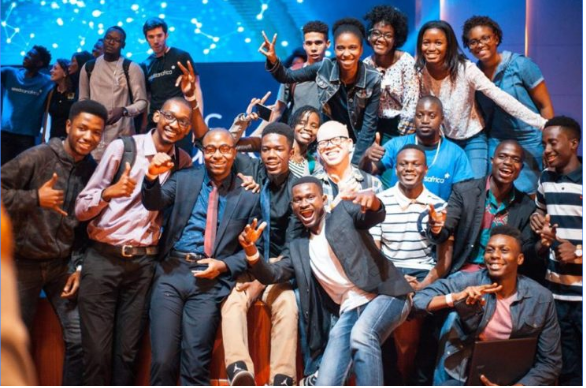
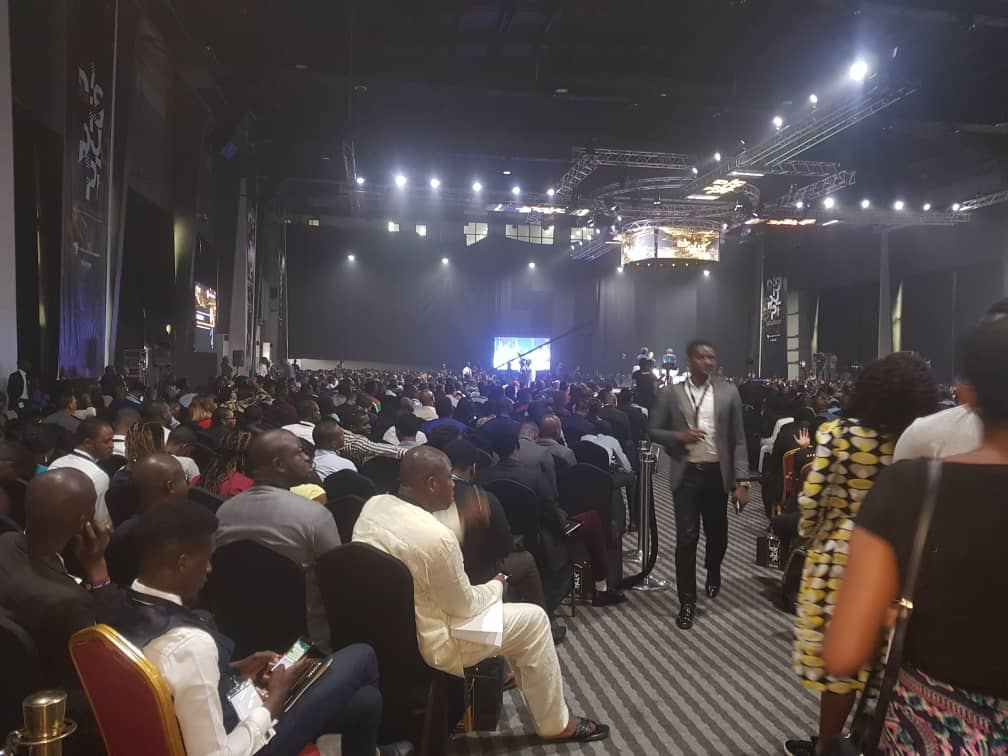
The 2019 Africa Fintech Foundry Disrupt themed ‘’Digital GoldRush’’, powered by Access Bank, was a showcase of technology trends which are transforming the financial services sector and other industries.

The Executive Director, IT & Operations at Access Bank, Ade Bajomo, gave a history of the previous goldrush, which transformed global economies, as explorers sought fortune in them, and the current digital gold rush – Fourth Industrial Revolution – which we are witnessing. Dr Herbert Wigwe, Access Bank Group CEO, gave a brief history about the banking experience in Nigeria before the digital revolution, and why his bank decided to play a leading role in offering a seamless technology- enabled personalized experience to its customers.

Banking Disruptor and founder of Moven, Brett King, was the keynote speaker. He gave an expose of the evolution of global banking which started in Italy to the current disruptors led by Chinese fintechs like Ant Financial and WeBank.

A panel on securing Seed and Growth Funding for Startups was next, followed by The Future of Gaming and Artificial Intelligence powered by Microsoft which had its EVP Gaming, Phil Spencer, and its Technical Lead on AI and Mixed Reality, Alex Kipman, explaining Microsoft’s foray into AI and Mixed Reality as well as the reason behind the recent $100 million African Development Centres in Lagos and Nairobi.

Microsoft seems to be putting deep focus on Nigeria. It reported weeks ago that it was opening an AI research unit in Lagos. Now, it is going to also build development centers in Africa with Lagos as one of the centers. The company plans to spend $100 million in the next five years to build the development centers in partnerships with local partners and governments. Microsoft also plans to hire in Lagos and Nairobi, another development center, about 100 full-time developers by the end of 2019, and expand the number to 500 by Q4 of 2023.

Brett King and Roosevelt Ogbonna, the Deputy Group CEO of Access Bank, had a discussion centered on Disruptive Banking which focused on commerciality around banking and API’s.

The role of regulation for financial technology featured Reginald Karawusa, Executive Commissioner Legal and Enforcement, Securities and Exchange Commission of Nigeria;  Sam Okojere, Director of Payments and Settlements, CBN Nigeria;  Reginald Udom, Partner at Aluko and Oyebode Legal Partners; and was moderated by Dr Segun Aina, President Fintech Association of Nigeria.

A demo session which showcased Robotics in Banking was showcased by Carl Wocke, the CEO Of Merlynn AI, South Africa. There was a remote session on Deep Learning for Digital Identity by Yann Le Cun, former Chief Data Scientist at Facebook and Cofounder Element AI. He spoke on how his technology is helping financial institutions in recognizing customers who conduct financial transactions.

Other components included Masterclasses on Blockchain by Chimezie Chuta; Digital Payments and Cybersecurity by Susanne Chisti, CEO and Founder Fintech Circle UK; Analytics In Action by Dr Bayo Adekambi Chief Transformation Officer MTN Nigeria; Using Agile to drive Digital Transformation by Abiodun Osoba Founder and CEO Agile Advisor. Finally, there was Beyond The Digital Frontier: The Journey From Uncertainty to Digital Transformation by Deloitte Nigeria.

The Future of Cash in a digital world by Claudio Ceresani, Global Marketing and Sales GM, GioriDigital and Zelda Akindele, Partner at Templars LP, which was moderated by Uzoma Dozie, the former CEO Diamond Bank looked at how Nigeria can evolve fully to cashless transactions like China and other markets where cash is being eroded in day to day activities.

There were demo presentations by startups which showcased solutions in healthcare by Trep Labs, blockchain for the real estate value chain by Seso, peer to peer currency exchange platform for African banks to enable their customers send money out cheaper and faster by Kaoshi, provision of banking services to the unbanked through financial cooperatives by Smart Teller and an affordable, portable and active cold chain device for the storage of vaccines, blood and other perishable products by Gricd. Gricd was the winner of the pitch prize of $10,000 with Kaoshi and Smart Teller clinching the first and second runner up positions respectively.

TAP (Touch and Pay Technologies), a Lagos-based fintech company, also showcased its technology in the event. TAP makes it possible for financial institutions to serve informal sectors and deepen financial inclusion by integrating electronic and cash payments at scale. Simply, TAP builds unique mobile payment and services platform capturing offline and online transaction in a seamless way.

With the AFF DISRUPT, Access Bank is positioning itself to play a leading role as an innovation-driven intelligent bank for the future.
“To Succeed in Career Development, Passion must Match Vision”, Says Ndubuisi Ekekwe – Vanguard Newspaper

0

The Vanguard has a nice piece on LinkedIn Local Lagos 2.0 event; I presented the Keynote. The message remains: your passion may not provide zobo, nkwobi and amala. You must match it with vision to find success, and pay for the zobo, nkwobi and amala.

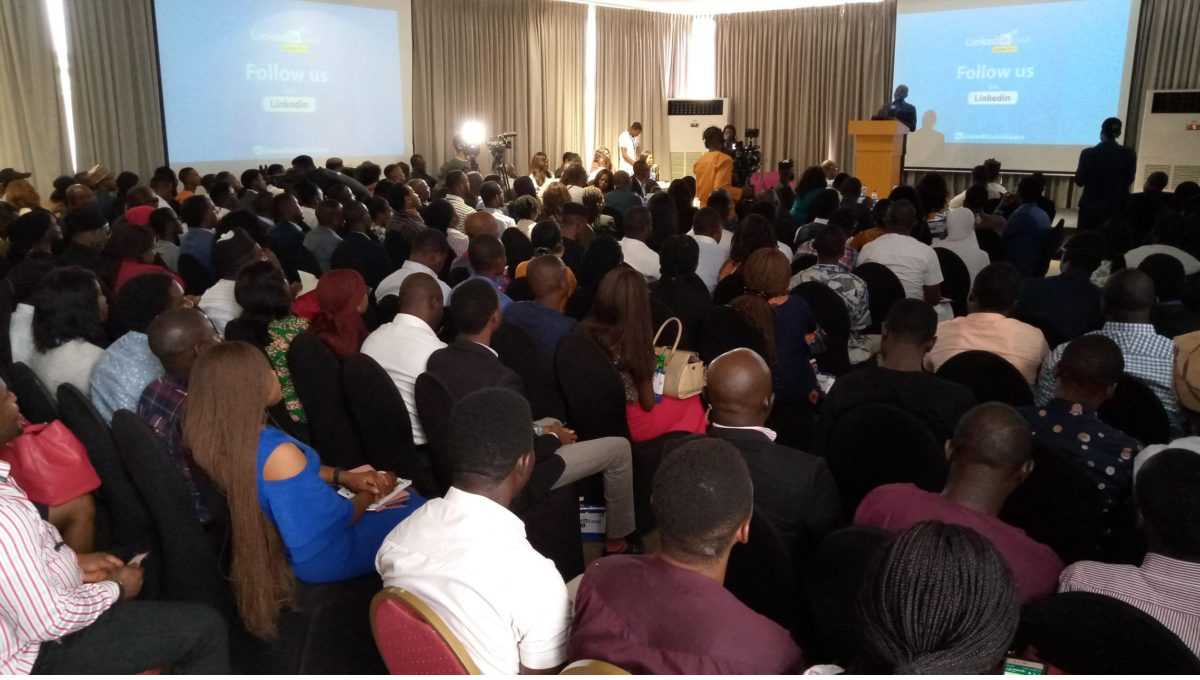
The second edition, LinkedIn Local Lagos 2.0 held on Saturday May 11, 2019 which was put together by Kayode Abass and Joel Pereyi featured keynote speaker, Prof. Ndubuisi Ekekwe, Chairman Fasmicro Group, who spoke to attendees what it takes to build capacity, the challenges.

Prof. Ekekwe said that for anybody to succeed in career development, passion must match vision and that is the only way one can make in life.

He said further that passion will help to remain to your target during challenges especially in this part of the world where there is operational environment are very harsh for any business to succeed.

Prof. Ekekwe who spoke on “Discovering Your Passion & Mission Accumulation of Capabilities, gave a 3-step approach towards executing your capabilities, hinged on his personal experience.

I have already summarized this talk here.

  • Harmonize your passion and mission to ensure pursuing your passion can pay your bills. Missions should be short-term goals you set in your career. As you get those missions done, you will be closer to your career vision.

  • Build and accumulate capabilities to make the mission happen. These capabilities include knowledge skills (from schools), networks and contacts, acquired job experiences, etc.

  • Execute and make those capabilities work. The best phase after accumulation of capabilities is using them to fix personal and professional frictions: rents, family upkeeps, grow businesses, get promotions, etc.

Summary of My Today’s Speech at LinkedIn Local Lagos on Careers

Apple’s Greatest Risk is Washington DC Packaged in Huawei

0

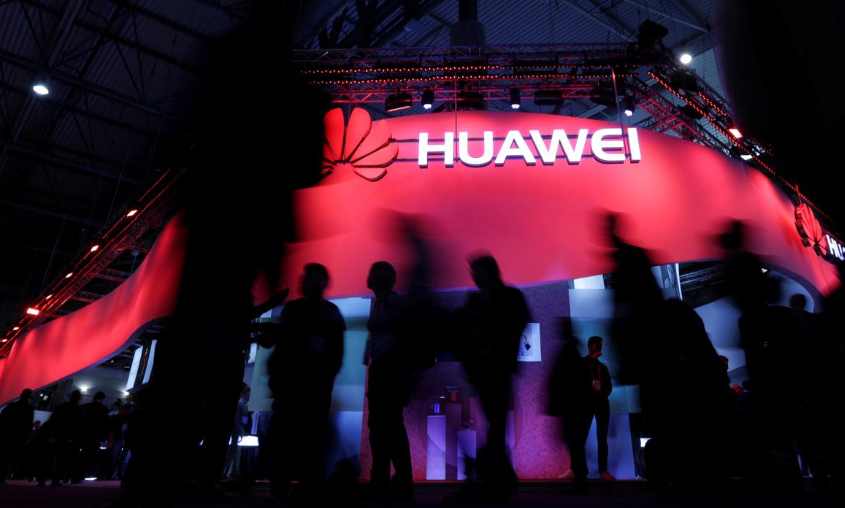
U.S. plans to restrict access of critical components into the hands of Huawei as the trade war with China intensifies, and the battle for the future of 5G technology is waged. Largely, U.S. has many tools through two vital companies in the world of microelectronics: Cadence and Synopsys. More than 99% of the leading chip designers depend on these firms. Without them, it will be hard for Huawei to make its own microchips (to overcome the bans) in ways that foundries can manufacture them effectively. If U.S. blocks Huawei, call that move extremely “severe” but not “existential”, yet, because China will respond. Simply, China can block Chinese factories from offering “labour components” for American firms like Apple, Dell, HP, etc. If that happens, iPhone may be off market!

From Fortune summary: The White House has intensified its campaign against Huawei. President Trump signed an executive order Wednesday that effectively blocks Huawei from the U.S. market. The Trump administration then added the Chinese telco to its “entity list.” As an “entity,” Huawei is unable to purchase components from U.S. companies without approval from Washington. Huawei says it has already stockpiled supplies and eventually will be able to replace U.S. tech with its own. Analysts are skeptical.

The Trump administration officially added Huawei to a trade blacklist on Thursday, enacting restrictions that will make it difficult for the tech giant to do business with American firms, in its latest broadside against the company that U.S. officials have labeled a threat to national security.

The head of Huawei’s HiSilicon chip division on Friday shrugged off concerns about disruptions to supply, saying it has long been preparing for this kind of “extreme scenario”.

Huawei will aim to be technologically “self-reliant” going forward, He Tingbo said in a letter to staff.

This is a tough one at all levels – “The Trump administration on Thursday officially added China’s Huawei Technologies Co Ltd to a trade blacklist, immediately enacting restrictions that will make it extremely difficult for the telecom giant to do business with U.S. companies.”

But China does have a game move available: if you restrict it from component supplies because of the “entity list”, companies like Apple, maker of iPhone, may pay the penalties. Other moves are explained here:

“If Beijing were not to stand in the way of a 3-5% depreciation in the renminbi, fears would grow that the stuttering Chinese economy was exporting deflation to the rest of world, and global markets—and the U.S. stock market in particular—would likely take fright,” Chen writes, arguing that a “sharp correction” in the U.S. markets could convince Trump that making a swift deal is in his best political interest.

[…]

Beijing could subject U.S. companies operating within China to administrative punishments, such as conducting arbitrary audits, enforcing stricter regulations, or slow-walking approvals of necessary permits and licenses. The approach is a nod to the advantage China has over the U.S. when it comes to China-based American businesses. “Operations of U.S. companies in China are a significant portion of the economic revenue that the U.S. as a whole derives from China, but the sales of companies operating abroad isn’t as significant a portion of China’s economic revenues from the U.S. Those mainly come from goods exports,” Anderson says.

Yet, as this happens, countries like Vietnam will benefit as U.S. companies move production from China to avoid the China-US trade paralysis.

As U.S. racks up pressure on China, smaller Asian countries like Vietnam will benefit. Yes, companies will move factories to those other locations to avoid the tariffs imposed on China-made products. There is a huge dislocation taking place in Asia right now. Can Africa benefit? Maybe Ethiopia which has been positioning itself for moments like this

This is going to be a long fight because even those American companies which will restrict supplies to Huawei, most of them use Chinese labour to make their products. This trade war is not asymmetric and that is why it will end at parity – DRAW. Yes, draw because U.S. companies will lose revenue also. CNN puts it at $11 billion.

This week’s escalation of the US campaign against Huawei has rattled investors. Shares in Qualcomm, whose sales to Huawei account for less than 10% of its revenue, closed down 4% on Thursday in New York. Huawei sales make up 15% of optical maker Lumentum’s(LITE) revenue. Its stock plummeted nearly 12%. Shares in other US chipmakers that supply to Huawei — including Qorvo (QRVO), Skyworks Solutions (SWKS), and Xilinx (XLNX) — also ended the day in the red.

Comment on LinkedIn Feed

Both the US and China are playing chess, they know that no side can claim outright win without severe scars and dislocations in its economy, so it’s about gaining more points before final agreement is reached.

Trump saw many things he felt that it was ridiculous to continue to allow them to play out that way, that’s why I like the ‘table shaking’, especially when you have considerable negotiation power. China doesn’t respect anyone, so you must go toe-to-toe with them, if you want to get anything.

The good thing is that when the chess game ends, other smart nations will learn few things from it, so that whenever you are negotiating bilateral or multilateral trade deals, you open your eyes very well.

Most times African nations look lost and clueless on the world stage, with everything appearing so great in their eyes. Trump is teaching everyone who cares to listen that anywhere you have some advantage, always stand your ground and pursue a favourable deal, it doesn’t matter if your partner is frowning face…

The global economy has been so convoluted and entangled to the extent that both the US and China know that none of them can just get all they wish for, it’s all about scoring more points than the other person!

Fintech and Banking Everywhere in Africa, Yet None Is Fixing This Centuries-Old African Friction [Video]

3

Africa has made real progress in the fintech & banking space. Yet, so far, I have not seen any fintech or payment company that has fixed this financial services friction. I return back to it after months of posting it. If you know any firm that has fixed it, let me know. For the continent to thrive, it needs to be part of the equation. Simply, an Africa-wide single bank account.

In this videocast, I discuss the need to build a truly pan-African digital remittance/transfer banking product which is agnostic of location or currency in Africa. None of the products we have today meets that standard. Largely, I envisage a situation where all you need to buy and sell across Africa is one bank account in just one African Union country. With that, you do not have to even think about the specific currency of that account as technology will seamlessly make it possible to access other African markets for payments, transfer etc. The banks or fintech companies must still comply with all regulations related to international transfers, forex etc. The only difference is that customers will not see them as they will be hidden with technology.

Towards Effective Development of State Infrastructures in Nigeria

0

Nigerian states have lower capacities to build critical infrastructures. As the new governors take oath of office, my recommendation is for them, at regional levels, to pool resources and examine projects. It would be another challenging four years on infrastructural development if they do not band together.

Nigeria’s rate of infrastructure development at state level has slowed after sub-division of states as we lost the economies of scale. We merely expanded bureaucracy, exotic cars, security votes and available political jobs while structurally weakening our competitiveness compared when Nigeria was 19 states.

If you look at the numbers – Nigeria built roads, airports, dams, etc faster when the nation had 19 states than when it became 36 states.

Nigerian States. Note: In 27 May 1967 the regions were dissolved and 12 statescreated, subsequently further divided into 19 states and a federal capital territory (3 Feb 1976), 21 states (23 Sep 1987), 30 states (27 Aug 1991), and 36 states(1 Oct 1996). 27 Aug 1991 Abia state created from part of Imo.