DD
MM
YYYY

PAGES

DD
MM
YYYY

spot_img

PAGES

Home Blog Page 6953

New York Leaders Now Want Amazon HQ2, Begging To Pay The Conglomerate Tax

0

It happened: Amazon cancelled its plan to have HQ2 in New York. The politicians went out on Twitter, public statements, etc lambasting Amazon for its “greed”. Yes, how can you give tax breaks to one of the largest corporations in the world? How can you send dollars from working New Yorkers to ask a company managed by the richest man in the world to come? Why can’t Amazon just make New York home without the “additionals”?

Simple answer: Amazon is a conglomerate and conglomerates tax cities and nations. Yes, because of their accumulated capabilities and the fact they pursue business frictions at the upstream level, doing things few can do, they run the world and no one can write them off via tweets.

New York made a mistake by wasting Amazon time: 100 new startups cannot handle the problems Amazon can fix in New York, just as 1,000 startups, in Nigeria, cannot fix problems Dangote Group (think refinery) can fix in Nigeria. And because of that positioning, enabled by accumulated capabilities, conglomerates tax where they operate: yes, the Conglomerate Tax.

The good news is that New York leaders now want Amazon back and have gone public begging Jeff Bezos to come to New York, and “tax” the city, for the hope of transforming it. Here’s the open full letter, reproduced from The Times:

Dear Mr. Bezos:

New Yorkers do not want to give up on the 25,000 permanent jobs, 11,000 union construction and maintenance jobs, and $28 billion in new tax revenues that Amazon was prepared to bring to our state. A clear majority of New Yorkers support this project and were disappointed by your decision not to proceed. We understand that becoming home to the world’s industry leader in e-commerce, logistics and web services would be a tremendous boost for our state’s technology industry, which is our fastest growing generator of new jobs. As representatives of a wide range of government, business, labor and community interests, we urge you to reconsider, so that we can move forward together.

We know the public debate that followed the announcement of the Long Island City project was rough and not very welcoming. Opinions are strong in New York—sometimes strident. We consider it part of the New York charm! But when we commit to a project as important as this, we figure out how to get it done in a way that works for everyone.

Governor Cuomo will take personal responsibility for the project’s state approval and Mayor de Blasio will work together with the governor to manage the community development process, including the workforce development, public education and infrastructure investments that are necessary to ensure that the Amazon campus will be a tremendous benefit to residents and small businesses in the surrounding communities.

New York attracts the best, most diverse talent from across the globe. We are a dynamic new center of the country’s most inclusive tech economy. We all hope you reconsider and join us in building the exciting future of New York.

Dangote Conglomerate Taxes

The letter was signed by dozens of New York civic and business figures, including religious, education, union, political, and tech leaders.

Cuomo [the NY Governor] has directly spoken with Amazon executives, including Bezos, on multiple occasions over the past two weeks to try to get the company to reconsider, according to The Times.

Amazon has given no indication that it is reconsidering its New York HQ2 decision. Last month, Amazon’s head of policy communications, Jodi Seth, told NBC News that the decision was “pretty firm” and not open to renegotiation.
 

Lyft Lifts the Veil – Lost Nearly $1 Billion in 2018 at ARPR of $3.56

0

As ride-hailing company, Lyft (yes, the other Uber), begins the journey to the public bourse, we are now seeing its financials: they do not look extremely party-like. The company lost nearly $1 billion last year even as it racked up $2.2 billion, about twice the revenue number for 2017. And the big one – the ARPR (average revenue per ride) is $3.56.  Simply, I do not see how these business models can work in Africa where the profit gestation period is expected to be short; otherwise, the investors will give up. Lyft, from its prospectus, is even telling investors that it may not make money in the next 11 years!

So Lyft is speedy. But like its archrival Uber—which has disclosed performance data publicly ahead of its IPO filing—Lyft’s results are atrocious by any objective standards. Yes, it has proven it can grow. It racked up $2.2 billion in revenue last year, about double the year before. But Lyft lost nearly a billion dollars from operations in 2018. Its cash balance declined by $600 million. And while the number of rides it provides continues to tick up, its average revenue per ride is tiny: $3.56 in 2018.

Lyft makes a virtue of its focus. It only provides transportation, primarily through rides in cars but also through bikes and scooters. Revenue from the latter category wasn’t material last year, however. Lyft’s simpler business model will get chewed over by investors as they compare it to Uber’s. The rap on Uber is that the growth in its core business is anemic, while its hoped-for bright spots are its prepared-food delivery and freight forwarding businesses. Lyft has neither of these product lines.

[…]

In case any of this was a little confusing, let me break it down for you: Lyft is telling prospective investors it might not make money for 11 more years. (Fortune Newsletter)

Because of these loss-happy business models, I return to my old prediction that Uber and Lyft will merge in coming years. Yes, they will just give up after all these losses and decide to start generating income. Because the industry is so young and fragile, regulators will not mind: similar rivalries have ended together:: Elance/Odesk (now UpWork),  Groupon / LivingSocial,  Sirius / XM and  Rover / DogVacay.

Dealing with Long-Profit Gestation in Nigerian Startups

Ndubuisi Ekekwe on Live German TV Station Next Week; German Museum Exhibition of My Design Ends This Month

0

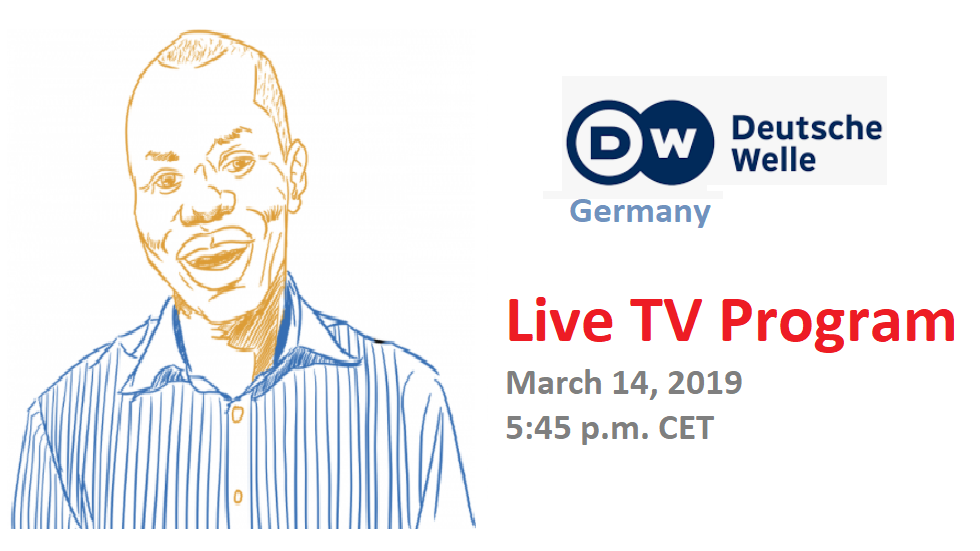
I will be live on Deutsche Welle or DW. DW is Germany’s public international broadcaster with services in 30 languages.

I will speak on Business in Africa on a TV program.

Date: March 14

Time: 5:45 p.m. CET. That is 4:45 p.m. UTC.

Meanwhile, the exhibition of my design in Germany will end this month at ZKM | Center for Art and Media Karlsruhe Germany. If you have not visited and want to see my works, you have the next three weeks to visit.

As always,  I thank the German Federal Cultural Foundation, German Federal Ministry for Economic Cooperation and Development, and the United States USAID for supporting some of my works. (And my beautiful Nigerian Government for subsidizing my undergraduate education in FUT, Owerri, Nigeria).

Exhibition of Ndubuisi Ekekwe Design Opens in a German Museum


OPPO Shows a Glimpse of the 5G Future; Nigeria’s NCC Sets 2020 for 5G Deployment

0

By Nnamdi Odumody

Oppo, a leading global smartphone brand, is known as been focused on providing products infused with art and innovative technology. Its key elements are young, trend-setting and beauty, delivering enriched digital experiences to its customers.

In the past ten years Oppo has been focused on developing smartphones with mobile photography technology breakthroughs. It pioneered selfie beautification and was the first brand to launch smartphones with 5MP and 16MP front cameras. And it was among the companies that pioneered the motorized rotating camera, the UltraHD feature, and 5X Dual Camera Zoom technology. Oppo’s Selfie Expert F series which launched in 2016 drove the selfie trend in the smartphone industry. In 2017, it was ranked as the world’s fourth smartphone brand globally by IDC, a consultancy.

With 5G as the future of intelligent communication, bringing new possibilities for creating, imagination and closer connectivity, Oppo showcased what a 5G experience will look like at its Innovation Event during the recently held Mobile World Congress at Barcelona with its 5G smartphone and 5G Landing Project.

Its first 5G smartphone will augment customer experience with 4k, 8k video download |upload| cloudplay, 3D video calling, 5G Cloud gaming and multiplayer AR|VR game, instore navigation, AR shopping integrated, immersive, entertainment everywhere, etc. Oppo showcased the 5G possibilities with hologram calls to AR shopping as well as demonstration of perfect scenarios to use 10x lossless zoom. With the world’s first 10x lossless zoom technology, it further empowers users and provides everyone the opportunity to become professional photographers without any loss of quality.

10x lossless zoom technology is an innovation created with industry leading camera specification including a triple lens camera structure consisting of a telephoto lens, ultrawide angle lens and main camera. To provide further value to users, it also introduced optical image stabilization on both the main camera and the telephoto lens to achieve higher antishake accuracy that brings people closer to the world around them.

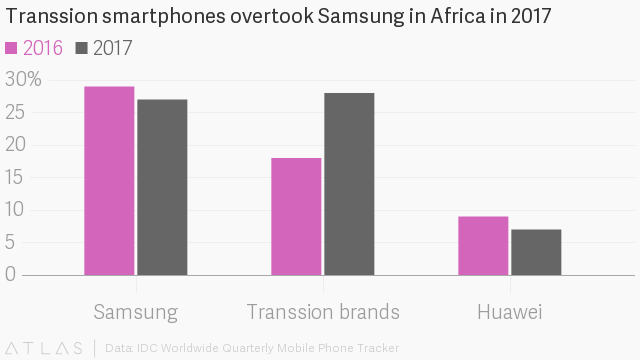
Transsion Holdings, the parent company of the leading smartphone brands for Nigerians and the rest of Africa – Tecno, Infinix, Itel – needs to invest in R&D to deliver 5G enabled smartphones for Nigerians and the continent. Tecno will see more competitions as Xiaomi and Oppo make Africa an important market in their businesses.

Already, the Nigerian Communications Commission has declared 2020 as the year from which telecommunication services operators will begin the deployment of 5G technology to help deepen the economic development of the nation.

Simply, with OPPO readiness on 5G, Tecno could lose its market position in the next few years, in Africa, if it does not work hard to prepare for this 5G future.

Tough Challenge for Tecno As Xiaomi Arrives Africa

Nigeria’s Biometric Nation as JAMB Introduces Biometric Capture for Exams

0

Good news from JAMB (Joint Admissions and Matriculation Board) as it sees more young people aspiring to attend universities in Nigeria: “Meanwhile the bulletin also noted that the slash in the UTME fee by the federal government had increased the number of candidates who want to sit for the examination.” Very happy for the voices we put together for the action effected for that change.

That said, the plan to use biometrics in JAMB exams will set a new basis for universities and all tertiary institutions in Nigeria to do so. After all, what is the value of JAMB using biometrics if the universities cannot use same biometrics to validate that incoming freshmen are the same JAMB had tested. So, as JAMB marches ahead with biometrics, contractors are already smiling because universities will need same equipment. Had NIMC (National Identity Management Commission) been fully operational, Nigeria could have consolidated all these disparate databases in one.

The Joint Admissions and Matriculation Board (JAMB) says it will not rescind its decision on the use of biometrics in the conduct of its Unified Tertiary Matriculation Examination (UTME).

This is contained in the board’s weekly bulletin issued on Sunday in Lagos.

According to the bulletin, the importance of biometrics in the conduct of the board’s examination cannot be overemphasised.

It noted that the Biometrics Verification Machine (BVM) was introduced by the board in an attempt to get rid of the numerous forms of examination malpractice.

It said the BVM was a security mechanism used for the authentication of candidates’ identity as it provided access to the individual data, based on physiological characteristics.

We need to fight exam malpractices, and using biometrics will surely help JAMB. Yet, it does not end there. The problem is that every university, polytechnic and college of education will get in line, embracing biometrics. And just like that, personal bio-data becomes permanently warehoused in schools which are not specifically suited for such. One will hope that brokers will not pay to trade on them!

Then after schools, employers will do their own biometrics to confirm that the same student is the very one applying for jobs.

Certainly, government needs to get NIMC going to avoid this biometric paralysis in the nation. It does not need to be this way. Yes, Nigeria cannot be a biometric nation, from telecoms (SIM card) to banking (BVN), and now university entrance exam, you do not need to kill more than one tiger to be nicknamed “the killer of tigers”.

LinkedIn Comment on Feed

Isn’t it ridiculous that in a country that is hell-bent on centralising governance now abhors the very things that actually deserve centralisation? We are really specialist in doing things the opposite way.

We run a federal system that is actually unitary in practice, then we have the NUC lording it over all the universities. You have the ASUU as a bargaining conglomerate, then we have JAMB deciding who the universities admit. With all the unification conglomerates all over the place, even when they are really the problems, we have done everything to keep them alive and kicking, while showing contempt and disdain to any idea that questions their efficacy and usefulness.

On the other hand, Immigration Service is maintaining its own database and biometrics, FRSC have theirs, the banks have their BVN, the telecoms have theirs, INEC is there, even Customs have theirs; and in all of these paralyses, we still have a certain NIMC, with government paying salaries there, only God knows what its job actually is. Now JAMB wants to join the league of Biometrics Keepers Association of Nigeria…

Other than awarding contracts and getting kickbacks, no one else can explain why we need disparate databases to keep an individual’s biometrics.