DD
MM
YYYY

PAGES

DD
MM
YYYY

spot_img

PAGES

Home Blog Page 6986

Tough Challenge for Tecno As Xiaomi Arrives Africa

0

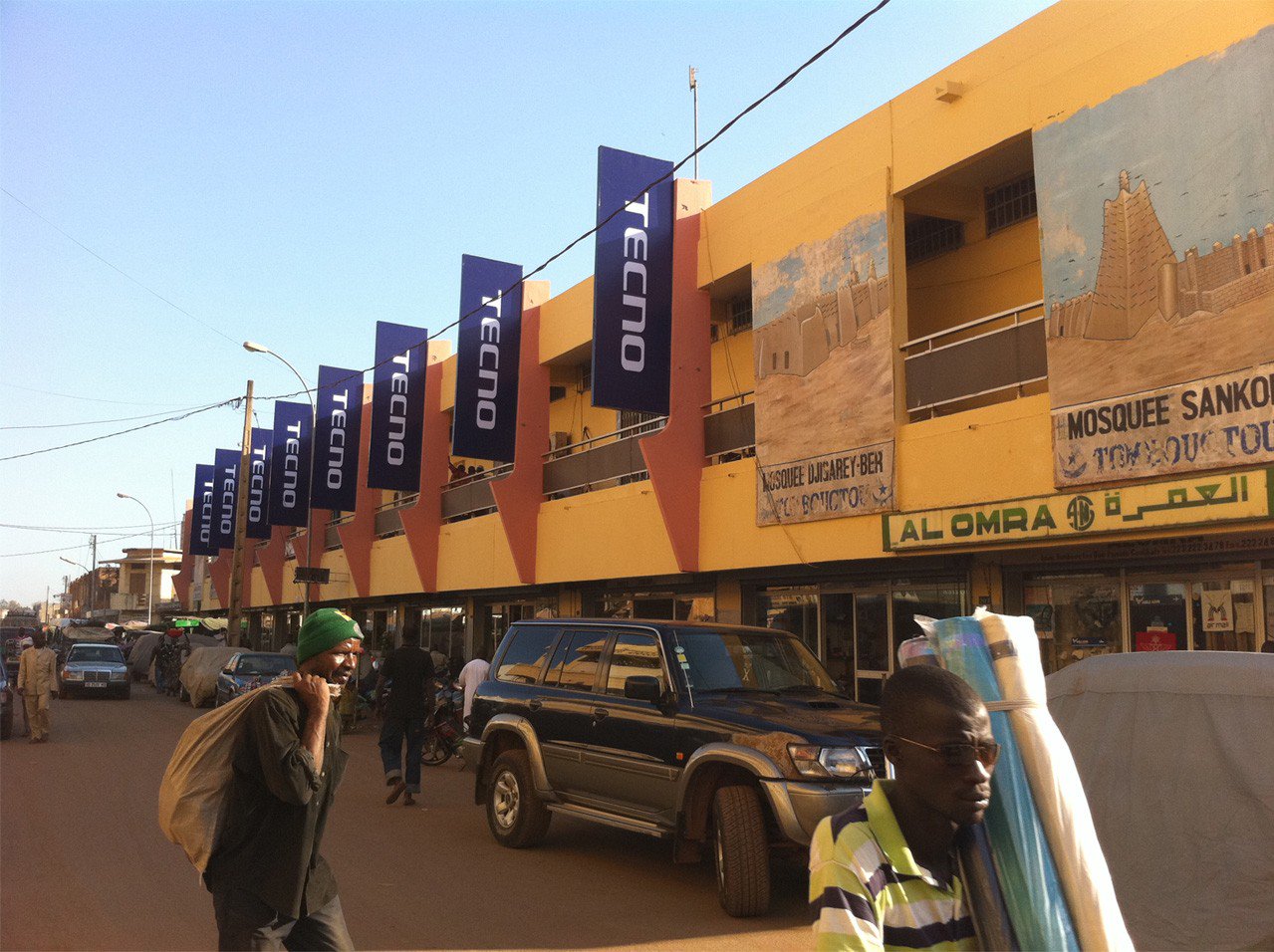
Tecno, the leading smartphone brand in Africa, controlled by Transsion Holdings will face a real test as Xiaomi arrives Africa. Xiaomi has done well in China and India but needs further growth. That growth cannot come from North America and key parts of Europe since the brand is largely banned in those regions over IP related issues. So, when all the permutations are done, the core critical market to explore is Africa. Hence, the maker of Mi phone brands is arriving.

Xiaomi says it’s launching a department in Africa, which will be headed by its current vice president. While the company has been selling phones in the continent since 2015 through local partnerships, the new department marks its official venture into the area.

{…]

Xiaomi is famous for making cheap handsets even though, recently, it’s been trying to move to the higher-end segment and sell more expensive, fancier phones. That doesn’t mean it’s given up on cheap phones. The company spun off a separate brand named Redmi, which focuses on making lower-priced phones. The first Redmi phone launched in early January features a 48MP rear camera and a midrange Snapdragon 660 chipset for just US$145.

There is still a huge opportunity ahead as Africa remains a growth market and despite the strong competitive position Transsion occupies with its brands, anything can happen in the smartphone sector. We used to have Nokia controlling more than 90% of the feature phone market. Then, Blackberry ruled and dominated a nascent smartphone market. Samsung later took over, but then lost its top position to Tecno. Simply, Xiaomi should take its chances.
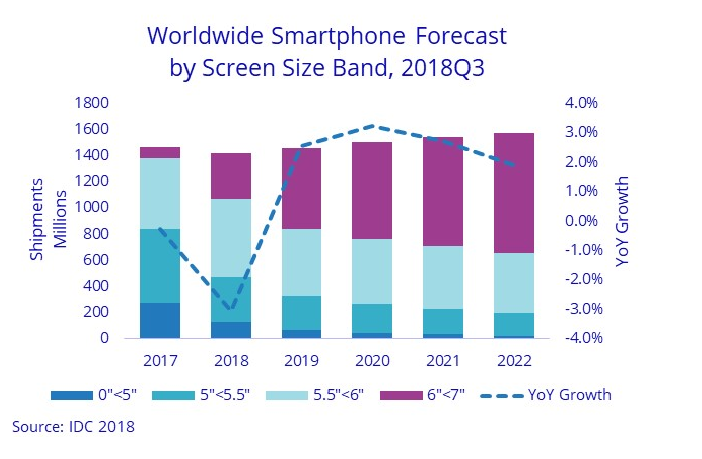
As these phone brands make Africa home, the immersive connectivity convergence will happen, as predicted, in 2022. Across board, Africa will win when there is competition. Yet, I am hoping that we can have local players in the continent as part of this rivalry.
Why Nigeria Is The Best Place To Invest In?

0

by Olayinka Oduwole

I recently read a Tekedia brief where the writer mentioned that Nigeria is the best place to invest. The author mentioned that open friction exists within the markets which therefore gives rise to various opportunities. In his words, ‘in Nigeria, there are acres of diamonds everywhere. From our food systems to our healthcare systems, from our road systems to our power systems, from our educational systems to our aviation and indeed everything, you see frictions everywhere. That is why Nigeria is the best place to invest.’

I pondered about these statements for a while and got to the realization that it requires a different level of thinking to make these assertions. To an ordinary Nigerian, there is no power. Individuals and families therefore need to purchase fuel to run their generators. The health care system is broken. Food prices could skyrocket at any point. ASUU could go on strike at any point. To the average Nigerian, these are problems and problems that the Government needs to fix. As a matter of fact, they cannot see beyond these problems. And it is indeed frustrating. And in that state, all you can therefore do is lament and complain about how broken the system is and perhaps think of a better destination to relocate to where life may be better.

But, for an individual like Prof, who’s on a different wavelength, he sees these problems, not as problems, rather as business opportunities. The inadequacies of the Government means that Individuals with foresight and the right vision can therefore step in, look for solutions to these problems and enjoy the diamonds that indeed exist everywhere. The catch is that not everyone can see the diamonds because the diamonds lie beyond the problems. That is, you hit a diamond only after you successfully proffer a solution to the problem.

He also mentioned that few things work in Nigeria which therefore makes it a country with the biggest problems to be solved in the world. This statement alone can cause some families to consider relocation to a different country with perhaps the smallest problem in the world. The issue here is, from my experience, comfort destroys creativity. When you are very comfortable, your brain automatically goes into sleep mode. A country with the smallest problem also mean that the problems have been fixed for you and therefore present the smallest opportunities for finding diamonds. But in a country with the biggest problems, if you can see beyond the problems and get creative, then you realize that the biggest problems in essence presents the greatest opportunities.

He further mentioned that the new set of Nigeria leaders need to be bold to fix these challenges. We are indeed our biggest fear. And the moment an individual can overcome that fear, then we shatter whatever glass ceiling lies and suddenly realize our strengths.

To conclude, even though we see the same things, we however see them differently; you may choose to see problems while someone else sees opportunities. Therein lies our differences and opportunities to either grow or reduce. If one can see the bigger picture in situations, then one can indeed make lemonade anytime life throws you lemon.

Nigeria, Ahead of China, Creating Millionaires at the Fastest Rate in the World – CNBC, Wealth-X

0

In one startup, after an investment, 17 young people became dollar (paper) millionaires in Lagos. In another one, 11 people joined the club. Yet, there is really nothing to celebrate as while Nigeria is minting rich people, we are also creating abjectly poorest citizens of the world. So, I take caution to report what we all know: startup entrepreneurs are joining the club at one of the fastest rates in the world. CNBC and Wealth-X just confirmed this trajectory. Yes, those young men you see with laptops in Lagos are now richer than some local government areas!

In the first edition of the High Net Worth Handbook which provides unique HNW analysis, uncovering the state of the world’s millionaire population, which rose by 1.9% to 22.4m people in 2018 and is forecast to increase by another 6.2% over the next five years, we got the message: Nigeria is going to be the fastest-growing high net worth country, jumping ahead of China, over the next five years.

The study, taken from Wealth-X’s inaugural “High Net Worth Handbook 2019,” drew on research from more than 540,000 high net worth individuals — those with a net worth of $1 million to $30 million — to forecast its outlook for global wealth growth over the next five years. It took into account current wealth levels, population growth estimates and anticipated future investment opportunities.

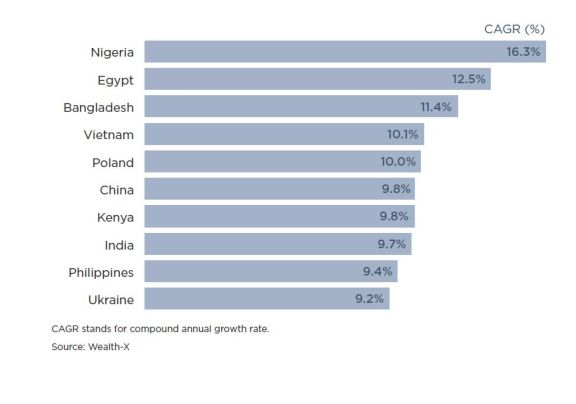
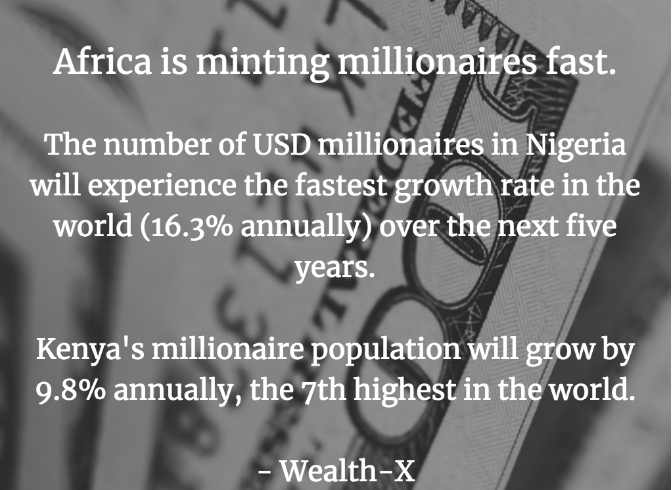
The report found the West African nation of Nigeria to be the front runner, set to see its high net worth population balloon by a compound annual rate of 16.3 percent between now and 2023. It was followed by Egypt at 12.5 percent and Bangladesh at 11.4 percent.

Here’s the full list of the 10 fastest-growing high net worth countries:

Aba Will Become Shenzhen Of Africa With Its FTZ Status

0

Capital is flowing into Aba (Abia State) at rapid rate. I predict that Aba will become a top-tier city within the next ten years in Nigeria. The Nigerian government has unlocked Aba by making Enyimba Economic City a free trade zone. This is the biggest deal in the land: the people of Nigeria will build Aba because private capital will flow into Aba.

The Federal Government and Abia State Government have signed Definitive Agreements for the project between the Enyimba City Economic Zone Limited. The signing took place at the Presidential Villa and the Federal Government was represented by Nigeria Special Economic Zone Company. President Muhammadu Buhari who witnessed the signing, commended the Governor of Abia State Okezie Ikpeazu for initiating the project, and thanked the host communities for their commitment to the project, saying that everyone should be more confident of the success of the project since the Minister of Trade and Investments, Okechukwu Enelamah, under whose portfolio it falls, hails from Abia State.

Aba will become one of the most important cities in West Africa within the next 15 years. Yes, when you think of Shenzhen China, think of Aba because we the citizens of Abia state got from the federal government one thing we wanted: a free trade zone. That status will galvanize trade and commerce in the heart of Nigerian makers. I made a case for this project design and it was a moment when Mr. President approved it. The governor believes that the output from Aba would seed massive expansion in the GDP of Nigeria.

My proposal to grow the electronics sector in Nigeria is to make Aba a special economic zone (SEZ) where all products produced therein would not be taxable, unlocking local and global capital to rival China’s Shenzhen within decades. I see makers but they are subsistence; to become entrepreneurs, a redesign in the hardware sector would be catalytic. In my model, a SEZ would make that happen.

A special economic zone (SEZ) is an area in which business and trade laws are different from the rest of the country. SEZs are located within a country’s national borders, and their aims include: increased trade, increased investment, job creation and effective administration. To encourage businesses to set up in the zone, financial policies are introduced. These policies typically regard investing, taxation, trading, quotas, customs and labour regulations. Additionally, companies may be offered tax holidays, where upon establishing in a zone they are granted a period of lower taxation.

Aba is a latent opportunity in Nigeria, … As Aba blossoms, private capital would build seaport in either Calabar or Akwa Ibom state. I am extremely confident that within a decade of making Aba a SEZ, Nigeria would double its GDP as it would serve Africa through the evolving continental treaty.

Here are the contacts for EEC:

Enyimba Economic City (EEC ) is in the heart of South East. The Industrial City is ideally positioned to offer holistic infrastructure. It will serve as the gateway to both regional and international trade.

You can find the project vision and components here.

Address:  1 Geometric Power Road, Osisioma, Abia State
+234 803 423 0455

Email:  info@eecdgroup.com

Website: www.eecdgroup.com

Apple Re-Prices iPhone As Sales Fall – Lessons for Entrepreneurs

0

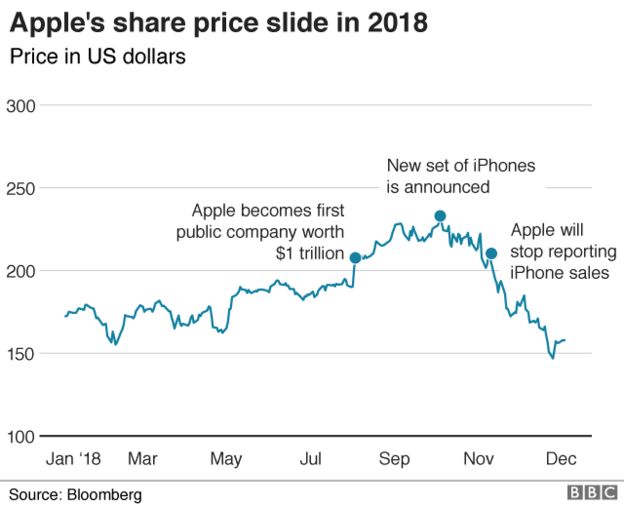
In this world, you can do many things in the market. But one thing I will suggest you do not do is to assume that your customers and consumers are stupid. Yes, we get into that phase where we think we can do anything and get away with it. People, it does not work that way. The last time Apple reported earnings, it was the most capitalized private company on earth. Today, it has lost hundreds of billions of dollars on market value.

What was Apple’s problem? It misfired on its pricing. And when that happened, customers revolted, leaving the one oasis in the company (the iPhone) and sales dropped 15%. Apple made an increasingly commoditized product category a fashionista product, putting the cost of iPhone out of the reach of many people.

The drop on iPhone sales was not going to hurt just on monetary terms, the planned transition into services (which grew 19% to a record $10.9bn for quarter ended 31 December) depends on more people using the devices since services win on volume. That explains why Apple wants to lower prices so that it can get many devices out of the stores. In most markets, Apple had already re-priced iPhone to make the device affordable for customers.

Apple boss Tim Cook has hinted it could lower iPhone prices in some places in an attempt to boost falling sales. Revenue from the iPhone, responsible for most of the firm’s profits, fell 15% in its latest financial quarter. Overall the firm’s revenue was down 5% from a year ago to about $84.3bn (£64.5bn).

[…]

But chief executive Tim Cook said customers were also struggling with the firm’s high prices.

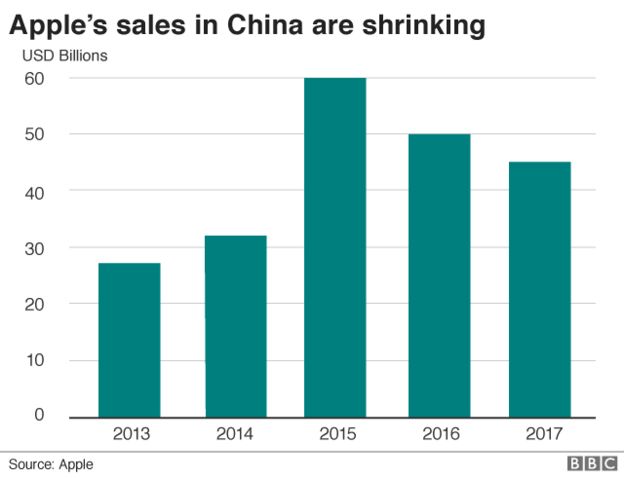
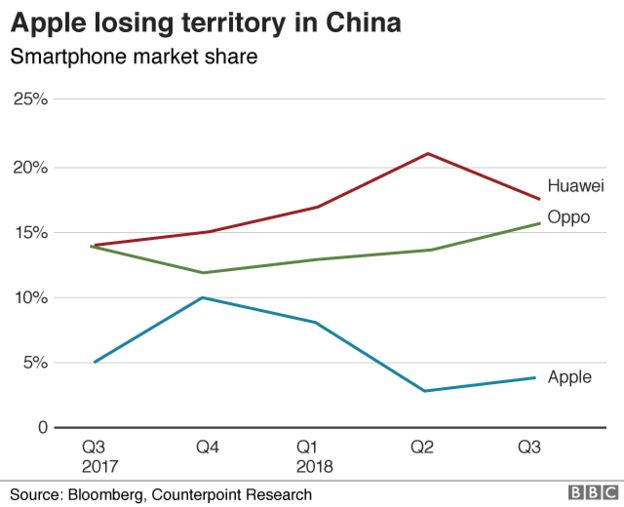
He said a strong dollar, which makes its products comparatively more expensive, had hurt its sales in emerging markets.

Mr Cook said the tech giant had started this month to re-price its phones to shield customers from the impact of currency fluctuations.

Apple made a mistake here – its price modeling was off. Typically, companies do all to make pricing fixed in ways that they do not lose customers. I expect the numbers to adjust (i.e. sales to move north) now that Apple had started re-pricing its phones. Apple remains the leader on making the best smartphones in the world, and despite the competition, it has a clear moat on its strategy of proprietary hardware powered with exclusive software. Provided the pricing makes sense, many will still congregate into that Apple world for a long time.

Yet, the firm needs to make affordable phones for the services future:“And do not count out the possibility of $300 Apple uPhone (u for “universe”, lol) to help on that service volume; I suggested that last August.”