DD
MM
YYYY

PAGES

DD
MM
YYYY

spot_img

PAGES

Home Blog Page 7

Global Stocks, Bonds, Oil Rally as Investors Reassess Fed Rate Outlook Amid Iran Tensions

0

Global stocks and bonds rallied on Thursday as investors weighed fresh U.S. economic data and comments from Federal Reserve officials for clues on whether the central bank will raise interest rates this month, while a sharp rebound in the yen and renewed military strikes between the United States and Iran kept markets on edge.

A recovery in global bond markets helped improve sentiment across equities, even as investors continued to grapple with elevated government borrowing costs, geopolitical risks and uncertainty over the outlook for monetary policy.

The STOXX 600 rose 0.2% in Europe, snapping a three-day losing streak, while U.S. stock futures gained about 0.1%.

In U.S. premarket trading, Broadcom shares fell roughly 2% after the chipmaker issued a fourth-quarter revenue forecast that fell short of market expectations. Snowflake shares, meanwhile, surged more than 20% after the cloud data platform provider raised its annual revenue outlook.

The immediate focus for investors is Friday’s U.S. nonfarm payrolls report, which could provide a crucial signal on the health of the labor market after weaker-than-expected private employment data for August.

Fed Governor Christopher Waller is also scheduled to speak, following comments from New York Fed President John Williams on Wednesday that rising long-term Treasury yields appeared to reflect a solid economy rather than heightened inflation concerns.

Williams said he was still gathering information before making his next monetary-policy decision.

Markets have nevertheless become increasingly cautious about the Fed’s policy path. Money markets were pricing in roughly a 60% probability of a rate hike this month, up from less than 40% a week earlier.

That shift has added to volatility across bonds and currencies, particularly as investors attempt to determine whether elevated yields are being driven by inflation, fiscal concerns and geopolitical risk or by stronger underlying economic growth.

“There is an interpretation about why yields are moving higher — is it good, or bad? I feel that the negative reasons are more often put forward than the positive reasons,” said Samy Chaar, chief economist at Lombard Odier.

He pointed to concerns over heavy government debt issuance, fiscal risks, geopolitics and the normalization of risk premiums as oil prices rise, but said stronger nominal economic growth could also explain higher yields.

“If demand is strong and it’s demand that is keeping yields at high levels, it’s quite a good environment for multi-asset portfolios, in the sense that you want to be exposed to profit growth with equities, and you want to be exposed to carry as well, with credit,” Chaar said.

Bond Yields Retreat from Recent Highs

Sovereign bond yields fell on Thursday after reaching multiyear highs over the past week as markets priced in tighter monetary policy and growing concerns about government finances.

The benchmark U.S. 10-year Treasury yield fell 2 basis points to 4.77%, while Germany’s 10-year Bund yield also declined 2 basis points to 3.353%. The retreat provided some relief to equity investors because lower long-term yields can reduce the discount rate applied to future corporate earnings and make fixed-income assets relatively less attractive compared with stocks.

But the broader bond-market backdrop remains challenging. Investors are confronting heavy government borrowing requirements at the same time that central banks are reassessing the pace and direction of interest-rate policy.

That has made Friday’s payrolls report attractive. A strong labor-market reading could reinforce expectations for tighter monetary policy, while signs of further deterioration in employment could strengthen the case for a shift toward easier policy.

Yen Surges As BOJ Rate Expectations Build

Currency markets delivered an even stronger signal of changing expectations. The yen rose more than 2.5% over the previous two sessions to around 156.1 per dollar, putting it on course for its strongest two-day advance since coordinated U.S.-Japanese intervention in early August.

The move pushed the dollar index down 0.4%.

The yen’s rally has been fueled by growing expectations that the Bank of Japan could raise interest rates sooner rather than later. A stronger yen also reflects a narrowing of the interest-rate advantage that has supported the currency’s weakness for much of the past several years.

The dollar fell 0.5% against the Swiss franc, while the euro gained 0.18% to about $1.1609 and sterling rose 0.1% to $1.349.

The speed of the yen’s appreciation is likely to keep investors alert to the risk of further official intervention, particularly given the currency’s history of sharp moves when Japanese authorities have signaled concern over excessive depreciation.

Oil Rises As U.S.-Iran Conflict Adds Risk Premium

Oil markets remained highly sensitive to developments in the Middle East as the United States and Iran exchanged their largest barrage of attacks since July, reviving concerns that the conflict could broaden across the region.

Brent crude rose about 1% to $96.62 a barrel, extending its advance to a fourth consecutive session.

The latest military escalation has injected a fresh geopolitical risk premium into oil prices, with investors focused on the possibility that a broader conflict could disrupt crude production, exports or key shipping routes.

The rise in oil prices presents an additional complication for central banks. Higher energy costs can feed inflation while simultaneously weakening household purchasing power, potentially making it harder for policymakers to respond to slowing economic activity with lower interest rates.

Gold Gains As Investors Seek Protection

Gold also advanced, rising 1.1% to $4,434 an ounce. The metal is now nearly 13% above its seven-month low in June.

Geopolitical uncertainty has supported demand for the traditional safe-haven asset, while concerns over the long-term purchasing power of the U.S. dollar have provided another source of support.

The latest evidence of central-bank demand came from the Netherlands. The Dutch central bank said on Wednesday that it had moved a substantial portion of its gold reserves from North America to vaults in London over the previous six months, saying the relocation would improve its preparedness for a potential crisis.

The move adds to a broader pattern of central banks paying greater attention to the location and accessibility of their gold reserves amid heightened geopolitical uncertainty.

For global investors, Thursday’s market moves point to an increasingly complicated policy environment. Equities are benefiting from signs of economic resilience, bonds are caught between stronger growth and fiscal and inflation risks, currencies are responding to divergent central-bank expectations, and commodities are carrying a larger geopolitical premium.

The next major test will come from the U.S. payrolls report. A strong reading could revive the recent selloff in bonds by strengthening expectations for tighter Fed policy, while a weak report could reinforce the case for monetary easing and provide further support for risk assets.

Uber Launches Wayve-Powered Robotaxis in London as Britain Accelerates Autonomous Driving Push

0

Uber launched autonomous rides in London on Thursday using artificial-intelligence technology developed by British self-driving company Wayve, bringing robotaxis to the British capital as the ride-hailing giant expands its autonomous mobility operations across Europe.

The launch makes London the second European city where Uber offers autonomous rides, following the introduction of robotaxi services in Zagreb.

The initial service will operate with a licensed safety operator in the vehicle to monitor the autonomous system, with fully driverless operations planned for a later stage once regulatory requirements are met, the companies said.

Passengers requesting UberX, Uber Comfort or Uber Electric rides could be matched with a Wayve-powered Ford Mustang Mach-E at no additional charge. Fewer than 20 vehicles will be available when the service launches.

The limited fleet marks an early commercial test of autonomous driving technology in one of Europe’s most complicated urban environments. Uber and Wayve will be able to gather operational data and consumer feedback while regulators assess how the technology performs on London’s roads.

Uber’s Global Head of Autonomous Mobility, Sarfraz Maredia, said the service would help the companies demonstrate the technology’s capabilities to both passengers and policymakers.

The launch would “build credibility with consumers as well as with the government,” Maredia said.

British Transport Secretary Heidi Alexander described the rollout as an important step for the country’s autonomous-vehicle industry.

“This is a major milestone for the future of transport in London, as British innovation brings this technology onto our roads and gives passengers more choice,” Alexander said.

Despite Thursday’s launch, widespread driverless operation in London remains subject to regulatory approval. Transport for London, the city’s transport authority, has yet to authorize fully driverless commercial services, leaving a licensed operator in the vehicle during the initial phase.

That makes the London rollout both a technology demonstration and a test of Britain’s regulatory framework for autonomous vehicles. The companies will need to show that the system can operate safely across London’s dense traffic, complex road layouts, cyclists, pedestrians and frequently changing weather conditions before removing the human safety operator.

Wayve’s autonomous driving system, known as the Wayve AI Driver, is designed to learn from driving experience in a manner similar to a human driver. The company said the system can adapt to new roads, vehicles, weather conditions, and cities rather than relying solely on detailed pre-programmed maps and fixed driving rules.

That approach is central to Wayve’s technology strategy and could give it an advantage as autonomous vehicle companies seek to expand beyond tightly controlled operating zones.

Alex Kendall, Wayve’s chief executive and co-founder, said London was an appropriate location for the company’s first public deployment.

“We’re proud to introduce the Wayve AI Driver to the public for the first time right here in London, our home city and one of the most complex driving environments in the world,” Kendall said.

The rollout builds on Uber’s partnership with Wayve, which began in 2024 and included an investment by the ride-hailing company. The agreement was designed to support the deployment of Wayve-powered autonomous vehicles across multiple markets.

For Uber, autonomous vehicles offer a potential way to expand ride capacity while reducing the industry’s dependence on human drivers over the longer term. Rather than developing its own autonomous-driving system, Uber has pursued partnerships with technology companies and vehicle manufacturers, allowing it to focus on its ride-hailing platform and customer network.

The London launch also comes as competition in autonomous mobility intensifies. Companies across the industry are moving from testing self-driving technology to limited commercial deployments, making regulatory approval, safety performance and consumer acceptance important competitive factors.

Wayve’s London deployment is notable because the company is seeking to demonstrate that its AI-based approach can generalize across different driving environments. Successfully handling London’s unusually complex streets could provide an important validation of the technology as Wayve looks to expand internationally.

For now, the small fleet and continued presence of safety operators mean the service remains far from a fully autonomous transportation network. But the launch marks a transition from testing the technology to putting it directly in front of paying passengers. The next test will hinge on Wayve and Uber’s ability to demonstrate enough safety and reliability to convince regulators to remove the human operator and allow the service to scale beyond a handful of vehicles.

EUR/JPY, Bitcoin and Nvidia: Three Signals Shaping the Market

0

Global markets are entering September with three developments demanding attention: Arthur Hayes’ warning that a falling EUR/JPY could become an early liquidity signal.

Bitcoin’s technical struggle around its neckline with $71,000 in focus, and a major Nvidia insider filing that could test investor confidence in the artificial-intelligence trade.

Hayes, the BitMEX co-founder and current Maelstrom chief investment officer, argues that traders should pay close attention to the euro-yen exchange rate because it can provide an early indication of stress moving through global funding markets.

In his latest analysis, Hayes identified EUR/JPY as his macro “North Star,” arguing that a sharp decline could reveal growing pressure in European financial markets and eventually force additional liquidity support.

The logic is important for Bitcoin. A falling EUR/JPY can reflect changing interest-rate expectations, unwinding carry trades and rising demand for safer funding conditions. Hayes’ thesis is that if funding stress becomes severe enough, central banks—particularly the Federal Reserve—could eventually respond with additional liquidity measures.

Such an environment could become supportive for scarce assets such as Bitcoin, even if the initial market reaction is risk-off. Hayes has suggested EUR/JPY could eventually fall substantially from current levels, making the currency pair a potentially important warning indicator for crypto traders.

Bitcoin itself is currently caught between bullish momentum and a renewed technical test.

The cryptocurrency recently broke above the $71,000 area during its broader recovery, but analysts are now watching whether it can reclaim and hold important technical levels after losing an ascending neckline.

One technical setup identifies $71,000 as a potential downside target if the neckline retest fails. Conversely, a sustained recovery above the neckline would invalidate much of the bearish setup.

The broader chart structure remains more constructive than it was earlier in the year. Reuters noted that Bitcoin’s recent rally pushed it above several major moving averages and broke a sequence of lower highs associated with the previous bearish trend.

However, maintaining levels above roughly $71,781 remains important. A failure there could reopen lower support zones, while a stronger breakout could eventually expose significantly higher resistance.

While crypto traders monitor liquidity and technical levels, Nvidia investors are confronting a different kind of signal: insider selling. Nvidia director Mark Stevens has filed notice relating to the sale of five million Class A shares valued at approximately $1.09 billion.

The filing follows additional disposals this year, bringing the value of his potential and completed sales substantially higher. Yet the market has not interpreted the filing as an immediate bearish signal.

Nvidia shares recently climbed as investors continued to focus on the company’s powerful AI growth, while its acquisition of Hugging Face has reinforced expectations that Nvidia wants to deepen its position across the AI software ecosystem.

Nvidia officially disclosed the acquisition agreement in a September 2 filing. The three stories ultimately point to the same underlying theme: markets are becoming increasingly sensitive to liquidity, positioning and confidence.

EUR/JPY may provide an early macro warning, Bitcoin’s neckline could determine whether its recovery extends or reverses, and Nvidia’s insider activity offers a reminder that even the strongest AI trade can encounter profit-taking.

For investors, the message is not that any single indicator guarantees the next move. Instead, the interaction between currencies, liquidity, technical momentum and equity positioning may determine whether September becomes another leg higher—or the beginning of a broader market repricing.

Yen Surges as BOJ Rate-Hike Bets Intensify, Intervention Fears Return

0

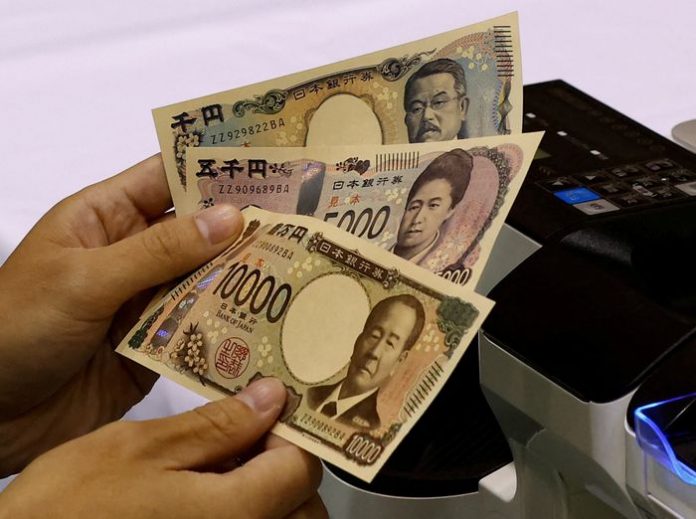
The Japanese yen surged to a one-month high against the U.S. dollar on Thursday as traders increased bets on further Bank of Japan interest-rate hikes and weighed the possibility that Tokyo could intervene again to support the currency.

The yen climbed more than 1% against the dollar, reaching ¥156.15, its strongest level since Aug. 3, according to LSEG data. It was trading around ¥156.40 per dollar at 6:20 a.m. ET and also strengthened against the euro and British pound.

The move marks a sharp reversal from earlier in the week, when the yen breached the psychologically important ¥160-per-dollar threshold. That level has become a key focus for markets because sustained weakness beyond it could increase pressure on Japanese authorities to act.

Atsushi Mimura, Japan’s vice finance minister for international affairs, said Thursday that authorities were “neither satisfied nor reassured” by recent currency moves and remained “on a state of heightened alert,” according to Reuters.

His comments bolstered the perception that Tokyo is closely monitoring the yen and could respond if movements become excessively rapid or disorderly.

Intervention or Rate-Hike Repricing?

Thursday’s rally followed a similar roughly 1% jump in the yen on Wednesday, prompting speculation that Japanese authorities might have intervened in the foreign-exchange market.

Japan has already demonstrated its willingness to deploy substantial resources to support the currency. The Finance Ministry said the country spent a record ¥15.4 trillion, equivalent to about $98 billion, on yen-buying intervention between July 30 and Aug. 26.

The United States also confirmed its participation in a coordinated effort at the end of July, using foreign-currency holdings to purchase yen. Washington has not disclosed the exact amount, although a Reuters photograph of U.S. Treasury Secretary Scott Bessent’s July 31 notepad appeared to reference a plan to buy between $5 billion and $10 billion of yen.

Bessent said Monday that he expected the Japanese government and BOJ to take measures that would strengthen the yen. He has also privately urged Japanese officials to provide clearer communication about the country’s interest-rate trajectory, according to local media reports.

Yet analysts remain divided over whether the latest yen surge represents another intervention.

Takuji Okubo, chief economist at Japan Macro Advisors, said it was “possible” that Thursday’s move reflected intervention, but argued that the more likely explanation was a market reassessment of the BOJ’s policy outlook following recent comments from Governor Kazuo Ueda.

“I do not think [the Ministry of Finance] has done this kind of small stealth intervention in recent history,” Okubo said. “So it is probably just a reaction to BOJ Governor Ueda’s comment cementing the high likelihood of a BOJ rate hike in September.”

ING’s global head of markets, Chris Turner, also questioned whether Wednesday’s move was intervention, pointing to the absence of significant disruption in electronic foreign-exchange matching systems at the time.

But a sustained appreciation driven by monetary policy would be fundamentally different from a temporary move engineered by government purchases of yen.

The BOJ’s next policy meeting is scheduled for Sept. 18, and markets are increasingly pricing the possibility of another rate increase.

BOJ board member Hajime Takata said Wednesday that the central bank should raise rates “nimbly” in response to rising inflation, suggesting policymakers could move faster or make larger adjustments than the roughly semiannual pace seen recently.

Ueda also left the door open to higher rates in comments on Tuesday.

The BOJ’s dilemma is becoming more acute. A weak yen raises the cost of imported energy, food and other goods, potentially keeping inflation elevated. A stronger currency, by contrast, can ease imported inflation but could weigh on exporters and economic activity. The prospect of higher Japanese rates is therefore becoming an increasingly powerful force in the foreign-exchange market because it narrows the interest-rate differential between Japan and the United States.

For years, the yen was heavily used to finance so-called carry trades, in which investors borrowed cheaply in Japan and invested in higher-yielding assets overseas. As Japanese rates rise and the potential return from holding dollars declines relative to the cost of funding in yen, some of those positions become less attractive and can be unwound, creating additional demand for the Japanese currency.

Yen Weakness Is Also A Treasury-Market Issue

The implications extend well beyond Japan’s currency market. Japanese investors are the largest foreign holders of U.S. Treasury securities, with roughly $1.1 trillion of U.S. government debt on their books as of June, according to the U.S. Treasury.

Analysts say a prolonged period of yen weakness could encourage Japanese investors to reduce overseas holdings or increase currency hedging, potentially affecting demand for U.S. government debt. Conversely, a stronger yen could make foreign assets more expensive for Japanese investors in yen terms and alter the attractiveness of U.S. Treasury investments.

That makes the yen an important transmission channel between Japanese monetary policy and global bond markets. The issue is particularly significant while global government bond yields are already elevated. Investors are assessing the combined impact of inflation, large fiscal deficits, heavy government borrowing and divergent central-bank policies.

Japanese government bond yields eased Thursday following a solid auction of 30-year debt, offering some relief after a sharp sell-off in longer-dated bonds.

Japan’s bond market has faced pressure as investors assess the government’s fiscal position and the scale of spending expected under its 2027 budget. Higher long-term yields can increase borrowing costs for the Japanese government while also making domestic bonds more attractive relative to foreign assets.

The interaction between currency, interest rates and government bonds is therefore becoming more relevant. Economists note that if the BOJ raises rates and Japanese bond yields continue climbing, domestic investors may have greater incentives to keep capital at home. That could support the yen while potentially reducing Japanese demand for overseas bonds, including U.S. Treasuries.

Deutsche Bank analysts said markets were also watching the possibility of intervention during thin trading conditions around Japan’s “Silver Week” holidays, which could amplify currency movements.

Fed Policy Limits The Yen’s Upside

The yen’s rally nevertheless faces an important counterforce: U.S. interest rates. Markets have recently increased expectations for another Federal Reserve rate hike this month following hawkish comments from Fed Chair Kevin Warsh. Higher U.S. rates would preserve a substantial yield advantage for dollar-denominated assets, limiting how far the yen can strengthen without a more decisive shift from the BOJ.

Turner said a sustained yen recovery would probably require a significantly more hawkish BOJ as well as new measures designed to encourage domestic investment in Japan.

The result is a three-way contest between monetary policy, government intervention and capital flows.

Tokyo can intervene directly in foreign-exchange markets, but intervention alone is unlikely to produce a durable change in the yen’s underlying trend if the interest-rate differential with the United States remains wide. A credible BOJ tightening cycle, meanwhile, could strengthen the currency more sustainably by changing the economic incentives behind global capital flows.

For investors, the ¥160 threshold may therefore remain less important than what happens after it, according to economic experts. They believe that if the yen continues strengthening toward ¥155 and below without intervention, it would suggest that expectations of higher Japanese rates are increasingly driving the market. If the currency repeatedly approaches ¥160 and then experiences abrupt rallies, speculation about official intervention is likely to remain intense.

The Sept. 18 BOJ meeting has consequently become a critical event for global markets, with the yen, Japanese government bonds and potentially U.S. Treasuries all exposed to the central bank’s next move.

A Fractured Global Economy Meets a Global Bond Rout

0

The global economy is entering a more complicated phase, where geopolitical fragmentation and financial-market stress are increasingly reinforcing one another.

This week offered a stark demonstration of that reality as divisions among the world’s largest economies became visible at a G20 finance meeting while government bond markets simultaneously came under intense pressure across major economies.

The US-hosted G20 finance meeting ended without a joint communiqué, highlighting the difficulty of achieving consensus among countries facing increasingly different economic and strategic priorities.

China rejected proposed language concerning “non-market policies,” reflecting longstanding disagreements over state intervention, industrial policy and the role of government in economic activity.

European objections also prevented Russia’s finance minister from appearing in the traditional group photograph, underscoring how geopolitical tensions continue to shape even forums designed for economic cooperation.

The significance extends beyond diplomatic symbolism. The G20 was established in part to provide a platform where major economies could coordinate during periods of financial instability.

Its inability to produce a unified statement suggests that the international system has become more fragmented precisely when coordinated responses may be most necessary.

At the same time, bond markets delivered another warning signal. UK long-term borrowing costs climbed to a 28-year high, while benchmark government bond yields in the United States and Germany reached multi-year highs.

Japan’s 10-year yield moved above 3% for the first time since 1996. The simultaneous rise in borrowing costs across these major economies suggests that the pressure is not isolated to one country’s fiscal position or monetary policy.

Higher government bond yields matter because they represent the cost of financing for states and influence borrowing conditions throughout the economy.

When yields rise sharply, governments face larger interest expenses, while households and businesses can also encounter higher borrowing costs. For highly indebted economies, sustained increases can create difficult fiscal choices between spending, taxation and debt management.

The Japanese move is particularly important because Japan spent decades operating with exceptionally low interest rates and subdued bond yields. A sustained transition toward higher yields could therefore represent a structural change in global capital markets.

Japanese investors have historically played an important role in international bond markets, and changing domestic returns could influence where capital is allocated globally. The US and Germany face different economic circumstances.

But rising yields in both markets point toward a broader repricing of sovereign debt. Investors may be demanding greater compensation for inflation risks, fiscal deterioration, economic uncertainty or the prospect that interest rates will remain elevated for longer than previously expected.

This creates an uncomfortable feedback loop. Geopolitical fragmentation can increase uncertainty and encourage governments to pursue strategic industrial policies, defense spending and supply-chain restructuring.

Those policies can require greater public expenditure, potentially adding to fiscal pressures. At the same time, higher bond yields make financing that expenditure more expensive. For financial markets, the combination is particularly important.

Equities, cryptocurrencies and other risk assets are sensitive to changes in liquidity and interest rates. A sustained bond-market selloff can therefore tighten financial conditions even without a conventional recession.

The deeper message from this week is that the global economy is not merely slowing or accelerating in a conventional cycle. It is being reorganized. Political rivalry, fiscal pressures, changing monetary regimes and shifting capital flows are converging at the same time.

The absence of G20 consensus and the simultaneous bond-market rout illustrate the same underlying problem: the institutions and assumptions that supported global economic coordination are under increasing strain.

For investors, policymakers and businesses, that means volatility may become less of an exception and more of a defining feature of the new global economic landscape.